by Colin Deerwood

The cook handed me the steaming java and looked me up and down in the daylight spreading through the kitchen window. “You ain’t like the other ones, but I doubt miz Ruth knows the difference. You don’t want to be here when Thorny come around. You smart to get out to Lil Lake, far enough he won’t pay no mind when he finds out another man been here.”
“Thorny? Who’s Thorny?”
“The Constable.”
Just about then Ruthie sauntered through the door tightening the sash on her bathrobe giving me the lowered sultry lashes and then flashing a mind-your-own-business frown at the cook.
Before she could say good morning, I said, “Hey Ruthie, I noticed Uncle Ned’s old motorcycle under the tarp in the shed. Do you know if that old Indian is still working?”
She sipped at the cup the cook had handed her and slid in the chair across the table from me. “Whadya want with that old thing?”
“Well, if I’m going to be staying out at Little Lake I’m gonna need some way of getting around. That would save me walking the five miles just to get a soda pop or scare up some grub.”
“He was always taking that thing apart and putting back together again. If he wasn’t tying fly, or drinking, always a lot of that.” A little cloud crossed her brow. “Funny. Old Ned sure liked the fishing up at Little Lake. That’s where he spent most of the summers toward the end.”
“Moonshiner on the property next to yourn was probably a good part of it, too, I’d say,” the cook interjected.
“Oh, Crazy Wilson, he doesn’t believe repeal happened. He and Ned had a deal, fish for hootch. You’ll have to watch out for him if you’re out there.”
The cook nodded emphatically, “Shoot you soon as look at you.”
“Ok, I’ll remember that.” I stood up and pushed back the chair to go see if the old Indian would kick over.
Ruthie fixed me with a regretful gaze that I wasn’t going to stick around to chat and sigh. “He also has a daughter who lives out there sometimes. She’s just a little older than Paul.”
“All the more reason to watch where you step,” the old cook said, “Might be a bear trap. Lose your leg.”
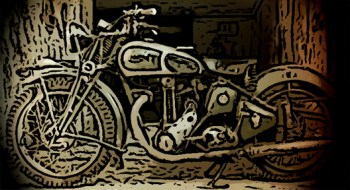 A quick once over told me that Uncle Ned and his old Indian Scout had had two things in common, they were both battered and well oiled. The tires were in need of some air, and something had been nibbling the edges of the leather seat. I rolled the motorcycle out into the backyard with a little effort. I throttled up and gave it a kick. I got a chuckle from the pistons. At least they weren’t frozen or screaming. Now that I had its attention, I gave it another go and it sputtered like it might do better next time. I goosed the gas and it caught with a loud shot and then a roar. But it didn’t last long, a cough and a shudder, and it was dead. I knew I would have to be poking around in places I wasn’t too comfortable in. But other than that, the motorcycle had definite possibilities.
I rummaged around in the shed and uncovered a pair of saddlebags that fit over the rear wheel. They were outfitted to carry fishing gear, one rod still attached under canvas straps. In one of the pockets I found the tire pump and a repair tin. And a half pint of clear liquid. I unscrewed the top and took a whiff. I drew my head back in a hurry. It hadn’t gone bad, it had started bad.
Uncle Ned, a bachelor all his life, kept his space orderly for the things that meant something to him, mostly fishing, his machine, and his booze. The tools I was going to need were rolled up neatly in a canvas tool bag. I figured I could poke and prod the best I knew how, and if worse came to worse, the Ridley Livery advertised a mechanic.
I spent a couple of hours fiddling with the iron pony, taking one thing off and putting another thing on, I’d spent enough time in the old neighborhood watching curbside mechanics make a machine behave. It is slow, methodical work, and I finally got it running, roughly, but running.
When I was about done and admiring my work, cook came down to the shed and handed me a bag. “Preserves, apple butter, pickles, cow’s tongue, and such until you get yourself set up out there. After a while you be eating fish and berries.” She smiled a wide smile, “Just like a bear.”
I pulled up to the pump in front of Ridley Livery and shut the engine off. A lanky gent in blue coveralls squeezed through the gap in the barn door wiping his hands on a greasy rag and sauntered over, eying me and eyeing the motorcycle.
“Gimme fifty cents worth, Ace.” I dismounted and moved the goggles up onto my forehead, thinking again as I had when I’d first found them in a pocket of the saddle bag, the guys that had attacked Alice had worn similar pairs, and the crew that shot up Rabbi Joe’s place, they had, too, and that made me think of Becky, and thinking of Becky only made me hurt.
“This old Indian is Ned’s, ain’t it.” He unscrewed the gas cap and inserted the pump nozzle. “You buy it?” and he gave me the skeptical eye.
Adjusting the strap holding my satchel in place, I met his eye. “Just borrowing. Ruthie Walker is my cousin, you can ask her.” I fished out the change and handed it to him. “Heading up to Little Lake.”
“Yeah, Ned liked to go up to the cabin.” He held up a finger as if a thought had just struck him “You look something like him, but younger. My pop has pictures of a fishing trip up in Canada, of him and Ned. You’re an Ask, then?”
I put a finger to my lips, “Yeah, but keep it on the QT. I got in a bit of trouble and now I need to lie low.”
He drew his head back a bit. “You don’t say?” And squinted an eye again, “Rob a bank?”
I laughed, “Naw, nothing like that. I was having some fun with this young gal and her husband didn’t appreciate it.”
“That why you look like a raccoon?”
“It coulda been worse if she hadn’t beaned him with a frying pan.”
I’d impressed him, “Now that’s something!”
“So if anybody gets to wondering, just tell them my name is uh. . .Dick Sales.”
“Dick.. .Sales,” he repeated and nodded not knowing what to think. He pointed at the motorcycle. “Sounded kinda rough when you pulled up. Ned always had it purring like a pussy cat. Start ‘er up, might just be a valve adjustment. It can be tricky.”
I did as he said and he reached under the tank and fiddled with something and the rough sputter of the engine turned to a throaty growl. He stood up, proud of himself, “That should do it. You tell Ruthie Walker if she ever wants to sell this old Scout, I’ll give her a fair price for it.”
“Why don’t you tell her yourself? She lives right down the road.”
He shook his head. “No, Thorny found out I’d been round to see her, I’d get nothing but grief.”
Thorny again. I thanked him and handed him another two bits for his trouble. I got some advice in exchange.
“Stay wide of the Wilsons. He’s the old coot with the still and the shotgun, ready to shoot, on the property next to Ned’s family cabin .”
“So I’ve heard. Thanks for the tip.”
“Oh, the old guy ain’t so bad so longs you don’t set foot on his property. It’s his daughter you got to watch out for.”
“His daughter? I heard she was just a kid.”
“Not any more. One day she was just this skinny little tomboy and the next thing you know she’s fully equipped and anxious to put it in gear. Only problem is that Crazy Wilson’s property line goes all around her. You set foot or any other part of yourself on her and you got a problem that’s more than just a angry husband.”

About half a mile out of town a large billboard advertising Big Lake Resorts, Sandy Beaches, Motor Boating, Shoreline Cabins, Fine Dining, Night Club Entertainment punctuated with a martini glass and a large arrow pointed the way. On a post nearby a smaller white plank shaped like an arrow with a crudely printed Little Lake indicated the rough dirt road branching off.
 The road was familiar in that I recognized the climb toward the rolling hills across the wide open farmland dotted on either side by towering elms or stately oaks. Wild grasses and cattails, pollywogs and frogs ran wild in the ditches I liked to remember. Fields of young corn and rows of walnut trees glimmered in the sunlight. Towering white clouds edged with gray on the horizon added to the mugginess. I noticed a few flashes of lightning in the direction I was headed and figured the chances of my getting wet were pretty good. I had to get out of the open before the storm reached me. I gunned the Scout and it leapt forward like a good pony.
By the time I reached where the road butted into Lake Rd and Little Rd, I could smell the rain in the air and my skin was itchy with sweat. Both roads followed the lake shore around where the summer cabins were located in groves of sycamores and birch and the scattering of pines and firs. No one lived at the far end of the lake where the dam marked the beginning of the wide mosquito marsh and swamp known as Middle Lake.
Lake Rd was a well-travelled double track with only a stubble of weeds growing up the center. It got a lot more use because most of the summer cabins were on east side of the lake, and that down the road a bit a farmer had a stand selling local produce to the summer vacationers. Little Rd was rougher and overgrown, the double rut not as clearly visible. Granny’s cabin was off Little Rd, about a mile down.
Thunder was rolling overhead as I set off and a large raindrop splashed on my cheek. About the time the overgrown ruts had turned into a single trail, the clouds let loose and I was drenched to the skin in less than a minute. The dirt track had turned to mud just as quickly. I had to dismount and push the motorcycle ahead of me. It felt was like I was swimming underwater through the white haze of heavy downpour. I could barely see two feet ahead of me but I trudged blindly forward. At that point I realized that I had no idea where I was or how far down the road it was to the entrance of Granny’s property.
Eventually I saw a parting in the weeds alongside the road and realized that it was a narrow dirt scar of a clearing crossed with a gushing rivulet wending its way down to the lake. I set out to follow it. The white of the streaming rain changed to a few shades darker as immense black clouds moved overhead. The stands of trees and clutter of underbrush added their own shadows and limited my vision even more. In my memory the track to Granny’s cabin took a similar turn and I was looking for the shelter of the shanty around the next bend. Just then a flash of lightning lit up the entire understory of whipped and moaning trees and illuminated for just a brief second a sign that had been tacked to a tree. It was immediately imprinted on my brain.
NO ???? I WILL SHOOT U.
I believed every word and did an about face back toward the road. I had to assume that it was Wilson’s place so Granny’s couldn’t be much further. The intensity of the rain slowly changed to a steady insistent pelting instead of the sheets of white water disgorged from buckets of clouds. I plodded through the mud until I found a less obvious track through the undergrowth but one that now was much more familiar and lifted my spirits so that I found the extra energy to slog through the stream cutting grooves in the path to the lake and the cabin. Partway down I found the proof positive that I was on the right path. There was the little sign that Granny had Ned carve for her. It read ASK N U (picture of a shell) B (picture of a wishing well plus a comb). Granny always loved her word puzzles and rebuses.
 Another flash of lightning revealed the old cabin as clear as if it were daylight and the thunder let out with an earsplitting bang before rolling away in a series of less loud concussions. I could smell the fried air as I hurried the motorcycle onto the shelter of the tiny front veranda. I stood there for a minute catching my breath and watching the rain wildly leaping off the eaves. The accompanying wind battered the tarpaper sides of the small cabin, blowing swirls of tree debris in every direction. Then the chill of being soaked through caught up with me and I pushed open the door to the shelter of the cabin.

Something had died. Not recently. But the stink of decay took up a lot of the air I was breathing. I had to step back out onto the porch. I left the door open and the stench streaked out like a flock of smelly ghosts in need of laundering. I waited a while, gazing through the steady rain to where I could see the dark waters of the lake agitated with tiny whitecaps. I would have to move everything into the cabin as day got darker I realized, including the Scout. I reached into my inside jacket pocket and carefully extracted my half pack of Luckies praying they weren’t soaked. I was in luck, the pack was wet but the inside foil had managed to keep them pretty dry. I fired up my trusty Ronson and filled my mouth with smoke. I figure that a nose full of tobacco smoke might help with some of the reek.
The Scout was a tight fit getting in through the narrow door. The one double window, given the circumstances, was letting in as much light as it could,. Most of it fell on a tabletop covered by a ratty oilcloth and barely illuminating a variety of indistinguishable objects. The corners were deep in shadows. I switched on the headlight and that helped some. I could make out what looked like a cot against one wall. Across from it was the shape of an old tin stove with the pipe snaking up and through the roof.
I steered the handlebars in a wide arc, memory filling in what I couldn’t completely make out. The narrow ladder I remembered led to the loft where us kids used to sleep, packed together on thin mattresses. Granny had her room at the far back and the dark rectangle of the doorway reminded me that we were not allowed in there. If we did get to curious, there was always a switch to remedy that. I felt a kind of excitement course through me, like the kind I used to feel when I was a kid. When I was going to do something daring. Or foolish. Or dangerous. And I could feel myself smiling.
 Looking behind me at the back of the door, it was where I thought it would be, the old kerosene lamp, hung on a nail next to a greasy leather apron. It was what us kids used to call the “outhouse lantern” in case it was the middle of the night and more than the spirit was moving you to unload your bad conscious and you didn’t want to be stepping on anything that might be out there crawling around in the dark. Mostly it was the adults that used it, the kids were no strangers to wetting the bed. And to my unbelievable luck, there was a handful of wood matches in the apron pocket, just like they’d always been. I carried the lantern over to the table and held it up to my ear. I heard a faint slosh. I lifted the glass chimney and sniffed the wick. There were enough fumes that it might catch. I scratched a match on the window sill and it burst to life like a sulfur flare. I rolled the flame carefully along the wick, adjusting the length. The flame leapt alive just as the match was about to burn my fingers. I lowered the chimney and the dark cabin held a warm amber light.
I didn’t waste any time reorienting myself and getting a better idea of my situation, memory now rushing in to fill in the gaps. The old footlocker that Uncle Ned had brought home from when he served in the Great War and in which he kept his tools, an axe and a couple of types of saws, among other things was where it always was behind the door. And the red kerosene can with the capped spout at the top. A good shake revealed that it would refill the lamp a couple times or more. Leaning on the wall next to it was the old portable stove with its legs folded up. I remembered that the well and the pump were on the up side of the cabin along with the washtubs, and on the down side, the rickety old outhouse. I was in no hurry to use it, not with the rain still pouring down and the thunder rolling through the clouds. I was looking out the window in the direction of the outhouse, outside now much darker and shadowed than when I had arrived. I heard another loud crack and immediately fingers of lightning crackled up from the ground on a further shore of the lake. I’d forgotten how spectacular they could be. I figured the way things were going I’d soon see another one.
That wasn’t what surprised me. The next lightning strike was right outside the window, multiple tines of blinding light illuminating the entire landscape, outhouse and all. I jumped back instinctively. In the dark the lamp had illuminated my reflection on the warped glass pane, but as the white flash of electricity lit up the outside, I saw a face staring back at me, and it was not mine. And just like that it was gone. The face of a young girl. My mind leapt to the only person it could be, the person who had been on my mind almost constantly the last few days. It was Rebecca.
But it wasn’t. I raced out the door and around the side of the cabin where the warm glow of the lamp shined out onto the empty blackness of rainswept trees. I could have sworn it was her. My mind was playing tricks on me and I hadn’t even had a drink. But I knew where I could get one. I took the half pint of everclear out of the saddle bag and gave it another sniff. It wasn’t nearly as bad as whatever it was that had died. It even had a smell you could get used to, the tang of oblivion.

 The woman in the robin breast red pants suit brought the high heels of her black pumps together and looked down at her notes. A professor at a small college upstate, she had a grant to do archive research, and that had brought her to All Soul’s Care Home. The man with her was large boned, long limbed, square faced with the pale eyes of a northerner. He wore a dark blue suit that was not his, or one he had outgrown many years ago. His scuffed brown oxfords were massive. The professor had introduced his instantly forgettable foreign name which he acknowledged with an expressionless nod. He didn’t say what he did.
 When Vegas got to be too much and the man she had been living with was arrested for murder in the course of an armed robbery, she left for Reno, taking the bus upstate, all that she owned in one suitcase. Her impression of the biggest little city in the world was that it was a gritty bleaker version of Vegas, that the glitter and neon was hardly bright enough to hide the desperation of so many of its inhabitants.
 Lydia held up her own hand signaling she would comply and fumbled for her shoulder bag. There were only two of them, with her training and the element of surprised she could render them unconscious. She didn’t want to have to kill them, the viper stiletto nudging against her ribs. But that would only complicate things. Her Aerosud Executive Airship Pilot’s ID identified her as Lydia Cheése, Airship Commander, and if Doctor Serre-Pain’s words were true, the authorities within IOTA’s sphere of influence, as Oldest Orleans was, would be alerted to her fugitive status.
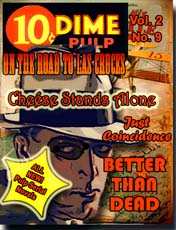

 In late February of 1908, a one-time drover, buffalo hunter, saloon owner, hog farmer, peach grower, horse rancher, US Customs inspector, private investigator, county sheriff, and Deputy US Marshal set out from his adobe home on the mesa above Organ, New Mexico accompanied by a young man in a black buggy on the journey to Las Cruces. He would never arrive. This is the story of that journey, a novel account of the last day in the life of a legendary lawman.
 In March of 1892, a Scotsman by the name of Arthur C. “Artie” Doyle was hanged by the neck until dead after being found guilty of a string of grisly murders of prostitutes in Whitechapel. At that moment, history veered off its presumed course and headed in a direction all its own in which the Great War never happened because the Kaiser was afraid of offending his grandmother, Queen Victoria, whose life has been prolonged by the wonders of biology. Her reign, known as the Pax Victoriana has lasted 180 years maintaining as many Victorian airs as possible while making accommodations to rapid advances in bio technology. Cheése Stands Alone poses a steampunk question, can Captain Lydia Cheése find her father, the antigovernment turncoat and radical, Commodore Jack “Wild Goose” Cheése. And furthermore, will her quest take her around the globe and through alternate world histories in the requisite 80 days or is it the beginning of a lifelong journey?
 In Just Coincidence, a privileged young man with the unremarkable name of Wayne Bruce returns to the site where his father once had his business, a battery manufacturing plant, and where he often spent his childhood days hanging around the factory and the neighborhood. His return is haunted by the mysterious circumstances surrounding his father’s death and the vague feeling that his uncle is somehow involved. Appalled by the poverty and crime of the place he remembers fondly, he is moved to resolve the injustice of the socially marginalized and to wreak vengeance on those he believes are responsible for the death of his father. A personal coincidence brings together dark prince and dark knight joined in a fateful and tragic quest for justice.
 After I’d left my disappointment in the coalbin, I made my way to the railyard by the Serbian Social Club. There were a couple of squad cars parked out front and the guard at the front door was now a boy in blue. There was no chance that I was going to get close or even inside the building. Becky was gone, I had to face up to that. Kovic’s mob probably dumped the body somewhere it wouldn’t be found any time soon. If anyone looked like a sad sack that day, it was me. I had no choice but to pick up my gear at Alice’s and head out of town.
 I’d waited till the last person in line had boarded and the driver was about to close the door. The man behind the wheel gave me the ‘there’s one in every crowd’ squint as I made my way to the back and humped my satchel onto the seat next to me. I’d given a quick eyeball of the occupied seats and what I was seeing was a smattering of overdressed travelers, men and women looking out the window, some with children in their laps. Some were obviously vacationers heading up to Big Lake, one of the three lakes and most popular summer resort. And some, by their defeated expressions, were going back where they came from with only the clothes on their backs. Maybe I fit into that last category, but behind the dark glasses I had picked up at the terminal newsstand and my hat tipped back once the bus turned onto the road leading to the outskirts, I didn’t care. I had a half pint of Old Hickory and a pack of Lucky Strikes to while away the three hours it would take to get to where I was going.
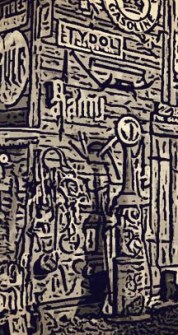 I’d gone through about half of the Old Hickory and smoked up the rear of the bus with a cigarette haze by the time the bus rolled into Ridley. I found my feet once I stumbled off the bus and watched it kick up the road dust on its way out of town. Ridley didn’t seem to have changed much since they last time I came through. They’d added a gas pump in front of the livery barn and a sign on the side that said mechanic. There was a streetlight I didn’t remember from before out front. Granny’s house was down the elm shaded road running behind it.
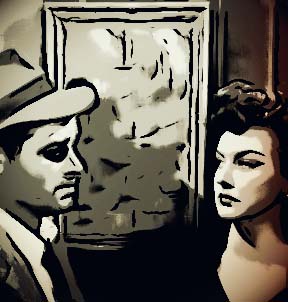 She ducked in the doorway with the wick on the lamp trimmed short so that just a dim pale glow lit part of her face. It looked like a face out of a Hollywood photo magazine. All of a sudden I wasn’t all that tuckered out as I thought I was. She came closer and I saw she was wearing a quilted house coat open at the front to reveal a frilly shimmering slip. And she’d perfumed up.

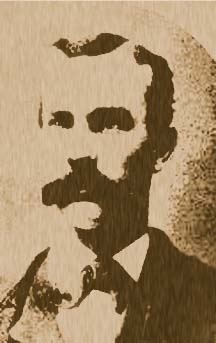 “Now I don’t know if the name Joe Miller is familiar to you, Mrs. Garrett, but it belongs to a notorious assassin who is believed to be part of this conspiracy and may even be the actual triggerman.”
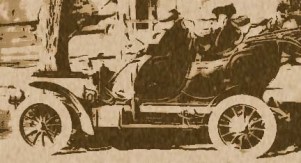 “It’s a motor carriage!” Paulita ran to the gate, her baby brother waddling behind her. The machine swayed and jogged from side to side, navigating the ruts in the wagon road, chased by outraged dogs and the town’s children. Scanly’s horse reared, shaking and tipping the buggy trying to free itself as the dust and noise rattled past. Seated high on the bench of the contraption were what appeared to be a man and a woman, he with a black hat held on his head with a chinstrap and she with a wide brimmed chapeau held in place with a yard of chiffon scarf. Both wore goggles. The woman waved at Paulita and her brother gaping through the pickets.
 Over the years numerous version of my manuscript, mostly typewritten, have languished in a drawer or gathered dust on my desk and to which I was drawn, on occasion, to reread and rethink the presentation of the material. In the process, a novel took shape, one that began as a bare bones cinematic adaptation of a biography and emerged as something more meaningful: the story of the relationship between two men, one garrulous, the other taciturn, the Mutt and Jeff of the old Southwest, and the tradition of storytelling and authoring of ‘true’ accounts. The life of this legendary lawman encompassed more than just that one episode, however. Garrett’s own violent death in the early years of the Twentieth Century seemed to punctuate the passing of an era. There is a resonance to the other particulars of his life as a lawman that belong to the saga of the Southwest.

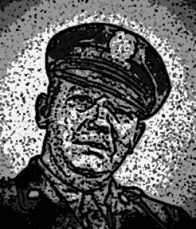 Hogan was shaking his head all the time I was telling him. “You believe this bum, O’Malley?” he asked the sergeant who was nodding in agreement. “You gotta lay off the dime detective fare, pal. It’s turning your brain to pulp!”
 The commotion was drawing a crowd of shipyard and dock workers just arriving to begin their shifts or leaving after a long uneventful night. Anything out of the ordinary was going to attract them like moths to a flame. Unfortunately I wasn’t invisible enough to get past the police line. They weren’t letting anybody in or anyone out. I scanned the faces of the crowd of workers being held back by the coppers. I recognized one of them, from Annie’s tug, The Narcissus, the tall one. I could tell from his expression that he recognized me, and he turned away quickly to disappear into the crowd. I lurked in the rapidly shrinking shadows dreading that Hogan would notice I had gone missing and raise the alarm. I did not at any cost want to go downtown to have a little chat and explain about Rebecca. Then I saw her, perfection in a sea of broken faces. It was Annie. Her mate had gone to fetch her. She caught my eye and gave a nod. She was up to something.
 “Gold,” she said with a frown, “Gold and jewels. People are fleeing the war in Europe and sending their wealth abroad. It’s an open secret. Everybody on the docks knows about it. But it’s scum like Kovic that’s gonna try and heist it.”
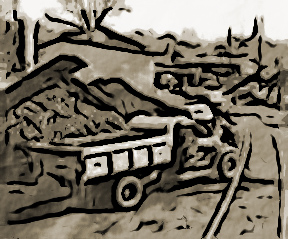 Pulling the flat cap down over my eyes, I made my way over to the coal yard. There was a queue of coal wagons backed to the chutes and I figured the guy with the papers in his hand was the foreman. Holding a sheaf of papers was not a hard job but the scowl on his face wanted you think that it was. He didn’t like the look of my mug, either. I asked him if he knew the coal company that delivered to the address of the building where Rebecca’s old man had his used clothes store because I had to do some work in the basement and didn’t want to do it if they were going to dump a load in the bin. The foreman was distracted by a wagon that had not pulled close enough to the chutes and the ore was spilling onto the ground. “Oreville Coal Company!” he yelled as he ran to chew out the coal wagon driver.
 In March of 1892, a Scotsman by the name of Arthur C. “Artie” Doyle was hanged by the neck until dead after being found guilty of a string of grisly murders of prostitutes in Whitechapel. At that moment, history veered off its presumed course and headed in a direction all its own in which the Great War never happened because the Kaiser was afraid of offending his grandmother, Queen Victoria, whose life has been prolonged by the wonders of biology. The peace of her reign, known as the Pax Victoriana, despite some major environmental disasters, has lasted 180 years keeping as many Victorian airs as possible while making accommodations to bio technology. Cheése Stands Alone poses a steampunk question, can Captain Lydia Cheése find her father, the antigovernment turncoat and radical, Commodore Jack “Wild Goose” Cheése. And furthermore, will her quest take her around the globe and through alternate world histories in the requisite 80 days or is it the beginning of a lifelong journey?
 In Just Coincidence, a privileged young man with the unremarkable name of Wayne Bruce returns to the site where his father once had his business, a battery manufacturing plant, and where he often spent his childhood days hanging around the factory and the neighborhood. His return is haunted by the mysterious circumstances surrounding his father’s death and the vague feeling that his uncle is somehow involved. Appalled by the poverty and crime of the place he remembers fondly, he is moved to resolve the injustice of the socially marginalized and to wreak vengeance on those he believes are responsible for the death of his father. A personal coincidence brings together dark prince and dark knight joined in a fateful and tragic quest for justice.
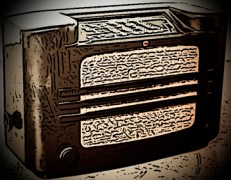 She was pointing at the two armchairs and the table with the radio between them. She stumbled back with her hand held over her mouth and in doing so knocked the banker’s lamp off its perch with a shattering crash. “The radio!” she gasped.
 doorframe buckled, coughing out bits of brick and plaster. I dropped to one knee to keep from toppling over. My ears were ringing from the explosion. Dust and acrid smoke filled my nostrils. When I got over the initial shock I looked over at Rebecca. She was gone.
 Dime Pulp