Tag Archives: Crime Fiction

The Last Resort 26-27

by Pat Nolan

Chapter Twenty Six

SAPHO

The waves washing across the black gravel of Sabbia Negru made a sound in their receding like that of distant applause. I might have been feeling nostalgic for the attention I received as a celebrated beauty. There was no doubt that I was conflicted. To say I had family and friends who were concerned for my well-being would be an understatement. I had been kidnapped after all. On the other hand, my captors were kind, generous women who had rescued me from sex slavery. Though when I reflected back on it, didn’t my life as a fashion model constitute a kind of slavery?

I’d been keeping track of the passage of days by the phases of the moon and my own cycle. In that time I had changed. My once pampered alabaster skin had darkened to a bronze hue under the unrelenting Mediterranean sun. And I was growing hair in places that had not seen a follicle in decades. For as long as I could remember I had been peeled, plucked, waxed and shaved of any growth that would hint at a more aggressive sexuality. As now, my hair fell to below my shoulders, streaked with salt bleached strands. And I had come to look forward to my daily jogs along the beach and my visits to Treyann’s stone cottage. Xuxann was often too busy with her other duties to continually watch me and she had to trust that I wouldn’t do anything foolish, like try to escape. Much of the time I was left on my own. I got a chance to know myself in those hours of solitude.

And I was learning things I had never imagined. For one, the group that was holding me was known as SAPHO, Société Anonyme Protectrice des Hétaïres et Odalisques, which, loosely translated, stands for Anonymous Society for the Protection of Prostitutes and Concubines. As their name indicated, they were an organization of anonymous female humanitarians engaged in the rescue of sex slaves and women forced into prostitution. They were a modern reimagining of nunneries in the Middle Ages coming to the rescue of wayward girls. Their sign was the ancient Greek letter psi which consisted of three lines converging on a single point at the base to form a bisected V, and the first letter in the Aeolic name for the great woman poet, saphoSappho. Some of the women had the mark discreetly tattooed on a shoulder blade or an ankle. Their totem was the octopus from which they derived their organizational structure, the nine: eight tentacles and one body. The head of a group of nine, usually the eldest, acted as the body, and directly beneath her were two women who in turn each directed a group of three. But despite their hierarchal structure, the women seemed to act by consensus. There were SAPHO octopi cells in every country around the world who worked to rescue young woman from sex slavery, usually operating as clinics and halfway houses. It was even hinted that Mother Teresa belonged to SAPHO. Only cells like the one that held me were clandestine operators. Known as the Erinnyes, they engaged in sabotage to disrupt the operations of the vast networks of the international sex trade. Each clandestine cell specialized in a particular type of operation. Those holding me specialized in being invisible and providing safe houses while others, like those who had rescued me, were more militant and lethal.

I was informed that it had been white slavers from the Sophia Syndicate, purveyors of female flesh since the days of the Ottoman Empire, who had kidnapped me at the behest of some sandcastle despot. SAPHO intercepted my transport at a private air strip in Moldavia and spirited me to their hideaway in the Mediterranean. Unable to deliver the goods, the Bulgarians claimed to be holding me for ransom and were demanding five million dollars. They were certain the Prince would pay the price.

SAPHO had their motives for keeping me under wraps. Through private channels, they released a picture of me holding a copy of Le Monde with the news of my kidnapping to prove to the Prince that my custody was under their aegis. They proposed a less costly solution, but one that was more politically delicate. And they had to move cautiously. They suspected that some of the Prince’s advisors were complicit in the original plan to kidnap me. When Mohamed el-Ipir’s name was mentioned, I wouldn’t believe it. And when Preston Carmichael’s name had come up, I dismissed him as merely that lawyer who had gotten me out of a drug jam.

Urann, the elder of this particular SAPHO cell, had been candid in explaining why I was being held. They were negotiating with the Prince to intervene in gaining the release of women from harems controlled by less enlightened oil royalty. The Prince’s professed affection for me would be the incentive to free the women from the basement sex dungeons. When I was released I would be at liberty to tell anyone who asked what I knew about the organization.

“Do you think they will believe you?” she had asked, allowing a glimpse of her cold determination. “You are a woman whose sole function is to serve as a display of a man’s idea of beauty, a measure held up to the women of the world. Your words on politics or the rights of others will be dismissed as that of a vacuous female icon.”

As it was, once I was allowed to tell my side of the story and counter the spin that appeared in the tabloids, hinting at wild lesbian adventures or just the antics of a fading star looking to attract attention, I opted to say as little as possible. I did speak out against sex slavery and the plight of women around the world. Not surprisingly, little of what I said was reported. I was much more of a photo op, and innuendo is always so much more interesting than fact. For me it was like buying a beautiful gown and not being able to remove the price tag. Every time I cut off one tag another appeared as a reminder of what it cost to be me.

Trayann also became a member of one of the clandestine cells working to disrupt the transport of women. They called themselves the Erinyes. . .Their power was the hypnotic blurring of the edges of reality, confounding the already befuddled minds of men.

My greatest lessons, however, were learned in the presence of Trayann. Together we explored the pine woodlands and meadows situated at the base of the monolithic crag I named Mother Mountain. She was intimately familiar with the surroundings and where to look for wild herbs, berries, and mushrooms. She tried to teach me the ancient names of birds and their calls. It was hopeless. The only name I remembered was Pica, the persistent woodpecker with its nest in the pine near Trayann’s hut. Between my quasi-Parisian French and her provincial argot, we managed to establish a rapport that included much gesturing, head nodding, and sympathetic understanding.

There were places that were obviously sacred to Trayann. She would stop and raise her arms to the transparent blue to incant a prayer or sing a song of praise to the great goddess. Then she would show me the herm hidden in the foliage or a stone column representing a wood nymph. Other times I just sat with her in her garden or beat the midsummer heat in the cool of her stone hut with a cup of herb tea. Conversation was nearly impossible unless Xuxann was in attendance. I would ask her to tell me the names of plants she had gathered or objects that adorned her tidy stone hut. And patiently, she did.

Once I noticed what I thought to be a vaccination scar on her left shoulder but when I looked closer I saw that the scar was the result of a hot brand. The image was that of an octopus with eight radiating tentacles. She had run her fingers over it, speaking words heavy with sadness.

Xuxann had been with me that day and as we descended the path back to my cell, I asked her if she understood what Taryann had said about the brand on her shoulder. I assumed that it must have had something to do with SAPHO as the octopus was their totem. Xuxann had given me a long searching look as if she were trying to discern my trustworthiness and then told me the story of Trayann.

What Trayann had said was something like “this is where I began.” As a young girl, she had been kidnapped by white slavers and ended up in the clutches of the Sophia Syndicate, the very same group that had tried to kidnap me. The SS, as they were known in the trade, had long branded their property with the octopus symbol. Even their luxury yachts on the Black Sea, essentially floating bordellos, flew the octopus pennant. After years in a brothel specializing in young girls, Trayann escaped and made her way to a convent in the eastern forests of Czechoslovakia where she was given refuge by nuns of the Order of St Hildegard. The nuns ran a sort of underground railway for refugees from the sex trade. They put Trayann in touch with other escapees similarly branded by the SS. She was introduced to a secret society whose mission it was to put the Bulgarians out of business. With the help of the Hildegardian nuns, Trayann and her associates set about establishing a variety of fronts and charities whose purpose was the rescue of at-risk young women. In an ironic twist, they appropriated the Sophia Syndicate brand as the symbol of their own organization.

Trayann also became a member of one of the clandestine cells working to disrupt the transport of women. They called themselves the Erinnyes or the Furies. That had been years ago, between the wars. During the war, the women of SAPHO had devoted themselves to working in hospitals and relief organization, sheltering young women who had been displaced by the fighting. Organizations like theirs, often headed by nuns, had existed in one form or another for centuries. The brutal lessons of the war had convinced SAPHO that they needed to be more militant and meet their foes head to head on the field of battle. Their lack of physical strength and fire power was more than made up for by their womanly wiles. They had to become invisible. This was accomplished by being what men thought they were, compliant and subservient. They learned to shape shift as the ancient shamans had. Their power was the hypnotic blurring of the edges of reality, confounding the already befuddled minds of men.

Trayann, because of her age, was no longer a participant in the day to day activities of SAPHO. Nor was she one of the nine. To the women of the organization, she was a model, a symbol of the ongoing struggle for the rights of women to be recognized as human and not chattel to be bought and sold like livestock.

Something else began occurring with regularity in the early months of my safekeeping and that was the arrival, every five to seven days, of motor launches crowded with woman, young and old, of all shapes and sizes. They were excursions from the woman’s resort on the grey shadow of land on the far horizon that I sometimes glimpsed from the vantage of Trayann’s garden.

The women at the villa, as a cover for their presence at Sabbia Negru, hosted overnight retreats that included vegetarian meals, herbal tonics, and accommodations in cabanas set up along the base of the cliff. Late into the night I listened to the joyful shrieks of female voices accompanied by the hypnotic rhythms of drums and flutes. I was not allowed to participate because I would surely be recognized. Only on those occasions had I felt a twinge of isolation. By the time the festivities began I was usually looking forward to a restful sleep after an exhausting and fulfilling day traipsing around in the woods with Trayann. Those who knew me would have been shocked at my indifference. I had a reputation as one of the most intrepid of party girls.

Like clockwork, I watched the boats arrive. First a sparkling wave at the prow would glimmer like a faint blinking white light. Then as the shapes of the large motorboats became more apparent, the rough rumble of their engines would reach my ears. At times three or four boatloads of women would disembark at the jetty and then proceed up to the villa, a procession of colorful beachwear flapping in the shore breeze like festive drapes set against the blackness of the sand. As I sat on the stone bench high above them in Trayann’s garden, the sound of their voices, a musical incomprehensible babble, would reach me, too often drowned out by the rumble of the motor launches returning.

I didn’t think I’d fallen asleep. I was hearing those motors only much louder, as if they were directly overhead. I opened my eyes and looked across the river. Rikki was waving his arms and shouting something to me. I might have been at the edge, where reverie turns to dream. And I’d barely touched my drink. Using my sandals as paddles, I made my way back to the dock where Wallace and Lalo stood shading their eyes and looking in the direction of the sound. Rikki directed my attention. “Look! A fire!”

It took me a while to focus at where he was pointing, but eventually I made out a column of black smoke roiling out from the hillside of firs and redwoods in the distance. Then I saw the source of the noise, a large white helicopter with a huge red bucket suspended beneath it, dipping into the river further down around the bend.

The look on Rikki’s face mirrored what I was thinking. Wallace spoke for both of us. “Lee, isn’t that smoke coming from over near where you live?”


Chapter Twenty Seven

BURNT OUT

The roof had caved in exposing charred rafters. Trails of smoke snaked up through the already choking air. The rear end of a fire truck, beeping a warning, nudged past me, backing toward the ruins of the fire demolished cabin. My cabin, half of which was now nothing more than brittle charcoal sticks. The fire chief took me by the elbow and led me back to his pick-up truck. I’d made the acquaintance of the fire chief when I first moved to Timberton. He was a moderately good looking guy in his late forties. I went to dinner with him once. Like most firefighters, if it’s not on fire, they’re not interested. And I don’t catch fire for just anybody.
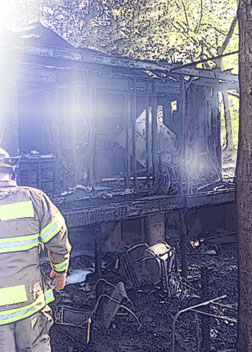
burntcabinLike giant bumble bees with axes, the firefighters in their yellow protective gear tore away at the scorched, discolored walls of the back bedroom that had served as my clothes closet. The chief spoke close to my ear to make himself heard above the din of the engine pumps and the chainsaws. I didn’t want to hear what he had to say. He explained anyway. The closely packed garments in the back bedroom had somehow slowed the spread of the fire to that part of the house. This was supposed to be some sort of consolation? The clothes were so smoke damaged that they wouldn’t even make good rags. The Valantini’s, the Borochios, the Kokolas, my beautiful Yamita silks, a classic fashion wardrobe that held the history of my career. Gone.

What I felt was more like disappointment than anger. I was still trying to puzzle the pieces together. How did my home, my refuge, become a smoking mass of rubble? What he was telling me didn’t help. Besides it was competing with what I was trying to sort out in my own mind. It started when I had seen the smoke from Nathan Thiele’s beachfront. I had a sinking feeling that the black column was somehow a signal to me. I had to rush home to confirm for myself that what I was imagining was just paranoia, that it was just me, crazy me. But not crazy enough to go the way I was dressed, teensy bottoms and an improvised halter top. I’d come with a wraparound skirt but that didn’t seem to be quite appropriate to go meet my insane intuition. I needed something to throw over myself.

Thiele didn’t have anything in the way of women’s clothing, nothing that would fit me, anyway. There was just one item, a collector’s piece that had once been worn by Audrey Hepburn in some horrid movie that had never been released, and when it occurred to him, it was as if he were having an epiphany. Personally, I was a little appalled. It was a sixties-style woman’s trench coat, deep red in color with large black polka dots. The movie it had appeared in might have been shelved solely on the basis of that coat. Rikki couldn’t help but quip, “I knew there was a Madam Butterfly but now I see that there’s a Madam Ladybug as well.” I couldn’t stay to laugh. My house was on fire.

The access to Primrose was blocked by fire trucks. I’d ditched my wheels and made my way up the street through the runnels of ashy water, my gold flip-flops slipping and sinking in the mire of soggy grime. I saw billows of black smoke pouring out of a broken window. Firefighters were working the hillside where the tall weeds and the oaks were burning. I began to understand then that the cabin I had called home was gone. There was nothing anyone could do.

I felt numb. My cabin wasn’t just a home, it was a connection to a part of my life that had always seemed safe. It had belonged to my stepfather, Frank Zola, and he had come by it in a high stakes poker game. This was long before he’d met my mother. He’d been a brash upstart Wall Street lawyer. She claimed to have civilized him, and maybe she had. But the cabin, for me, represented that side of him that had never been tamed. After I had been rescued by the Prince’s elite security force and then turned over to the authorities who were intent on charging me with fabricating my disappearance, I wasn’t feeling all that great with the world. I’d had to stay in Paris until the legal wrangling was over. Frank had been in touch with me much of that time. The transatlantic phone calls alone must have cost him a fortune. He wasn’t living with mother anymore. And I didn’t realize how sick he was. He passed away shortly after I was vindicated.

    I wanted to be free to explore the world in anonymity, as an unknown. I wanted to reconnect with the person I had started to become on the beaches of Sabbia Negru, but this time on my own terms. I wanted to get to know that person.

I could have cashed in on all the attendant publicity. There was not one tabloid that didn’t carry a story about me somewhere in their pages, barely any of it true, mostly rehashing past indiscretions. I was in demand at social occasions and public spectacles like gallery openings and premieres. On the other hand, I wasn’t hearing much from the agencies. But I was fairly ambivalent about it all. My time in captivity on what turned out to be the southwestern tip of Corsica on the Straits of St Bartholomew had given me a new perspective. I had come to think of myself differently. I tried to keep a low profile in spite of being hounded by paparazzi. I had been evicted from my posh apartment. I stayed with friends, putting all that I owned, which was mostly clothes, in storage. Then I had to fly to Chicago for the funeral.

It wasn’t quite a circus, though it was trying hard to be. Wisely, mother had convinced someone high-up on the police commission of the possibility of an unruly crowd and that he should have a riot squad on hand. Fortunately it didn’t come to that. Still flashbulbs sparked like thousands of tiny random white holes in the gray mass of on-lookers that rainy Sunday afternoon. Men with telephoto lenses had climbed into trees just to get close-ups of the grieving bad girl. I would have traded every bit of my notoriety for just five more minutes with Frank Zola, to enjoy his kindliness and humor, and his common sense. Later that day his lawyer advised me that Frank had left me the cabin in Corkscrew County in his will. The mystified expression on his face said he had no idea where that was, certainly no place in the civilized world. But, considering my mental state, I took it as a sign, Frank’s last bit of advice. Lay low for a while, regenerate yourself, rediscover yourself.

From the moment I parked the rental in front of the cabin on Quince, I knew I had come home. Financially, Frank had me covered, setting up a trust fund and investing my earnings while I was a minor. Even as an adult and accustomed to extravagances, he managed to convince me to contribute a percentage to the “strong box” as he called it. I sent for the things I had in storage in Paris and moved in. I wanted to be free to explore the world in anonymity, as an unknown. I wanted to reconnect with the person I had started to become on the beaches of Sabbia Negru, but this time on my own terms. I wanted to get to know that person.

Someone had once suggested that I write the story of my life as a top model. It would make a good book, they said. I never thought so. But I did start a journal and wrote down my thoughts on a daily basis. That’s easier said than done. But I kept at it. And I came to realize that I had a knack for observation, for detail. That’s how I ended up writing for the Grapevine. It was in answer to a plea for local news and events. I wrote a scathing review of a gallery show up the coast in Healy, the upscale art colony, and sent it in under a pseudonym. I heard back from JJ not because she accepted my article but because she said I had talent that could be used in a positive way. And I was probably the only one who had answered her plea. When we met for the so-called job interview, she recognized me immediately from one of the old cigarette billboards. She had been elated at first and then uncomfortable. And finally, very business-like in a tremulous sort of way. She couldn’t pay me much, she explained, but I should consider my assignments as part of an apprenticeship into the world of journalism. In reality she just wanted someone else to write the puff pieces, a soul deadening task in any language.

The fire chief directed my attention to the tall gray haired woman in uniform approaching us from the edge of the fire. “May Ann Young. The County fire cop,” he nodded toward her almost respectfully. “She’ll want to talk to you.” When she reached us, a fiftyish, weather scarred, no nonsense square ruddy face, he made the introductions. “May, this here’s the property owner, Lee Marlowe.”

“Malone,” I corrected, and extended my hand in greeting.

She looked at it. “You are the legal owner of this property, is that correct?”  She didn’t blink and I had the feeling my every scintilla was under scrutiny.

“Yes, I inherited it from. . . .”

“What time did you leave the house today?”  She held a small yellow notepad in her hand.

I didn’t know what time I had left the house this morning and I said so.

“So you left this morning. Early, late?”

It had been closer to noon.

“Are you having financial difficulties, Ms. Malone?”

I didn’t know how to answer that. What had my finances to do with my house burning down?

“Arty, show the lady what we found,” she said to the firefighter with the shovel who had accompanied her. “Recognize that, Ms. Malone?”

The firefighter extended the shovel in my direction. I looked at a vaguely familiar shape of burnt plastic and discolored metal sitting in the shovel but couldn’t say exactly what it was.

“That’s an electric iron. Or what’s left of one.”

I jumped involuntarily as if I had touched the hot iron itself. I had an electric iron. And I had taken it out when I thought to use it on the scarf I chose for my halter top. But when I realized that it was not a material that would take heat, I’d thought better of it. I didn’t think I’d plugged the iron in. But I had been in a hurry so I wasn’t certain. “You mean that my iron started the fire? It was an accident?”

May Ann looked at me without a change of expression though I could tell she was weighing her words. “Normally, I would say yes. You wouldn’t believe how many people lose their homes to fire through carelessness. But in this case there was just too much accelerant splashed around to make it anything but deliberate.”

I was stunned. “Ok, you just said two things I need to understand better. You said accelerant. What’s that?”

“In this case, I’d say gasoline. That’s what you would use so that what you wanted to burn burned hot and fast.”

“And deliberate, I know what that means. Arson. Are you saying someone purposely set fire to my house?”

“And tried to make it look like an accident.”

“Why would anyone want to do that?” As soon as the words left my mouth, I knew the answer.

May Ann spoke, wearily, as if she were tired of saying it. “Why, to collect on the insurance money, of course.”

I felt stupid, but I played it smart and stopped talking. Something Frank Zola had taught me.

“Ms. Malone, I have a lot of questions to ask you. I would like to establish your whereabouts from around noon today to approximately half an hour ago, three o’clock. Sheriff’s deputies will be questioning your neighbors to see if they saw or heard anything suspicious. But I think we might accomplish more if you accompanied me to my office for an interview.”

I hesitated. I was under suspicion of setting my own house on fire. “Do you actually think that I burned my own home?”  I tried to sound irate but it came out with too little conviction. I was starting to doubt myself.

“The facts haven’t been established. But I’ve been a fire cop for a long time, and a fire like this,” she indicated the pile of smoking debris with the jerk of her head, “it’s usually the property owner who has the most to gain.”

“Am I under arrest?”

A ripple of a smile or smirk flexed her stern jaw. “Not unless you wanna be.”


Next Time: Audrey Hepburn’s Raincoat

Contents Vol. I No. 7

Introducing Dime Pulp Number Seven

In Dime Pulp, A Serial Fiction Magazine, Issue Seven, Helena Baron-Murdock’s Hard Boiled Myth featuring Weston County Sheriff’s Detective Jim Donovan, drops more clues than an Agatha Christie mystery to the Greek myth she’s adapted. Part two of The White Room finds Donovan looking into the mysterious restricted zone at the top of Mount Oly and almost being run off the road by ominous tinted window dreadnaughts as well as concluding that answers to the identity of the murder victim might be closer to sea level at the Sparta Creek Trailer Park.

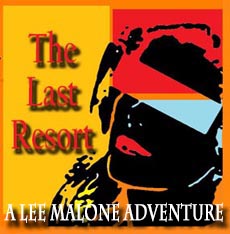
The Last Resort continues the adventures of Lee Malone, former super model and now small town reporter for the Corkscrew County Grapevine, with a close call from a presumed friend now antagonist, and a deep dive into her kidnapping by the radical underground feminist group known as S.A.P.H.O.

The latest installment of A Detective Story finds our semi-hero with a chance to get a handful of uncut diamonds in exchange for an address book possibly belonging to a member of The Black Hand, get next to a good looking dolly all the while while teaching her the subtleties of American slang.

Dropping A Dime, News, Views, and Reviews in which yours truly, Perry O’Dickle, aka The Professor, offers up his considered and considerable opinion on the fine art of pulp fiction, reviews of crime fiction, old and new, as well as news of upcoming publications features another look at Max Allen Collins’ Nolan saga from Hard Case Crime with reviews of Two For The Money and Skim Deep.

Dime Pulp continues its crime spree with the serialization of two full length novels, The Last Resort and A Detective Story, as well as another short story based on Greek myths under the rubric of Hard Boiled Myth.

If you’ve made it this far, go ahead and follow the links below to reading entertainment with the serial contents of Volume One, Number Seven

  —Perry O’Dickle, chief scribe
and word accountant


TLR banner321Deep in the redwood wilds along the Corkscrew River, someone is shooting neighborhood dogs. The year is 1985 and Lee Malone, former fashion model, queen of the runways from Paris to Milan, once dubbed the most beautiful woman in the world, now a part-time reporter for The Corkscrew County Grapevine, is looking for a story to sink her teeth into. When Lee finds the owner of Kelly’s Seaside Resort brutally murdered, it leads her on an adventure that includes a mysterious gray van, another murder, extortion, pornography, sex slavery, and a shadowy organization of militant feminists known as SAPHO.  In the process, Lee Malone’s notorious past catches up with her. 

The Last Resort, Chapters 1-3
The Last Resort, Chapters 4-6
The Last Resort, Chapters 7-10
The Last Resort, Chapters 11-13
The Last Resort, Chapters 14-20
The Last Resort, Chapters 21-23
The Last Resort, Chapters 24-25

HBMbanner421

Greek myth is rife with murder, mutilation, cannibalism, mayhem, and the ever popular incest.  Weston County Sheriff’s Detective Jim Donovan of the Violent Crimes Unit wouldn’t know a Greek myth from a Greek salad, but if he did he would find some troubling similarities to the cases he’s investigating.  Revisited as crime fiction are the strange death of Hippolytus, the agonizing death of Heracles, the slaughter of Penelope’s suitors, the Fall of Icarus,  the sparagamos of Orpheus, and the cursed lineage of Pelops.  Helene Baron-Murdock’s Hard Boiled Myth taps into the rich vein of classical literature to frame these ancient tales in a modern context.

Long Shot I
Long Shot II
Notification Of Kin
Valentine’s Day I
Valentine’s Day II
The White Room I
The White Room II

ds1020

Lackland Ask is the name. ‘Lack’ to my friends, ‘Don’t’ to those who think they’re funny. You might have seen my portrait on the cover of Black Mask, the crime friction magazine. This is my story. It starts with a blonde. This kind of story always starts with a blonde. The brownstone was on the Westside and easy enough to find. So was the mug’s yellow roadster. It stuck out like a new shoe in a cobbler’s shop. I was being a sap again. I woke sitting straight up, sweat pouring out and over me, my undershirt drenched. I was going to have to change my shorts. Some dream. They worked me over, demons in dingy cable knit sweaters. They pumped my arms and peered in my face with eyes as black as eightballs. He handed me a hat. “The pièce de résistance.” He said it like he was serving me dessert. The gat fell from his hand and clattered across the marble floor. It looked like something that might have survived the battle at Ypres. I looked at him and back at the hand and then at the rabbi and his granddaughter who all seemed very pleased by what was being offered. “You’re offering me pebbles? Little gray rocks?”

This kind of story always starts with a blonde
“I was being a sap again.”
“Some dream”
“demons in dingy cable knit sweaters”
“He handed me a hat.”
“The gat fell from his hand” 
“You’re offering me pebbles? Little gray rocks?”

dime-reviews-hdrOnce again from Hard Case Crime, the imprint that is doing it’s darndest  to resuscitate pulp nostalgia with it’s tantalizing cover art and reprints of  of crime fiction classics as well as original contemporary genre fiction comes Max Allen’s Collins’ continuing saga of master thief  Nolan and his young, comic book-loving partner, Jon, matching wits with mobsters while trying to hang on to their lives as well as their stash of bank heist loot. This installment of Dropping A Dime takes a look at the origins of the Nolan and Jon team in Bait Money as well as the contemporaneously penned wrap-up curtain call (but not “curtains”) for the duo in Skim Deep.  

Dime One
Dime Two: Come Back, Nolan, Come Back
Dime Three: He’s Back! (Nolan, that is)

DIME THREE: He’s Back! (Nolan, That Is)

I gotta come clean. Once again the gang at Hard Case Crime have crossed the transom with the requisite paper in the form of two novels in the Nolan series by Max Allen Collins. If Dime Pulp were a legit operation, we might expect more, but since it isn’t, we don’t. The latest from Hard Case Crime did keep these offices burning the midnight oeil. Not due to a guilty conscience, however, but in pursuit of guilty pleasure, i.e., reading crime fiction.

To make up for the gap in our limited knowledge of the Nolan saga, those Hard Case types bookended these offices with the original Collins foray into Nolan territory, and then an encore, as a wrap up to an epic crime career, written thirty three years later. Collins’ origin stories for the Nolan and Jon characters begin in a novella titled Bait Money, a boy meets thief story, in which the bond between apprentice and master is forged and sets the tone for all the Nolan-centric adventures to follow.

twoferHard Case Crime has reprinted four novellas from that late 80s period,  Two For The Money and Double Down  (reviewed in Dropping A Dime Two) each in the twofer format, which will be joining another two (four) titles slated for publication in 2022 and 2023. Skim Deep, the encore curtain call for Nolan and Jon, is novel length in its own right.

The incredibly prolific pulp polymath Max Allen Collins is a Hard Case Crime franchise author, it should be noted, Mickey Spillane’s heir apparent, and author of the Quarry assassin series (also well represented under the Hard Case Crime imprint). In the author’s note to Two For The Money, Collins reveals that the idea for the title and the plot of the first story, Bait Money, was inspired by his girlfriend who worked in a bank. The story starts off solid with a portrayal of Nolan, heist meister extraordinaire, trying to smooth things over with the mob over his killing of one of the bosses’ relatives. The mobster wants a blood price and Nolan has to find a way to pay it. Enter Jon, a comic book aficionado and amateur who has come up with a plan to take down a local bank. Needless to say it’s a bad plan, but the pro sees a way of fixing it and potentially clearing his debt. And naturally there are double crosses, unfaithful women, killing, and last minute glitches.

The Nolan character, Collins admits, is based on Richard Stark’s Parker. And to fix him in the reader’s mind, he is described as looking like Lee Van Cleef. If you were reading Bait Money when it was first published, you would know who Lee Van Cleef was and what he looked like. For the new generation of readers, Hard Case Crime has commissioned covers featuring the likeness of a Van Cleef-ish looking protagonist. And while Parker is a meticulously formulated character, Nolan, ostensibly just as tough, is humanized by taking on an heir apparent in Jon who also adds some comic (book) relief as it is his naivete that informs the narrative. There the resemblance ends, due primarily to a difference in styles.

Donald Westlake’s Richard Stark, author of the Parker novels, presents a casebook for the terse, uncompromisingly “stark,” stoic, “just the facts, ma’am,” Joe Friday deadpan voiceover narration. It is a style Stark is known for, and one admired by countless crime fiction buffs and aspiring writers. The economy of the prose finds it source in an older generation of writers who knew the value of counting words, as they were paid by the word, and well aware of the editorial constraints on length. The Parker novels may be formulaic but they have an edge that never gets dull. Combined with nearly imperceptible cinematic scene transitions and you have a style well worth emulating.

Max Allen Collins’ Nolan stories have what might be termed an improvisational discursive style, aka the kitchen sink approach, in which everything you need to know (cue Ed McMahon) about the characters’ looks, motivations, hopes, fears, hangnails, and warts are presumed open secrets from the discourse of the omniscient narrator who does not hesitate to tell the reader how it is. Collins is a good storyteller whose style is no style, just a recounting of the honest to goodness facts of a story that is too good to be true and bound to go south at any point, and of course that’s what the reader is looking for behind the feints and dodges, and seemingly untenable albeit predictable situations.

In some sense Parker doesn’t seem to have a future, going from one heist to another, scrabbling to stay even. Nolan, on the other hand, is trying to get just enough ahead so he can open up a snazzy club while staying out of the clutches of the mob. He wants to retire from the heist biz and lead a normal and happy life without a .32 Colt breathing down his neck. It would be difficult to make Nolan into a petty bourgeois but he has the dreams of one, a quintessential American dream, though with more than a little tang of cynicism. Parker is an untamed animal, a force of nature, with which nature will deal.

The second novella in Two For The Money is titled Blood Money in which the bonding between Nolan and Jon solidifies in their quest for revenge against the men who killed Jon’s guardian uncle, the “Planner” (shades of Dortmunder). The “eye for an eye” theme is big in the Bible Belt Midwest where most of the action takes place: Iowa, Missouri, Illinois, Wisconsin, anywhere the mob and fundamentalism might have its tentacles. There are no shortages of derring-do, shootouts, kidnappings, and miraculous rescues. Enough twists and turns to keep the pages turning, a few slapstick moments to offset the more compelling business of getting the money and getting revenge, and the hedging justifications for that chosen lifestyle of outlier/outlaw. Yet there are consequences: that butterfly whose butt you kicked is going to come back around in the form of a homicidal maniac looking to get even. And take all the money.

skimCan an author go back to a character thirty three years later and pick up where he left off? What will have changed in experience and maturity of style? These are question the curious reader might ask as they dip into Skim Deep, the epilogue to the Nolan saga, the last ride into the Acapulco sunset.

Nolan is retired from the heist biz with that snazzy club he always wanted and the soft life is making him sentimental so he pops the question to his longtime live-in gf. Enter Vegas, where Jon now resides trying to make a living as a comic book artist keyboardist for a casino cover band and where Nolan and his bride-to-be are heading to get hitched. Enter, also, revenge, in the form of “Maw” Comfort, matriarch of a clan of crooks from (where else?) Missouri, three of whose members Nolan has had to eliminate for stepping on the toes of his thief’s integrity and going for the double cross. And, of course, money, the root of all robbery, in the form of a casino skim. This one time, the coming together of the retired robber and his now journeyman partner is not with the object to plan a job but to celebrate and “legalize” a relationship about which Jon’s feelings are ambivalent (incidentally). Not to spoil all the machinations of the plot, but like a Jacques Tati movie, everything that goes around, comes around and meets at the intersection in a head-on collision. The pitch might be spun as: they fall in shit and come out smelling like roses.

As for the difference in style, Collins has not abandoned his fussy omniscient narrator nor the breezy improvisational writing style. The sex scenes have improved in detail if not in sensitivity. In the portrayal of Jon, Collins allows more of the autobiographical nature of the character emerge (which has always been there on one level of emphasis or another). That the main action does not take place in the Quad Cities area somehow ups the ante on the techniques of graphic violence. In Skim Deep, the pulp adventure returns to its roots as a Western, and Collins’ long expertise in the pulp genre skillfully brings about the denouement to everyone’s (characters included) satisfaction.

To read in this crime fiction genre is to discover something about the American psyche, the deep rooted divide of oblivious well-off swells and the continual rebellion of the have-nots who want theirs. The symbolic outlaw then becomes valorized to justify contravening societal norms as a leveling of the playing field, a kind of grass roots communism, a Utopic equitable community. Yet the myth of egalitarianism posits a level playing field in which universal values are applied equally when obviously this is never the case—the “nature” of humans intervenes—hierarchies or boundaries are created depending on the circumstances. Idealized individuals (such as Nolan and Parker) stand symbolically for the masses, and differences are glossed over to align with the symbolic outlier outlaws who are too unruly to fit into the narrow category of convention and reside at the periphery where dogs howl to be let in, but flee the multitude once the gates are opened (thus their tantalizing mystery). Fiction can only deal these issues a glancing blow in the hazy nostalgia for a way it has never been.

That’s my story and I’m sticking to it,
Perry O’Dickle
for Dime Pulp

A Detective Story—7

by Colin Deerwood

Ads39

Her eyes never left me as she steered the old gent to a chair alongside Soloman’s desk. They were blue shiny pools and I was drowning in them. She stood behind him once he was seated. Gramps had perked up since the fainting episode, his cheeks had a little color and he was focused, attentive. He pointed a gnarled finger in my direction. “You have more of these documents?”

I drew myself up to my entire height, pulled in my gut, and put as much authority as I could in my stance. It was all an act. I was wondering what the hell I’d gotten myself into. “Yeah, I do. It’s an address book.”

Soloman threw old Joe a look and then said, “You can read the Cyrillic?”

“Ixnay, Doc, I’m just guessing from the way some of it was arranged. Plus there were street names in American I could figure out.”

Now it was Rabbi Joe’s turn. “You are in possession of this dress book?”  There was a fierce gleam in his eye as he leaned forward.

“Yeah, yeah, I just brought that page to see what it might be worth. I coulda brought the whole works but you guys mighta said it was nertz and I woulda never known the diff.”  As it was the book was digging into my backbone just about the beltline.

Soloman and Joe looked puzzled. Finally the old rabbi asked, “What is this ‘nertz’?”

Soloman shrugged. “It is not Yiddish to my knowledge. And this ‘diff’ I do not know also.”

JELLO ADThe tailor’s daughter smiled and I about swooned. She spoke and I felt my knees turn to Jell-O. “I think I know, zayde. I have been studying my American. Nertz is a Brooklyn pronunciation of the expression ‘nuts,’ maybe meaning crazy or perhaps nonsense, also a negative term for bankrupt or no good.”

Even I didn’t know that and I used the word all the time. This frail would be a smash on Information Please.

Soloman looked surprised and the old guy beamed a prideful smile at his granddaughter.

“Also,” she continued, “I believe that ‘diff’ is a shortened form of the word ‘difference.’  Americans speak like telegrams I have learned.”

Just like that I was laid bare by some Jane who just got off the boat.

Soloman harrumphed to get the conversation back on track. “I would say that if the rest of the book is similar to what you have shown us, we could come to a lucrative arrangement.”  He smiled what wasn’t really a smile.

I figured when he said ‘we’ he meant more than just those present in the room. I had to be extra cautious around these jokers. There was a whole dining room full of tough kikes on the other side of the door. And once the dolly had opened her yap instead of flapping her lashes some of her glow had dimmed for me. She was out of my league, besides. “Yeah, doc, what you got to offer? I’m all ears.”

Rabbi Joe gave a knowing nod and Soloman went to the wall of books, moved a couple aside to reveal a tiny wall safe. He looked over his shoulder to make sure no one was peeking and then spun the dial. When he rejoined us he had a tiny cloth bag in his mitt like a miniature Bull Durham pouch.  He loosened the ties and poured the contents into the palm of his hand and held it out for me to take a gander.

I looked at him and back at the hand and then at the rabbi and his granddaughter who all seemed very pleased by what was being offered.

“You’re offering me pebbles? Little gray rocks?”

It took a while to register and then Soloman almost choked on his goatee laughing. Rabbi Joe’s laugh was wheezy squeak. The girl held her hand over her mouth but her eyes were yukking it up. When Soloman finally caught his breath he intoned, with all his puffed up superiority, “But Mr. Ask, these are uncut diamonds.”

You coulda fooled me. What do I know of uncut diamonds? They looked like rocks to me. And then as if a light had been shined in my eyes: rocks, diamonds, ok, I got it. But who could tell the diff. Maybe I sounded suspicious. “How am I supposed to know that these aren’t fake?”

“I can assure you, Mr. Ask, these are diamonds of the highest quality. From Africa,” he added.

Learn something new every day. Diamonds that look like driveway gravel from Africa when all I thought they had was bananas and coconuts.

“Maybe you are who you say you are, Doc but I only met you and Rabbi Joe here less than thirty minutes ago. I need to get the say-so from someone I’ve known a bit longer.”

Soloman looked astonished. “You have an appraiser?”

“Yeah, guy I know runs the pawn shop over on Fourth near Chinatown. He was in the diamond trade years ago. He knows his stuff.”

Now Soloman was almost on his tippy toes with indignation. “Stuff? If he knows this stuff then I knows of his stuff. I am familiar with everyone in the diamond trade. Name your stuff expert!”

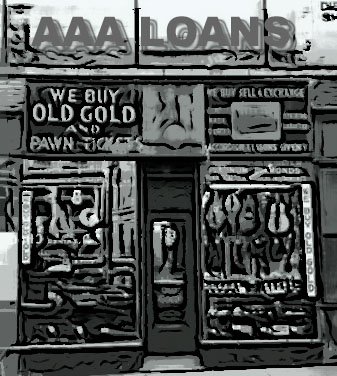
I’d obviously hit a nerve. And again I was distracted by the comely granddaughter and feeling like the big bad wolf. “Yeah, sure, everyone knows him. Triple A Pawn, Max Feathers proprietor.”

Two bigger bug eyes you couldn’t find in the cartoon featurette at a Saturday matinee.

“Feathers?” he moaned the name as if was a curse. “Max Feathers was disbarred from the League of International Gem and Diamond Merchants. Feathers is a fraud! A cheat! A scoundrel! A confidence man!”

I shrugged. “Yeah, but he knows his diamonds.”  From the shade of crimson creeping up toward his popping temple veins I figured my bird in the hand had flown the coop. But I was saved by an angel.

Ads40

“Herr Doktor” she said, and why he wasn’t charmed is beyond me. He raised an eyebrow as if being spoken to by a woman was highly irregular. “Zayde,” she also invoked the protection of the old rabbi, “I have a suggestion if you will indulge me.”  Of course I was enchanted and I’d have to say she’d been doing pretty good at learning her English. Old Joe gave a nod lifting his hands to Soloman as if asking what’s the harm?

“Just as Mister Ask has brought only one page, perhaps we can allow him one,” and she smiled at me, “pebble to verify with Mister Feathers. In exchange for the book he will receive more.” She beamed, proud of herself although gramps wasn’t so sure.

Soloman didn’t like the idea as soon as she started talking and when she was done he liked it even less.  “Nein, nein. What if he did not return? He has gained an item of value and we have nothing but a scrap of paper! Does he take us for fools?”

The thought had crossed my mind. If the diamond was real I could be on a boat to Havana before anyone was the wiser.

“It was my suggestion, uncle, and I have a feeling that Mr. Ask is in a situation unlike any other he’s been in before.”  She came at me with her eyes as if she were boring in and I began wondering when I’d last changed my underwear.  “Here he is with the opportunity to make a considerable amount of money, enough to give him a vacation from his dangerous profession for a very long time. I don’t think that he would pass up that opportunity.”  Now she was appealing to my mercenary side: with a load of dough I could ditch this burg, maybe move to Hollywood, reconnect with Grace. “Furthermore, I think that Mr. Ask is a man of honor, a man of his word who would not consider betraying us.”  By “us” I was sure she meant “her.”  And the way she said it, the implications were tempting. I just wanted to see how committed she was to her scheme.

“There was an expression I liked to see after I’ve made love to a woman—shock and pleasure. I recognized it immediately because it was so rare of an experience.

“Thanks, miss, I forget your name, but you are correct. I am a man of my word. Once I shake on a deal it is solid. And if what I have is that important to you,” and I meant to her, “then it is just makes good business sense for us to conduct this exchange, the book for the rocks.”

Soloman sniffed like something didn’t smell right. He squinted one eye at me as if trying to view me from a different angle.

“Like the girl said, I take one diamond to Feathers. He looks it over. If he gives the ok, I get the gravel and you get the book. No one breaks a sweat.”

Soloman was shaking his head. He didn’t like the logistics. “How will we make the exchange? The Rabbi nor I cannot go abroad.”

“What? I ain’t asking you to leave the country.”

“No, no we have to be careful in this city. We have enemies. We cannot be seen in public.”

“How about a coupla your minions. They look like they can handle themselves.”

Soloman gave a sour look. He didn’t like that idea either.

“How about the dame?”

Ads41

There was an expression I liked to see after I’ve made love to a woman—shock and pleasure. I recognized it immediately because it was so rare of an experience. That’s what was missing in my life. I could tell by the demur smile that she liked the idea. Shock for being put into that position and pleasure because it felt good.

Soloman sputtered like he’d inhaled something down the wrong way and coughed till his eyes bulged holding on to the edge of his desk for fear he might fall down.  Then it translated into, once he caught his breath, “absolutely not, impossible, I won’t hear of it.” And in a couple of other languages, I couldn’t be sure.  In a way it made the objection international, like we were hemmed in by little flags stuck in a map. The old rabbi looked uncomfortable, color coming to his ears, and lowered his eyes.

But she knew her mark. “Zadye,” she began, “if you send Mr. Ask with your men to the Feather Diamond place he will become suspicious and might not want to verify the authenticity of . . .” and looked directly at me, “the pebble.”

The rabbi had lifted his eyes. They asked what are you getting at?

“Now if I were to accompany Mr. Ask to the pawnbroker, he would not be suspicious because we could pose as betrothed,” she smiled, pleased with herself, “and we are inquiring as to the authenticity of the stone.”

It sounded so simple. And naive. I know, I’d been there.

Soloman wasn’t buying it. “Nien! Nein!” He was pacing now. “It is not safe! Who knows who we’re dealing with.  This might all be a ploy. He could be working for them. To kidnap Rebecca!”

“Herr Doktor, they could not have known that I would be involved. I didn’t know it more than a minute ago when I suggested it.”

“Rebecca, my child, these are cruel and evil people we are dealing with. They are clever, insidious.”  His head wagged back and forth like a dog’s tail.  That meant no.

“Listen, Hair Doctor, do we have a deal or don’t we? Otherwise I’m wasting my time here.”

“What you suggest is impossible. How do I know you have what you’re claiming to have in your possession? That it is authentic. What else is there beside this single page? What am I buying?”

“First of all, Doc, suddenly you’re worried about authenticity. You musta thought that this page was the hoot’s snoot otherwise you wouldn’ta asked me into the inner sanctum. You were gonna offer me a bag of gravel in exchange for the book. That’s how authentic you made that single page. I get it. You think you need to be extra careful because you don’t know me from Adam. But lemme put you straight. This book usta belong to one of Yan Kovic’s goons, a guy by the name of Yamatski who is now swimming with the fishes in the East River. How I got it is a story we won’t get into. Just let’s say I got wet and the pages only suffered a little water damage around the edges, but everything is still readable because it was written in pencil. It’s an address book and doubles as a wallet, about the size a cigar case, leather like one, and it’s got a wraparound zipper that closes up the three sides.” I don’t know why I felt I had to claim the wallet was empty, but I did. “There are pages of what look like names and addresses like I said, and what looks like some kinda codes. I couldn’t figure out what they said because my Buck Rogers decoder ring got lost in the mail.  Besides they mostly was all in that serialic writing.”

Now the doc and old Joe were trying to say something to each other without opening their mouths.

I gave them a nudge. “I saw you flash the old stink eye when I mention’s Kovic’s name. He’s from that part of the world you were showing me on the map, am I right?” I pointed to the map on the wall. Mrs. Peabody would have been proud of me—maybe something did sink in after all.

“Yes, the name is known to us. America is truly the land of opportunity when a petty thief in his home country can become an American gangster and make more money than even the President of the United States. Is that what you call democracy, rule by the petty?”

“He’d be part of this secret society then, the Black Hand, I’m guessing.”  Even the frill took a breath in fright at the mention of the name.

Soloman nodded glumly. “They are a network of thugs and murderers who prey on the vulnerable, the fringes of society and culture where the powers that be often look the other way. We are the mercy of their genocidal schemes. There is a chance, a slight chance, that the address book will provide information that will aid us in our resistance and thwart their aims. These fascists are drunk with power! The Black Hand must be stopped from terrorizing our people!”

“You don’t have much of a choice then, do ya, doc. Me and the bird take a rock over to Feathers’ shop. He scopes it and it’s either deal and you get the book you wanted or no deal and I get a free ride downtown in the company of a beautiful young woman.”

Soloman made a face that made him look like he had exclamations points all over his mug!!!  “They are real, that you can count on, and I would expect delivery of the address book upon verification!”  He glanced sideways at the rabbi whose head reluctantly nodded yes. “Simon and David will drive you there and make certain there is not a. . .double cross, as you American’s like to say.”

I shook my head. “The girl is right. Max sees a couple of mugs with us, he’s gonna smell something fishy. Just me and her. Nothing to worry about. Max won’t bite. You just watch.”

“Nonetheless, they will accompany you and stay discreetly hidden but nearby. Should the need arise, Rebecca, do you know what to do?”

“Surely my father must have told you of what I and my troop of Red Kerchiefs did in the hills above the city.”  Before Soloman could interject, she said, “We secured the parachute drops and parachutists and hid them from the authorities.”

“Ja, ja, we are well aware of your exploits. And that is why you are here in the United States. To keep you safe, out of harm’s way. You are, after all, Rabbi Joseph’s great granddaughter and ark of his ancient family line. Your father was foolish to leave you behind.”

“I stayed with my mother, to fight in the resistance.”

“And sadly she is no longer with us.” Soloman lowered his head. “And you are here in relative safety.”

“I would have stayed behind! I wanted to avenge her death! Instead you had me kidnapped and brought to this country!”

I had to step in. “I hate to breakup this family tussle here, but missy, if you want to get your revenge, the quickest way is to get going with the plan.”  I coulda asked her if she had a backup plan but this was looking like taking candy from a baby. “Only I need to use the can before we head out.”  With the quizzical looks they gave me I had to add, “My bladder’s lapping at the overflow valve.”  Still nothing. “The facilities, the toilet?”

Ads42

They rolled a big Packard around to the front entrance. The tailor’s daughter didn’t look a bit like the kid in Soloman’s study. She was wearing a dark wool skirt and a beige blouse with a collar tied in big bow under her porcelain chin, a russet three quarter length wide lapeled tweed coat, and a tiny brown Robin Hood peaked cap with a black and red band propped jauntily on the luster of her long auburn hair. Looking like she just stepped off the silver screen, she smiled at me as I held the door open for her, long lashes blinking a beguiling thank you.

1940-packard-1Two mooks sat like bowling pins in the front seat of the Packard—they couldn’t have been more than sixteen years old—the one who looked like he was working on a ‘stache driving. The other one had a head of curly hair no hat, even the bucket he was wearing, was going to hide.

I sat in the back seat with Rebecca. I’d made a detour to the water closet before we left, pretended to make my business all the while wedging Yamatski’s address book up behind the gravity flush water tank. Then I flushed.

I even felt a little flush—sitting next to this specimen of female flesh had worked up my blood. It was her feisty nature as well as her good looks that kept my interest. She, however, was interested in only one thing. Learning how to talk American.

“What is this stink eye?”

“Uh well,” I was at a loss, “it’s just kind of one of those looks you give somebody who says something that spills the beans when they shouldn’ta.”

“Beans? In the kitchen? I see, they have spilled a pot of beans and you are giving them this look that you are disappointed, no, angry! Angry eye, yes?”

“Yeah, angry, maybe the evil eye without all the hoodoo voodoo behind it.”

“ Hoo-doo voo-doo. This is your American tall tales you are telling me. I have heard that they are told and one must be cautious because they have flam flam. No, flim flim, that’s it!”

She had such a little pink innocence to the scrunch of her nose, such a determined set to her lips, such an intense gaze I couldn’t decide if I wanted to kiss her or laugh in her face. “Flim flam.”

“Yes, that is what I said. And this stink to the eye. It smells, it emits an odor, and you are . . .threatening with it? No, you are giving them this, this. . .stentsch with the look of your eye! Yes?”

She had my mind taking corners I didn’t even know were there and it was making me dizzy. I was on the verge of asking her if she wanted to see Niagara Falls because I was about to change my name to Niagara and I was falling for her. But it would have just added to the confusion. I didn’t want to look like a dumbo so I said, “The look says you can see the reek rising up off them and lets them know that you can.”

She cocked her beautiful head to one side as if considering the explanation “And who is this Buck Rogers, an associate of this Feathers man?”

I don’t know why all this wasn’t covered at Ellis Island but all of a sudden I was feeling like a tour guide at the Statue of Liberty. “Naw, Buck Rogers, he’s this guy who flies around in a rocket to other planets in outer space. In the funny papers, the brats, you know, the Katzenjammer Kids? He’s on the radio, too, and in the movies, that Olympic champ, Buster Crabbe plays him.”

Her pretty little forehead gave a frown. “This is your flam flim, yes?”

She was a real doll, and I can’t say that I’d ever met one before, not one like this, not putting on a front, acting tough or sexy, but smart as a pistol, and from what I could see, some terrific gams. She caught my gaze and pulled the hem of her skirt to cover her knees. “I am curious also. A hoot’s snoot, this is more of your filmy flam?”

“Naw, just something I made up. ‘don’t give a hoot’ means ‘I don’t care,’ and ‘snoot’ means ‘nose,’ kinda like I’m ‘thumbing my nose’ and I just threw them together because they sound the same. It’s jive talk, that’s all.”

“A whole other American language?

“You might say that. It’s what you might hear on the street, you know from the hep cats or if you hang out in jazz clubs.”

This is something you can do in American? I am unaware.”

“Well, yeah, you can if you’re good at it”

“And you are good at this, what would you call, improvisational arabesques, verbal flourishes? Maybe you should be a writer.”

“Yeah, I thought about it once.”

“What happened?”

“I ran out of paper.”

She laughed, peals of amusement filled the entire car, and even Mr. Hair had to look over his shoulder to make sure we weren’t being unruly.

“Ah yes, I understand,” her eyes widely innocent,  “Jive talk, a kind of argot.”

She wasn’t going to get me with that fancy word because I knew exactly what she was talking about so I said, “No, it ain’t like them snails you eat at fancy French restaurants.”

This time she chortled behind her gloved hand and her eyes gleamed merrily reflecting the neon night of the passing streets. “Mr. Ask, I find you extremely charming which belies your rough exterior and manner. This is a most wonderful and informative conversation.”

“Pigs who speak Latin, another one of your American tall tales, yes?”

The beam of her smile blinded me and tangled up my tongue. I didn’t know what to say, besides my heart was in my mouth and I didn’t want to spit it out and hand it to her because that would definitely be uncouth, and what little couth I had I wanted to wait and use at the right time so I said “Yeah, I was thinking the same about you, and maybe sometime you and me, we could, ah, get to know each other a little better, you know, over a cup of coffee or a drink, I could take you to a club, go dancing, hear some jazz.” I put my arm across the seat behind her and moved in her direction. “We probably got a lot in common. I mean, you’re doll and I’m a guy.”

She shifted toward the door on her side and I felt something hard poke against my ribs. I looked down at her hand in her coat pocket and up into that determined look I had found adorable earlier now steely and uncompromising. “You are suggesting what it is called a date, but not from a palm, one agreed on ahead of time on a calendar. I don’t think my father would approve or allow it. Our supposed engagement is a ruse, Mr. Ask, nothing more. Please do not try to make more than it is. I am fully capable of taking care of myself.”

I shrugged and sagged back to my side of the bench. I felt the breeze of being blown off followed by the disappointment of being wrong about a dolly again, I always end up leading with my chin wearing my heart on my sleeve, and falling for a herring, the operator behind my eyes putting me through to a wrong number.

Ads43

I’d been shot down before so I laughed it off. “I dunno why you need any help from me. Your English ain’t so bad.”

“Yes, but it is my American I must improve. I am curious again for a word. What is this ixnay?”

“Nix, no. What you just said to me, notta chance. It’s pig Latin.”

“Pigs who speak Latin, another one of your American tall tales, yes?”

“No, it’s for real, something we used to talk in the neighborhood among us kids. Only thing I still use is ixnay, anybody who’s ever spoken it still does, that and amscray.”

“Amscray, I have not heard.”

“It means scram, beat it. . .go away?”

“I must remember these, scram, beat me. . . ? I am still confused as to why you speak the Latin of pigs as a child.”

“Well, it ain’t really Latin, it’s a made up language, kind of a code so you can say stuff that somebody who don’t know the igpay ain’t gonna understand, like if they ain’t part of your gang, see?”

“Now I am very confused. Are you being truthful or are you with me making a toy?”

“No, it’s all true. Now I wasn’t as good at it as little Stevie Silverman, he’s the guy who taught igpay to most the guys in our gang. We called him “Stubby” cause he was so short. He could hold whole conversations in pig Latin. Once he recited the preamble to the Declaration of Independence in pig Latin to history class. Mrs. Peabody didn’t know if she shoulda been shocked or amused, but it got Stubby beat up on the playground for being a showoff anyway.”

“This is fascinating. How is this pig Latin spoken?”

“It’s pretty easy. You take any word, like say ‘pig’ and you move the first letter of the word to the end and add ay, a-y, so pig becomes igpay. Or, like scram, you take all the letters bunched up before the a and move them to after the m, add an ay, and you get amscray. Simple.”

“That is easy for you perhaps, but let me see if I grasp. Pig is igpay. If I wanted to say  pig Latin I would say igpay. . .atinlay?”

“Yeah, I suppose, if you wanted to say that. Usually we just said things like amscray or uckday.”

“You would say a duck? For whatever purpose?”

“That is a very short question to a very long answer, but the gist is ‘keep your head down.’ Unray was always popular when we seen the cops coming.”

“Run, am I correct?”

pawnshop“Yeah, I think you got the hang of it. Try this one on for size. Ouyay areyay ayay ishday.”

“I am at a loss. It sounds like an infant’s babble.”

“It means ‘you are a dish.’”

“A dish? What is a dish? Do you mean a place setting. . . ?” She blushed, “Oh, porcelain.”

I laughed “No flies on you.”

She brushed at her shoulders, suddenly alarmed, “I hope not!”

I laughed again. And we were there.


Next Time: Max and The Empress’s Cucumber

The Last Resort 24-25

by Pat Nolan

Chapter Twenty Four

FIVE MILLION DOLLAR BABY

“I have always been bait.”

Chandler moved his head slightly from side to side in disbelief. “That’s crazy.”

smoky cafe“Why are you so surprised? It’s just another name for seductress.” Albért Picón, the French poet and lecher had pointed that out to me over a glass of Pernod in a smoky café on the Left Bank years ago when I was still actively playing that role.

“You had no idea that I would get your phone message telling me to meet you out here because you said you had some new information on the Fashwalla murder. Good thing I was out this way when my secretary paged me. You saw how angry Blackie was when he left.  Don’t let the white hair fool you.  I don’t think you realize what kind of danger you’re putting yourself in.”

I shrugged and toyed with the ice in my glass.  “I’ve been bait since I could walk.  Practically every woman is.  When you’re made out to be the pinnacles of feminine perfection, in the eyes of men at least, it becomes obvious that you’re a lure. It’s even a quality you can have. Allure. Rich men want you gracing their arms like expensive jewelry. Men are impotent in the face of real beauty. And if they’re not, they’ve still got mother issues to resolve.  As for Blackie, I can handle him.”

Chandler smiled wide enough to give himself dimples.  “You think you’re tough, don’t you?”

I shrugged.  “I think I’m a realist.  At least about what I’ve been, what I’ve done.”

“Well, you might be a little out of your league here.”  He was serious again, little ridges of worry crinkling his smooth Asian forehead.

“Blackie’s been eavesdropping on the conversations in the Grapevine office. You can sit in his workshop and hear everything that’s said upstairs. I made up that story about new evidence to get him to follow me out to the coast.”  I bit the straw and wet my whistle with a little of the diluted soda. “I had to prove to myself that I was right about him. I still don’t know how he managed to beat me out here. Unless he was on his bike before I got to my car. . . .” My reasoning was beginning to sound farfetched, even to me. “But he’s involved in all of this, I’m sure of it.  I just haven’t figured out how.”

Chandler worked up another smile but this time it had a smug edge.  “Not even close.”

There was something about Chandler Wong that I liked, but I also got the feeling that I baffled him. He was certainly intelligent, but guy enough to always want to be right.  I gave him my extraordinary smile and “You’re probably right, but help me out, just to satisfy my curiosity.”  A three quarter profile and a little lean forward.  “Where am I wrong on this?”

He started to speak but then exhaled a slight chuckle.  He shook his head and stared down at the edge of the cracked formica table. “I can’t.” And then up to meet my gaze.

His mistake.  I let my eyes do their special pleading.

He folded like a bad poker hand. “Alright, Hollis Ryan, or Blackie as you call him, is involved but probably not in the way you think.” He leaned forward and lowered his voice. “He was a potential witness in the Fashwalla murder.  He happened to be here, at the Chicken Fish, on that day.  But then this is one of his hangouts.  As he said in his statement to Detective Santos, he was inside and not outside.  He only saw the food on his plate and the beer in his glass.”

“That sounds like something he’d say.”

Chandler cleared his throat, annoyed perhaps.  “Blackie was known to Detective Santos when Santos was a deputy assigned to the Timberton substation. There had been an incident with Mr. Ryan and in the course of a background check, it turned out that your antique shop owner had once been arrested for murder. He copped a plea and had it reduced to manslaughter.  He did time. This was down south, long before he moved up to Corkscrew County.”

My surprise must have shown.

“It turns out that Mr. Ryan was muscle for a small time pimp by the name of Tommy Perro.”

Tommy Perro.  I mouthed the name to myself.  That was the name of one of the men in the photo at Blackie’s workshop.  One of the old motorcycle gang.

“Perro branched out into dirty movies.  Ryan doubled as one of his actors as well.  He killed another male actor on the set of a shoot.”

This was a little more than I’d bargained for, but I was fascinated.  “Don’t stop now.”

That chuckle again, with a slightly embarrassed shy boy sideways glance at me. Quite charming. “When Fashwalla’s brother came forward and confessed we thought we wouldn’t need the testimony of witnesses so that part of the investigation was shut down.  His recanting of the confession and the similarity with the killing at Franklin’s Resort put a different spin on things.  Again Ryan’s presence at the resort raised a flag but his alibi checked out so now he’s just what you might call a person of interest.”

“I think Blackie has something to do with the murders.” I tried not to sound too self-righteous. “Why aren’t you investigating him?”

A frown greeted my insistence. “Well, for one, I’m not in charge of the investigation.  It’s the District Attorney’s call.  He’s the one who sets the schedule.”  By the way he said it, he obviously wasn’t happy with the progress of the case.

“Anyway, we’re after bigger fish.”  Chandler sat back in the booth and considered me with a serious stare. “This cannot be repeated to anyone. Do you understand?”  He lowered his voice to a near whisper.

I nodded dumbly and leaned forward.  “Of course.”

“After Fashwalla’s brother recanted his confession and retained the high priced attorney. . . .”

“Preston Carmichael.”

“Right, we started taking a closer look at all the players.  A common thread emerged.  Both Fashwalla and Franklin owned old rundown resorts.  The other thing in common was that they had both refused to sell their properties to Ramparts Corp, a real estate developer with international connections.  It turns out that there’s been a steady rise in title transfers of ranch land and old resorts in the county, the majority being grabbed up by Ramparts. We’re pretty sure there was coercion in more than a few of the sales.  A lot of the property is being converted to vineyards.”

“Let me guess.  Montague Winery.”

“Very good. Ramparts, it turns out, is an umbrella corporation fronting a lot of questionable enterprises and headed by a certain Thomas Montague.”

“Tommy Montague?”

“Senior.  His son is the executive in charge of the Winery.  But what’s more interesting is the fact that Montague is not the old man’s real name.”  Chandler paused.  He must have realized I was mesmerized.

“Perro. He used to go by the name of Tommy Perro.”

The bus boy rattled past with a cart full of dirty dishes.  A group of couples had entered the dining room and were assessing the best place to be seated. The waitress waved them over to the tables overlooking the crashing surf with a handful of menus.

“Which brings us back to Blackie.” I thought my point had been made.

“This is much bigger.  Sex trafficking, child pornography, wire fraud, extortion, money laundering.  We’re working with the Department of Justice, State and Federal.”

I wasn’t all that convinced.  “I still think there’s more to Blackie than meets the eye.”

Another chuckle, this time a rolling rumble of pleasure.  “My contact at Justice is an old college friend.  He asked about you last time I spoke to him.  He saw an item on TV that said you lived in Corkscrew County and he wondered if I had ever met you.”

“And you have!”  I wasn’t surprised.  “What a coincidence!”

“He reminded me that you had once been kidnapped and held for ransom.  I remember reading something about that when I was in law school!”

“That was quite some time ago.”  I didn’t like thinking about it, let alone talk about it.

He frowned as if the math was not adding up.  “Not that long ago.”

waitress-main“Maybe it just seems that way.”  Now I was uncomfortable.

“You were held for ransom by some radical feminist group, right?  And what was the ransom?  Two million dollars?”

“More like five million.”

The waitress appeared suddenly, pad in hand, casting curious glances at each of us.  She was an older woman with weary road worn features and dyed blonde hair gathered in a bouquet of split ends on the top of her head.  She extracted a long orange pencil from the haystack.  She had on a blouse that had once been whiter and a wrinkled faded black skirt.  A nametag partially covered the discoloration of an old stain over the left breast.  It read Guess.  She looked at Chandler and then at me.  “Well, now that we’ve decided on a price, are we ready to order?”


Chapter Twenty Five

IN THE SWIM

I had four men staring at me and two of them were pointing, but not with their fingers.

The day started innocently enough. The heat wave of the past several days had subsided to a mere swelter. I’d received a call from Rikki inviting me to a swim party at the home of an acquaintance. The temperatures had been pretty unbearable and with the exception of my lone foray out to the coast, I’d contented myself with iced drinks, an electric fan, and the occasional cold shower. The thought of spending time in water that didn’t come from a pipe was tempting. There was a problem though, and that’s what had dissuaded me from going to the beach before. I didn’t have appropriate swimwear. I had plenty of stylish bikini and mini thong bottoms but no tops. I’d spent most of my time on beaches in Mediterranean countries where tops were optional so they never got packed or were simply abandoned in boutiques. Hard to believe that in all the years I’d lived near the Corkscrew River I’d never dipped in a toe.

laloRikki’s friend was someone he’d known in Hollywood, Nathan Thiele, the legendary stage and screen production designer, now retired. So Rikki had informed me over the phone. I wouldn’t have had a clue. Nat’s partner was a young Haitian man named Lalo with the cutest accent and the smallest most revealing swimsuit, which, with the speed removed, left only the oh to the imagination. Rikki and Wallace were both conservatively attired in clashing neon Hawaiian shirts and rather unimaginative baggy swim trunks. Nat himself looked like he might be preparing to go on safari. Nat’s cabin, as he called it, was a dreamy redwood Arts & Crafts gem with a wide sweeping deck sitting at the top of an apron of manicured lawn that ran down to the sandy shore and the water’s edge.

I had shown up a little late, having resolved my dilemma by grabbing an old scarf from my scarf drawer and fashioning it into a halter top. I thought Nat’s eyes were going to pop out of his head. He’d pointed a trembling finger at me. “That’s not a Héléne Mouchoir, is it?”  I admitted to that possibility, after all I did own some of her creations. And he’d replied, “Well, in that case, I wouldn’t think of allowing you to go swimming in a priceless designer scarf!” Rikki spoke up and suggested that I just go topless. His words were “After all, we’re gay guys, we’re not gonna get all weird at the sight of your tay-tays.”  I considered it and thought why not, it’s perfectly natural in the civilized world. There was an embarrassed silence while they all stared at my breasts. Finally I had to say, “Lalo, Wallace, it’s not polite to point.”

Nate and I compromised. He had a large rubber raft that featured inflated back and arm rests. There was even a place for my cocktail. After spreading lotion all over myself, I climbed on, launched the raft away from shore, and settled back. I donned my Fabregianni sunglasses and trailed a finger in the cool green waters. What there was of a current steered me down away from the dock into the shade of bays and willows on the opposite shore. The little alcove of shade was a perfect place to observe the world even if it was just four guys posing, posturing and frolicking in the shallows. I was like Cleopatra on her barge, the queen of the Nile with sun-dappled ankles.

The tranquility of water, I’ve always appreciated the tranquility of water, especially in the Mediterranean where the sparkling azure sky reflecting off the undulating expanse was magical. Just the thought of it transported me there. And the beach at Sabbia Negru, the black sands where Xuxann bent over me, nipples as dark and plump as rum soaked raisins.

Only at first did it ever seem like captivity. Protective custody, the council of nine had called it. I had been confined to a small cell for possibly a week, disoriented at first, while my captors decided whether I was to be trusted. Eventually I was allowed to roam the grounds but only if accompanied by one of the nine. Most of the time it was a woman named Xuxann. She was my guide as well as my guard. A tall, lithe North African with a mass of dark ophidian locks, Xuxann was what the poets meant when they referred to Abyssinian maids.

Once I’d concluded that I was not in eminent danger, I took stock of my situation. By the angle of the sun crossing the sky, I figured that the rugged landscape faced south. My first guess was that I was on an old Roman estate tucked among pines, cypress, and aromatic cedars on a rocky hillside overlooking a cerulean sheet of sea. The main house, a large villa roofed with red tile, was perched on the edge of a table of land above the seashore. A winding stone stairway cut into the face of the cliff led to the beach below. My cell was among a collection of wood and stone structures on the hillside behind the villa indicating that at one time it might have functioned as a monastery and that my tiny austere room may have once been a monk’s. There were places on the compound where I wasn’t allowed, and on certain occasions I was held incognito in the confines of my room. Otherwise, I was free to roam and explore.

Behind the compound, thick nests of conifers populated the creased gray stone face of an ancient mountain. On the west side, an old Roman arch led out to a treacherous rock and thorn-bush infested ravine. A frothy white stream tumbled over smooth rounded boulders on the east side of the property and dropped over the edge of a precipice onto the beach below. Xuxann called it Alleca Diva, the milk of the goddess.

The two of us often spent the early part of the day running along trails and paths of the wild flower carpeted cliffs, pausing to absorb the enchantment of a particular sea-shaped formation or gaze over a sheer decline at the rocks milling in the surf. It was then that I developed my passion for running and the love of freedom and power it gave me. We ran or jogged everywhere we went, especially on the wide stretch of black sand from the waterfall on one end to the jetty at the other. We were like wild mares galloping through the shimmering surf. When the sun rose to its peak at midday, weary from our exertions, we splashed in the refreshing turquoise waves.

I remembered sitting on that beach and watching as Xuxann rose out of the sea, a blast of setting sun framing her like a golden shell, a dripping wet wide-hipped silhouette creating a presence as well as an absence that pulled me in and yet repulsed me. I sensed her strength, a power representing all of life.

minoan“All of life,” spoke the shaman, stretching out her arms to indicate the world of the hillside garden outside of her ancient stone abode. Xuxann had repeated the words in French as I was not yet accustomed to the old woman’s coarse dialect.

It had been a little over a month after my arrival that Xuxann took me to the top of the property and through a small stone arch that was obviously much older than the Roman period one. We had followed the path along the milky stream up to a terraced garden at the top of which a primitive stone house commanded a wide view of the sea and the shadow of a far off shore under a mantle of cloud. Out in front a tall woman with a halo of wiry silver hair framing a perfectly symmetrical face greeted us. Her eyebrows were still as dark as her eyes and her nose drew a narrow angle down to her welcoming smile. She wore a colorful tiered skirt and a little embroidered sleeveless vest joined by a macramé clasp of gold thread in the middle. That was my introduction to Trayann, the old woman of the mountain.

How I arrived in this dream of peace and beauty was nothing short of a nightmare. I’d just finished an exhausting round of fashion shows and soirees and was on my way to Budapest to meet with the Prince for an opening of East European modernist art at a gallery he sponsored. I had asked the driver of my limousine to take the old road between Prague and Budapest. We had just passed through a small farming village and into a forested region. It was getting on toward evening and I had just begun to nod off. I opened my eyes when I felt the limo come to a stop. A black Mercedes blocked the two-lane road and a green panel truck had pulled in behind the limousine. I was trying to make sense of what was going on when the rear door was yanked open and I was pulled from the back seat. A pungent rag was forced over my nose and mouth. As I faded into unconsciousness, I made out two burly square-headed men in black hoods. It didn’t seem odd that I would think Bulgarians. I awoke next when I felt a pin prick on my thigh. A man with a narrow face and a dark moustache glanced up from the syringe in his hand. The walls were red, the bed was red, the chair was red, the floor was red, the light was red, and then everything went black. I was jolted awake by a violent crash and found myself strapped to a gurney in the back of what appeared to be an ambulance. I heard a commotion, shouting, outside the vehicle, and then gunshots. I told myself, this is it, this is the end. My ears rang with more excited yelling in a language I couldn’t quite make out, this time closer, at the doors to the rear of the vehicle. It seemed curious that they were women’s voices. My heart beat harder, faster, and I lost consciousness again.

A pale white light edged with red insinuated itself through my closed lids. I opened my eyes to see the face of an older woman bent over me with a look of concern and relief. She straightened up and I saw that she wasn’t alone. There were eight other women of varying ages surrounding my bed in a large white room. I had known females of great physical beauty in the fashion business, but it was mostly skin deep. A beauty of wisdom and compassion emanated from the assembled women, generating an aura of calm benevolence. I thought I’d died and gone to heaven.


Next Time:  Enter S.A.P.H.O, Société Anonyme Protectrice des Hétaïres et Odalisques


The White Room—II

by Helene Baron-Murdock

mt oly1Donovan followed Delphi Road up the lee side of Mount Oly. The narrow paved road wound around the base of the coastal peak still shrouded in fog. Vistas of dry yellow grass and oak woodlands, dotted in the near distance by grazing animals, stretched on either side broken occasionally by a trailer home set back under a cluster of trees or a barn and some farm machinery. Driveways were indicated by rural mailboxes and posts marked with large red reflector buttons. Some areas included sheds, corrals, and chutes indicating working ranches. Then a manicured hedge, stone or stucco wall and large wrought iron gates spoke of money that could afford to live that far out and not worry about the commute.

Baxter had remarked when he’d pulled up to the fire station, “They got you driving an unmarked patrol ride now?”

He could have offered the explanation that his assigned vehicle was in the shop for routine maintenance. “It’s a nostalgia ride,” he’d answered instead. And that it was. It certainly rode heavier than his sedan and just tapping the accelerator said that there was more under the hood, much more. It had taken a few miles on his return to the coast to get used to the dashboard mounted shotgun in his field of vision again. And the heads-up display mapping the road ahead along with speedometer and a variety of indicators that he didn’t want to bother deciphering, made him feel like he was in the cockpit of a fighter jet, or what he imagined that would be like. The radio was a new high end digital voice activated model that did just about everything except talk for you. At least the rig was still equipped with a push bar on the front end, a pit bull bar to tactical drivers, that hadn’t changed. It was a familiar space, nonetheless, one he had not been in for many years, more high tec than he remembered, but the sense of consoleidentity as law enforcement, of purpose at its most elemental was still there. Gadget porn was not his thing yet there was also something to be said for its effects.

Curious, he’d checked his console mounted computer for the County GIS topo before leaving the fire station. There in big red letters was the warning, Restricted Area, hashed over with wide red bars obscuring the topographical features along with the small print Federal Code citation. He’d switched to satellite image and encountered a blur no matter how far down he zoomed in. It didn’t make any sense, and that bothered him.

Baxter had laid out an old site map of Camp Minnoknosso across his desk. “This is what it used to look like before the feds took over.”

Donovan followed as the fire chief’s finger conducted the tour. “These squares here represent the tent platforms scattered along the main trail kinda like in a maze. Back then, the site had a functioning fire lookout staffed by the gals here at the high point in a structure they called the Mini-Tower. It’s the highest point on this part of the coast. Unobstructed view all the way to the east side of the county. Of course, no telling what it looks like now.”

“When did all this happen? Was it in the news? I don’t recall it being disseminated in operational bulletins.”

“Oh, probably ten or so years ago. There were protests by the local tree huggers when the land was handed over to the feds.”

Donovan remembered vaguely. He’d been in Narcotics at the time and his focus had been mainly on gangs and drugs. “No one’s been up there since? Folks around here must be curious about what they’re doing up there.”

Baxter shook his head. “There’s some who’ve tried. Met with dogs and armed patrols on ATVs. Scared the bejesus out of most of them. They’ve got a helipad up there and occasionally there’ll be heavy duty whirlybird traffic flying in and out. Road up’s been blocked and according to some when you get up close all of a sudden your GPS and digital gadgets stop working or go glitchy like there’s a big electronic shadow over the whole area. Once you get past the second cattle guard up on Delphi you’re playing by their rules. Some folks report being harassed or being run off the road by security vehicles.” Baxter didn’t hide his disgust. “It’s like someone took a dump on your living room rug and won’t let you get near it.”

Donovan had just bumped over the first cattle guard as the road began winding up through a switchback toward the summit. The landscape had changed from rolling yellow hills to a mix of a tangled foliage, pine, and fir into whose upper reaches the coastal fog lapped. He encountered the first yellow and black road sign, Not A Through Road and Turnout Ahead. He passed the turnout and a few hundred yards later rumbled over the second cattle guard. There followed a red and white sign with a more forceful message Do Not Enter Restricted Area Ahead Authorized Personnel Only. The road had stopped climbing and around the next curve he encountered the barricade with the same red and white sign and an even more dire warning Lethal Force Authorized. The road at that point was too narrow to make a three point turn and he had to back up to a break in the thick roadside understory.

restrict1Once he nosed the front end into the gap, he saw that it was the beginning of an obscured fire road. He steered around the rutted unpaved path several hundred yards in to a clearing and a cyclone fence topped with razor wire. Along with an identical red and white sign threatening lethal force and the specific Federal Codes that allowed the authority was another official sign.

He stepped out of the sedan, following with his eye the fence as it disappeared into the woods on either side of the gate, and walked up to the sign. Large letters stated Defense Advanced Research Projects Agency followed below by an even larger set of initials, IDA, the acronym revealed by the third line as Institute for Dynamic Application.

“There’s a name that says a whole lot of nothing,” he muttered to himself. Requisite fine print followed, restating the prohibition on trespass and the likelihood of death by armed guards.

Before getting back into his rig and returning to Delphi Road, he took a picture of the sign and the fence with his smart phone, and peered through the diamond links at the road continuing further on into an overarching tunnel of trees.

He didn’t noticed at first, occupied with mulling over the implications of the restricted zone, on auto pilot as if he were in his own sedan. The heads up display was showing just a row of meaningless blank squares, the GPS was flashing like it was trying to establish a link to a signal, and the readout on the radio console scanned furiously from one end of the band to the other.

He’d had the training on the new Voicue radios. “Manual” he spoke. The readout scanning stopped and showed a set of red zeros. “Channel 3,” and the frequency flashed on the display once and then read Channel 3. Nothing but static from the speakers. So much for high tech. At least the mirrors were still working.

Donovan glanced in the rearview again. Now the hint of vehicle he’d noticed earlier as a vague shadow rounding a bend in the road behind was gaining steadily and soon was close enough to make out the blocky front end of a government issue Suburban. Then it was in tailgate range.

He maintained his speed anticipating the road ahead while considering his options and any evasive action he might need to take. He gripped the wheel. With a high powered roar, the dark hulk overtook him and passed close enough to cause his ride to shudder and almost leave the pavement. Then the tinted window Suburban was in front and no longer accelerating as the road made a gentle curve in its decent into the switchbacks before the straightaway to the valley floor.

Another glance in the rearview and his suspicions were confirmed. There was another Suburban drawing up behind. Whoever they were, they weren’t playing around.

“10-BOY-9, what’s your 10-20” It was a long shot. The SUV behind was closing fast. He was about to try the coast deputy again when riding a garbled static wave came the transmission, weak, distant, “. . .oy-ni. . .elphi. . .oad. . . .” Whatever he’d said,  it sounded like Greek to him.

Donovan started down the switchback in among stands of eucalyptus, thick foliage on the upside and the downside of the narrowing road. The vehicle in front was slowing, brake lights flashing. He was in a pocket, and it was making him sweat. The adrenaline had kicked in. “BOY 9 confirm you are on Delphi Road.”

“Victor 5, affirm,” the radio crackled.

As the vehicle ahead started into the outside turn, he closed on it. “Code 30. I’ve got two 11-54’s, one on my tail and one hindering forward progress. Code 3 to my location. Evasive tactics in progress.”

bullbarHe took a breath. How long ago had he taken that advanced tactical driving course? Something you don’t get much practice doing once you become a detective. He closed on the bumper, aiming the bull bar for the right rear. Current speed dropping to 30 MPH, he had to hit it just right. Activating the lights and siren as a distraction, he wheeled a sharp turn. The bull bar made contact with the outer edge of the Suburban’s bumper. He accelerated, pushing the large SUV off center to deprive the rear wheels of traction. The Suburban went into a skid, swerved to regain control but only ended up facing the way it had come, what Tac drivers euphemistically called a “committed lane change,” both side wheels dangling over the steep drop.

There was enough of a gap on the inside heading into the next turn. Low branches and  shrubs scraped the driver’s side, snapping the sideview mirror. Donovan pulled a hard right as he approached the bend, engaged the emergency brake long enough to fishtail, cant on two wheels, and come down facing an unobstructed road. Punching the accelerator he skidded around the last switchback at top speed. Out in the clear he had a good view of the road snaking its way up the gentle curve of the coastal hill and the flashing lights of the patrol unit speeding in his direction. A quick glance in the rearview and it appeared that his pursuers had given up the chase.

He pulled over to the side of the road adjacent a sagging rusty barbed wire fence holding back a large field of tall dry grass. And waited for the patrol unit to arrive. He was shaking, breathing hard, the adrenaline sending his heart rate through the roof. His eyes were watering and he had to step out of the vehicle. He held the door open and used it do steady himself.

Royce pulled his unit to a stop and shut down the flashing lights. He stepped out and jogged over to Donovan. “You alright? What’s going on?”

“I had a couple of dreadnaughts on my tail, they tried to get me in the pocket.” He took a breath. “And they weren’t at all friendly about it.”

Royce was nodding, a look of concern in his eyes. “You gonna be alright?”

Donovan laughed. “Yeah, yeah. Just as soon as my asshole unpuckers.” He laughed again, looking back the way he’d come. “I’m good.”

“I thought you knew about the top of Mt Oly being off limits. That’s why when I heard you going 10-8 to the old Girl Scout camp I thought I’d head up to warn you off. But I was all the way down at Argo State Beach coordinating with the new Park Ranger down there.”

“How long’s the restriction been in effect?”

Royce shrugged. “I don’t know. It was that way when I took up this post. That’s what it says in the procedure manual for the coast district. The feds want hands off, no peeks, no peeps, their personnel handles everything up there. It’s their own private country. They get to do what they want and how they want was the way it was explained to me by the coast deputy I replaced.”

“Baxter says there’ve been complaints of threats, intimidation by their security?”

“Yeah, I’ve taken complaints, sent them on for review. Next thing I know the complaint’s been dropped. Word comes back to me to warn potential hikers in that vicinity to steer clear. The ranchers round here know the drill so I don’t hear from them too often.”

Donovan’s head shook in disbelief. “No, this is bullshit. I’ll be looking into this.”

Royce smiled in return. “You mustn’t be planning to retire any time soon. You’re gonna run into an avalanche of paperwork that’ll keep you in the courts till you’re pushing a walker and dragging an oxygen cannister.”

“You’re probably right, but what the hey, if I’m on my way out, why not stir a little shit, light a fire under some bureaucrat’s ass.”

Royce’s radio squawked. “10BOY9, status of VICTOR5?” He keyed his epaulet mic, “Code 4.”

“Request VICTOR5 10-21 SAMOCEAN1,” dispatch returned. “10-4.” Royce answered and then to Donovan, “Sounds like the Sheriff wants a word with you.”

“Won’t be the first time,” Donovan said as he looked up from his device. “Finally got an ID on the flyer, and not coincidentally, a frequent flyer.” He held up his device so Royce could see the booking photo. “Dwight Carey.”

“That’s Ike! Or ‘Ikey’ as he’s known at the Sparta Creek Trailer Park.”

“You know him?”

“I’ve had interactions with him, 5150, disorderly conduct mostly. He gets a little manic when he’s off his meds. Not violent. just what you might say, too happy.”

“That scares people.”

“Apparently.”

“I’d like to go to Sparta Creek Trailer Park and ask around about Ike Carey. Interested in being my tour guide?”

“Follow me.”  Royce started toward his unit. “Aren’t going to call the boss?”

“Why bother, he’s only going to chew me out,” Donovan said, getting back behind the wheel, “and after what I did to his brand new tactical rig, can’t say I’d blame him, but I’m not interested in getting my ass chewed over the phone. If it’s going to happen, I’d rather it be in person, and later in the day. Otherwise, I’ve got work to do.”

trailer-parkThe gravel road into Sparta Creek trailer park ran along a wide dribble of questionable water between sand dunes and beach grass, and was accessed from the paved road that wound up to the parking lot of the overlook popular with hang gliders. A few bright colored sails had drifted down onto the wide beachfront as he turned off the coast highway and followed Royce down the narrow track into the nest of antique trailers, really tiny homes, rusty camper shells, and lean-to’s, most supplemented with one or more blue tarps. He didn’t want to guess how many vehicle violations were parked in front of the dilapidated aluminum dwellings. A profusion of surf boards, either atop of dune buggy type vehicles or leaning against old board fences, spoke of the occupants’ preoccupations.

Royce said he wanted to check up on the victim of the domestic from the previous day. Being a long time resident, she would likely know Ike Carey. Her name was Heron. “Like the bird,” he’d added.

The woman who stepped out from under the awning of the trailer had a young face struggling to stay that way framed by a tangle of gray and blond deadlocks. A bruise burnished one cheek and above the other, a pale blue eye contained by purple lids engorged with blood. Skinny tan arms clustered with tattoos jutted out from an oversized  mauve down vest and across her chest, pale thin lips turned downward, licked by a nervous tongue.

“I wondered where he’d got off to.” She dropped her head and shook her mane, “So sorry to hear. I just thought he’d gone off with Dad.” She paused to give Royce a meaningful look. “Besides I had other things to deal with.” And addressing the deputy “They gonna let Billy go? I ain’t gonna press charges. He was just mad cause I loaned his car without asking.”

“Dad is his father, his next of kin?” Donovan wrote in the battered notepad he carried in his jacket pocket.

“Uh, no, don’t think so, just an old guy everybody calls Dad, kinda looks like that poster of Einstein, you known, big floppy moustache with the tongue sticking out? He stays mostly up in the parking lot with the hang glider schleppers. And so does Ikey. Kinda funny, they are almost like father and son, the way I’ve seen them argue and get on.”

“Schleppers?”

“The guys the hang gliders hire to carry their gear up to the highest point above the overlook.” She pointed up toward the top of the cliff, scrawny wrist bespangled with bracelets. “We call them schleppers, kind like Sherpas, because they have to cart the sail outfits up a skinny dirt trail to the higher point and help with the setup. Course they can’t go to the highest point because of the dogs and barbed wire.”

Of course. The other residents knew about as much as Heron did about Ike Carey, or even less. They all agreed that Dad did not live in the trailer park but showed up every once in a while to watch the hang gliders. He didn’t have wheels according to one resident because he had asked to borrow his Datsun station wagon. “Said he’d give me a hundred bucks, he just had to get to Santa Lena for a doctor’s appointment. I wanted his driver’s license for collateral. That stopped him. But the next day, he shows up with this out of State drivers id. So I said what the heck, a hundred bucks is a hundred bucks.”

“Remember what the name on the id was?”

“Well, it wasn’t Dad, that’s for sure. Daniel something. Something weird like Ailess or Ailuz, I don’t know.”

Donovan sat at his desk where the real work got done unlike how it was portrayed on TV cop shows. Detective work was essentially paperwork, scanning the details, sorting the facts, gathering the evidence. He had a friend who was a program analyst for Social Services and she had put together a timeline spreadsheet template for him. All he had to do was fill in the cells with approximate times and dates, add a few notations, and look for any patterns that might emerge.

Working backward, 12 to 36 hours prior to the discovery, calculating the dates which placed the TOD within a two to three day period. He had interviewed a few idling schleppers in the overlook parking lot. No one had seen Dwight Carey for at least two days prior to his drowning. When informed of the young man’s death, one of the schleppers had mentioned something about going into a “white room.”

hangglidingHe consulted his notebook. A “white room” was the interior of a cloud and a very dangerous place to be as it was disorienting to the hang glider. Entering the white room was also a term used to signified someone who had died while hang gliding.

Had Ikey gone into the white room and had that led to his demise? Not unless someone else had also been in the white room and gut shot him. The bullet had entered the abdomen above the hip. Whoever shot him would have been positioned lower or below the subject assuming that he was in the air and attached to a pair of homemade wings. He examined the stick figures drawn and numbered in his notebook. Number one was the victim, number two, the assailant. Obviously #1 was in the air. Where was #2 standing when he or she fired the shot? He had a hunch.

Quizzing the schleppers and the gliders waiting for what they called “magic air,” Donovan had learned that there were three spots to launch from: the overlook by the parking lot where mostly beginners were “chucked off the hill” by their instructors, and the next highest point on the bluff overlooking the beach some three to four hundred feet further up where the “sky gods” might “glass off” and no “launch potatoes” were allowed. The third level was for the advanced “airborne,” as they were sometimes called, high enough that sky gods or goddesses might catch a “bullet thermal” and “speck out,” but it was no longer accessible because it was in the restricted zone. That had been the most frequent gripe in all the interviews, that the government was spoiling their fun.

The phone on his desk warbled. He stared at it, distracted. He had a good idea who it might be and let it go to voicemail.

Looking over Carey’s arrest record, he came across an old booking entry, almost a dozen years prior. His first, in fact. Resisting arrest at a demonstration by the local environmental group, EAF, Earth Action Front. He’d required hospitalization and had been released on probation. There’d been a lawsuit, dismissed. All subsequent arrests had been for disorderly conduct, nothing criminal.

Donovan paused his finger on the keyboard and then with a few deft pokes called up the EAF file. It was password protected. He paged back through his notebook. He wondered if they had changed the password since the last time he’d accessed a secure file. They hadn’t.

The EAF dossier was mostly routine. Court orders for communication monitoring, CI interviews, a few audio files indicating listening devices. He was surprised at the extent of the coverage. EAF (the D is silent, as the cops liked to say), once a fairly radical militant group, had not made the news cycle in quite some time, now mostly affiliated with more mainstream enviros, limiting their activities to leafletting and demonstrations. He scanned the membership list. No surprise, there was Dwight Carey’s name.

Dad had come up in the interviews about Ikey with a few of the schleppers. No one knew where he lived. Not at the trailer park, that had been confirmed. He’d show up out of nowhere. Some suspected he was camping up the hill near the old waterfall. He always dressed in the same ratty blue coveralls. Ikey followed him around like a lost puppy. Nor had Dad been spotted in the last few days. One of the schleppers had mentioned that he thought that Dad might have been going somewhere. The last time he’d seen him was the same morning that Ike’s body had been found. He looked different, too, shaved off his moustache, slicked his hair back, might have even cut it, wearing a sports jacket and slacks.

Donovan stared at the notebook where he had written Daniel “Dad” Ailess followed by a question mark. What was his connection to Ike Carey’s death, if any?


Next Time: What Is EAF, Who Is IDA?

Contents Vol. I No. 6

Introducing Dime Pulp Number Six

Dime Pulp, A Serial Fiction Magazine, Issue Six features a large chunk of Colin Deerwood’s A Detective Story, getting into the meat of the first act as Lackland Ask, Confidential Investigations, finds his lawyer gunned down in his office and narrowly escapes the same treatment as he seeks out someone to decipher the Cyrillic writing in the dead hood’s address book only to encounter a breathtaking young frail who just might be the key to untold riches, at the very least enough scratch to let him live comfortably in a style he is not normally accustomed to.

Helena Baron-Murdock’s Hard Boiled Myth featuring Weston County Sheriff’s Detective Jim Donovan, is called out for an unidentified body found in the surf which turns out to be a possible homicide. In the course of his investigation he learns of a top secret installation in the coastal hills that draws his suspicions in a multipart short story titled The White Room that involves hang gliders, environmental activists, and a clandestine government agency.

Further in the adventures of Lee Malone, former super model and now small town reporter for the Corkscrew County Grapevine, who has just missed witnessing a murder and now has been called in to be deposed in the original murder she almost witnessed in the continuing chapters of The Last Resort in which she is suddenly reminded of her party girl past while meeting hostility from someone she thought she could trust.

Also in this issue, a sneak preview of a new serial novel slated for future publication in these hallowed (hollowed?) pages as we lift the veil on a Steampunk adventure by nouvelle roman author, Phyllis Huldarsdottir featuring the indomitable Captain Lydia Cheése (pronounced Chase), Airship Commander, whose quest for her father. the legendary Commodore Jack Cheése, might just take her around the world titled Cheése Stands Alone .

Dropping A Dime, News, Views, and Reviews in which yours truly, Perry O’Dickle, aka The Professor, offers up his considered and considerable opinion on the fine art of pulp fiction, reviews of crime fiction, old and new, as well as news of upcoming publications features a book review of Max Allen Collins’ Double Down from Hard Case Crime.

Dime Pulp continues its crime spree with the serialization of two full length novels, The Last Resort and A Detective Story, as well as another short story based on Greek myths under the rubric of Hard Boiled Myth.

If you’ve made it this far, go ahead and follow the links below to reading entertainment with the serial contents of Volume One, Number Six

  —Perry O’Dickle, chief scribe
and word accountant


TLR banner321Deep in the redwood wilds along the Corkscrew River, someone is shooting neighborhood dogs. The year is 1985 and Lee Malone, former fashion model, queen of the runways from Paris to Milan, once dubbed the most beautiful woman in the world, now a part-time reporter for The Corkscrew County Grapevine, is looking for a story to sink her teeth into. When Lee finds the owner of Kelly’s Seaside Resort brutally murdered, it leads her on an adventure that includes a mysterious gray van, another murder, extortion, pornography, sex slavery, and a shadowy organization of militant feminists known as SAPHO.  In the process, Lee Malone’s notorious past catches up with her. 

The Last Resort, Chapters 1-3
The Last Resort, Chapters 4-6
The Last Resort, Chapters 7-10
The Last Resort, Chapters 11-13
The Last Resort, Chapters 14-20
The Last Resort, Chapters 21-23

HBMbanner421

Greek myth is rife with murder, mutilation, cannibalism, mayhem, and the ever popular incest.  Weston County Sheriff’s Detective Jim Donovan of the Violent Crimes Unit wouldn’t know a Greek myth from a Greek salad, but if he did he would find some troubling similarities to the cases he’s investigating.  Revisited as crime fiction are the strange death of Hippolytus, the agonizing death of Heracles, the slaughter of Penelope’s suitors, the Fall of Icarus,  the sparagamos of Orpheus, and the cursed lineage of Pelops.  Helene Baron-Murdock’s Hard Boiled Myth taps into the rich vein of classical literature to frame these ancient tales in a modern context.

Long Shot I
Long Shot II
Notification Of Kin
Valentine’s Day I
Valentine’s Day II
The White Room I

ADSbanner421

Lackland Ask is the name. ‘Lack’ to my friends, ‘Don’t’ to those who think they’re funny. You might have seen my portrait on the cover of Black Mask, the crime friction magazine. This is my story. It starts with a blonde. This kind of story always starts with a blonde. The brownstone was on the Westside and easy enough to find. So was the mug’s yellow roadster. It stuck out like a new shoe in a cobbler’s shop. I was being a sap again. I woke sitting straight up, sweat pouring out and over me, my undershirt drenched. I was going to have to change my shorts. Some dream. They worked me over, demons in dingy cable knit sweaters. They pumped my arms and peered in my face with eyes as black as eightballs. He handed me a hat. “The pièce de résistance.” He said it like he was serving me dessert. The gat fell from his hand and clattered across the marble floor. It looked like something that might have survived the battle at Ypres. 

This kind of story always starts with a blonde
“I was being a sap again.”
“Some dream”
“demons in dingy cable knit sweaters”
“He handed me a hat.”
“The gat fell from his hand”

Sneak Preview

cheesealonevinex8

In March of 1892, a Scotsman by the name of Arthur C. “Artie” Doyle was hanged by the neck until dead after being found guilty of a string of grizzly murders of prostitutes in Whitechapel. At that moment, history veered off its presumed course and headed in a direction all its own in which the Great War never happened because the Kaiser was afraid of offending his grandmother, Queen Victoria, whose life was prolonged by the wonders of biology. The peace of her reign, known as the Pax Victoriana, despite some major environmental disasters, has lasted 180 plus years keeping as many Victorian airs as possible while making accommodations to bio technology. Follow Capitan Lydia Cheése (pronounced Chase), Airship Commander, into a world in which the biological sciences overshadow the physical sciences. Steam engines dominate most modes of propulsion. The skies are filled with lighter-than-air craft and railroads cover most of the globe. Internal combustion engines are banned except in the non-aligned nations of the African continent.  Can Lydia Cheése find her father, the antigovernment turncoat and radical, Commodore Jack Cheése. Will her quest take her around the world in less than 80 days or is it a lifelong journey?  Catch your interest? Below is a sample of how any of that might occur in an alternate world never before explored.

Cheése Stands Alone

dime-reviews-hdrFrom Hard Case Crime  nominated for  numerous honors since its inception including the Edgar, the Shamus, the Anthony, the Barry, the Ellery Queen, and the Spinetingler Award with titles that include Stephen King’s #1 New York Times bestsellers, Joyland and Later; James M. Cain’s lost final novel, The Cocktail Waitress; lost early novels by Michael Crichton (writing under the name “John Lange”) and Gore Vidal (writing as “Cameron Kay”), comes Max Allen’s Collins’ second outing  in the Nolan series , continuing the saga as Nolan and his young, comic book-loving partner, Jon, match wits with a skyjacker and a vigilante slaughtering the members of a Midwest crime family.

Dime One
Dime Two: Come Back, Nolan, Come Back

Dropping A Dime Two

Come Back, Nolan, Come Back

MAX ALLAN COLLINS’ MASTER THIEF, NOLAN, RETURNS IN ALL-NEW EDITIONS OF HIS CLASSIC ADVENTURES 
DOUBLE DOWN | Max Allan Collins | May 25, 2021 | Trade Paperback | 352 pp
 ISBN: 978-1789091410; e-ISBN 978-1789091427
US $13.95; CAN $18.95 

FULL DISCLOSURE: Hard Case Crime provided the review copy of Double Down by Max Allan Collins after these editorial offices begged for any kind of review material, press releases, etc., to post in this column, essentially filler in an effort to give the impression that we here at Dime Pulp are dialed in and ready to drop a dime on the fine art of pulp fiction (which may sound to some like an oxymoron but more on that later).

Hard Case Crime might have even thought that they had merely tossed a crumb our way but it had the effect of opening up a whole new box of donuts. At any rate, the classy pulp tome with its appropriately garish cover remedied an editorial unfamiliarity with Max Allen Collins’ writing and his master thief and heist maven, Nolan. 

Hard Case Crime has built a solid inventory reissuing some underappreciated and long forgotten authors of the paperback pocket book explosion of the 40s and 50s as pulp magazine fare evolved to standalone crime novels. Reprints of Collins titles make available a later iteration of popular adventure/crime novels of the waning decades of the 20th century in what might be termed “pop pulp,” a style readily adapted to graphic novel storyboard treatment. This is not to overlook their emphasis on the work of Donald Westlake, Laurence Block, or the terrific Gregory MacDonald twofer riff on O. Henry’s The Ransom of Red Chief reissued as Snatch. As well, Hard Case has published a few excellent original works, including Von Doviack’s Charlesgate Confidential.

DDownThe great thing about Hard Case Crime paperback novels is the nostalgic eye candy of titillating covers in that postwar Madison Ave advertising style that brings to mind twirling the wire kiosks of paperback novels in the corner pharmacy over by the greeting cards display looking for something to jump out, something lurid, scandalous, colorful at least, in the hues of rebellion. Essentially these Hard Case Crime paperbacks work as artifacts of taste and nostalgia, a repackaging of an idealized past in the history of crime/men’s adventure literature as a popular mode of storytelling. Although the genre will likely remain popular, actual volumes of bound pulp paper with the eye catching covers may become specialized objects much like vinyl LPs, especially with the advent of the more cost effective eBooks. As I write this, public libraries are discarding their mass paperback collections in favor of the less space demanding digital formats. 
Hard Case Crime titles are also repositories and reiterations of some incredibly terrific writing and imaginative storytelling. The writing style of the hardboiled pulp genre is sourced in the Anglo-American idiom with its laconic exaggerations, understated asides, snappy comebacks, and quaint argot. They are in the main imaginary constructs, based to some extent on experience, but passing themselves off as the real world for reading entertainment. Often situations are farfetched and downright improbable but nothing good writing, deft imagination, and diverting dialogue can’t paper over to render the illogical and unlikely readable. What makes the pulp genre an art is the diverse skill of its practitioners.

Max Allen Collins’ genre specific Nolan novellas have a certain tongue-in-cheek air to them that seems more pop than pulp, particularly with their emphasis on comic book collecting as a kind of meta-referent. Pop fetishizes consumer objects for their cultural resonance whereas pulp is a category of materials used in the manufacture of entertainment literature just as film specifies the medium of cinema. Pop pulp subjects relive imagined circumstances through the objects of their obsession, fantasizing situations in which they can partake in tandem or take on the persona of their fixation. Collins clearly defines his protagonists, Jon and Nolan, as separate individuals yet Nolan doesn’t exist without Jon nor can Jon indulge in his fantasy without Nolan. Or, at the very least, the poster of steely-eyed, rock-jawed Lee Van Cleef that eerily resembles, who else, Nolan.

Also, by way of disclosure, there is a certain amount of resonance to the Nolan referent around the editorial offices of Dime Pulp as it is the family name of one of our contributing authors, Pat Nolan, who is also the brain behind this mad pulp caper as well as the man behind the curtain at Nualláin House, Publisher—Nualláin being Gaelic for Nolan, donchaknow, in tribute to that jolly leprechaun of prose, Flann O’Brien (of The Third Policeman fame) whose real name was Brian O’Nolan or O’Nualláin if you’ve an ear for Celtic speak. It goes without saying that Nolans are a pretty fecund lot and can be found, other than their home turf, from Quebec City to Buenos Aires. Most often it’s a last name, but sometimes a first, especially in the Appalachians and rural South where, as indentured servants and criminals let loose in the new colonies, Nolans headed for those hills as soon as their feet hit dry land after a long and horrific Atlantic crossing. Throw a rock in those parts and you’ll no doubt hit a Nolan, first name or last. Nolans are everywhere, but for Max Allen Collins, Nolan is a mononym—it isn’t his first or his last name, but both, and as such underlines his iconic role as the heroic figure.

Double Down was released by Hard Case Crime in May of 2021 following the April release of Two For the Money. As the titles suggest, each volume features two Collins novella reprints from his Nolan series of the 1970s and 80s. The last two volumes, Tough Tender and Mad Money, will follow in 2022 and 2023. Collins opens with a useful introduction to the genesis of the Nolan series, admitting inspiration from the Parker novels of Donald Westlake’s pseudonymous Richard Stark as well as reiterating a firm denial that he was copy/parodying Don Pendleton’s The Executioner series whose main character is a similar sounding “Dolan.”

These are Max Allan Collins’ fledgling works written years before he wrote Road to Perdition, before his Quarry novels were turned into a Cinemax original series, before he was named a Grand Master by the Mystery Writers of America or ghosting the Mike Hammer novels for the late Mickey Spillane. Set against a ground of pop culture nostalgia for comic books, old movies, and golden age cartoons, the stories work as an accessory after the fact to their illustrated four color context. Nolan is the master thief, and young Jon, the comic book aficionado, is the sorcerer’s apprentice. Collins’ narrative style, a casual conversational ramble, allows veracity to the coincidental material that makes up the underworld of criminals or at least reprehensible lifestyles somewhere in the middle of Iowa where,  not so coincidentally, Collins attended the university and its fabled Writer’s Workshop.

In the first novella, Fly Paper, Jon and Nolan fly to Detroit to commit their righteous payback heist where a comic book convention is also being held and which allows plenty of opportunity to nerd out on comic book references, and of course, since they’re flying, there has to be a skyjacking, DB Cooper style. From this story alone one would get the impression that being a thief, albeit an honorable one, is harder work than might first appear.

Collins uses as epigraph at the beginning of the second novella, Hush Money, a quote from 30’s bank robber, Alvin Karpis, to give an inkling of insight into his Nolan character: “A thief is anybody who gets out and works for his living, like robbing a bank, or breaking into a place and stealing stuff. . . .” On the other hand and in direct contrast to Nolan, “A hoodlum is a pretty lousy kind of scum. He works for gangsters and bumps off guys after they’ve been put on the spot.” In this light, Nolan is a working man, not a mob connected mug.

The midwestern locales of Cedar Rapids and Des Moines in the Nolan sagas provide an entirely appropriate set location for the revalorization of a regional culture hero, the bandit, the bank robber, as in the likes of the James Brothers. The Daltons, and half a century later, Machine Gun Kelly, Pretty Boy Floyd, John Dillinger. Nolan has worked managing Mob assets, but he is not a mobster, and he would like to break free from the association but lacks the leverage or is thwarted or suffers a setback which in itself is the MacGuffin to these tales. He wants out of the game, independence, but will the game let him?

The Nolan stories are narrated matter-of-factly, a backstory always close at hand to smooth over any unexpected inconsistency, told with a faux naïve garrulousness that renders the character of Jon as Nolan’s foil, and in some respects, his Watson. The depictions are spare and not averse to cliché, sketched with minimalist efficiency. The characterizations with the exception of the protagonists are also austerely presented. Unfortunately the “love making” and opposite sex encounters have not weathered well the decades since they were originally conceived (pardon the pun).

As we’ve advocated before here at Dime Pulp, the novella is the ideal vehicle for crime fiction and these two novellas by Collins don’t disappoint in their succinct story arc leading to resolutions that invariably beg for further opportunities to thieve and adventure in the spirit of radio/movie serials of the forties, and four color comic books.

In evolutionary terms, comic books and pulp magazines stem from the same source: penny dreadfuls, the National Police Gazette, and sensationalist yellow journalism of the 19th century. Following WWII, pulp novels and comic books emerged as the go-to reading entertainment while monthly magazines lagged into obsolescence and radio dramas morphed into TV shows. The mood and thrust of the postwar pulp novel reflected the upheaval and brutality engendered by another world war. Crime novels of that time depicted unflinchingly the cruelty and disillusionment of desperate men and women with a darkness and fatalism termed noir. Revenge and lawlessness became more prevalent as themes such as injustice must be avenged took prominence. Yet Justice is blind and wields a double edge sword and in the end, the realization that vengeance is a poor substitute for justice. To enter into that self-devouring daisy chain is enter the lair of the viper, Vendetta ®. Literary depictions of violence tend to be one dimensional, fleeting, and unsatisfactory. It is the lead up to the act, and its consequences, that grabs attention as all violence enacted on the screen or on the page is symbolic no matter how well depicted or orchestrated in its intent to trigger the amygdala’s flight or fight response. A successful effort is often judged by how well and how often the symbolic can undermine the suspension of belief and present the reader with real chills. To be able to accomplish such a feat takes imagination and not a little sadism.

In contrast to the violent vengeful dark despair found in the postwar pulps novels, there was a kind of daffy innocence to prewar pulp fiction appearing in monthly magazines, often as cliff hanger serials, and selling at newsstands. And it is this particular tenor Dime Pulp would like to echo even though it is yet another marginal drop in the meta bucket. Serials were a large part of pulp fiction’s appeal, working class epics on the installment plan for one thin dime. As a serial pulp magazine, Dime Pulp, as in the pulpy days of yore, hopes to offer not only high quality serials but garishly appropriate cover renditions. Pruriently attractive colorful cover art and its arousing effect in stirring up the imagination was a main selling point on the newsstands. A fact attested to by Dime Pulp’s A Detective Story by Colin Deerwood as the story is entirely predicated on the author fixing his gaze on the cover of a vintage issue of Black Mask magazine and improvising time travel to an imagined place where such a detective might live, say in the years leading up to Pearl Harbor. As a serial it has unlimited potential for unfolding from the pages of pulp to the pages of panels. As well, the nominal policiers of Helene Baron-Murdock’s Hard Boiled Myth find themselves with a seemingly endless and labyrinthine source of material gleaned from Greek myth and tragedy. Although the stories are episodic, the thread follows a sheriff’s detective toward the end of his career and into retirement. The Last Resort, A Lee Malone Adventure, Pat Nolan’s pastiche of the private eye genre turned on its head (buxom babe with brains vs. splinter faced chisel chin with a breath that could pickle a squid), was based on a character from a short story published serially in a weekly newspaper. The novel too, published in 2012 by Nualláin House, Publishers,, was written in installments over the course of a few years for a monthly writing workshop, and now returns to publication in its serial roots.

Lastly, just to reiterate, in case it was not made previously clear, the aim of Dime Pulp, aside from garnering a few discerning readers, is to indulge in a speculative fiction make-work program for the benefit and amusement of the author(s), and to partake of the imagination. You are welcome to come along for the ride.

That’s my story and I’m sticking to it,
Perry O’Dickle for Dime Pulp

Cheése Stands Alone—Sneak Preview

 by Phyllis Huldarsdottir

~Sneak Preview~

The World of Lydia Cheése

In March of 1892, a Scotsman by the name of Arthur C. “Artie” Doyle was hanged by the neck until dead after being found guilty of a string of grizzly murders of prostitutes in Whitechapel. At that moment, history veered off its presumed course and headed in a direction all its own in which the Great War never happened because the Kaiser was afraid of offending his grandmother, Queen Victoria, whose life was prolonged by the wonders of biology. The peace of her reign, known as the Pax Victoriana, despite some major environmental disasters, has lasted 180 plus years keeping as many Victorian airs as possible while making accommodations to bio lydcirtechnology. Follow Capitan Lydia Cheése (pronounced Chase), Airship Commander, into a world in which the biological sciences overshadow the physical sciences. Steam engines dominate most modes of propulsion. The skies are filled with lighter-than-air craft and railroads cover most of the globe. Internal combustion engines are banned except in the non-aligned nations of the African continent. Brazil has an emperor and holds an empire of its own covering much of the southern landmass, with Sao Paulo as one of the most modern cities in the world, far outstripping Newer New York and Greater London with its lively futuristic culture. The North American States fractured in the early 20th century after the revelation of the imposter president Cleveland. The Supreme Court under Justice White then ruled that the Southern States had the right to secede as they did nearly half a century previous and promptly left the Union to form the USSR, United Slave State Republics. Subsequently the Eastern Seaboard was renamed Newest New England with the Boston Bubble becoming an independent city state much like Newer New York. Albert Einstein was the name of a famous Swiss watchmaker, Henry Ford was tried for sedition for the rebellion at Belle Isle and faced a firing squad, and Guillaume Apollinaire was the last mayor of Paris before its annexation, along with Amsterdam, into the sphere of Greater London’s influence. Can Lydia Cheése find her father, the antigovernment turncoat and radical, Commodore Jack Cheése. Will her quest take her around the world in less than 80 days or is it a lifelong journey? Below is a sample of how any of that might occur in an alternate world never before explored.


Dirigible1ch

Captain Lydia Cheése (pronounced Chase), one hand ungloved, read the memo with a frown.  Her airship, Orinoco III, had been grounded.  An Aerosud cadet stood by at attention in a blue glossy visor cap and the impeccable dark blue company tunic with the distinctive sky blue piping at the collar.  Lydia placed her thumb on the bio wax pad of the message board and then pressed her print at the bottom of the white message square. The cadet knuckled a salute.  Captain Cheése returned it perfunctorily, and with a sigh.  She watched the young woman exit her suite at Watson House, name after the famed inventor of propulsion biology, Dr. John Watson, as she peeled off the other maroon porskine glove. “Pshaw,” she said with gritted teeth. G. B. Pshaw was her supervisor, nemesis, and constant irritant at Aerosud HQ.   She caught a look at herself in the mirror above the marble mantle of the faux hearth as she unfastened the gold frog at her throat and sloughed off her Aerosud officer’s tropical dress tunic.

AIRSHIPIII
What she saw did not please her, a fringe of auburn hair, brow knit into a frown, grey eyes staring back in anger.  Not again, she thought.  Two groundings in as many weeks, and her suspension only just overturned.  Tossing her tunic onto her grandfather’s vraisther smoking chair, she glanced at the stack of documents on the side table.  In particular, she eyed the communication she had set aside the day before when she had been too preoccupied with preparing for her flight out of Lesser London to give it much more than a cursory glance.  Addressed to her, handwritten in green ink, that in itself unusual, on what felt like a slip of parchment. “Parchment, really?” she said aloud. It was just one of the many come-ons and false leads she had received since she advertised a reward for information as to proof of life of Commodore Jack Cheése, her father and the brilliant airship engineer who had disappeared many years ago, around the time she had entered the Air Academy for the freshman term.

The slip of parchment, or faux-par, she wasn’t going to believe that it was actually real, gave an address on Baker Street, Old London, current day, and specifying two in the afternoon.  As it was almost four, she grabbed her walking coat and went quickly to the door.  “Impulsive!” she imagined her mother saying.  But no, not impulsive, an intuition she felt compelled to act on.  The preciseness of the hand that had shaped the words “I can help you” tipped her in favor of the certainty of her hunch.

The elevator man gave a bow of recognition as she stepped on, and slid closed the door grill.  A quiet whirr of machinery brought them down to the main floor lobby.  Off to one side, framed by potted finger palms, was the entrance to the lounge frequented by her fellow lighter-than-air officers.  Collectively they were known as litharians and the ships they flew were commonly known as lithairs.  She would have been welcome at any table or congregation of hale fellows well met as she was known among them for her cutting wit and outrageous pronouncements as well as the sincerity of her companionship.

Watson House, where Lydia Cheése maintained a permanent suite, was a hostel catering to the Navair trade, especially their officer class. Crews of ships officers, pilots, navigators, drive engineers also known as chemists represented dozens of navair companies doing business at the aerodrome on the far western edge of Lesser London lodged at Watson House on layovers from continental and trans-oceanic flights.  They flew passenger rigids and cargo semi-rigids, rigs and semi-rigs to those in the trade.  Their companies were from all over the flown world. Large luxury passenger transports like Rajair and Anglair. Canamair operated both trans-Atlantic passenger and cargo service, as did Aerosud, Lydia’s employer, based out of Sao Paulo.  They offered service to the major ports in Greater London which included Paris, Amsterdam as well as Lesser London where Lydia was now feeling, in a word, ruffled and in no mood for companionship.

The doorman greeted her opening the door, and she crossed the threshold into the torch orange glow of phosphorescent plasma lamps lighting the perpetual brown haze of Lesser London. Her grey walking coat was cut to the knees of the darker grey of her uniform culottes.  Her boots were pointy, at heel and toe, and made of supple maroon psuedo, matching her porskine gloves, and fastened along the calf by large pearlite buttons. They made her appear taller, and she was already tall. On her head was a jaunty little cap of ribbons and silk made to look like a tiny bird had nested in the soft pile of auburn hair.  She strode down the wide granite steps to the cobbled walkway where the carriages for hire and their drivers waited.  She chose one at the head of the line and spoke the address on Baker St.

“Would that be Baker St. West, mum, or would that be Baker St East?” the driver asked over his shoulder, whip testing the haunch of the blocky beast of burden, an equlone, specifically bred for urban drayage.  Like mules, they could not reproduce and their life span was less than five years. Small as a pony but as strong as a full grown natural equine, they were cheaper to maintain.  Unfortunately, as they approached their end date their pace became slower and slower, signaling a reluctance to hasten their passing.

Lydia glanced at the address on the parchment impatiently.  “It just says Baker St.” she said as if that settled it.

“Well, mum, Baker St is a very popular name here in Double L, Lesser London to you, and as I said, there’s East and West Baker St as well as Baker St South, Baker St North, and South Baker St North. Of course there’s also Upper Baker St and Lower Baker St.  Upper Baker St Southwest. And Old Upper Baker St.  If you understand what I’m saying, mum.”

Lydia restrained herself from knocking the man off his bench.  “Take me to the intersection where all these Baker Streets meet!”

“Ah, yes, mum, Baker Square.”  And under his breath, “should have said that in the first place.”

After what seemed like an interminable time, the plodding near death equlone carriage brought a fuming Captain Lydia Cheése to Baker Square, a rather nondescript roundabout, so not literally a square, from which each of the various Baker Streets radiated like the spokes of a wheel. The driver hunched over, shoulders to his ears, as if feeling the heat of her rage.

She disembarked and paid him.  “Here you are, sir, a five Victorine, and not a regina more.  You have hindered me long enough.”

row houses Baker’s Square was hemmed in by blocks of apartment dwellings designed to look like rowhouses, stacked one atop the other.  They were all the same whichever way you looked.  Their sameness caused her a momentary claustrophobia.
A figure approached, steadily, methodically.  When it stepped out of the shadows she saw by the cut and buttons it was a constable.

He smiled and saluted her.  “Be of any service, mum?”  He was a big man. Lydia looked directly into his eyes.  She knew what the tattooed lines radiating from the corner of his left eye meant.

“Yes, perhaps you can.  I seem to be unable to find this particular address.”  She showed him the parchment.  “Is there not simply a Baker St without any of the bothersome directional appendages?”

The constable studied the square she held out to him and scratched his chin.  “Yes, of course there is.”

“Then please be so kind as to direct me.”

“In Old London.”

“Old London, but. . .” It then occurred to her.  Old London, not Lesser London.  Old London, underground London, the London that Lesser London was built upon.

The Constable pointed to the iron gate set in the granite base of the monument at the center of the Baker Square roundabout.  “Tours to Old London just now closed up for the evening.  Too dangerous to go down there now, without a guide, and you being a lady and all.”

“Constable, I will have you know that I served as an ensign at the siege of the Bushwackers.  I know what danger is!”

“Aye, mum, I was in the PanAm Wars meself.”

“Yes, that is evident from your eye tat.  You were with. . . .”

“The Lost Brigade, yes, mum.”

“You are one of the brave, and I respect that.  However, I must to Baker St.  I am already late!”  Lydia strode toward the iron gate.

“It’s not safe, mum,” he called after her.


Dirigible1ch2

At the bottom of the concrete steps joining the cobblestones of Old London the bacterial-sodium lamps dimly lighted shades of grey and black as flat as house paint.  A man in a dusty worn gray shirt, pants, and shoes stood against an almost identically gray wall beside a weathered gray real wood produce cart upon which were displayed row upon row of bright though somewhat desiccated illegal Valencia oranges.  Lydia was about to ask directions when she saw the street name in plain view attached to the side of a dingy gray brick façade.  Real brick, not that faux coral that was used now almost exclusively for building exteriors. She’d always been under the impression that Old London was shuttered after daylight hours yet a goodly press of people, all dressed in the varying shades of gray, black, and brown of their surroundings, shuffled past like shadows, busy about their business. Brighter light splashed out onto the cobbles from storefronts, and distantly, music and singing could be heard.  There were also clots of men clustered around porn boxes listening to the endearments of courtesans.  Others stood in doorways and eyed passers-by.

Lydia proceeded down Baker St searching out the house numbers, peering into alcoves and letting her eye follow the buildings’ truncations as the support to Lesser London.  At least here you could see some of the sky bathed in the rust orange of plasma light between the roadways and the avenues joining the elevated sectors like the bridges over the fabled canals of Venice.

Her forward progress was halted somewhat by the throng of dingily attired Old London denizens in the thrall of street entertainment.  A bear on a chain rolled a large red ball with its feet wearing a red Phrygian cap strapped under his chin.  A tall African in a flowing ostrich cape led the furry apparition around in a circle as if he were holding a magnet in his extended hand.  Lydia paused to observe, a bit distracted by the unusual show.  Live animal acts had been banned aboveground for decades.

As she turned to resume her quest, she was confronted by two coppers.  They had been keeping an eye on the crowd and had noticed her.  She was out of place.  They were young, one barely out of his teens, a tense meager set to his jaw that was trying to pass for determination.  The older one with the light fuzz of lip hair spoke.  “Your papers, mum.”

Lydia reached into her pouch bag and retrieved her Aerosud identification.  She handed it to him, “It’s quite alright, constable, I have an appointment.”

The copper nodded, “Captain Cheese, is it?”

Lydia narrowed her eyes, and for the hundred thousandth time said, “It’s pronounced ‘Chase’.”

“Yes, mum.  And I should be warning you about traveling the depths without an escort, mum.  It is very dangerous.”

The younger one nodded vehemently.  “This lot here would think nothing of kidnapping an upper to sell on the fem market!”

A commotion at the other side of the gathered throng drew their attention and they hastened away.  An explosion sounded, a pistol or fireworks.  The crowd scattered pushing past Lydia caught up in the fleeing mob.  She felt a tug at her waist where her pouch was slung.  She looked down to see a young girl slip effortlessly, eel-like, through the press of legs, arms and torsos.  The bag pouch perceptibly lighter, Lydia understood immediately that she’d been picked.  She forced herself through the crowd after the young girl.

The girl moved away quickly on what appeared to be a crippled leg.  She wore a gray crochet bonnet over dusty brown hair, her shoulders draped in a shawl a shade lighter than her hair, and one arm hooked through a large wicker basket indicating that perhaps she was a flower seller.

lower london The pickpocket veered into the alley between two buildings with Lydia still in the tangle of panicked underdwellers. She kept her gaze fixed on the hobbling figure and once free of the mob ran swiftly to the entrance of the alleyway.  The already inefficient bacso street lamps hardly penetrated the deep darkness of the cleft between buildings. Indignation overrode her sense of caution and she strode into the shadows.  Slowly her eyes gathered the available light and sharpened to the dark. An oversplash of orange from the city above allowed her to discern edges and contours. The young purse snatch bobbed hurriedly toward the light of a parallel street at the other end.
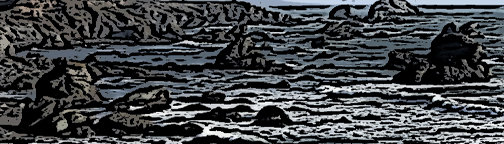
Certain that she could easily overtake the thief, she hesitated for a beat.  Someone had reached the girl first.  Springing from the shadows a wiry figure grabbed for the girl’s shawl.  The undersized shape stumbled. The much larger outline pounced on the fallen child.  It occurred to Lydia that a thief was robbing another thief, one that seemed a little more formidable than a crippled girl.  By then Lydia had caught up to them.  She just wanted her wallet back.  Instead she got the attention of the crippled girl’s assailant.

He was a narrow dagger of a man, drawn emaciated face, stubby hard shoulders extending boney brittle arms and long fingers.  “Now we have ye,” he gargled a mirthless laugh.

Lydia had been taught well.  As she flipped forward she extended a hand and placed it on the attacker’s rib cage, the momentum and force of her acrobatic maneuver was enough to give her thrust the power to unbalance the man. As she landed she swung her right leg and tapped the man’s chin with the toe of her boot at exactly the right spot, rendering him instantly unconscious.  She made all these movements effortlessly as if simply slipping an arm through a sleeve or brushing back a fall of hair.

The young flower seller, now unburdened of her empty basket, scrambled around the corner of the building and out to the lighted thoroughfare.  Lydia stepped over the fallen man after her.  As she emerged into the light, the young thief was nowhere to be seen.  Lydia hurried past a young couple sauntering ahead and then turned and hurried in the opposite direction, their startled gazes following her.  She glanced across the street beyond the hack stand and the motionless equlones.  The girl had disappeared.

Lydia strode to an iron railing on the other side of the alleyway.  She leaned over the bar railing and stared down into the stairwell that led to a basement door.  The door itself seemed to sway slightly as if it had just moments before swung closed.  Lydia trusted her instincts and leapt down the stairwell.  The door pushed open easily and once again she was in pitch black, this time with not enough ambient light to gather for sight.  She turned back the piping on her coat sleeve and massaged the phosphene activator until the piping emitted a faint green glow like low viz string lights. It was a purely decorative feature of her garment, but it had enough phot, 33 lumens per centimeter if she remembered correctly what the salesperson who sold her the coat had claimed. She moved her arm in a slow arch across the front of her body to illuminate the bare edges of the light’s reach.  A passageway opened up in front of her. Attenuated by the lack of the visible spectrum, she heard the whisper of shuffle steps ahead.  She hurried and almost ran head on into the wall where the passageway turned sharply left. The rhythm of the foot falls changed and, after almost tripping, she was now following steps leading up and toward a light, a pale narrow splinter at the edge of a doorway.  Without the slightest hesitation, she flung open the door with such force that it slapped against the inside wall of a small room lit by the soft glow of an oil lamp.  The bear confronting her made her catch her breath.


To Be Continued At A “Future” Date

The White Room—I

 by Helene Baron-Murdock

coast

Abalone divers found the body floating in the surf tangled up in bull kelp. The call landed on Detective Jim Donovan’s desk. He called down to the Weston County Sheriff’s dispatch and talked to the shift supervisor. “Do you have a deputy at scene? I can’t feature driving all the way out to the coast if it’s just a 10-55.”

“Let me check the log. . .appears like it came in as a 10-54 from one caller at Acropolis Cove. Someone else called it in as a 10-32. With all the divers out there, that sounded about right. Then the local volunteer fire and rescue got on scene and when they pulled the body out of the water they thought it might be a 10-71, but definitely a 10-55.”

“Ok, dead body, possible drowning, and a definite coroner’s case, but a shooting? Whose jurisdiction is that out there?”

“That’d be Mount Oly Volunteer Fire Department.”

“Baxter?”

“The same. He’s even saying that it might be a 187.”

“ Murder? Figures, he’s such a drama queen. Where’s the coast deputy? Is he on days off?”

“No, he’s handling a 415 domestic right now at the Sparta Creek Beach trailer park. It got pretty dicey for a bit. They’ve got the abuser in custody but he’ll be tied up for a while.”

“Alright, I’m on my way.”

“Look on the bright side, you’ve been freed from paper work in a stuffy office and you get to enjoy a nice pleasant drive out to Weston County’s gorgeous coast.”

Donovan grunted, not all that convinced. “I’ll 10-97 when I get there. Advise the coast deputy I’m on my way and have him meet up with me when he clears the domestic.”

Donovan headed south out of Santa Lena on the main four lane. He exited the freeway at Corinth Bay Road and drove west. He could tell by the mass of gray clouds on the horizon that the coast was fog bound, so much for enjoying the gorgeous scenery. It would take him forty minutes to reach the coast highway and another quarter of an hour to Acropolis Cove.

Traffic slowed as he approached Dardanelle, the little upscale arts community astride the Corinth road. The tiny burg with its one way streets tended to be a bottleneck but as he got closer to town he saw a fire and rescue unit and Highway Patrol directing cars around a demolished piebald  junker, windshield trashed, twisted like a candy wrapper. The meat wagon was just revving up to head for the hospital and let out an ear splitting howl as its siren screamed down the road back toward Santa Lena. A yellow tow truck was parked at the shoulder with a disgruntled but not too severely damaged tinted window black Suburban on the flatbed. Once clear of the wreck and west of Dardanelle he followed a caravan of cars all in a hurry to get to the coast and the fishing village of Corinth Bay, the coast highway, and points North and South.

Traffic thinned out the further north  he travelled as the highway got windier, steeper, and narrower, cornering around sheer cliffs and then whipping down gullies into hairpin turns and then back up again only to repeat the same course in the next few miles. By the time he reached Acropolis Cove with its distinctive escarpment of eroded columns resembling those of an ancient Greek temple, his arms were cramped  and his neck was stiff. The parking lot was crammed full of RVs and pickups with camper shells.

Donovan notified dispatch he was at scene and parked behind the red Fire & Rescue rig and the bright yellow ambulance. A stiff breeze hit him with a frigid seaborne slap as he exited the sedan and he regretted not bringing a heavier windbreaker. He could tell from Baxter’s expectant expression that he was not a happy camper. `

“You took your damn time!” Baxter accused. He was a short man with a ruff of curly gray hair escaping out from under his fire department ballcap. He had the dark and weathered complexion of a man who lived his life outdoors. Donovan seemed to remember that he was a cattleman or a sheep rancher when he wasn’t being the volunteer chief.

“Someone should have been out here sooner but apparently the coast deputy was delayed on a domestic.”

Baxter nodded in resignation that that was all he could expect in the way of apology for taking up his time. “Yeah, heard that on the radio this morning. Sparta Creek is a cesspool of surfers, druggies, and the homeless. The county needs to clean out that rats nest. It’s a blight on our coastal community.”

Donovan had heard the spiel before. “That our customer?” he asked looking down the embankment to the beach to where a blue tarp bulged over an elongated shape. The wide stretch of sand was dotted with men and women in their black wetsuits and snorkel gear, some emerging from the surf with mesh bags and pry bars. The oppressive overcast like a lead plug gripped everything in its gray light accompanied by the tang of cold ocean air and rotting seaweed. Panoramas of sheer red cliffs, driftwood littered dingy beige sand, spray dashed craggy monoliths, roiling surf, wave after choppy wave all the way out to the swelling shimmering steel gray horizon seemed somehow dreary and unsettling.

Baxter led the way and pulled back the tarp. Donovan made a mental picture of the prone figure before crouching down for a closer look, taking note of the clothing, complexion, hair, and any signs of injury or unusual markings such as tattoos: pale blue coveralls, one tattered sneakers, white, brown, and contusions around the forehead and jaw. He guessed male by the body type. Appeared to be wearing a harness of some sort, straps from the shoulder crossing the back to a belt cinched at the waist.

“Looks like one of them hang glider types. They like to jump the cliffs a little further up Sparta Creek ways,” Baxter offered. “They use that long stretch of Sparta Creek Beach to land.

“No helmet.”

“Yeah, saw that. Banged his head on the rocks a bit, I’d say.”

“The wounds look clean. Could have been washed in the surf.”

Donovan straightened and gazed out at the field of guano covered monoliths splashed in stolid indifference by breakers. A stiff icy breeze pushed against him and he resolved to get back in his sedan as soon as possible. “Where’d they find him?”

Baxter pointed to a pair of almost identical smaller crags closer to the shoreline at the foot of a precipice topped thick with conifers. “Wedged between those two, tangled in the kelp. The divers like that spot beyond the furthest twins where it drops off deep to an underwater cliff jammed packed with sea slugs. They call that spot the New York City of single-footed critters there’s so damn many!”

“You go out there and pull him in?”

Baxter looked at him like he was crazy. “We had the divers run a line out to the body and pulled it to shore.” Then, “What? They were already wet!” And as if to change the subject, he pointed at the left side of the body. “What d’you make of this?”

Donovan had noticed the ragged hole in the jumpsuit just above the waist and below the harness belt. It was surrounded by a large area of discoloration. “Could be blood. Or grease.”

“I think it’s a bullet wound.”

“You looked.”

Baxter didn’t deny it.

“You didn’t happen to find his wallet or identification while you were looking, did you?”

“Nope, not that I could see, and he’s completely nekkid under that jumpsuit.”

Donovan noticed two men descending the path to the beach with a gurney. “Coroner’s van is here, you can release the ambulance and your boys. Thanks for the help.” Then he saw a deputy peering  down from the edge of the parking lot. He recognized him as a kid name of Royce. “Did you get details on the guys who found the body?” he asked Baxter.

“Yeah, a couple of guys from the valley. They’re in their trailer. I told them you probably want to talk to them.”

campgroundDonovan headed back to the parking lot after he’d watched the coroner’s assistants turn the body over and load him onto the gurney. Facing up, the corpse did nothing more than confirm that he was a white male. Royce met him at the top of the path.

“Sorry about the delay, Donovan, but I had a live one. Some dirtbag using his woman for a punching bag. Again.”

Donovan nodded sympathetically. “All in a day’s work. I get paid the same sitting on my ass in the office or freezing my ass off in the fog. Baxter here has the info on the guys who found the body. They’re in a trailer here somewhere in this parking lot.” He pointed with his chin. “Probably those two guys in wet suits over there looking like they have more than a casual interest in what’s going on. Get the story from them and file the interview so I can add it to my report.”

“No foul play like I been hearing on the scanner?”

“Naw, straight up accident. Some people just have an overactive imagination. He’s got some contusions and probably other injuries related to getting banged against the rocks. We’ll let the ME sort that out.”

“Ok, I’ll get to it.” The deputy turned to Baxter whose face had gone a bright red and then as if he’d forgotten to ask something. “Any truth to the rumor that you’re thinking of retiring?” He said it with a boyish expectant grin.

Donovan made a wry face. His retiring would open up the ranks to promotion for certain ambitious young officers. He remembered when he was one of them. “Still in the thinking stage. Been there for the last couple of years. Could be a couple more years before it stops being a rumor.” He laughed at the transparence of the deputy’s disappointment.

“Retire? You gonna retire?” Baxter acted indignant to cover his irritation at the slight. “You don’t want to retire. Man, that’s the last thing you wanna do!”

Donovan and the deputy turned their attention to Baxter to hear his reasoning.

“I knew this guy, worked for Fish and Feathers, put in thirty years. Up and retired, dead in three months.”

“Now there’s a happy thought.”

He didn’t often dream of the dead although in his line of work he’d come across his fair share of corpses. Every once in a while he was awakened by a vivid dream of a dead body, the images lingering in his consciousness as he transitioned to a wakeful state. Sometimes he was in the uniform of his early days as a deputy, other times in his civvies as a detective, and often the corpse belonged to someone he knew or had known even if they were not currently deceased. And at times he had had conversations with them as if being dead was the only way they could get his attention. Always he had the feeling that he was being guided or escorted in these encounters by an accompanying shadow or shade.

“He had to assume the wound would have been fatal had the subject not drowned. That made him primary on a possible homicide. He hated to admit it, but Baxter was right.

The images were still with him as he drove into the office the morning after his trek to the coast. He was on a beach crowded by large crags on all sides anxious to avoid getting doused by the cold ocean spray. There was a covered body hovering at his feet, a long dark, barely discernable cigar shape. There was also a party in progress, drinking, and drunks raising a ruckus, getting soused, shouting it seemed, and singing. The beach transformed into the interior of a bar, and stretched out on the pool table surrounded by votive candles, the body of someone he knew, someone from long ago. He’d awakened with a start at that moment of recognition. They had been in the same class at the Academy, Lopes, Larry Lopes, aka “Lucky” Lopes.

Lucky had been hired as a patrolman for the better paying Santa Lena City PD upon graduation which was how he got the name “lucky.” They weren’t necessarily good friends but buddy enough to grab a beer or two on occasion. Donovan remembered him as wild, cowboy impulsive.

Lopes had responded to a domestic on the west side near the city limits. Protocol demanded that he stage and wait for backup. It had been a busy night for the PD and all their other units were tied up elsewhere, Dispatch had called for mutual aid from the County Sheriff. Donovan had been the closest County unit and was there in five minutes, but it was five minutes too late. The radio had crackled with alerts of shots fired, and then the dreaded triple 9, officer down. Later it came out that Lopes had advised dispatch he was going in alone, not that that had lifted the weight of residual guilt from his shoulders, and it revisited him from time to time.

Deputy Royce’s report was waiting for him when he signed in. It tallied with what Chief Baxter had said. Hector Royas and Charles Yu, both from the burbs south of the Capitol, had suited up and gone out for their first dive of the day, approximately 0900 hours. A large raft of bull kelp obstructed their passage to their dive spot. In moving it out of the way, they discovered the unidentified victim. Originally believed that it was another diver but on closer examination saw that the subject was not wearing diving gear. They hailed someone on the beach to call 911 and stayed with the body until Fire & Rescue arrived. They assisted the volunteers in bringing the body to the beach and awaited the arrival of law enforcement. Dispatch log shows the first report of possible 10-32 at approximately 0913.

The medical examiner had filed a preliminary report cc’d to him and the shift commander. He always marveled at the obfuscating bureaucratese they were couched in. You had to crack them like a walnut just to get at the meat.

The still unidentified decedent, white male, 5 foot 7 inches, 200 pounds, approximately 30 years of age, died in a manner consistent with drowning. Because he was in the water for an indeterminate amount of time, the TOD was between 12 to 36 hours prior to recovery. Contusions on the head and hands were post mortem. Entry and exit wound to lower right side of torso consistent with gunshot was not.

He had to assume the wound would have been fatal had the subject not drowned. That made him primary on a possible homicide. He hated to admit it, but Baxter was right, it was a 187.

Toxicology report indicated traces of amphetamine, cannabis, and a few other as yet unidentified residues, possibly psychotropic. The harness found on the deceased appeared to be nonmanufactured for its specific purpose. Identity via fingerprinting and facial metrics still pending.

Donovan knew he’d need another cup of coffee if he was going to continue to read the passive voice mind mush. He made his way to the breakroom and immediately realized that he had been elected to make a fresh pot. As he was banging around, tossing out the old grounds and looking for the filters, Nina Vaughn, the Violent Crimes Unit SOA and de facto den mother, looked in smiling and asked, “Anything I can help you with, short timer?”

Nina had one of those husky sassy voices that made you pay attention.

“What do you mean,  short timer?”

“You know exactly what I mean.”

“I’m just looking for some coffee filters.”

“Don’t change the subject.”

“What was the subject?”

“Don’t play dumb.”

He smiled at her. “I’m only as smart as my pay grade will allow.”

“That is definitely a short timer attitude.” She smiled back at him in a rather flirtatious den mother way. “Did you get the message that Chief Baxter called early this morning. I left the number on your desk. He said it was important.”

“If it’s from Baxter, it’s self-important. No I didn’t, but then you know the state of my desk.”

“Not only are you a short timer, but you’re short sighted as well. I put the pink sticky note right in the middle of your keyboard.”

“You should’ve put it on the mouse. I avoid the keyboard whenever I can. In fact, I hate the keyboard so much once I’m retired I’m never going to touch another keyboard again.”

“Aha! I was right!”

The phone answered after the second ring. “Mount Oly Volunteer Fire Department, Chief Neil Baxter speaking, how can I help you?”

“Baxter, Donovan, what do you have for me?”

“Hey, detective, yeah, thanks for calling back. I found something, or rather one of my boys found something yesterday when we were out on a call for a cliff rescue. Some damn tourists, like they always do, think they can climb down to the beach but never think about how they’re gonna get back up. And then the tide comes in. . . .”

“Cut to the chase.”

“Well, like I said, the boys were doing a cliff rescue and one of them found your victim’s wing.”

“Wing? I’m not getting what you’re talking about.”

“Well, going on the assumption that he was a hang glider, this would have been his gear.”

“You’re the only one going on that assumption. What makes you so sure it belongs to the deceased?”

“Remember that harness he was wearing? I’ve done a lot of hang glider rescues and I never seen one that looked like that. Theirs are more like cradles. And if I don’t miss my guess, that guy’s harness looked DIY.”

“Do-it-yourself?”

“Right, and this wing we found is definitely homemade. What you wanna have me do with it?”

mountoly sta

Mount Oly volunteers had brought the wing back to the station in Orcala, a coastal community of the retired well to-do with prized coastal vantage just off the main highway consisting of a post office convenience store gas pump, a hotel restaurant, a driftwood souvenir shop, and the volunteer fire station. Numerous dwellings dotted the steep hillside overlooking the Pacific like the nests of sunset worshipers.

“Not like any hang glider sail I’ve ever seen.” Baxter had propped the wing up against a wall in the engine bay. A collection of odd fabric squares resembling a quilt was stretched over most of a lattice made of interlaced bamboo lashed with fine wire. It had suffered some damage in the surf but was still remarkably sturdy for something that appeared so delicate. “And I think it had a twin. If you look at the design, it actually looks like a bird’s wing. And see this little do-hickey here, with the handle? I’ll bet if you pull on this mechanism it makes the wing flap at these hinges.”

“Can you show me where you found it?”

“I can take you there or I can show you on a topo in the office.”

“Whatever’s most convenient.”

Inside the small office with a desk, a radio squawking staticky incomprehensible chatter, and a jumbled assortment of firefighter turnouts and helmets, Baxter pointed to the wall map. “This here is our jurisdiction. We go as far south as Argo State Beach and as far north as the county line.” He placed his finger on a spot on the map. “This is Acropolis Cove where we found the body. And here, less than a mile up is where we found the wing.”

Donovan stared at the map. It meant a whole lot of nothing to him, and even though he had a general knowledge of the county’s topography he once again thanked his lucky stars that he’d never been assigned coast duty. Nothing said out in the middle of nowhere as much as this stretch of coast did.

“This up here is Sparta Creek Beach, right?”

“That’s right, and right there in that bow in the hillside is the Sparta Creek drainage and where the trailer park is nested.”

“So if I was a hang glider, where would I launch from?”

“This highpoint here at the south end of the beach.”

“Why not from up here? The elevation’s considerably higher.”

Baxter grinned. “Right there is an abandoned Girl Scout summer camp, Camp Wannaseeme, as the locals used to call it, cause the gals liked to go skinny-dipping in the dammed up feeder to Sparta Creek and weren’t particularly shy about it. That’s a hush-hush restricted zone of the Area 51 variety now.”

“You pulling my leg?”


In Part Two: Moonshine Maneuvers