by Colin Deerwood

I felt like a house had fallen on me. A dead house by the stink. And by the taste, like I had a mouth full of rotten eggs. It took a few tries to crack open an eye. I slammed it shut immediately. The light was too bright and heavy, and the weight of it hurt my head which seemed larger than I remembered it. I didn’t remember being a pretzel either but my arms and legs told me otherwise. My groan sounded faraway but maybe that was because of the ringing in my ears. I put my hands over my face and tried the eyes again, and encountered the same blast of white light and the space it occupied. I managed to get myself upright and sitting once I untangled my legs from under me and slowly pieced together what I was seeing.
I was in the cabin on Little Lake. Uncle Ned’s Indian was parked in the middle of the floor, the bright light streaming in through the one window casting unflattering rays on the rest of the tumbledown cobwebbed furnishings. I felt like I had broken my back on what could have been a bed of nails but was actually a crude cot that was much harder. The reason I hadn’t felt anything until I opened my eyes was on the floor next to the bed, a half pint of Uncle Ned’s high-octane joy juice.
The stink got my attention again and made me gag. I bolted to my feet and yanked open the door only to be blinded by the intense brightness of an otherwise welcoming morning. I stumbled up to the pump platform, shading my eyes while little birds made annoying high pitched squeaks like they were either happy to see me or happy to torture me, and tried my luck.
I almost broke my arm trying to bring the pump handle down. It was frozen. I tried again as if the first time hadn’t hurt enough. This time I wrenched my back. I sat down on the pump platform and looked out over the dark blue scintillating waters of Little Lake. It was like an apparition, a story book picture, and of the times I’d visited as a kid, I don’t think I ever saw it that way.
What made it worse was that she was a beaut, blond hair cascading down to her shoulders and a figure like a young sapling, a shapely young sapling.
The sun had been up for a while judging from the slant of rays through the trees, but there was an after the rain freshness to the air. In the distance swimmers frolicked on a float set out from the shore near a collection of green and white summer cabins. A green canoe creased the waves paddled by two women with a third in a large sunhat lounging between them, dragging a hand in the water. Maybe I wasn’t the only one with a hangover. And the sounds of joyful shrieks and laughter of bathers on the docks of the resort around the bow of the lake reached me like a long ago memory of my own delight at being here.
I grabbed a tin pot from the clutter among the washtubs and picked my way carefully down the overgrown path to the dilapidated dock at water’s edge. I’d watched granny do it before. Sometimes the pump needed priming.
I bent over the lapping waters and reached down, got a handful of water and threw it on my face. The shock of the cold wet helped a little. I cleared more of the tadpole scum from the surface and dipped in the pot, filling it to the top and straightened up to get my bearings. That’s when I saw her.
I’d caught a movement out of the corner of my eye. About fifty yards down the shore a sleek silhouette emerged and pulled itself effortlessly up to the top of the large boulder. She shook her hair out of a bathing cap, water dripping off of her in sheets and extended both arms out from her body, arching her back, resembling a little T.
And T always stands for trouble as far as I’m concerned. Just what I’d come up to the country to avoid. What made it worse was that she was a beaut, blond hair cascading down to her shoulders and a figure like a young sapling, a shapely young sapling.
I may have been hungover and groggy but my better instincts kicked in. I held my breath until she turned and walked up the cut in the bank and disappeared behind a stand of birch trees. My luck with women hadn’t been all that great of late. Now not only did I have the thought of Becky gnawing at me and pointing an accusing finger of guilt, but I had a water nymph tormenting me with the prospect of moonlight swims. My goose was cook. I could almost taste the sauce.

I didn’t have a man named Friday, but I went about fixing up the place like a man on a desert island anyway.
The pump wasn’t broke, just dry from lack of use. It took a couple pots of water poured down the gullet but I got it to squeak, working the handle slowly down and up and down until I heard the slurp of the uptake and a spurt of rusty water sloshed out into the trough. A couple more hearty pumps and it gushed out clear and cold onto my upturned face and mouth and splashing across my chest. It was a tasty quenching drink with a mineral tang that I remembered fondly, and it revived me.
If I was going to live in the cabin I was going to have to get rid of the rotting stench of the dead. My nose told me that the stink was strongest near the stove and the chimney pipe up through the roof. And as I suspected whatever it was, possum or coon, had crawled up in there, got stuck and died. I shucked my soggy clothes and borrowed the greasy coveralls hanging on a hook on the wall near the toolbox. They fit loosely. Ned was a bigger man. Dismantling the stovepipe was nasty work but I got it done and dumped the remains in the heap behind the cabin. By then I realized that I was famished and set about devouring much of the grub the cook had packed for me.
I watched the sunlight play over the expanse of Little Lake from the front porch of the cabin and knew that I had to put Becky’s death aside and concentrating on my plan. It had been a good idea to drop out of sight as quickly as I did. It might look like I’d been knocked off and was feeding the eels at the bottom of the East River. But I couldn’t count on it for certain. I had to get as far away as possible from the cops and the mob as I could and stay there. The threats to my life from the Thieves of Bombay were not something I was too concerned about yet. The news of an upcoming draft, on the other hand, made me nervous.
The bruises on my face were starting to fade but dark enough around the eyes to resemble a black mask like on some pulp magazine character.
The fly in my ointment was my lack of the do-re-mi. My broken C note would eventually play out to its last nickel and I’d end up sawing a violin on a street corner. My best bet to get some traveling cash was the art piece that Ted had left me. If Alice could find a buyer then I’d have enough money to leave all my troubles behind. Now that the diamonds and Rebecca were out of the picture, my plans of expanding my confidential investigation business and going upscale were nothing more than coal dust.
For the time being I had to make like a hermit hiding in a cave, not get friendly with anyone, especially nubile young girls and their shotgun toting fathers, and stay out of sight. But it wasn’t in my nature to skulk around in the shadows—except when I was on a case, of course. I had to keep busy.
I set about taking inventory of the old cabin and figuring out how I could make it livable. The cobwebs met the old broom as did the floor. Granny’s room, the forbidding sanctum, smelled moldy and I figure that it was probably due to a leak in the roof. The water stains along the far wall confirmed my suspicion. Otherwise, it was just a jumble of old furniture and boxes full of musty old clothes. A bedframe held a lumpy feather mattress that the mice had chewed through. A set of drawers had a mottled discolored mirror propped above it. I opened the only other window in the cabin and let in some air and light. A shaded kerosene lamp sat in front of the mirror and when I reached for it I gave a start. The face in the mirror was mine but I almost didn’t recognize it, smudged with soot, hair uncombed and standing straight up. The bruises on my face were starting to fade but dark enough around the eyes to resemble a black mask like on some pulp magazine character.
I took my time rooting around, getting a feel for what was there and might come in handy, accompanied by the pleasant memories of the previous stays of my younger days. I visited the outhouse, the door hanging on one hinge and not offering much privacy. I knocked down an old hornet’s nest above the plank seat and swept away a thicket of spiderwebs and egg sacs. Mice had nibbled most of what was left of an old Sears Roebucks catalogue. The old red lime bucket was still there, the lime as solid as a rock with the large kitchen ladle lodged in it. The memory came to me of Ruthie showing the younger boys how girls pee and how it seemed pretty disgusting and shocking at the time and someone had gone to tattle to one of the adults and how Ruthie got in trouble for it but it was one of the most talked about events that summer.
And that reminded me that there was a root cellar set in the downslope of the cabin’s foundation. The rough wooden double doors were still intact. When I yanked them open, I heard something scuttle away. Critters were living in there, maybe relatives of whatever it was that had died in the stove pipe. There were shelves set against the back and the gleam of glass, a wooden egg box with something growing out of it and a huddle of burlap bags with tiny pale sprouts poking through. The glass on closer inspection were mason jars. Some appeared to be empty and others were dark and mottled, green and white. I pulled a few out to get a better idea of what had been tucked away all this time. Much of it looked like it might have gone bad, some were preserves, loganberry jam I guessed as that was granny’s specialty. And to my surprise, the empty jars were not empty but contained a clear liquid. A twist of the lid and a sniff told me I’d stumbled on Uncle Ned’s emergency supply. As if I needed any more trouble.

A pair of old dungarees chopped off just above the knees made passable swim shorts if I was of a mind to engage in bathing frolic. Mainly I’d just jump in the lake to cool off after I’d swung the axe and made myself a nice pile of fire wood to feed to the stove. The early summer heat was sweltering, thunderstorms booming regularly on the horizon. By the time evening arrived so had the mosquitoes, but it was also the best time for fishing. I braved a few evenings to be able to feast on lake trout. No one had fished off the end of the old dock in a while and they and the insects were biting. Good as it is, fish will only do you for so long and I had a craving for some variety. I knew to stay away from the berry patch after I’d stepped in what a bear had left there. I had to take in supplies and that meant the farm stand down Lake Road or firing up the Indian to go into Big Lake and the Big Lake Market.
I was sitting at the table with a stub of pencil making up a list when I heard a tapping on the door frame and got an eyeful of trouble.
I had figured right, she was the girl I’d seen swimming the morning after I got here, the moonshiner’s daughter.
She stood about five foot four, her blonde hair tied up in pigtails that dangled down to just below the collarbone, a pert little nose and pouty lips, and a playful sparkle to her predatory blue eyes. The rest of her looked like it belonged on a pinup calendar: a pair of overalls, patched at the knees, over a thin undershirt. Barefooted, all that was missing was a piece of straw to chew on and a come hither look. I had to blink. She was a stunner.
While I untied my tongue to find something to say, even “hello” or “come in,” she stepped into the cabin and glanced around like she’d been there before. “You look just like him.” It wasn’t an unpleasant voice, young, in the upper register. Lips set serious, she said, “Except younger.”
When I didn’t respond, she offered, “Ned, old Ned. And a little worse for the wear.” She meant the bruises on my face.
“Maybe, I’m his ghost.” I thought I’d be cute.
She shook her pigtails and threw me a smile that hurt. “No, I saw you use the outhouse and I don’t think ghosts do that.”
“You’ve been spying on me?” I tried to sound grave although I was amused.
“This old cabin been almost abandoned after old Ned died. Maybe once in a while some of the cousins will come up and get drunk and even that don’t seem to happen as much anymore. I used to come round when I was younger, when Ned was up fishing and trading pa fresh caught for shine.”
I had figured right, she was the girl I’d seen swimming the morning after I got here, the moonshiner’s daughter. It was like a bomb with a lit fuse had just stepped into my life. And for obvious reasons, I didn’t want to stand up and shake her hand..
She smiled at my discomfort. “My name’s Marie. I live on the property over yonder. My pa is Abner Wilson though most know him as Crazy Man Wilson on account he’ll shoot at you if you come round uninvited. But as long as I can recall, he ain’t never shot nobody, scared them mostly.” She went on like she’d missed talking to anyone who’d listen. “If you’re one of the cousins, I ain’t ever seen a one of them look as much like the old man as you do. And you got his old Indian setting on the porch. He never lent his cycle to nobody, let alone let them ride it.” She cast a wistful gaze in the direction of the porch. “’Cept maybe for me. He would let me ride it on the old dam road out over by Middle Lake. Ride fast enough and the skeeters won’t get ya, he’d say.” She gave a nervous little laugh, worried that she might have said too much.
“Yeah, I’m one of the cousins.” I remembered the alias I’d given Ruthie, “Stan Gardner. Ruthie’s the one let me borrow the motorcycle. Me and her used to vacation up here when we were kids. Probably about your age. How old are you?”
I could tell by the way she shifted her eyes she was going to lie.
“Seventeen. I’ll be eighteen in another month.” And when I didn’t respond. “Honest.”
“So Marie, is this just a neighborly visit or did you come by to borrow a cup of sugar?”


 The violent event that occurred more than half a century ago is brought into focus in an assisted living home for an elderly woman whose memory of that time is blocked much to the frustration of an academic researcher and her partner who who see the old woman as the key to uncovering who was behind the conspiracy that changed the course of history.
 In March of 1892, a Scotsman by the name of Arthur C. “Artie” Doyle was hanged by the neck until dead after being found guilty of a string of grisly murders of prostitutes in Whitechapel. At that moment, history veered off its presumed course and headed in a direction all its own in which the Great War never happened because the Kaiser was afraid of offending his grandmother, Queen Victoria, whose life has been prolonged by the wonders of biology. Her reign, known as the Pax Victoriana has lasted 180 years maintaining as many Victorian airs as possible while making accommodations to rapid advances in bio technology. Cheése Stands Alone poses a steampunk question, can Captain Lydia Cheése (pronounced “Chase”) find her father, the antigovernment turncoat and radical, Commodore Jack “Wild Goose” Cheése. And furthermore, will her quest take her around the globe and through alternate world histories in the requisite 80 days or is it the beginning of a lifelong journey?
 In Just Coincidence, a privileged young man with the unremarkable name of Wayne Bruce returns to the site where his father once had his business, a battery manufacturing plant, and where he often spent his childhood days hanging around the factory and the neighborhood. His return is haunted by the mysterious circumstances surrounding his father’s death and the vague feeling that his uncle is somehow involved. Appalled by the poverty and crime of the place he remembers fondly, he is moved to resolve the injustice of the socially marginalized and to wreak vengeance on those he believes are responsible for the death of his father. A personal coincidence brings together dark prince and dark knight joined in a fateful and tragic quest for justice.
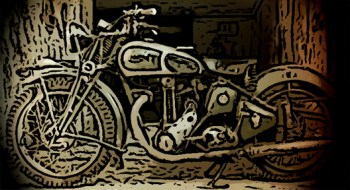 A quick once over told me that Uncle Ned and his old Indian Scout had had two things in common, they were both battered and well oiled. The tires were in need of some air, and something had been nibbling the edges of the leather seat. I rolled the motorcycle out into the backyard with a little effort. I throttled up and gave it a kick. I got a chuckle from the pistons. At least they weren’t frozen or screaming. Now that I had its attention, I gave it another go and it sputtered like it might do better next time. I goosed the gas and it caught with a loud shot and then a roar. But it didn’t last long, a cough and a shudder, and it was dead. I knew I would have to be poking around in places I wasn’t too comfortable in. But other than that, the motorcycle had definite possibilities.

 The road was familiar in that I recognized the climb toward the rolling hills across the wide open farmland dotted on either side by towering elms or stately oaks. Wild grasses and cattails, pollywogs and frogs ran wild in the ditches I liked to remember. Fields of young corn and rows of walnut trees glimmered in the sunlight. Towering white clouds edged with gray on the horizon added to the mugginess. I noticed a few flashes of lightning in the direction I was headed and figured the chances of my getting wet were pretty good. I had to get out of the open before the storm reached me. I gunned the Scout and it leapt forward like a good pony.
 Another flash of lightning revealed the old cabin as clear as if it were daylight and the thunder let out with an earsplitting bang before rolling away in a series of less loud concussions. I could smell the fried air as I hurried the motorcycle onto the shelter of the tiny front veranda. I stood there for a minute catching my breath and watching the rain wildly leaping off the eaves. The accompanying wind battered the tarpaper sides of the small cabin, blowing swirls of tree debris in every direction. Then the chill of being soaked through caught up with me and I pushed open the door to the shelter of the cabin.
 Looking behind me at the back of the door, it was where I thought it would be, the old kerosene lamp, hung on a nail next to a greasy leather apron. It was what us kids used to call the “outhouse lantern” in case it was the middle of the night and more than the spirit was moving you to unload your bad conscious and you didn’t want to be stepping on anything that might be out there crawling around in the dark. Mostly it was the adults that used it, the kids were no strangers to wetting the bed. And to my unbelievable luck, there was a handful of wood matches in the apron pocket, just like they’d always been. I carried the lantern over to the table and held it up to my ear. I heard a faint slosh. I lifted the glass chimney and sniffed the wick. There were enough fumes that it might catch. I scratched a match on the window sill and it burst to life like a sulfur flare. I rolled the flame carefully along the wick, adjusting the length. The flame leapt alive just as the match was about to burn my fingers. I lowered the chimney and the dark cabin held a warm amber light.
 The woman in the robin breast red pants suit brought the high heels of her black pumps together and looked down at her notes. A professor at a small college upstate, she had a grant to do archive research, and that had brought her to All Soul’s Care Home. The man with her was large boned, long limbed, square faced with the pale eyes of a northerner. He wore a dark blue suit that was not his, or one he had outgrown many years ago. His scuffed brown oxfords were massive. The professor had introduced his instantly forgettable foreign name which he acknowledged with an expressionless nod. He didn’t say what he did.
 When Vegas got to be too much and the man she had been living with was arrested for murder in the course of an armed robbery, she left for Reno, taking the bus upstate, all that she owned in one suitcase. Her impression of the biggest little city in the world was that it was a gritty bleaker version of Vegas, that the glitter and neon was hardly bright enough to hide the desperation of so many of its inhabitants.
 Lydia held up her own hand signaling she would comply and fumbled for her shoulder bag. There were only two of them, with her training and the element of surprised she could render them unconscious. She didn’t want to have to kill them, the viper stiletto nudging against her ribs. But that would only complicate things. Her Aerosud Executive Airship Pilot’s ID identified her as Lydia Cheése, Airship Commander, and if Doctor Serre-Pain’s words were true, the authorities within IOTA’s sphere of influence, as Oldest Orleans was, would be alerted to her fugitive status.


 Bion had looked up from his cup and said, “What you call this, Rick, coffee or taffy? The cream just sits on top.”
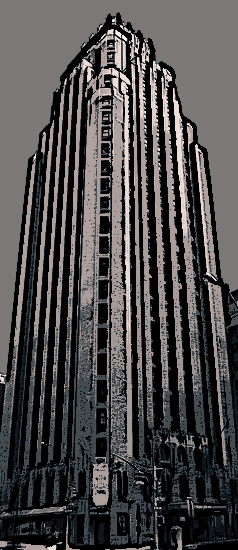 He forced himself to don his sweats and stretch the aches out of his bruised muscles. He didn’t want to overdo it, but he had to get blood flowing, working out the stiffness and swelling. He had a call in with the service and made an appointment for some body work in half an hour. By then he might be in good enough shape to face another board meeting. One of the things to be broached was the renovation of the old battery works in memory to his father and founder of Bruce Enterprise. And how that would be funded through a number of grants, federal and state, as well as the charitable foundation BE WELL, founded by Trish, his mother,. He had the votes and only Harold was against it. The consensus though was that it was a positive public relations move. They could feel good being civic minded without really having to do anything, aristo cake crumbs to the plebs in proclamation of their benevolence. If Harold made too much of a fuss, he would have to bring up the toxic site review and explain what the BATS lab has discovered. Harold was nervous over the government contracts being paused while the leadership issues were being worked out. He was heading to DC after the meeting with a plane load of lawyers for a big pow-wow with Agency lawyers.
 And then there was the nostalgia market that gave new value to well preserved auto relics of the past. His fire engine red 1954 Studebaker Commander Convertible, a restoration from a barn find, and from another company that did not make the postwar transition especially after its failed merger with Packard, taking down the venerable carriage company known for its elegance and reliability. It wasn’t about quality anymore, especially if the consumer was buying a new car every year, it was about looks. Now everyone appreciated the durability of the older cars like his 1948 Chevrolet Fleetmaster Coupe, a pale green over forest green, it was built like a tank but totally uneconomical to manufacture. For personal use, the public wanted something light, fast, the kind of transportation that might appear in comic books or science fiction movies.
 The out of service number was telling him something he was convinced. Nor did he think of it as random. He knew he would obsess over it. So why not start at the source, his father’s old office in the very building he was currently renovating. He resolved to find out and suited up in his riding leathers, the most obvious conveyance to make a stealth approach to the battery works was the modified Spyder XR he kept in storage and easily accessible. The black balaclava under the lightweight off road helmet was for an especially cold longer night.
 He’d followed them, keeping to the shadows cast by the partial moon playing peekaboo with trundling clouds ready to drop more of their cold wet. They’d disappeared around a brick corner on Central and when he’d given a quick glance in the direction they had headed, they were no longer in sight. A few doors down was the entrance to the apartment space above an abandoned vacuum cleaner store. The door was open to the stairs leading up. A bare bulb flickered at the top of the landing. Unless they’d raced down to the next block where a street light illuminated the frozen air with a brilliant halo, they would have had to veer off. The stairwell was the only likely and immediate option.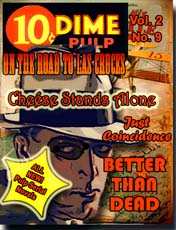
 In late February of 1908, a one-time drover, buffalo hunter, saloon owner, hog farmer, peach grower, horse rancher, US Customs inspector, private investigator, county sheriff, and Deputy US Marshal set out from his adobe home on the mesa above Organ, New Mexico accompanied by a young man in a black buggy on the journey to Las Cruces. He would never arrive. This is the story of that journey, a novel account of the last day in the life of a legendary lawman.

 He was occupying his father’s penthouse apartment now, a perk on the company dime. He could survey the entire city from his perch at the wide window looking out onto the marble deck of the balcony. The landing lights of a passenger jet heading for the municipal airport that the city council was now slated to vote on naming the Wallace W. Bruce Airport crossed his field of vision. The parallel arrays of lighted city streets and the winking red tail lights and white bright head light beams that travelled them. The cacophony of neon marking nightclub entertainment and dining, the garish ostentation of major brand billboards, the imposing corporate skyscrapers with their lighted empty offices emblazoned with their two story logos. Bruce Enterprise being one of the pretentious eyefuls with it cryptic minimalist brand of three horizontal lines followed by a full height vertical line and the three mirrored parallels again. BE, a minimalist icon if there ever was one. How many times had he stood at that window, taken in the night lit panorama and stopped his gaze at the office tower only to be nudged by that famous quote he often parodied: “To be or not to be is not the question.”
 The car service had picked him up and taken to the country club, his regular driver, Cornell, affirmed. That was just before ten. The country club listed his tee time for a foursome at ten. Linus Pall was one of the quartet, Aldo Ring, a city councilman, and also a name that was not familiar to him. One of the staff at the Pro Shop said she’d heard that there had been a loud argument in the locker room between Doctor Pall and another man who was not a club member but a guest. The restaurant staff served Mr. Bruce at his usual table and he had had his usual French Dip and iceberg lettuce salad with tomato and mayonnaise. And of course iced tea.
 When Wayne showed up at the club, it was closed but someone was inside cleaning up. It was a large open warehouse bay, painted black, catwalks skirting what was ostensibly a dance floor, cluttered with the debris of the previous night’s activity. There was a bar near the front of the door. The man sitting at the bar stool with the push broom in his hand was the manager as well as one of the bartenders, the DJ, and sometimes the doorman. His name was Peter. He’d looked at the corporate photo of Wallace Bruce and shook his head.
 Accompanying by his cogitations, Wayne’s pacing in the book lined study had brought him in front of the gas fireplace and the large portrait oil of his father that hung above the marble mantel. The old man hated the painting Trish had made him sit for as a mark of his status as a captain of industry. Old Dad had made many disparaging comments about the painting, particularly at the pretentiousness of such a display, and had hidden the canvas at the back of the wardrobe in master bedroom of the penthouse. Wayne had found it and restored to its spot above the flickering flames of the fireplace.
 After I’d left my disappointment in the coalbin, I made my way to the railyard by the Serbian Social Club. There were a couple of squad cars parked out front and the guard at the front door was now a boy in blue. There was no chance that I was going to get close or even inside the building. Becky was gone, I had to face up to that. Kovic’s mob probably dumped the body somewhere it wouldn’t be found any time soon. If anyone looked like a sad sack that day, it was me. I had no choice but to pick up my gear at Alice’s and head out of town.
 I’d waited till the last person in line had boarded and the driver was about to close the door. The man behind the wheel gave me the ‘there’s one in every crowd’ squint as I made my way to the back and humped my satchel onto the seat next to me. I’d given a quick eyeball of the occupied seats and what I was seeing was a smattering of overdressed travelers, men and women looking out the window, some with children in their laps. Some were obviously vacationers heading up to Big Lake, one of the three lakes and most popular summer resort. And some, by their defeated expressions, were going back where they came from with only the clothes on their backs. Maybe I fit into that last category, but behind the dark glasses I had picked up at the terminal newsstand and my hat tipped back once the bus turned onto the road leading to the outskirts, I didn’t care. I had a half pint of Old Hickory and a pack of Lucky Strikes to while away the three hours it would take to get to where I was going.
 I’d gone through about half of the Old Hickory and smoked up the rear of the bus with a cigarette haze by the time the bus rolled into Ridley. I found my feet once I stumbled off the bus and watched it kick up the road dust on its way out of town. Ridley didn’t seem to have changed much since they last time I came through. They’d added a gas pump in front of the livery barn and a sign on the side that said mechanic. There was a streetlight I didn’t remember from before out front. Granny’s house was down the elm shaded road running behind it.
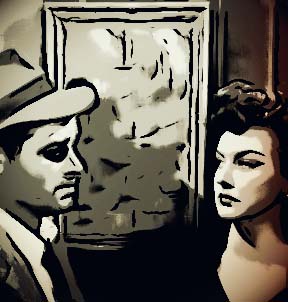 She ducked in the doorway with the wick on the lamp trimmed short so that just a dim pale glow lit part of her face. It looked like a face out of a Hollywood photo magazine. All of a sudden I wasn’t all that tuckered out as I thought I was. She came closer and I saw she was wearing a quilted house coat open at the front to reveal a frilly shimmering slip. And she’d perfumed up.

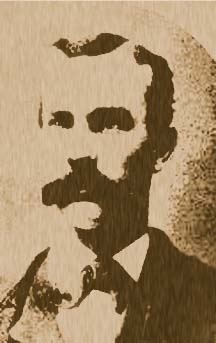 “Now I don’t know if the name Joe Miller is familiar to you, Mrs. Garrett, but it belongs to a notorious assassin who is believed to be part of this conspiracy and may even be the actual triggerman.”
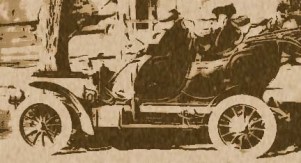 “It’s a motor carriage!” Paulita ran to the gate, her baby brother waddling behind her. The machine swayed and jogged from side to side, navigating the ruts in the wagon road, chased by outraged dogs and the town’s children. Scanly’s horse reared, shaking and tipping the buggy trying to free itself as the dust and noise rattled past. Seated high on the bench of the contraption were what appeared to be a man and a woman, he with a black hat held on his head with a chinstrap and she with a wide brimmed chapeau held in place with a yard of chiffon scarf. Both wore goggles. The woman waved at Paulita and her brother gaping through the pickets.
 Over the years numerous version of my manuscript, mostly typewritten, have languished in a drawer or gathered dust on my desk and to which I was drawn, on occasion, to reread and rethink the presentation of the material. In the process, a novel took shape, one that began as a bare bones cinematic adaptation of a biography and emerged as something more meaningful: the story of the relationship between two men, one garrulous, the other taciturn, the Mutt and Jeff of the old Southwest, and the tradition of storytelling and authoring of ‘true’ accounts. The life of this legendary lawman encompassed more than just that one episode, however. Garrett’s own violent death in the early years of the Twentieth Century seemed to punctuate the passing of an era. There is a resonance to the other particulars of his life as a lawman that belong to the saga of the Southwest.
  Dime Pulp