Category Archives: Western Fiction

Contents Vol. 2 No. 7

Welcome to Volume Two, Number Seven of Dime Pulp,
A Serial Pulp Fiction Magazine

In Issue Seven, Dime Pulp, A Serial Pulp Fiction Magazine, continues with our two new pulp serials, Phyllis Haldursdottir’s global steampunk saga, Cheése Stands Alone, featuring Airship Commander Lydia Cheése (pronounced “Chase”), and Pierre Anton Taylor’s  Just Coincidence, a familiar fiction of dynastic intrigue and the dark revenge of a masked crime crusader.

In Act One, Scene 2 of Just Coincidence, at his father’s funeral, a privileged young man plots revenge on those he suspects of  his father’s murder.  An emotional connection to an old mentor and an overwhelming nostalgia  move him to act against the injustice of social marginalization. That he is a dark prince as well as a dark knight is just coincidence.

It is the year 180 of Pax Victoriana, one hundred and eighty years since Queen Victoria took the throne and whose persona if not the actual person, are kept alive as the paragon of world peace. For Airship Commander Lydia Cheése, Britannia still rules the waves as well as the airship lanes,  with the exception of  the carbon states of New Brazil and United Outlaw Africa. In the continuing saga of Cheése Stands Alone, Captain Lydia Cheése  has fallen down the rabbit hole and finds herself in the clutches of a herpetologist by the name of Serre-Pain and his traveling snake show, Madame Ophelia’s Ophidiarium. Then the agents for IOTA show up and things get (shudder) slithery. Lydia’s efforts to locate her fugitive father, the infamous Commodore Jack “Wild Goose” Cheése, have brought her to the attention of  the Investigative Office of The Admiralty and her flight from them will take her on an airship globetrotting adventure.

Number Nine of On The Road To Las Cruces reaches a crucial point in this fictional retelling of the last day in the life of a legendary Western lawman where memory becomes a dialogue with one’s self in the justification of a killing and a blind pride that leads to to death. As an echo from the abyss, the famous retelling is retold as a rebuttal as well as an oral chronical.

And last but not least, Installment 19 of The 1940 detective story, Better Than Dead (Dime Pulp’s longest running serial), follows hapless confidential investigator Lackland Ask through another tangle of tense circumstances as his quest for revenge and profit are continually thwarted by kidnapping, murder, attempted murder as well as stolen diamonds and the mysterious jade Empress’s Cucumber. Things only get worse when he loses someone close to him in an explosion and then finds himself being fit for a pair of cement overshoes.

FYI: Dime Pulp Yearbook 21 contains the novels (The Last Resort and Better Than Dead) and the short fiction (Hard Boiled Myth and Gone Missing) of Volume One’s 12 issues,  available for perusal in their entirety. If you missed a few issues or lost the thread of a serial, clicking on the link at the beginning of this paragraph or on the menu bar above is a good way to catch up.

Dime Pulp continues its crime spree with two new pulp fiction serializations, Cheése Stands Alone by Phyllis Haldursdottir and Just Coincidence by Pierre Anton Taylor, as well as the continuing serialization of the pulp crime fiction of  Better Than DeadA Detective Story and the Western, On The Road To Las Cruces . If you’ve made it this far, go ahead and follow the links below to reading entertainment with the serial contents of Volume Two, Number 7

 —Perry O’Dickle, chief scribe
and word accountant


Knapp-Felt 1930 1930s USA mens hats

“Lackland Ask is the name. ‘Lack’ to my friends, ‘Don’t’ to those who think they’re funny. You might have seen my portrait on the cover of Black Mask, the crime fiction magazine. This is my story. It starts with a blonde. This kind of story always starts with a blonde.” Thus begins the seemingly non-stop, endless narrative of Better Than Dead in which women are not the only trouble although most of it, told with the wit and street savvy of Runyon and Parker.

Better Than Dead—19


otrpic1fi2In late February of 1908, a one-time drover, buffalo hunter, saloon owner, hog farmer, peach grower, horse rancher, US Customs inspector, private investigator, county sheriff, and Deputy US Marshal set out from his adobe home on the mesa above Organ, New Mexico accompanied by a young man in a black buggy on the journey to Las Cruces. He would never arrive. This is the story of that journey, a novel account of the last day in the life of a legendary lawman.

On The Road To Last Cruces ~Nine~


lydcirIn March of 1892, a Scotsman by the name of Arthur C. “Artie” Doyle was hanged by the neck until dead after being found guilty of a string of grisly murders of prostitutes in Whitechapel. At that moment, history veered off its presumed course and headed in a direction all its own in which the Great War never happened because the Kaiser was afraid of offending his grandmother, Queen Victoria, whose life has been prolonged by the wonders of biology. The peace of her reign, known as the Pax Victoriana, despite some major environmental disasters, has lasted 180  years keeping as many Victorian airs as possible while making accommodations to bio technology. Cheése Stands Alone poses a steampunk question, can Captain Lydia Cheése find her father, the antigovernment turncoat and radical, Commodore Jack “Wild Goose” Cheése. And furthermore, will her quest take her around the globe and through alternate world histories in the requisite 80 days or is it the beginning of a lifelong journey?

Cheése Stands Alone II


fury circle1fiIn Just Coincidence, a privileged young man with the unremarkable name of Wayne Bruce returns to the site where his father once had his business, a battery manufacturing plant, and where he often spent his childhood days hanging around the factory and the neighborhood. His return is haunted by the mysterious circumstances surrounding his father’s death and the vague feeling that his uncle is somehow involved.  Appalled by the poverty and crime of the place he remembers fondly, he is moved to resolve the injustice of the socially marginalized and to wreak vengeance on those he believes are responsible for the death of his father. A personal coincidence brings together dark prince and dark knight joined in a fateful and tragic quest for justice.

Act One. Scene 2

Better Than Dead—19

by Colin Deerwood

Ads87

Then I had another think coming. My hands began to sweat. It wasn’t like I’d lost my nerve and even if I had, being suicidal wasn’t going to help me find it. Mister K’s operation looked like a little more than just controlling the waterfront action and trucking companies. The kind of firepower I was seeing here would outfit a small army. And that other think arrived to tell me that I had to get the hell out of there, fast. There was no going back the way I had come. Down the stairs and into the social club was the only way out. If we stuck to the stairwell we had the chance of cheese with a rat and the only hope was that the rat was on the cheese wagon.

“You still got your peashooter?”

She frowned obviously distracted by the same dilemma I found myself in. “A shooter of peas?”

“Your little Lady Remmington. Your piece.” I made my fist into a gun.

“No, Lack, I have left it at the loft. It was foolish. . . .”

“Never mind, these mugs would chew those slugs like licorice candy. We’re just going to have to take our chances. Like I said before, if there’s a dust up, run, I’ll hold ‘em off as long as I can.”

She gave me a smile that said I was her hero. “We are in this together, Lack. I will stay by you.”

I opened the door from the attic stairs to the top floor hallway. A globe fixture at the head of the stairway illuminated the next flight down. I peered cautiously over the banister to the further dark abyss of the interior stairwell. There were muffled sounds of laughter. Other voices drifted up and caught my ear because of the intensity of the conversation. I could only make out a few words, but I recognized the speaker, Yan Kovic. Out of the frying pan into the fire. I had him right where he wanted me. The indistinct dialogue seemed a few landings below, not inside one of the rooms where the raucous laughter was coming from.

“Why can you not find this weasel who has killed Milosh?” Kovic demanded.

The other voice sounded lower and all I got was “more important matters” and Kovic insisting that “everything taking care off.”

I knew we would never get past them and even though I would have loved to get my hands around Kovic’s neck, right now wasn’t the best opportunity. There had to be another way down, a fire escape or a back set of stairs. I went to the window at the end of the corridor and looked out. The rain was still pouring down. I lifted the sash and poked my head out. I saw my way out. A metal ladder out of reach from where I was standing reached from the roof to a small terrace one floor below. Off to one side of the terrace was a fire escape leading down to the back alley. All I had to do was descend one more floor without being noticed, make my way to the terrace and down the fire escape.

The treads were carpeted although each step held the potential of a riser’s groan, but the joint was a sturdy as a jail and my luck held. I crept to the end of the hallway where I judged the terrace would be. I could spy the edge of the parapet from the window and assumed that access would be through the large oak door set into the wall. There didn’t seem to be a lock and the brass knob turned easily. The hinge was as silent as the whisper of air being displaced. I found myself in a large room with a couple armchairs, a long table, a bar along one wall, and double glass doors leading out to the small terrace. The setup looked like it was a kind of meeting room. A map and a scattering of papers were spread out at one end of the table under the light of a green shaded banker’s lamp. An RCA tabletop radio sat on a side table between two leather armchairs.

Rebecca let out a gasp. She had one of the sheets of papers in her hand. “I am not very good reading Serbian but I think this is timetable for an attack!” She had moved to the map on the table and was studying the symbols. “Here with this symbol, where is this?”

It took a bit to swivel my head in the right direction but when I did I saw that I was looking at a map of the waterfront, and part of the downtown area. X marked the spot near the customs warehouses. I was familiar with the area. It was near where Annie Bassinger’s tug, The Narcissus, was berthed. The other was an arrow pointing to the district where the Federal Courthouse was located. I was trying to formulate a correlation of some criminal intent and about to give vent to my hunch when I saw the look on her face. Horror.

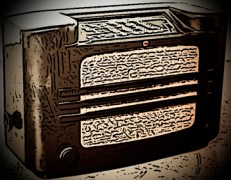
radio1She was pointing at the two armchairs and the table with the radio between them. She stumbled back with her hand held over her mouth and in doing so knocked the banker’s lamp off its perch with a shattering crash. “The radio!” she gasped.

I didn’t think she could blame the radio. It wasn’t even turned on. That wasn‘t my worry. I had a feeling that we might not have been the only two who heard the sound of glass breaking.

“Forget it. Let’s get out of here!” I caught her by the arm and led her to the double doors.

“But Lack, the radio! I know that radio! It is the one my father. . . .”

I didn’t let her finish. There were the sounds of fast approaching footsteps and voices, one of them saying loud enough, “It come from up here, try the smoking lounge!”

That’s what they called this place but I wasn’t gonna stick around to admire it. Outside the rain had let up and left behind a misty scrim in the warm night air. I made for the corner of the terrace near where the wrought iron scaffolding of the fire escape was attached to the bricks of the building. I had underestimated the distance between the parapet of the terrace and the iron rail. Only an acrobat was going to take that leap and make it, and it wasn’t me. Besides the racket was going to be a dead giveaway. There was a narrow ledge just below the parapet that ran along the façade but hardly wide enough for my size twelves.

He didn’t want to believe his eyes when he spotted me, but then his surprise grew grim before turning into a grin as he reached under his arm and unholstered the large pistol and took aim.

An overhead light switched on in the smoking lounge and threw a beam across the wet tiles of the terrace. I chanced a glance through the glass and saw the three bears, the one with the bald dome I knew was Kovic. I put my ear to the hinge to catch what they were saying.

“Hey, wadya know, the lamp fell and broke.”

“Who broke it?” Kovic demanded, “who is up here!?

“Naw, boss, it just fell. Everybody’s down below playing cards.”

“That noise we heard earlier, Mr. K, they said it was from the hotel next door.”

“One moment! This radio, where is other radio?”

“Oh, yeah, guy, radio repairman, come by this morning. This is the loaner while he fixes the other one.”

“Radio is broken. No one tells me.”

“I didn’t know either, boss, but he said somebody called and said it was broken and that he should come fix it. Said he’d need to take it to his shop to do that.”

“Someone call? Who does this? Sammy, bring others up here. I want search of entire building.”

“I’m sure it’s nothing, Mr. K, here let’s turn the radio on, maybe listen to a symphony broadcast.”

“Yeah, boss, maybe a ballgame, or Amos and Andy.”

“Has anyone think to look on terrace?”

That was my cue to make like a leaf and leave. I turned to see Rebecca standing on the edge of the parapet, fingers splayed clinging to the bricks and edging a bare foot onto the ledge and aiming to close the distance with the fire escape.

The door behind me opened and Kovic’s gorilla nonchalantly stepped out onto the terrace. He sniffed the air and glanced at the misty night drifting across the inky black of the dark alley below. He didn’t want to believe his eyes when he spotted me, but then his surprise grew grim before turning into a grin as he reached under his arm and unholstered the large pistol and took aim.

Ads88

The blast blew the double doors off their hinges, showering glass and splinters and knocking the goon with the gun off his feet and sending him flying across the narrow terrace like he was nothing but a dead leaf in a tornado. The building shuddered. The terrace tiles quaked. The glass-explosiondoorframe buckled, coughing out bits of brick and plaster. I dropped to one knee to keep from toppling over. My ears were ringing from the explosion. Dust and acrid smoke filled my nostrils. When I got over the initial shock I looked over at Rebecca. She was gone.

Coughing, I stumbled to the edge of the parapet. She had been trying to reach the fire escape. I stared over the edge focusing on the darkness below. Nothing, no sign of her. She had fallen forty feet and even if I could see her all I would have seen was her body sprawled on the pavement, dead.

A sinking gut churning sorrow overtook me. That little glow of hopefulness that had come into my life when I first met her, the sense that my crappy life might be worthwhile after Grace and I had split, was snuffed out like someone had just squelched the wick of a guttering candle between their two fingers. I let out a sob. It was an angry sob. I wanted to kill.

The palooka moaned and tried to sit up but couldn’t. He might have broken something. Amid the scattering of debris at his feet lay his pistol. I picked it up and hefted in my hand. My temples were pounding. He was going to be the first one and I pointed the gun at his head. I heard the crunch of broken glass behind me and a low howl of pain.

Kovic leaned against the blasted brick of the doorway with one hand, a bloody gash across the top of his bald pink dome and a smear of blood below an unfocused eye. He was trying to say something, but I wasn’t gonna let him. I raised the revolver and aimed for his head.

“I’m better than dead,” I spat back.

It was his fault. Everything was his fault. If he hadn’t tried to dun me out of my fee for finding his hophead daughter. And he did it over a lousy C note. Left me to rot in an upstate ditch. The guy had no class. Maybe I wouldn’t have been so set on getting mine back but if that’s what he thought of me I was gonna make him regret it. I’d tried once before. That ended me up in the drink. Along with the guy who had put me in the ditch who was too dead to swim. Kovic had my lawyer snuffed and put a hit out on me. And then Rebecca. Yeah, it was his fault. Here was my chance. He deserved to die.

My knee went numb and folded as pain shocked through me. I turned to find the cause and caught the brick full in the face. My arm went numb from another blow and the gun dropped from my hand. The next thing I knew I was laid out flat and Kovic’s ugly mug was dripping blood on my face.

“You!” he snarled, “You, the lousy private dick? You did this?” He grasped me by the front of my jacket and brought my face close to his. “You are as good as dead!” he spit.

“I’m better than dead,” I spat back.

Ads89

When I came to I was tied to a chair. My feet were sunk in a couple of large buckets. A bright spotlight shone in my face and lighted up the guy with the shovel as well. He was mixing something with sand and water in a large tub. He noticed when I raised my head.

“Hey boss, the pigeon just stirred.” He ladled a shovelful of cement into the bucket around one foot.

I heard a chair scrape across the wood floor and Kovic say, “Everything to go as planned. But first I have take care of this budala. He will swim with Milosh.” Then his hot breath on my throbbing face as he grasped a handful of hair and jerked my head back. His teeth shone in the light. He had a bandage over one eye and part of his dome. “Your death will give me great pleasure, American swine. You think you can kill me, Yan Kovic! I am a powerful man and you are nothing but bug I will crush.”

He landed a slap that numbed the other side of my face. “Hurry up with cement, I want to watch  when we drop him in river.”

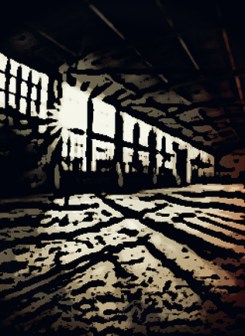
The dankness of the air made sense. They had me in an abandoned warehouse along the river.

“Going as fast as I can, boss.”

“Make it hurry.”

“It still has to set before it’ll do any good.”

“Add big rocks! I must not have to be doing this work for you!”

Long shadows in abandoned factory building on sunny summer day.

“Boss! Hey!” The distant voice echoed in the large warehouse space. Then there was a gunshot, and then another. A muddle of gunfire from all directions followed. I felt a bullet whizz by an ear and tipped myself and the chair over, the half full buckets wrenching at my ankles. The guy with the shovel had a gun and was firing off into the shadows. Muzzle flashes sparked orange flames in the dark cavernous space. Kovic fired back as he scrambled away. His goons were holding their ground. There were screams and curses and more shots. The cement mixer went down with a groan and a big red hole in his neck. I heard movement near me and looked over to see my old pal, Al. He was crawling across the floor toward me with a pained look on his old drawn face. He had a gun in one hand and a knife in the other. He gave me a nod and dug the knife into the rope holding me to the chair. I tumbled free and worked to shake my feet out of the metal boots. A shot spit up near where I was and I lay still for a moment. Al snapped off a shot and got one in return. I heard him draw in a breath. The pained expression had left for one of surprise. I crawled over to him as the sides traded more gunfire. He was holding a hand over his chest and blood was leaking out between his fingers. He looked up at me as if asking why? I had my own questions I needed answering.

“Al, why are you here?”

“You pulled a fast one on us, Lack. You switched the postal slips.” He coughed and a little blood edged the corner of his mouth.

“The postal slip? What’s so important about that lousy postal slip?”

“You still have the slip from Della’s mailbox. That’s the one we want. We have to have it!” he tried to sit up and this time coughed up a lot of blood. “We followed you. We saw when they took you outta the building and brought you over here. You got the ticket and we want it back.”

Rebecca had the slip. Rebecca. She never gave it back to me. She still had it. But she was. “Rebecca” I breathed aloud.

Now Al’s expression grew curious. Even as he was fading, he had a question. “We saw you go into the hotel with her. Does she. . . ?” But there was no more.

The warehouse had grown silent. No one was popping off any shots and there were only the faint rustles and death rattles of the wounded and dying. Distantly there was the sound of sirens or it might have the wind vibrating the tin siding.

“He was dead when we got there. But I got what I wanted, the box with the Empress’s jade.

I got to my feet cautiously. I’d lost a shoe to the coagulated mess and had to pry it back out of the bucket. They were no longer the supple pair I had once worn. I pricked up my ears and swiveled my head. I could hear labored breathing in the shadows beyond the arc of light. I tilted the light in the direction of the sound.

Al’s sister had propped herself against a pocked stanchion, leaning one shoulder on the beam, head bent forward trying to catch a breath, an old dogleg Mauser in one hand and a snake of blood trailing down the inside of her other arm. She looked at me with blank eyes.

“What was so important about that postal slip?” I demanded.

A slight smile flexed her upper lip. “The Empress’s Cucumber.”

“The what?” I was about to ask and then I remembered Max’s story about the precious jade artifact that had belonged to the Chinese Empress. How it was key to the restoration of the Dynasty. “You had that hunk of jade?” Then it hit me. “You mailed it to yourself!”

“You don’t know,” she groaned, her body slumping forward. “We’re the Thieves of Bombay. That tattoo on the inside of Al’s arm, I have the same one on my shoulder blade. It’s a Sanskrit rosette that spells out our motto, ‘nothing too light, nothing too heavy for our diligent skills’. Al and the boys stole the jade from a prominent art collector in one of their penthouse heists, see. They gave it to me for safe keeping. Then my lousy boyfriend decides he’s gonna pawn it. He took it around a couple of places and musta realized that it was worth more than he thought. Someone probably told him he could get big money from the right people. So he hung on to it. That’s when you come into the picture.” Her eyes narrowed and brimmed with venom. Or maybe pain.

“You had me trace his new address and once you had it you went there ahead of me and bumped him off figuring I might get there around the same time as the cops and take the rap.”

“He was dead when we got there. But I got what I wanted, the box with the Empress’s jade. You’re the rat who stole the postal ticket from my mailbox. You thought you were smart by switching them and leaving me with a bundle of old clothes.”

The sirens grew closer and I could hear the screeching of tires and the loud thumping of vehicle doors being slammed shut. I watched Della stiffen as a pain tore through her. She wanted to point the Mauser at me but didn’t have the strength. “We’ll get you, you bastid, the Thieves is a worldwide organization. When they find out what happened to us, they’ll come after you and rub you out like the no good rat you are. You can count on that.” She tried to spit. “May the curse of Kali be upon your head. . . .” She gave what sounded like a little feminine giggle and a bubble of blood formed on one nostril before bursting. She closed her eyes.


Next Time: G-Men To The Rescue! (sort of)

Act One, Scene 2

by Pierre Anton Taylor

headlines S2The funeral was huge and, not surprisingly, resembled a business convention. The social occasion of old Bruce’s death itself required accommodations for those who had come to pay their respects. Politicians, local dignitaries from various denominations, prominent financiers and corporate honchos crowded the large assembly hall. Harold Bruce had made the arrangements with the exclusive Green Cove Country Club for the post interment reception which was beginning to have the air of a celebration on the verge of a cocktail party. Moderate words of tribute were spoken, tearfully, by Trish, his mother, huskily, by Harold, his uncle. Respectful, ardent words by others who had known and worked for and with him, a saint, a devoted father. When it came his turn, as the younger generation should have the final word, he had been as gracious as a psychopath, echoing their praise with a chorus of his own to the gathering of family, friends, and business associates, yet all the while considering that among them was his father’s murderer.

He had stepped away from the reception hall to a wide windowed alcove overlooking the golf course, uncomfortable with the glad handing and the humorous reminiscences of the old and well off, the condolence ballet that seemed so artificial and rehearsed. In the reflection of the glass he imagined the old man in his beige polo shirt standing beside his red roofed golf cart taking a practice swing before teeing off.

God, how he hated that game, a ludicrous spectacle of status played by amateur athletes that doubled as a de facto boardroom for corporate deal makers and politicians. What did the golfers have to gain from Wally Bruce’s death?

He felt anger with himself first of all. And then everyone else. He wanted to confront them. Accuse them.

Old Dad was a centerpiece in the local business community. They could point to him as their good guy, the peak of integrity even though most of them were out and out crooks and fraudsters. The Bruce name on committees and charitable organizations gave them a shiny legitimacy that signaled trust. Although most of that was Trish’s doing, the non-profits, and political committees to free or stop things. And then there was Trish. And Harold, six years younger and same age as mother. Old Dad’s opinion of his brother, “He’s a real fun guy, he’ll grow on you.” And he did, like a cancerous tumor. As vice president of Bruce Enterprises, he steps into the old man’s shoes before they’re even cold. And into the widow’s bed? Is it not what it seems? Now in hindsight, had there always been something between Trish and Harold, signs of undue affection, of favoritism, She was not known as the “Queen” for nothing. Her wish, her whimsy, was her command. She accepted the deference she thought she deserved, watchful for any indication of disaffection or reticence from her liege. He was her husband, father of her only son, although she seemed to treat that almost as an afterthought, and perhaps that was why the Bruce offices, the old Battery Works, held such nostalgic fascination. It had been his nursery. The difficulty of his birth had ruined her, caused her no end of physical ailment, and was an oft repeated litany that mercifully diminished after being installed in various boarding schools in the States and abroad. Now she shamelessly paraded with her brother-in-law, pretender to the throne, the head of the Bruce empire. He, unlike old Dad, would indulge her every whim.

He watched them appear behind him as reflections in the panoramic window

“There you are!” It was always like to Trish to state the obvious.

Harold maintained a grim bulldog visage, his ledge of eyebrow in a frown. The square cut glass in his right fist like an appendage, he leaned a shoulder in. “That was a very eloquent tribute to Wall.”

His father disliked being called Wall but since it was only his brother who dared called him that, he bore it with long suffering tolerance.

Trish put a ring spangled hand on his arm. “It was a powerful eulogy. Your father would be proud.”

He felt himself blush at the insincerity of it all. Maybe even on the verge of tears for the falsehoods he endured. He felt anger with himself first of all. And then everyone else. He wanted to confront them. Accuse them.

“Thank you. There was so much more I could have said. There is so much left unsaid. And to pass away like that. In his prime, some would say. There is so much we, I, don’t know about his last day, his last hours. It just doesn’t make sense.”

“Wayne, he was not a well man, but he hid it from all of us. He had his pride, but as his wife I can say it was pride. He thought he was some kind of super human. Unfortunately he had the heart of a mere mortal. The negotiations were taking their toll on him.”

“But the circumstances. . . .”

“I know, I know, we’ve been through all this before.” Trish put on her practiced long-suffering face and sighed. “The doorman at the Legacy Tower saw him at around 11 that evening. He saw your father get into the penthouse elevator. Alone. He was the only one with a key. The trouble alarm sounded because the door to the elevator wouldn’t close after it arrived at the penthouse.”

“I think he panicked,” Harold offered.

“Father?”

“No, the doorman. He wasn’t the regular on that shift, but Ronald, who normally manned those hours had called in sick earlier that evening and so this other man who was actually a trainee didn’t know the procedure.”

“Which was?” Wayne had heard the official oft repeated version and they were all remarkably the same which should have allayed suspicion, but still he doubted and his doubt required reassurances.

“Why are we replaying the morbid details? We’ve been over them a thousand times,” Trish exaggerated.

Harold continued as if recounting someone else’s mistakes would give him satisfaction. “So he called the fire department.”

“Shouldn’t he have?” Wayne knew that here was where the details became rather vague.

“He should have called the night manager who has the key to the service elevator that would open to the penthouse. That was the protocol.”

legacy towers“But wasn’t it an emergency?”

Harold offered a placating gesture. “He didn’t know that. It could have been merely a mechanical problem. He did call up to the penthouse. And when no one answered he called the fire department.”

“So the police tagged along as well. And that only complicated matters,” Trish added with a tone of disgust.

“The commotion roused the night manager and they were able to get to the penthouse where they found. . . .”

“Oh, I don’t want to hear this. It is so undignified. Why couldn’t he have died in bed, alone or not, befitting a man of his stature!” Trish was on the verge of real tears not so much at the death of her husband but at the indignity of it all.

Harold shrugged and set his jaw with resolve to finish the story. “Wall had fallen, must have happened just as the door to the elevator opened, and wedged in the doorframe, triggered the alarm. The police should never had been called, Trish is right, it was a medical emergency. But because he was who he was, the cops at the scene called downtown, and downtown sent a detective, and because they sent a detective, they had to alert the medical examiner. . . .”

“They were going to take him to the morgue! Fortunately our lawyer, Dr. Linus Pall, and your father’s physician, put a stop to that.” Trish became clearly agitated.

“But the cause of death, it seems rather vague.”

“Death is vague, darling boy. It was his heart, your father had a bad heart. You’ll have to accept that.”

“He had a good heart, Mother. That I can guarantee. And I am my father’s son.”

“I hope you’re not going to make trouble now, are you, Wayne? Do something silly like call for an autopsy?” Harold squared his shoulders and became very grim along the jaw line where pink tinged the skin under his five o’clock shadow.

Wayne waited out the silence before giving a smile and a shrug. “No, of course not. Life goes on, open for business. I have my life, he had his. I have a new project I’m pursuing.”

“Oh mountain climbing again, Mount Everest, was it?”

“K2, Mother.”

“That as well. Black belting in some tournament or other? Sky diving? Jumping off bridges on a rubber band. I can never keep track.”

“No, actually, it’s something I’m quite excited about. It is local. I had been thinking about doing it before Dad died. We had talked about it briefly several times and he seemed in agreement.” Wayne inclined his head to each of them. “I will be renovating the old battery works and restoring it as a local landmark named in memory of Dad and at the same time preserving some of the history of that area.”

Harold arched his eyebrows in a show of interest. “You’re suggesting a gentrification project?”

“That’s a horribly depressed side of the city, dear. I heard the city council wants to bulldoze the entire area. That old foundry is in a high crime district. I read in the paper just this morning that yesterday or maybe the day before, three citizens were assaulted by a crazy masked man! There are daylight robberies!”

“My project would address the poverty in that area by hiring local labor and artisans to do the restoration work and maintenance thereby giving them a stake in their community.”

“Oh, dear, you’re starting to sound like a communist.”

Harold cleared his throat. “A good idea, my boy, but I’m afraid that will be impossible. We are in the middle of negotiating with a toxic cleanup fund contractor to comply with the federal. . . .”

“I’ve read the suit, and our inhouse analysis. I’m having my lab at Bruce Advanced Technical Systems review the soil samples from the Environmental Impact Report. I can bring the cost in lower than the big contractors by hiring locally. . . .”

“It’s a losing proposition,” Harold insisted, shaking his head and glaring fiercely, a family trait. “You’re crazy if you think you’ll get any decent returns, even after the entire issue of liability. . . .”

“Yes, listen to Harold, dear boy, how will you ever recoup your returns on your investment. What bank. . . ?”

Harold cleared his throat. “The funding for the new Defense Department contract is in the pipeline and everything is on track?”

“Once the toxic issue is settled, the old factory site will be turned into a historical park in memory of Dad’s civic contributions to the culture of the city.”

“A park? Those old brick relics? And for free. Harold is right, you are mad.”

“There’ll be a museum.”

“Of old batteries?”

“There would an historical display, of course, but primarily it will house my world renowned collection of classic cars.”

“Of course,” Harold nodded appreciatively, “they were part of the big auto show in Vagas a few years back.”

“Another one of your hobbies. When are you going to settle down, get married. Lotte has been asking after you.”

Wayne ignored his mother addressing Harold instead “Collectors and car enthusiasts the world over will flock to the museum just to be photographed alongside a favorite classic by a professional staff. For a fee, of course.”

Harold had shifted his eyes to the side making a calculation. “That’s a rather large parcel of land for a museum. What are you going to do with the rest of it? Parking lot?

“For some of it I’m sure. We’ll have to accommodate visitors. And much of it can be landscaped as a park. The old brick sheds will house the museum with certain alterations and additions. Perhaps an art gallery and a community center. I’m having one of our architects prepare a feasibility study and I’ll be taking over the old administration building as a satellite office of Bruce Advanced Technical Systems. That way I can keep an eye on the reconstruction of the old battery works while managing the research firm.”

Harold cleared his throat. “The funding for the new Defense Department contract is in the pipeline and everything is on track?”

“Red Ball.”

Trish sighed. “He would always say that when a plan of his was top priority. That, ‘going great guns” whatever that supposed to mean.” She smiled at her son. “Spoken like a true captain of industry!” She was turning away as she made the proclamation. The conversation had become boring and not a little impertinent.

Harold followed, a muttered “We have to talk” as he strode away.

Wayne returned his gaze to the wide window panorama and the fading day rendering the glass all the more opaque. Another shadow loomed behind him and was reflected in the glass. He turned, smiling, extending his hand.

“Ray Tso! It has been a long while! How many years?”

Ray returned the smile and the handshake. “I had to come and pay my respects. Your old man was one of those unique adults you knew you could trust.”

“Thanks, Ray, that’s good of you to say. And how about you? More kids? Still working for the District Attorney?”

“No and yes.”

“I’m glad you came. I have a favor to ask of you. I have to see the medical report of when they brought my father in.”

“I don’t think I can do that, Wayne. Why? Is something suspicious about his death? I would have heard.”

“No, no, just curiosity, and grief, I suppose. It feels so unresolved. I had talked to him on the phone not more than a week ago.”

“You’re not going to ask for an autopsy are you?”

Wayne gave a wan smile. “No, but you are the second person who’s mentioned it.”

Ray nodded in understanding. “Let me put you in touch with the detective who handled the case. His name is Gordon James. He might be able to help you.”

“Ok, put in a good word for me.”

“No problem,” Ray answered scribbling on the back of his business card and handing it to Wayne. “You know, when I walked up behind you I could see your reflection in the window and you looked just like your old dad.”

redroof gc“Crazy,” Wayne smiled, tucking the card into his inside jacket pocket, and glanced back at the tee box now in darkness and imagined the red canvas roof of the golf cart dropping down behind the mound and heading for the fairway. A silent vow welled up and tightened his jaw. Justice. Justice for old Dad. If it’s the last thing.

He accompanied Ray Tso back to the reception hall and stopped to view the thinning crowd of attendees from the top of the steps leading down. The black clad and somber gathered in clusters exchanging reminiscences and business cards, nodding gravely over their cocktails.

Off to one side where a shrouded grand piano sat unattended by the large floor to ceiling doors leading out to the terrace, Charlotte and her brother, Lawrence Taste, heirs to the vast Taste fortune, and Doctor Linus Pall appeared to be having a purposeful conversation. Charlotte, tall, willowy, blonde, a perfect example of privilege and beauty that even her subdued yet stylish mourning outfit could not suppress. Her long blond hair piled atop her head beneath a black lace doily, she was listening intently to something Linus Pall was saying. She must have sensed his gaze as she turned her head toward him and gave a weak smile. She lay a slender hand on Pall’s arm and said something to her brother before leaving them and walking his way. Larry Taste frowned at her departure and followed it with a scowl directed at Wayne. There was no love lost between them. Like Charlotte, her brother was a carefully sculpted specimen of the handsome aristocrat with a full crop of disheveled sun bleached hair breaching the collar of his casually tailored dark suit, fashionable sideburns and a moustache over a mouth of perfect teeth.

Charlotte had the same perfect teeth as she greeted him with a slight smile and a sad downturn to her beautiful blue eyes.

“Wayne, I’m so sorry,” she started but he shook his head. It was an emotional moment for both of them, her eyes welling up with tears and he trying to tamp down the sorrow and anger rising in his chest.

She instead threw her arms around him and sobbed into his lapel. As she caught her breath she pulled her head back and stared into his eyes. “I, I think I understand,” she said as if the words were strangling her, “You’re right, of course, to postpone the engagement. It’s not a good time. You have so much to deal with now.”

She was repeating back the message he had left on her answering machine almost word for word. It made him doubt the sincerity of her words.

“I thought the occasion should be put on hold considering the circumstances. Business has imposed impossible demands with Dad’s passing and I have to step in more actively now. The company is vulnerable to corporate raiders and ripe for a hostile takeover. Bruce Enterprises has to be prepared for that. I knew you’d understand.”

Larry Taste had followed his sister and wasn’t as contrite. “I ought to punch you in the face, Bruce! What kind of ill-mannered asshole calls off an engagement on the telephone? She’s lucky to be rid of you!” Taste had aggressively placed his face directly in Wayne’s line of sight to make his point.

A great calmness overcame him and deflected the rage with disarming acquiescence. “You’re right, she is lucky to be rid of me. I am cursed by an insane constancy that demands a balance be restored, wrongs righted, justice meted. It will not allow me to rest and it would not be reasonable to inflict my dark obsession on someone I love ”

Charlotte tugged on her brother’s arm, eyes agog at Wayne’s admission. “Larry, no!”

“You’re a psycho!” Larry spat.

“I am mad.”


End, Scene 2, Cue Scene 3

Cheése Stands Alone II

by Phyllis Huldarsdottir

Chapter Three

The large hairy beast pinned Lydia’s arms to her side before she could take evasive action, crushing her face into a chest of greasy smelling fur. She brought her leg up and kicked at the bear’s instep with the heel of her boot. The thought occurred to her, do bears have insteps? The bear spun her into the middle of a low ceilinged room and let her go as if she were a dancer given a twirl.

bear1Lydia crouched in a defensive stance, the training she had received as a young officer in the Admiralty’s Aerocorps returning to her tensed body like a remembered presence. She faced the bear, turning warily, sensing others in the shadows of the oil lamp’s mute orange glow. The flower girl sat on a very large ornately decorated trunk, feet dangling in picturesque innocence. She was the one Lydia wanted. About to demand her wallet back, she caught a third figure at the periphery, moving toward her. Tall, muscular, a dark skinned man with a crop of white hair and narrow, also white, iron jaw whiskers held his hand palm up in the universal gesture of no harm. On her guard, she turned to keep all three of them in her field of vision.

The bear did indeed have an instep, large blocky brogans, and appeared only half dressed not to mention headless. The head had been set aside on a large colorful round hat box. The bear costume pantaloons flopped like thigh high furry boots next to it. The large man, still wearing the bear fur shirt, had a head of shaggy gray hair and a silver tinged beard that covered his entire face except for the coal black eyes and the red tip of his large square nose. From the way his beard uplifted at the cheeks he appeared to be smiling. The girl too appeared to be smiling, a pale oval face with the sketchiest of features.

And now the tall man spoke. “Please forgive Vlady, he is such a playful child at times.”  Lydia understood Vlady to be the bear man and that he was harmless. “And Serpina, please return Captain Cheése her property.”

The young girl extended the wallet and Lydia snatched it, returning quickly to her guarded posture. She searched the tall man’s dark eyes and gauged the frankness of his serene gaze. “At least you know how to pronounce my name. I demand to know the meaning of this.”

“No need to be alarmed, Captain Cheése. . .I am Doctor Jean-Pierre Serre-Pain, herpetology is my profession,” he said indicating what Lydia now saw as rows of glass faced enclosures in which writhed long narrow beady-eyed shadows, “and may I presume to call you Lydia?”

Lydia swallowed. She could handle two legged creatures, maybe even four legged creatures, but cold blooded no legged critters transfixed her with uncertainty. In other words, snakes gave her the creeps.

“I don’t care for any of your presumptions, Doctor, an explanation is what I require in these circumstances.”  At least the slithereens were behind glass. For the moment. Now the cool, faintly acrid dankness revealed its source.

“Surely you know why you are here, don’t you?”

The man she now realized was the African she had seen with the trained bear currently removing the remainder of his costume and seeming to be chuckling to himself over something he deemed frightfully funny.

“Please have a seat at the table,” Doctor Serre-Pain spoke leading the way to the small table from which the oil lamp radiated its dim flicker of light. It and the vague green light from the piping on her sleeve comprised much if not all of the visible spectrum.

Cautiously, Lydia approached the low wooden chair, tracking the bear man and the young girl and then settling on the African. “What do you want with me?”

Serre-Pain smiled, sitting, indicating that Lydia do the same. “Are you not seeking your father, Commodore Jack Cheése?

Lydia sat slowly, throwing a glance of caution at the other two. “Yes, I am looking for my father. How did you know?”

“I, like anyone else who reads the personal advertisements in The Greater London Tines, the faux food gourmet magazine, would have come upon your notice. You thought to disguise your quest by placing a notice in an obscure publication read only by gastronomists, bacteriologists, yoghurt culture specialist, and possibly the pathologically curious. Would that be to keep your search from coming to the attention of IOTA?”

Lydia directed her full attention at the snake doctor. “Yes, you have read the advertisement correctly, and my intent to keep my undertaking from coming to the attention of the Investigative Office of The Admiralty. Since my father’s disappearance a dozen years ago, I have been preoccupied with finding out what became of him.”  She took a breath and dropped her guard down a notch. “Only recently have I decided to become more aggressive in my pursuit of an answer. At first I made public notice of my intention. As a result I was paid a visit by the gentlemen in the dark hats from the Investigative Office. Much to my surprise, rather than assist me they sought to hinder me. My employment as a Captain with Aerosud’s passenger fleet was put under a cloud. I have been placed on disciplinary probation for trumped up infractions, my command of airships is under scrutiny and my flights are regularly canceled. I believe that someone high up in World Air Power Operations is trying to thwart my efforts. I have had to consider going underground.”  Even as she said it, she realized that she was underground.

“As I said, I am a herpetologist. I deal primarily in the venomous variety, cobras, mambas, North American rattlers.”

“Your father, Commodore Cheése, was outspoken about the abuses of bacto-research by the big air power companies. He sounded the alarm that there were not enough industry safeguards against virulent strains of energy life. He warned of another Chordin that might possibly eat whole swaths of the planet down to its mineral base before self-devouring. Unrestrained heat energy from selfdev bacteria is as wasteful as it is dangerous. What if the breach had occurred in a populated area as they believe happened at Sunyata Station? What became of the inhabitants there has never been completely revealed. Certainly the relocation camps have never been open to public scrutiny. If they even exist.”

“Everything you have said is merely idle speculation, the stuff of paranoid conspiracy theorists. My father is a misguided delusional man. His claims are based on nothing concrete and fed to him by those who wish to disrupt Her Majesty’s government— anarchist, revolutionaries, anti-bacterialists and icers, with the aim to undermine the Pax Victoriana that has been in effect these last one hundred and eighty years. My purpose in finding my father is to provide him with a caring safe environment where he can live the remainder of his days free of the anxieties that afflict him.”

Serre-Pain’s chuckle was low and melodious. “You father is indeed fortunate to have such a devoted daughter. But what of IOTA? They may well have an abiding interest in finding The World Order’s most vocal critic. Even now, tracts, pamphlets, voice box cylinders ostensibly by Commodore Cheése continue to circulate and criticize TWO and its cooperators among the commonwealths. If you found him, how could you ensure his safety?”

“I have the means to keep him incommunicado if that should prove necessary. Once his mental state has been officially declared diminished, I can apply to have him cared for by a staff of trained professionals on my husband’s plantation near the source of the Orinoco. We have friends in high places at the palace in Sao Paulo.”

“A worthy project, and ambitious, though not one I’m sure Commodore Jack and his followers would approve of. How can you expect to accomplish this rather grandiose plan?”

“That is none of your concern, Doctor. If you can aid me in discovering the whereabouts of my father, I am prepared to authorize payment of the advertised reward. Otherwise, I must conclude that our discussion is over.”

“Please, Captain Cheése, don’t be hasty. I have information.”

“Then speak up, Doctor. Tell me and I will make the authorization as soon as I can access a World Bank kiosk.”

“I’m afraid it is not all that simple. For one thing, monetary remuneration is not what I am asking for in exchange.”

Lydia noticed that the young girl had dropped from her perch on the large trunk and was busying herself with packing things into a large carpet bag as if she were getting ready to leave. Also that her limp was no longer discernible. The large man called Vlady was stacking the long glass faced boxes into a brightly decorated double door cupboard with wheels. She could see that there were several such containers of different sizes, some with wheels and some without.

“What do you want, then? My resources at present are limited.”

“I need your assistance. It would require your skills as a pilot.”

“What, you want me to fly you somewhere? Unauthorized flight would draw the attention of IOTA in a zygote. You would be intercepted before the last guy wire dropped. Impossible! Not to mention that I risk my pilot’s license being revoked. If you have information, I will pay with coin of the realm, Victorines. Otherwise, I will seek my answers elsewhere.”  She stood to leave though the only exit she could fathom was the way she had entered and a large trunk had been wedged in front of it by Vlady. A spark of panic made her catch her breath. She had been in tighter situations, especially at the siege of the Bushwackers, but then she had been with compatriots of her Aerocorps Intel Battalion.

“Please, Lydia, hear me out.”

She read the earnestness in his bearing and again, despite her agitation, lowered her guard.

“As I said, I am a herpetologist. I deal primarily in the venomous variety, cobras, mambas, North American rattlers.”

Lydia gave a shudder at the mere mention of their names.

“I travel the world collecting specimens for the expressed purpose of making anti-venom to counteract the deadly effect of snake bites. My anti-venom can save lives, Lydia. There has been an infestation of poisonous adders in the Horn of Africa Republic. . . .”

“HOAR? HOAR is a non-aligned state, Doctor, are you mad? It is a country overrun by pirates, revolutionaries, subversives, and worst of all, icers and their preposterous coming of the Ice Age creed. I have no intention of going there and. . . .”

She was interrupted by the sound of heavy boots clambering on the floor above them. The footsteps were accompanied by loud voices announcing themselves as Agents Of The Admiralty, AOTA, IOTA’s para-military enforcement arm.

Serre-Pain was now standing, alert. “We appear to have visitors, Serpina. You know what to do.”

The young girl started across the room toward Lydia who immediately crouched in a defensive stance though how much of a threat could a tiny girl present. Distracted for that moment she felt Serre-Pain’s hand brush her neck. She turned to focus on him as the greater threat. The blow was entirely ineffectual yet something was wrong. Her lips began to tingle as did her neck where he had touched her. Her legs itched and her vision blurred. She realized she was falling.

“Quickly, quickly now,” she heard Serre-Pain say. “Vlady, hold her up. Serpina, the lid. Now gently, gently, lower her down.”

snakesxpLydia was immobile, paralyzed, her entire body coursed with a fiery itch yet conscious of being lowered into a musty smelling box and a mesh cloth placed over her. Then snakes, a tangle of slithering vipers, were dumped on top of her prostrate form. She tried to scream but her vocal cords were affected as well. She heard Serre-Pain’s voice, a soft soothing whisper, “Please forgive me, Lydia, but it was necessary to prick you with a small dose of octopus venom. You will be immobilized for about twelve hours. You will remain conscious but unable to speak though you will be able to move your eyes. Don’t fret about the snakes. Since you can’t move, they won’t bother you though they will be attracted to your body heat. The mesh will protect you. Now I must deal with our visitors.”

Chapter Four

Livid, Lydia lay limp as soggy linguini unable to lift a limb. Her anger was causing her heart rate to soar and claustrophobia was making her hyperventilate. To someone accustomed to freedom of movement, her present situation was intolerable. As an airship pilot, soaring among the clouds had become almost second nature. Yet she was confined underground in a vile airless snake pit. Her skin felt aflame with a burning itch as if she were enveloped in a cocoon of raw home spun wool, or worse, biofiber.

She calmed herself with a thought. She thought of her mother. Her mother, Adeline, a child prodigy gymnast who had run off to join the circus to become a trapeze artist, calmed herself before each performance with a breathing exercise. Lydia had learned it at her knee as a young child. She concentrated, regulating her breath blocking out all other distractions, the shouts, the threats, the stomping of big boots on the floor planks, the slithering of scales rubbing up against the mesh of her protective veil. She visualized herself outside the gaily decorated main tent, its multi colored pennants and streamers snapping in the ocean breeze, and nearby the hissing garishly painted steam calliope, the crews of men and women setting up stalls and positioning wagons in the vacant field at the edge of a village on the Normandy coast, a pale sun emerging from the dark clouds and splashing streaks of gold onto the undulating metallic gray waves. Her breathing fell into sync with the rolling rhythm of the sea. Eyes closed, she would have drifted off but for the harshness of the voice pulling her back, a demanding voice.

“Where is she? She has to be here somewhere! Search the place!”  It was an unpleasant voice, a voice used to giving orders and making demands, a woman’s voice.

Then Serre-Pain’s voice, soothingly, answered. “Please, Chief Inspector, I beg you to be careful with my specimens. If you would just tell me what, who you are looking for, perhaps I can be of some assistance.”

aotaChief Inspector? Lydia’s eyes snapped open. IOTA! IOTA was out there beyond the glass. Bright biotorches cast large shadows flickering at her peripheral vision. She could hear the scrapping and shuffling of large objects being moved around accompanied by Serre-Pain’s pleas for caution.

The woman’s voice again. “I will need to see all your papers as well as your captive creature permits.”

“Of course, of course, Chief Inspector, I assure you that they are all in order. But please advise your men to be careful. Some of these snakes can become very excitable when disturbed, and some are quite venomous.”

That voice, Lydia thought, I know that voice. She tried to move her head but her body would not obey. It had been quite a while since she had heard the voice. Then it was in the Academy gymnasium in her last year there. She was leader of the Aerosud team as each of the big Navair companies sponsored their future officers in the Admiralty Air Academy, Triple A as it was known to most, even though they would be required to serve the Admiralty as junior officers for a requisite two years of service. Once they were released from active duty they would be reemployed by their sponsors. The occasion had been a martial arts competition. The underdog Aerosud team had bested all the others and was slated to go against the Aeroskya team, the favored defending Academy champions. The bleacher seats were crammed with cheering rowdy cadets and high officials from all of the competing Navair companies. Their top combatant was a tall blonde woman with high cheek bones and narrow intensely electric blue eyes. Everyone who had gone up against her had been resoundingly defeated. The Aerosud trainer, Master Mo Han Yan, had more or less hinted that they resign themselves to a silver medal in the competition.

Lydia remembered stepping to the mat to face her. The hubbub of the crowd settled to a low murmur as their names were announced, and finally, after four years, they finally got hers right. That was a victory in itself. As she circled her opponent, taking her measure, looking for the opening, she was taunted by the blonde woman with the merciless eyes. That voice, those same arrogant tones, belonged to the same woman. Her name was Karla Kola.

Chief Inspector Karla Kola of the Investigative Office of The Admiralty. When they were both assigned their compulsory service, Kola had been given a post in the Investigative Division at headquarters in Greater London. Ensign Lydia Cheése had been posted to Alamo Station in Greater Houllas, in the Republic of Texas, capital of the United Slave State Republics. Her cover was Transportation Officer, in charge of the dirigible pens as well as securing modes of ground transportation for the Embassy. In reality she was a junior intelligence officer. ROT, as the Republic was known, and the USSR were not affiliated with TWO, The World Order..  They were responsible for the hostilities that had led to the PanAm Wars. She was lucky to be alive after the siege of the Bbushwhackers.

“Where is the woman?” that same voice demanded.

“I’m sorry, Chief Inspector, I’m not sure I know what you’re talking about.”

“She came to an appointment at 221B Baker Street. This I know.”

“Excuse me, who? This is 221C, B is upstairs and over one.”

“Lydia Cheesecake!”

“Cheesecake? You’ll see that we have no cake here. Only my collection of herpetological specimens. We were just packing up my samples. I have an engagement in Old Orleans and it will take a few days travel what with my wagon and equipment.”

“You keep snakes? What useless creatures. What can you possibly do with them?”

“I extract their poisons.”

Lydia detected hesitance in the pause.

“And these poisons, you use them how?”

“I use it to make anti-venom medicine. I milk them of their poisons.”

A gruff voice interjected, “You must have to sit on a very tiny stool, then.”  A titter of laughter spread through a number of the assembled agents.

“Enough, Cogan. Have your men completed their search?

“Yes Guv, everything except for the large trunk in the corner.”

“Careful, please.”  It was Serre-Pain. “That contains the Marimba mamba, even more venomous than its black relative.”

Lydia could see the shadow of the torchlight pass over her. Then the lid slapped shut. She was trapped in a box with the most dangerous snake in the world and there was nothing she could do about it.

“Nothing but snakes in there, Guv, big ‘uns.”

Madame O“Interesting. I see by your papers you are proprietor of Madame Ophelia’s Ophidiarium and Traveling Medicine Show.”

“Yes, chief inspector, we are, my associates and I, an educational enterprise, traveling the countryside and providing education and entertainment. I am Doctor Jean- Pierre Serre-Pain, at your service.”

“Doctor Pain, is it?”

“Yes, it is pronounced payn, the n is barely vocalized. It means bread in my native language.”

“And in World Wide Standard it means exactly what it says, Pain. Tell me, Doctor Pain. Have you ever been bitten by your poisonous pets.”

“Yes, I have several times.”

“Yet you are still alive.”

“Fortunately I had the anti-venom at hand. Or I was very lucky.”

“I would think you would need to be more than just lucky with these lethal overgrown worms.”


Next Time: A Motley Crew

On The Road To Las Cruces ~Nine~

by Pat Nolan

new badge hd 32

“Let’s begin the proceedings. How does the defendant plead?”

Billy Brazil stared blankly at the magistrate. Then, as if startled, answered, “What’s that?”

His lawyer, Abe Falk, leaned over and whispered into his client’s ear.

“How does the defendant plead?” the judge repeated.

“Not guilty, your Honor,” Brazil replied quietly.

“Very well, Mr. Prosecutor, call your witness.

“I call Mr. Adams to the stand.”
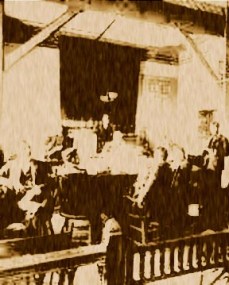
courtroomAdams, his green bowler clutched to his chest, took his seat in the chair next to the magistrate’s table.

“Do you swear to tell the truth and nothing but the truth so help you God?”

“I do.”

“State your full name for the record.”

“Charles Adams.”

“To the best of your recollection, what took place on the road to Las Cruces?”

“I stopped the buggy to urinate, and while I was standing there, I heard the old man say ‘Well, damn you, if I don’t get you off one way, I will another,’ or something like that.”

“Where were these people in relation to you?”

“The old man was in the buggy and Brazil was on his horse. They were at my back.”

“So you did not see the deceased standing upright at all?”

“I think when I seen him, the first shot had been fired and he was staggering.”

“Did he fall to the side, to the front, or to the rear of the buggy?”

“About two feet to the side.”

“Where was the defendant at the time?”

“He was on horseback, about even with the buggy. He had a six-shooter in his hand.”

“Who fired the second shot?”

“My horse bolted and I had to grab the lines and wrap them around the hub of the wheel to stop him from running. Then I went over to where the old man lay.”

“What about the defendant?”

“He was still on his horse and about in the same place.”

“Did the deceased speak?”

“When I got to him he was just stretching out. He did groan a little, and he might have said something. It sounded Mexican.”

“And what was that?”

“I can’t be sure.”

“Could you venture a guess?”

“It sounded like he might have said quien es?”

“What about the defendant, what did he say after all this had transpired?”

“He did not say much. He said, ‘This is hell.’ and he handed me his six-shooter.”

“Your Honor, I have no further questions.”

“Very well, Mr. Adams, you may step down. Mr. Prosecutor, call your next witness.”

“I call the Dona Ana County medical examiner, Doctor Fields, to the stand.”

A large man with a wide intelligent brow and graying muttonchops removed himself from the chair behind the prosecuting attorney’s table and strode to the witness stand.

“Do you swear to tell the truth and nothing but the truth so help you God?”

“I do.”

“State your full name for the record.”

“Walter Charles Fields.”

“You are the medical examiner for the County, is that correct?”

“Yes, it is.”

“Can you describe what you found when you arrived at the scene of the crime?”

“I found the deceased in a six-inch sand drift about four miles from town on the road to Las Cruces in an area known as Alameda Arroyo.”

“And what was the disposition of the body?”

“The deceased had been shot twice, once in the head and once in the body. He was lying flat on his back, one knee was drawn up. His trousers were unbuttoned and his male organ was visible which would indicate that he had been urinating at the time he was killed.”

“Was there a weapon at the scene?”

“Yes, there was. A shotgun identified as belonging to the deceased lay parallel to his body about three feet away. It lay on top of the ground without any sand kicked around it.”

“And what were the findings of your autopsy?”

“The deceased had been shot twice, one shot hitting him in the back of the head and emerging just over the right eye. The second shot was fired when the deceased was on the ground, the bullet striking the region of the stomach and ranging upward.”

“Thank you, Doctor Fields.”

“When a man is shot in the back of the head, he does one of two things with what he has in his hand. Either he clutches it convulsively tight or he throws it wide. There were no signs in the sand that the gun had been violently thrown. I would therefore conclude that this could not possibly be a case of self-defense as claimed by the defendant, but murder in the first degree.”

Abe Falk leaped to his feet. “I object! The witness offered conclusions that go beyond the scope of the original question!”

“Mr. Falk, this is not a trial, merely a hearing to determine the circumstances. . . .”

“All the same, your Honor, I respectfully request that the last comment by the witness be struck from the record.”

“Very well. Objection sustained. Doctor Fields please restrict your answers to questions asked by the prosecutor. Mr. Prosecutor, you may continue.”

“No further questions, your Honor.”

new badge hd 33

“Quien es?”

“That’s all he said?”

“Near as I can recollect, yes.”

“Could you see his expression?”

“No, he was pretty much just a shadow.”

“So you couldn’t tell if he saw you.”

“No, I don’t think he saw me.”

“Then why did he ask, ‘Who is it?’”

“He was asking Pete who the boys on the front porch were.”

MaxwellHouseCimarron-500“And Pete was in his bed.”

“That’s right, and I was crouched down in the dark next to him.”

“How did you know it was him?”

“Pete said, ‘That’s him!’”

“Then what happened?”

“I shot him.”

“How many shots were fired?”

“Two.”

“He fired back then.”

“No, both shots were mine.”

“What did you do after you shot him?”

“I got the hell out of there. I didn’t know if I’d killed him or just wounded him.”

“He was armed, though.”

“I couldn’t tell at the time that I shot him. Later, after I was sure that he was dead, I saw that he had a butcher knife in his hand.”

“I find it hard to believe that a desperado of his reputation would be walking about without a firearm.”

“He did favor that self-cocking revolver.”

“He didn’t have it on him?”

“I didn’t see it if he did.”

“Did you look for it?”

“No, once he was dead, I figured that no amount of pistols were going to make him any more dangerous.”

“Pat, I’d hate to think that you shot an unarmed man.”

“I had no way of knowing if he was armed or not, Ash. I wasn’t going to take the chance that he was and ask him.”

new badge hd 34

“You had a chance to see how cool and calculating he could be, when you were operating Beaver Smith’s saloon over in Fort Sumner, didn’t you?”

“He had come in with some of his compadres. That lot had been in there a few times before. They generally behaved, hoisted a few and played cards like most of the regulars.”

“I’ll wager he did like to belly up to the bar.”

“Can’t say that I ever saw him take a drink of liquor. He was partial to the paste boards, though.”

“Yes sir, he was adept at cards from a very early age. I should know, I boarded at his mother’s establishment in Silver City. He was quite a handful even in those days.”

“As I was saying, I was engaged in a game of chance at a nearby table and I had a good view of the goings-on.”

“Some hold that poker is more of a game of skill than chance, Pat.”

“Ash, you know as well as I do that when I play poker, it’s a game of chance. . .there’s always a chance I might win!”

poker party“Sir, your wit is like prairie lightning, bright and dry. Allow me to top your glass off with another jolt. But, please, please, continue. . .I apologize for my interjections.”

“One of their bunch, an hombre with the go-by of Grant looked to be getting pretty damn drunk pretty damn fast. He yanked a six-shooter out from an old saddle tramp’s scabbard at the bar. He waved it around, keeping it away from the old man, teasing him. He was an accident waiting to happen.”

“Certainly, that gun could have easily gone off and pelted somebody with a lead plum.”

“The boy came over to Grant, laid his hand on the pistol, said a few quiet words to him, and got Grant to let go of it.”

“That should have been the end of it.”

“Well yes, but no sooner had he gone back to his game, Grant snatched up the revolver again, walked be-hind the bar, and began breaking bottles and smashing glasses. I’d about had it with him by then.”

“I’ll say. He’d made himself pretty unwelcome.”

“But before I could get to him, little Jimmy Chisum collared Grant and was about to do my job for me.”

“Jimmy Chisum, now there’s a rooster.”

“Grant turned on him like a snake caught by the tail. He threw down on him with that old tramp’s six-shooter and cocked the hammer back.”

“That sounds like a mighty close situation.”

“Things got very quiet right about then. But as I said, the boy was a cool customer. He walked right over to Grant and said to him ‘why don’t he put that gun down and get the hell out of here before someone gets hurt.’”

“Now Grant was not a greenhorn desperado, was he?”

“That’s right, and he was on the prod!”

“But the kid was cool as the shade.”

“He didn’t take his eyes off Grant. And Grant, who had the look of a man gone too long to the bottle, was suddenly as sober as a country Baptist. What’s more, he had the drop on him. Then he said something like ‘now, you little bucktoothed sonofabitch, I got you!’ and he pulled the trigger.”

“What happened?”

“Nothing. The gun misfired.”

“You don’t say.”

“And they weren’t any further apart than you and me.”

“What did he do?”

“He blew the man’s head off. I was finding bits of brain behind the bar for weeks!”
new badge hd 35

“Last week you talked about how you couldn’t scare up a posse to go out after him and his gang. How did you manage to secure the assistance of the Canadian River boys?”

“The Panhandle Cattlemen’s Association had charged them with locating and bringing back stock that had supposedly been rustled by the men we were after.”

“So just who were those Canadian River boys?”

“Damn it, you know as well as I do who they were, Ash!”

“Refresh my memory, Pat. For the purposes of our narrative and the eventual readers of this book, it’s important that we get the details right.”

“Let’s see. Frank Stewart, of course, Lee Halls, Jim East, Lon Chambers, a character they called ‘The Animal,’ Poker Tom, and Tenderfoot Bob. Charlie Siringo was among that bunch, but he and a couple of others declined to take up the manhunt. I didn’t blame them, they were mostly cowhands. That was not what they had hired on to do.”

“Stewart must have understood that if you captured those boys, the stock depredations would most likely stop.”

“I had developed information that the men we were after had been seen in the vicinity of Fort Sumner.”

“Yes, you might say that Sumner had a fatal attraction for him, like a moth for a flame.”

“Once there, I had the men lie low and keep their presence concealed. I took a turn around the Plaza. There I ran into old man Wilcox’s son-in-law, Juan. I had suspicions that he might have information I was after. I was right. He had been sent to town by the gang with instructions to return and report on the lay of the land.”

“All right. Hold up while I get all this down. This was in December of ’80, am I correct?”

“That’s right. The weather had been particularly bad. A blizzard had blown through just the day before. There was a foot of snow on the ground if there was an inch. ”

“Good, good, weather conditions are important. They set the scene for the events about to transpire.”

“Juan confirmed that the men I wanted were at his father-in-law’s place. I knew Wilcox was a law-abiding citizen, but had he betrayed them, they would have killed him without second thoughts.”

“They were nothing if not cold blooded and ruth-less.”

“It seems that they had planned to come into town the following day with a load of beef. They learned that I was on my way to Sumner and so Juan had been sent in to size up the number of my force.

“I asked Juan if he would work with me to set a trap. He agreed immediately. I hunted up someone I knew to be sympathetic to these men and forced him to write a note saying that my party and I had left for Roswell and there was no danger. I also wrote a note to Wilcox stating that I was in Fort Sumner with my men, that I was on the trail of the gang, and that I would not let up until I got them. I gave the two notes to Juan. I warned him not to mix them up as his father-in-law’s safety depended on it.”

“You were confident that if those boys took the bait that they would ride for Fort Sumner that night.”

“That is so. I also knew he would be leading his gang. . .”

“Consisting of. . .”

DaveRudabaugh-500“Dirty Dave Rudabaugh, Billy Wilson. . .”

“A wanted murderer and a counterfeiter.”

“Tom Pickett, Tom Folliard, and Charlie Bowdre.”

“Guilty by association.”

“The old military hospital building was on the east side of the Plaza, the direction I expected them to come in from. Bowdre’s wife also occupied a room in that building. I figured that they would pay her a visit first. I took my posse there, placed a guard about the house, and awaited the game.”
new badge hd 36

“The boys got the cards out and engaged in a little prairie pastime while we waited. It was getting on dark and we had secured a room in another part of the old hospital to keep out of the cold. Snow was lying on the ground increasing the light from the full moon outside.

“Around eight o’clock, one of the guards called from the door, ‘Someone is coming!’  They were two hours earlier than I had expected them. ‘Get your guns, boys,’ I said, ‘None but the men we want are riding tonight!’

“Lon Chambers and I stepped out onto the verandah. The rest of the men went round the building to intercept them should they aim to pass on into the Plaza. The gang was in full sight approaching. Folliard and Pickett rode in front. I was close against the adobe wall hidden by the harnesses hanging there. Chambers was next to me. They rode up until Folliard’s horse poked its head under the porch. I called out ‘Halt!’

“Folliard reached for his pistol. Lon and I both fired. His horse wheeled and ran. I fired at Pickett but the muzzle flash from Lon’s rifle had blinded me and so I missed him.”

“I’ll bet he was taken aback.”

“You would have thought by the way he ran and yelped that he had a dozen balls in him.”

“What about Tom?”

O_Folliard-1-1“Folliard was crying and moaning. He had received his death. He managed to wheel his horse and ride back toward me. He called out, ‘Don’t shoot me, Garrett, I’m killed!’  One of my men ran out toward him, yelling, ‘Take your medicine, old boy, take your medicine.’  I warned him off. ‘He may be killed but he’s still heeled and liable to spit lead!’ I stuck to the shadows. ‘Throw up your hands, Tom, I’m not going to give you the chance to shoot me,’ I said. His horse stopped right in front of where I was standing.”

“Did he say something like ‘I’m dying, goddamn it’?”

“He moaned some. He was doubled up in the saddle.”

“I’ll wager he said something like, ‘I can’t even lift my head!’ and ‘It hurts, it hurts.’ And finally ‘help me down, let me die as easy as possible, boys.’”

“I don’t recall his exact words if he even spoke any. He was in a world of pain.”

“What happened to the rest of the gang? How did they fare under the onslaught?”

“During the encounter with Folliard and Pickett, the party on the other side had engaged the rest of the gang, had fired on them, and killed Rudabaugh’s horse. I learned later that it ran twelve miles under him, to Wilcox’s ranch, before it died. Soon as my men fired, the remaining outlaws ran off like a bunch of wild cattle. They were completely surprised and demoralized.”

“But Tom Folliard’s luck had run out.”

“That it had. We unhorsed him and disarmed him and laid him out on a blanket on the floor of the hospital. He begged me to end his misery. ‘Kill me,’ he said, ‘if you was ever a friend of mine, Garrett, you’ll kill me and end this torture.’

“‘I have no sympathy for you, Tom,’ I replied, ‘I called for you to halt and you went for your sidearm instead. I’m no friend of a man who would shoot me simply because I was doing my duty. Besides,’ I said, ‘I would never shoot a friend as bad as you have been shot.’

“Now when one of my men came up to where we were, he changed his tune. ‘Don’t shoot anymore, for God’s sake, I’m already killed.’”

“Who would that be?”

“It was Barney Mason who, along with Tip McKinney, was part of my original posse.”

“Married to Polly’s sister.”

“That’s correct.”

“And a notorious horse thief.”

“So some claim, but he proved invaluable in tracking down these desperados.”

“What did he say to Folliard?”

“Oh, he said something like ‘take your medicine like a man, you ain’t got much of a choice.’  And Tom answered, ‘It’s the best medicine I ever took, pard, but it hurts like Hell.’  He asked, ‘Could you have McKinney write my old grandma in Fort Worth and tell her that I died, can you do that, old chum?’ Barney answered him, ‘Hell, you’d kill your old grandma if she found out that you died with your boots on, Tom, it’s best that she didn’t know.’

“At one point he exclaimed, ‘Oh my God, is it possible that I must die?’  I said to him ‘Tom, your time is short.’ and he replied, ‘the sooner the better. I will be out of pain.’  He expired soon after that.”


Next Time: The Trail To Stinking Springs

Contents Vol. 2 No. 6

Welcome to Volume Two, Number Six of Dime Pulp,
A Serial Pulp Fiction Magazine

In Issue Six, Dime Pulp, A Serial Pulp Fiction Magazine, is adding two new pulp serials to the ongoing lineup. Beginning in this issue, the steampunk saga Cheése Stands Alone (previewed in Volume I, No. 6) featuring Airship Commander Lydia Cheése (pronounced “Chase”)  makes its official entry into the Dime Pulp roster. Also joining Phyllis Haldursdottir’s global saga as a new serial is Just Coincidence, a familiar fiction of dynastic intrigue and the dark revenge of a masked crime crusader.

In the first installment of Pierre Anton Taylor’s Just Coincidence, a privileged young man revisits his childhood neighborhood now a ghetto of poverty and crime. An emotional connection to an old mentor and an overwhelming nostalgia  move him to act against the injustice of social marginalization. That he is a dark prince as well as a dark knight is just coincidence.

In the steampunk world of Airship Commander Lydia Cheése, history has taken a sharp left or a right turn (depending on your point of view) in 1892 and the familiar events of history are turned upside down if they even happened at all. It is the year 180 of Pax Victoriana, one hundred and eighty years since Queen Victoria took the throne and whose persona if not the actual person, are kept alive as the paragon of world peace. Britannia still rules the waves as well as the airship lanes, mostly in the Northern Hemisphere and some of the Southern with the exception of  the carbon states New Brazil and United Outlaw Africa. Cheése Stands Alone begins with Captain Lydia Cheése  redoubling the effort to locate her fugitive father, the infamous Commodore Jack “Wild Goose” Cheése, which has brought her to the attention of  the Agents of The Admiralty (AOTA), and which will make her next three months of the year 180 PV an airship globetrotting adventure.

Number Eight of On The Road To Las Cruces reaches a crucial point in this fictional retelling of the last day in the life of a legendary Western lawman where memory becomes a dialogue with one’s self in the justification of a killing and a blind pride that leads to to death.

And last but not least Installment 18 of The 1940 detective story, Better Than Dead (Dime Pulp’s longest running serial), follows hapless confidential investigator Lackland Ask through another tangle of tense circumstances as his quest for revenge and profit are continually thwarted by kidnapping, murder, attempted murder as well as stolen diamonds and the mysterious jade Empress’s Cucumber. That he has a young adventuress in tow only complicates matters.

Dime Pulp Yearbook 21 contains the novels (The Last Resort and Better Than Dead) and the short fiction (Hard Boiled Myth and Gone Missing) of Volume One’s 12 issues,  available for perusal in their entirety. If you missed a few issues or lost the thread of a serial, clicking on the link at the beginning of this paragraph or on the menu bar above is a good way to catch up.

Dime Pulp continues its crime spree with two new pulp fiction serializations, Cheése Stands Alone by Phyllis Haldursdottir and Just Coincidence by Pierre Anton Taylor, as well as the continuing serialization of the pulp crime fiction of  Better Than DeadA Detective Story and the Western, On The Road To Las Cruces . If you’ve made it this far, go ahead and follow the links below to reading entertainment with the serial contents of Volume Two, Number 6

 —Perry O’Dickle, chief scribe
and word accountant


Knapp-Felt 1930 1930s USA mens hats

“Lackland Ask is the name. ‘Lack’ to my friends, ‘Don’t’ to those who think they’re funny. You might have seen my portrait on the cover of Black Mask, the crime fiction magazine. This is my story. It starts with a blonde. This kind of story always starts with a blonde.” Thus begins the seemingly non-stop, endless narrative of Better Than Dead in which women are not the only trouble although most of it, told with the wit and street savvy of Runyon and Parker.

Better Than Dead—18


otrpic1fi2In late February of 1908, a one-time drover, buffalo hunter, saloon owner, hog farmer, peach grower, horse rancher, US Customs inspector, private investigator, county sheriff, and Deputy US Marshal set out from his adobe home on the mesa above Organ, New Mexico accompanied by a young man in a black buggy on the journey to Las Cruces. He would never arrive. This is the story of that journey, a novel account of the last day in the life of a legendary lawman.

On The Road To Last Cruces ~Eight~


lydcirIn March of 1892, a Scotsman by the name of Arthur C. “Artie” Doyle was hanged by the neck until dead after being found guilty of a string of grisly murders of prostitutes in Whitechapel. At that moment, history veered off its presumed course and headed in a direction all its own in which the Great War never happened because the Kaiser was afraid of offending his grandmother, Queen Victoria, whose life has been prolonged by the wonders of biology. The peace of her reign, known as the Pax Victoriana, despite some major environmental disasters, has lasted 180  years keeping as many Victorian airs as possible while making accommodations to bio technology. Cheése Stands Alone poses a steampunk question, can Captain Lydia Cheése find her father, the antigovernment turncoat and radical, Commodore Jack “Wild Goose” Cheése. And furthermore, will her quest take her around the globe and through alternate world histories in the requisite 80 days or is it the beginning of a lifelong journey?

Cheése Stands Alone I


fury circle1fiIn Just Coincidence, a privileged young man with the unremarkable name of Wayne Bruce returns to the site where his father once had his business, a battery manufacturing plant, and where he often spent his childhood days hanging around the factory and the neighborhood. His return is haunted by the mysterious circumstances surrounding his father’s death and the vague feeling that his uncle is somehow involved.  Appalled by the poverty and crime of the place he remembers fondly, he is moved to resolve the injustice of the socially marginalized and to wreak vengeance on those he believes are responsible for the death of his father. A personal coincidence brings together dark prince and a dark knight joined together in a fateful and tragic quest for justice

Act One. Scene 1

Act One, Scene 1

By Pierre Anton Taylor

The old neighborhood had changed for the worse. The high brick wall that had once been a part of his father’s factory was covered with ivy creepers, mottles of lichen, and faded graffiti. Sickly yellowing weeds grew between the cracks in the broken sidewalk. At the curb, obscured by plastic trash and piles of leaves,  stood an old sycamore whose roots has caused the cement to buckle, a last remnant of when the area had been tree shaded, thriving, catering to the employees from the battery works..

He stood in front of the candy store he had frequented as a youngster. It hadn’t changed much, just become a little shabbier. The white paint on the double front doors had bubbled and peeled. The storefront windows near the entrance, repaired with duct tape and cardboard, looked as if a hole  had been punched through it.

JCA1S2“That’s quite an antique.” A square shouldered black man on the step leading up into the store spoke the words. He was referring to the black sedan parked at the curb.

“It’s a 1960 Plymouth Fury. Fully restored.”

“I know that. I was about your age when I would have given my right arm for one of those.” He held up the stub of his right arm. “Instead I gave it for my country in Vietnam.”

“Oh, I’m sorry.” The young man grimaced. He always felt uncomfortable saying it because it was such a cliche. “Thank you for your service.”

“Wasn’t your fault. I just got careless. Ripley’s the name, by the way. I didn’t catch yours.”

“Wayne, Wayne Bruce.” He felt a little awkward as he extended his hand, but the black man grasped it firmly with his left.

“And what brings you to this neighborhood, Mr. Bruce? Lost? Or looking to pick up some cheap real estate?”

Wayne Bruce shook his head and glanced around again, reorienting himself after so many years. Abandoned buildings and the apartment towers that used to teem with activity now appeared worn and past their use by date. The brick enclosure to the crumbling factory site he used to think of as towering had retained some of its respectability if not its height. The candy store abutting the wall emitting a faint single source amber light, the tavern on the corner across the street where Central teed into Battery, neon beer sign sputtering in the dark round window open for business.

Ripley kept his gaze fixed on the young man, a lithe six foot two, tangle of dark hair framing a square face and jaw, dark intense eyes under darker eyebrows, and with a deferential confidence to his manner. A tailored black gabardine three quarter length coat with attached cowl draped snugly across the broad shoulders. The crew collared dark gray jersey clung to the shape of the angular torso topping a pair of slim black slacks and casual half boots.

Bruce then smiled and indicated the candy shop. “I used to come here when I was a youngster. My favorite candy was a Chunky bar. Mr. Rick still the owner?”

Ripley showed a frown and squinted at the tall young man. “You know old Rick?”

“Sure, he made the best egg-cream around.”

Ripley’s frown intensified, taking a closer look at the white man who had just parked his antique Plymouth on one of the roughest streets on the east end of the city. “No, he don’t do that no more. Hasn’t done that in a real long time, make egg-creams. Kids today don’t know what egg-cream is. But you are right, he made the best.”

A stiff breeze rattled the branches of the sycamore and persuaded some of the last leaves to release their grip and float reluctantly to the concrete. Both men looked in the direction the wind had come, at the lead gray mass hovering over the tall spires and square silhouettes of the downtown district, the tawny streak of late afternoon sky crushed by darker clouds at the horizon.

“You say Bruce? That your name? Like this place here?” Ripley pointed to the grim shadows hovering above the wall and the sign that had been creatively overwritten.. “Bruce Battery Manufacturer? That you?”

Wayne nodded. “My father.”

candystore1“The Battery Man. I remember the billboards. Nobody Beats A Bruce! You that kid? I heard about you. Come on, come on in.” He pushed the door open and the hinge squeaked like a cry for help. “He’s in the back, come on.”

Bruce didn’t need urging to step up and in. The candy store was familiar though smaller than he remembered it. The counter with the white scale, now a nicotine yellow, atop the display case of penny candy, jaw breakers, licorice whips, and candy bars. A diagonal crack mended with yellowing translucent tape ran across the display glass. On the back wall by the cash register the slotted black shelves of tobacco products mostly empty. There were plastic toys and odds and ends household items, clothespins, wooden matches, boxes of plastic forks and knives on shelves along the opposite wall. A rack next to the shelves displayed an assortment of flimsy plastic Halloween costumes and masks from the holiday a few weeks past. Boxes, some unopened, some empty, were stacked on the floor toward the rear of the small space where a doorway was covered with a threadbare flowered green curtain stirred by the sound of shuffling behind it.

“Yo! Rick! Hey! Old man! Somebody here to see you!” Ripley’s grin was mirthful, glee ringing his eyes.

A grave low voice answered, “If it’s Kerr, I already gave him my answer. What don’t he get about ‘shove it’? The curtain parted to a frown under a head of close cropped silver wool and a mean squint distorting the dark brown face. Pale framed thick lensed glasses held together at the bridge by a bulge of masking tape sat on a crooked nose, the tip of which appeared lighter than the rest of the ebony exterior.

The old man came to a stop, a walking cane in each hand, and craned his tall torso forward. “Who are you? You don’t look one of Kerr’s. . . ?” He gave a sidelong glance at Ripley who was trying to maintain his composure and not burst out laughing, and then turned to face the tall young man in black. A smile slowly cracked the harsh demeanor exposing red gums and missing teeth. “It’s you, ain’t it? I’d know that canary eating grin anywhere.” To Ripley, he snapped, “What you laughing at? I don’t see nothing funny!”

Easing himself behind the candy counter, Richard Richards, Mr. Rick to most of his customers, took up his iconic position in the eyes of the young man. “Lemme guess. A Chunky bar.” At the young man’s nod, he slide open the rear door to the display case and reached in. “You remember how much you used to pay for one of these?” he asked as he set the foil wrapped candy on the top of the counter.

chunky1Wayne paused to recall. “A quarter.” And then, “But I remember when they went up to fifty cents because I came in one day and all I had was twenty five cents, two dimes and a nickel, and you told me that the price had gone up. But you sold it to me anyway, that I could pay the rest next time.”

The old man chuckled. “That’s right. And you shoulda seen the look on your face when you realized you didn’t have the right amount. You mighta cried.”

“Did I ever pay you back? I don’t remember. I hope I did.”

“I don’t recall either. Not that it matters after all this time.” He held up the silver square. “Nowadays one of these will set you back five dollars! Think anyone can afford that?”

Ripley nodded in assent, “Not around here they can’t, that’s for damn sure!”

“This young man here used to keep track of my inventory. He knew every candy I carried and how much of it I had. He’d come in here with his daddy and name off everything I had in the case. I carried newspapers back then, and Mr. Bruce would come in for his morning and his afternoon edition. He always had this one in tow. Go straight to the glass and put his nose up against it.” He shook his head in recollection. “Time’s are gone.” And addressing young Bruce, “I’m sorry to hear of his passing.”

The tips of Wayne’s ear’s reddened, darkening them, and he twisted a grin in agreement and acceptance of the condolences. And as if to offset the tension of the emotion, he pointed to the soda vending machine’s garish edifice over to one side in the corner, the only thing that seemed out of place. “I remember the big red cooler you used to have there. It rattled whenever the compressor came on. The first time I heard it I nearly jumped out of my shorts. That and the treasure hoard of candy were my first impression of this place. And you used to have a comic book rack over there too. I spent a lot of time sitting on the floor reading them. Those are good memories, Mr. Rick.”

“Aw, you were a pest, always asking questions, you were curious about everything. And then you went away to school, somewhere, some place foreign I heard. Your mother sent you off to get a proper education. And you’d come by every once in a while when you were home visiting, and I seen you were developing into a fine young man, taking more after your ma than your husky pop, though. She only come in here with you a couple times I can remember but I could tell she was high toned.” He lowered his eyes at the memory, “She doing well, is she?”

Wayne gazed out at the failing light of the darkening street. He nodded, “Yes,” as if to himself. “Mother is doing well as can be expected. Dad’s brother, Harold, is taking care of the details, managing the Bruce business empire.” A hint of bitterness in his attitude. “Life goes on even if not for Wallace W. Bruce.” He erased the frown with a bright smile as if it had never been there. “I thought that while I was in town for the funeral I’d see if I could still get a Chunky at the only place I know that sells them.”

Rick gave an appreciative guffaw. “Well, you are in luck, this is the last one! I stopped carrying them half a dozen years ago when the price went up to two dollars. I didn’t think anyone would ever want a square of chocolate, nuts, and raisins that bad. I kept this one as a souvenir of when candy was cheaper than crack.” He pointed to the shelves behind the display glass. “You see anything in here that reminds you of a Zagnut or Good & Plenty or a Clark Bar, Abba Zaba, Big Hunk, JuJuBes, Milk Duds, or Pay Day?”

“You had those little wax bottles with fruit syrup in them. . . .”

“Yeah, Nickle-A-Nips, go for over a dollar now. I can’t get a lot of those old candies anymore. It’s my distributor, he carries all these off brands. You ever hear of a Ball Park? it’s shaped like a frankfurter, made mostly of sawdust as near as I can tell, and held together with a chocolate tasting glue. Bigga Jigga? I don’t even want to think what it’s made of, but I heard somebody lost a tooth biting into one, pulled it clean out of his gums. And Plenty Good? Just a box of hard candy pieces swept up off the candy factory floor. O’Hara’s? Some kind of high fructose soybean glop, and Dummies, just little pills of color flavored chalk. This Wacky Wax? It’s just artificially sweetened wax. That can’t be good for your gut.”

Ripley nodded vigorously, “Eat enough of that, stick a wick up your butt and call you a candle.”

“You might need a new distributor.” Wayne offered with an understated chuckle.

Rick shook his head. “No, can’t, Kerr controls the East Central District. He has a say in just about everything that gets bought and sold in this neighborhood. His guy makes me carry these knockoffs and threatens me when they don’t sell! He made me install that drink vender. It’s expensive, besides. Has to stay plugged in all the time, uses more lectricity than the rest of the shop! Usta carry his girly magazines but it just attracted the kids, and they’d want to shoplift something, sometimes because they thought they needed it, other times just because they thought they could. Sell ‘em under the counter now, you gotta ask to see ‘em, and if you’re asking, you buying one.”

“Kerr? Where have I seen that name, from around here?”

“Joeseph Kerr. That’s his warehouse down the block, in the old garment factory, you mighta seen the sign painted on the side of the building when you turned down Central coming into the neighborhood.”

“I did. Kerr Novelty, Inc. Big letters.”

“Big crook, if you ask me. Came from out east about ten years ago. He’s got his fingers in other pots, too, buying up real estate. He owns Quinn’s, the tavern across the street, and the old folks apartment building next door. I heard he was partnering with some developers for a project down at the other end of Battery. Bound to be a boondoggle like most projects in this town.”

“Calling the cops ain’t gonna do no good. They take forever to get to this end of town. Kerr’s probably paying off somebody at the precinct to lay off in his turf.”

“And he’s been looking at the old factory site, your pop’s place.” Ripley spoke up. “Heard he wants to move his operation to over there.”

Rick threw him a quick glance. “B, you know that’s just a rumor. Ain’t no truth to that.”

“Yeah, that’s what I overheard at Q’s. And you know why that’s bad news for you.”

“Yes I know, but no need to talk about something ain’t gonna happen until after I’m dead.”

“You see, man, this building, old Rick’s crib in back, the candy store, they all on the factory property. Somebody buy that factory, they get the candy store in the deal.”

Wayne cocked his head to one side, “Is that true? I’d have to look up the property deed in the company archives.”

“No, no, Bion is right. This is part of the factory property. It had been the foundry foreman’s residence before the site was converted to  Bruce Battery Works. I was one of your old man’s original employees back when he started out. Then after the accident, well, he helped me. . . .”

“Here, here,” Ripley was pointing out the window as the streetlights sparked to life at the encroaching gray, “The Up To No Good gang, I’Van and J’Van. I haven’t seen them in a while. Somebody musta bailed them out.”

Rick concurred. “They on the prowl early, looking for a stray bird. They must be desperate.”

“You know them?”

Ripley nodded solemnly, “We had occasion to get close.”

Rick chuckled, “Bion ripped open a case of whupass on those boys. They know not to mess with him.”

Bion pointed with his stub. “The redhead? That’s I’Van. He’s a nasty piece of work. The other one, the kid, J’Van, he’s dangerous because he doesn’t know how strong he is. But he’s a follower, not a leader. They do muscle for the local numbers guy, and strong arm the unwary for their nickels and dimes. They try to intimidate everyone else. Those that cross them usually end up in the hospital.”

“The bookie is in Kerr’s pocket. He couldn’t operate without his say so. His boys are the neighborhood pit bulls.” Rick added.

“And they’re taking a close look at your Plymouth at the curb. Might not be too wise to leave it parked there for long. I can go stand by it. They’ll know enough to steer wide.”

Wayne held up his hand. “No, please, I don’t think that will be necessary. Thanks for the offer, Bion, is it? An unusual name if you don’t mind my saying.”

“Naw, man, that’s cool, everybody trips over it. I got it in Nam. It’s because of my last name, Ripley. The guys in the platoon used to call me Believe It Or Not, and it got shortened to BION, and then just B, what most folks knows me calls me.”

“I don’t believe it!” Rick was leaning forward on his canes glaring out the window. “Just this minute, coming down the steps, it’s old lady Winslow, I’m sure of it.”

“Her daughter musta forgot to lock the apartment door again,” Ripley said, a trace of concern in his voice.

“She thinks she’s going shopping, got her purse and her shopping bag. . . .”

“Wait till she gets around the corner to find that the market been closed for two years now.”

“If she gets that far. I didn’t think they’d do that. They are lower than scum. Knocked her down, one of them has got her purse, laughing.”

“Call the cops!” Wayne had started toward the door.

“Calling the cops ain’t gonna do no good. They take forever to get to this end of town. Kerr’s probably paying off somebody at the precinct to lay off in his turf.”

“She might be hurt!” Ripley raced through the door, “Call for an ambulance!”

Rick replied to Wayne’s questioning look, “He was a medic in Nam. He’ll see to her till the meat wagon arrives.”

“The men, they’re gone, where. . . ?”

The old man looked up from dialing the phone, “Can’t have gone far, mighta ducked into Q’s to divvy up the loot.”

Wayne became very quiet, overcome by an ominous calm. He glanced at the Halloween display, the black domino mask with peacock feather eyebrows in its cellophane bag. He unclipped it from the rack and held it up. “How much?”

Rick shook his head. “Try it on first. See if it fits.”

Wayne ripped open the bag and plucked off the feathered decorations and slipping the mask over his eyes. “Better call for a second ambulance.”

He strode down the steps, skirted the rear fins of the Plymouth Fury and stepped quickly across the darkening street pulling the cowl up over his head as the first of the rain began to fall.

quinnsWet occupied the air and chilled it. In the yellow-brown light of the doorway to Quinn’s Tavern, the rain striking the concrete jumped like sparks off a hot griddle. The door opened quietly, disturbing neither the wide shouldered man with the bar towel over his shoulder, gaze intent on the square of color TV mounted above the bar, who laughed along with the track, a rheumy asthmatic rasp, or the other two hunched over in the shadows of a back booth, laughing, giggling, but not at the TV, a sitcom about people who frequent a bar similar to this one although certainly less sinister.
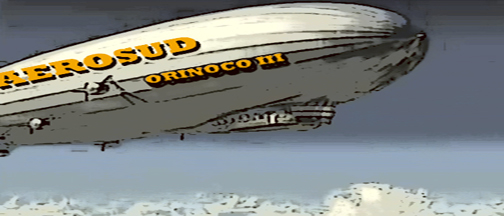
The young one looked up, questioning at first and then frowning his face into a growl at the perceived threat. The redhead jerk his eyes up from the emptied contents of the purse like a dog guarding a bone. He was about to raise his head and bark when two rigid fingers jabbed the larynx causing a choking spasm gasp for breath at the same time the base of a palm slammed into the apex of his nose with enough force to render him unconscious. As the dark haired man boy rose to defend his partner, a well-placed kick to the sternum knocked him back into the sitting position with his head bouncing against the tall booth, an open target for the elbow that struck him full face and broke his nose. The man behind the bar had just brought up the shotgun as the round glass ashtray that had been between the two unconscious thugs struck him on the bridge of the nose knocking him down.

A black gloved hand gathered the pile of belongings in the middle of the table and returned them to the purse. There wasn’t much to the loot: a change purse, a wallet stuffed with grocery coupons but no legal tender or credit cards, a lipstick tube, hair pins, an empty pack of spearmint gum, a sheaf of letters held together by a ribbon, the scent of lilac.

No one paid attention to him as he set the purse on the stoop to the apartment house where a few neighbors had gathered with umbrellas to shield the old woman who was sitting up now, looking around bewildered, rubbing the elbow she had hit after being pushed down by the hoodlums. A siren sounded close.

Ripley glanced up once to see the tall cowled figure, eyes shadowed by the black mask before the ambulance’s flashing red and ambers saturated the rain dark street. After the medics had taken over, he stood in the soaking downpour and stared at the empty curb in front of the candy store. He sensed that it was just the beginning, a perfect storm of coincidences gathering at the horizon that would rain down justice and injustice alike, and transform the lives of those who lived in the decaying industrial fringe of the city, a city whose name had always resonated as a cesspit of crime and corruption.


Next Time: Unfortunate Son

Cheése Stands Alone I

by Phyllis Huldarsdottir

Chapter One

Captain Lydia Cheése (pronounced chase), one hand ungloved, read the memo with a frown. Her airship, Orinoco III, had been grounded. An Aerosud cadet stood by at attention in a blue glossy visor cap and the impeccable dark blue company tunic with the distinctive sky blue piping at the collar. Lydia placed her thumb on the bio wax pad of the message board and then pressed her print at the bottom of the white message square. The cadet knuckled a salute. Captain Cheése returned it perfunctorily, and with a sigh. She watched the young woman exit her suite at Doyle House as she peeled off the other maroon porskine glove. “Pshaw,” she said with gritted teeth. G. B. Pshaw was her supervisor, nemesis, and constant irritant at Aerosud HQ. She caught a look at herself in the mirror above the marble mantle of the faux hearth as she unfastened the gold frog at her throat and sloughed off her Aerosud officer’s tropical dress tunic.

AIRSHIPIIIWhat she saw did not please her, a fringe of auburn hair, brow knit into a frown, grey eyes staring back in anger. Not again, she thought. Two groundings in as many weeks, and her suspension only just overturned. Tossing her tunic onto her grandfather’s vraisther smoking chair, she glanced at the stack of documents on the side table. In particular, she eyed the communication she had set aside the day before when she had been too preoccupied with preparing for her flight out of Lesser London to give it much more than a cursory glance. Addressed to her, handwritten in green ink, that in itself unusual, on what felt like a slip of parchment. “Parchment, really?” she said aloud. It was just one of the many come-ons and false leads she had received since she advertised a reward for information as to proof of life of Commander Jack Cheése, her father and the brilliant airship engineer who had disappeared many years ago, around the time she had entered the Air Academy for the freshman term.
The slip of parchment, or faux-par, she wasn’t going to believe that it was actually real, gave an address on Baker Street, Old London, current day, and specifying two in the afternoon. As it was almost four, she grabbed her walking coat and went quickly to the door. “Impulsive!” she imagined her mother saying. But no, not impulsive, an intuition she felt compelled to act on. The preciseness of the hand that had shaped the words “I can help you” tipped her in favor of the certainty of her hunch.

The elevator man gave a bow of recognition as she stepped on, and slid closed the door grill. A quiet whirr of machinery brought them down to the main floor lobby. Off to one side, framed by potted finger palms, was the entrance to the lounge frequented by her fellow lighter-than-air officers. Collectively they were known as litharians and the ships they flew were commonly known as lithairs. She would have been welcome at any table or congregation of hale fellows well met as she was known among them for her cutting wit and outrageous pronouncements as well as the sincerity of her companionship.

Doyle House, where Lydia Cheése maintained a permanent suite, was a hostel catering to the Navair trade, especially their officer class. Crews of ships officers, pilots, navigators, drive engineers also known as chemists represented dozens of navair companies doing business at the aerodrome on the far western edge of Lesser London lodged at Doyle House on layovers from continental and trans-oceanic flights. They flew passenger rigids and cargo semi-rigids, rigs and semi-rigs to those in the trade. Their companies were from all over the flown world. Large luxury passenger transports like Rajair and Anglair. Canamair operated both trans-Atlantic passenger and cargo service, as did Aerosud, Lydia’s employer, based out of Sao Paulo. They offered service to the major ports in Greater London which included Paris, Amsterdam as well as Lesser London where Lydia was now feeling, in a word, ruffled and in no mood for companionship.

The doorman greeted her opening the door, and she crossed the threshold into the torch orange glow of phosphorescent plasma lamps lighting the perpetual brown haze of Lesser London. Her grey walking coat was cut to the knees of the darker grey of her uniform culottes. Her boots were pointy, at heel and toe, and made of supple maroon psuedo, matching her porskine gloves, and fastened along the calf by large pearlite buttons. They made her appear taller, and she was already tall. On her head was a jaunty little cap of ribbons and silk made to look like a tiny bird had nested in the soft pile of auburn hair. She strode down the wide granite steps to the cobbled walkway where the carriages for hire and their drivers waited. She chose one at the head of the line and spoke the address on Baker St.

“Would that be Baker St. West, mum, or would that be Baker St East?” the driver asked over his shoulder, whip testing the haunch of the blocky beast of burden, an equlone, specifically bred for urban drayage. Like mules, they could not reproduce and their life span was less than five years. Small as a pony but as strong as a full grown natural equine, they were cheaper to maintain. Unfortunately, as they approached their end date their pace became slower and slower, signaling a reluctance to hasten their passing.

Lydia glanced at the address on the parchment impatiently. “It just says Baker St.” she said as if that settled it.

“Well, mum, Baker St is a very popular name here in Double L, Lesser London to you, and as I said, there’s East and West Baker St as well as Baker St South, Baker St North, and South Baker St North. Of course there’s also Upper Baker St and Lower Baker St. Upper Baker St Southwest. And Old Upper Baker St. If you understand what I’m saying, mum.”

Lydia restrained herself from knocking the man off his bench. “Take me to the intersection where all these Baker Streets meet!”

“Ah, yes, mum, Baker Square.”  And under his breath, “should have said that in the first place.”

After what seemed like an interminable time, the plodding near death equlone carriage brought a fuming Captain Lydia Cheése to Baker Square, a rather nondescript roundabout, so not literally a square, from which each of the various Baker Streets radiated like the spokes of a wheel. The driver hunched over, shoulders to his ears, as if feeling the heat of her rage.

She disembarked and paid him. “Here you are, sir, a five Victorine, and not a Regina more. You have hindered me long enough.”

row housesBaker’s Square was hemmed in by blocks of apartment dwellings designed to look like rowhouses, stacked one atop the other. They were all the same whichever way you looked. Their sameness caused her a momentary claustrophobia.
A figure approached, steadily, methodically. When it stepped out of the shadows she saw by the cut and buttons it was a constable.

He smiled and saluted her. “Be of any service, mum?”  He was a big man. Lydia looked directly into his eyes. She knew what the tattooed lines radiating from the corner of his left eye meant.

“Yes, perhaps you can. I seem to be unable to find this particular address.”  She showed him the parchment. “Is there not simply a Baker St without any of the bothersome directional appendages?”

The constable studied the square she held out to him and scratched his chin. “Yes, of course there is.”

“Then please be so kind as to direct me.”

“In Old London.”

“Old London, but. . .” It then occurred to her. Old London, not Lesser London. Old London, underground London, the London that Lesser London was built upon.

The Constable pointed to the iron gate set in the granite base of the monument at the center of the Baker Square roundabout. “Tours to Old London just now closed up for the evening. Too dangerous to go down there now, without a guide, and you being a lady and all.”

“Constable, I will have you know that I served as an ensign at the siege of the Bushwhackers. I know what danger is!”

“Aye, mum, I was in the PanAm Wars meself.”

“Yes, that is evident from your eye tat. You were with. . . .”

“The Lost Brigade, yes, mum.”

“You are one of the brave, and I respect that. However, I must to Baker St. I am already late!”  Lydia strode toward the iron gate.

“It’s not safe, mum,” he called after her.


Chapter Two

At the bottom of the concrete steps joining the cobblestones of Old London the bacterial-sodium lamps lit dimly shades of grey and black as flat as house paint. A man in a dusty worn gray shirt, pants, and shoes stood against an almost identically gray wall beside a weathered gray real wood produce cart upon which were displayed row upon row of bright though somewhat desiccated illegal Valencia oranges. Lydia was about to ask directions when she saw the street name in plain view attached to the side of a dingy gray brick facade. Real brick, not that faux coral that was used now almost exclusively for building exteriors. She’d always been under the impression that Old London was shuttered after daylight hours yet a goodly press of people, all dressed in the varying shades of gray, black, and brown of their surroundings, shuffled past like shadows, busy about their business. Brighter light splashed out onto the cobbles from storefronts, and distantly, music and singing could be heard. There were also clots of men clustered around porn boxes listening to the endearments of courtesans. Others stood in doorways and eyed passers-by.

Lydia proceeded down Baker St searching out the house numbers, peering into alcoves and letting her eye follow the buildings’ truncations as the support to Lesser London. At least here you could see some of the sky bathed in the rust orange of plasma light between the roadways and the avenues joining the elevated sectors like the bridges over the fabled canals of Venice.

Her forward progress was halted somewhat by the throng of dingily attired Old London denizens in the thrall of street entertainment. A bear on a chain rolled a large red ball with its feet wearing a red Phrygian cap strapped under his chin. A tall African in a flowing ostrich cape led the furry apparition around in a circle as if he were holding a magnet in his extended hand. Lydia paused to observe, a bit distracted by the unusual show. Live animal acts had been banned aboveground for decades.

As she turned to resume her quest, she was confronted by two coppers. They had been keeping an eye on the crowd and had noticed her. She was out of place. They were young, one barely out of his teens, a tense meager set to his jaw that was trying to pass for determination. The older one with the light fuzz of lip hair spoke. “Your papers, mum.”

Lydia reached into her pouch bag and retrieved her Aerosud identification. She handed it to him, “It’s quite alright, constable, I have an appointment.”

The copper nodded, “Captain Cheese, is it?”

Lydia narrowed her eyes, and for the hundred thousandth time said, “It’s pronounced ‘Chase’.”

“Yes, mum. And I should be warning you about traveling the depths without an escort, mum. It is very dangerous.”

The younger one nodded vehemently. “This lot here would think nothing of kidnapping an upper to sell on the fem market!”

A commotion at the other side of the gathered throng drew their attention and they hastened away. An explosion sounded, a pistol or fireworks. The crowd scattered pushing past Lydia caught up in the fleeing mob. She felt a tug at her waist where her pouch was slung. She looked down to see a young girl slip effortlessly, eel-like, through the press of legs, arms and torsos. The bag pouch perceptibly lighter, Lydia understood immediately that she’d been picked. She forced herself through the crowd after the young girl.

The girl moved away quickly on what appeared to be a crippled leg. She wore a gray crochet bonnet over dusty brown hair, her shoulders draped in a shawl a shade lighter than her hair, and one arm hooked through a large wicker basket indicating that perhaps she was a flower seller.

lower londonThe pickpocket veered into the alley between two buildings with Lydia still in the tangle of panicked underdwellers. She kept her gaze fixed on the hobbling figure and once free of the mob ran swiftly to the entrance of the alleyway. The already inefficient bacso street lamps hardly penetrated the deep darkness of the cleft between buildings. Indignation overrode her sense of caution and she strode into the shadows. Slowly her eyes gathered the available light and sharpened to the dark. An oversplash of orange from the city above allowed her to discern edges and contours. The young purse snatch bobbed hurriedly toward the light of a parallel street at the other end.

Certain that she could easily overtake the thief, she hesitated for a beat. Someone had reached the girl first. Springing from the shadows a wiry figure grabbed for the girl’s shawl. The undersized shape stumbled. The much larger outline pounced on the fallen child. It occurred to Lydia that a thief was robbing another thief, one that seemed a little more formidable than a crippled girl. By then Lydia had caught up to them. She just wanted her wallet back. Instead she got the attention of the crippled girl’s assailant.

He was a narrow dagger of a man, drawn emaciated face, stubby hard shoulders extending boney brittle arms and long fingers. “Now we have ye,” he gargled a mirthless laugh.

Lydia had been taught well. As she flipped forward she extended a hand and placed it on the attacker’s rib cage, the momentum and force of her acrobatic maneuver was enough to give her thrust the power to unbalance the man. As she landed she swung her right leg and tapped the man’s chin with the toe of her boot at exactly the right spot, rendering him instantly unconscious. She made all these movements effortlessly as if simply slipping an arm through a sleeve or brushing back a fall of hair.

The young flower seller, now unburdened of her empty basket, scrambled around the corner of the building and out to the lighted thoroughfare. Lydia stepped over the fallen man after her. As she emerged into the light, the young thief was nowhere to be seen. Lydia hurried past a young couple sauntering ahead and then turned and hurried in the opposite direction, their startled gazes following her. She glanced across the street beyond the hack stand and the motionless equlones. The girl had disappeared.

Lydia strode to an iron railing on the other side of the alleyway. She leaned over the bar railing and stared down into the stairwell that led to a basement door. The door itself seemed to sway slightly as if it had just moments before swung closed. Lydia trusted her instincts and leapt down the stairwell. The door pushed open easily and once again she was in pitch black, this time with not enough ambient light to gather for sight. She turned back the piping on her coat sleeve and massaged the phosphene activator until the piping emitted a faint green glow like low viz string lights. It was a purely decorative feature of her garment, but it had enough phot, 33 lumens per centimeter if she remembered correctly what the salesperson who sold her the coat had claimed. She moved her arm in a slow arch across the front of her body to illuminate the bare edges of the light’s reach. A passageway opened up in front of her. Attenuated by the lack of the visible spectrum, she heard the whisper of shuffle steps ahead. She hurried and almost ran head on into the wall where the passageway turned sharply left. The rhythm of the foot falls changed and, after almost tripping, she was now following steps leading up and toward a light, a pale narrow splinter at the edge of a doorway. Without the slightest hesitation, she flung open the door with such force that it slapped against the inside wall of a small room lit by the soft glow of an oil lamp. The bear confronting her made her catch her breath.


Next Time: Slithereens


Better Than Dead—18

by Colin Deerwood

Ads84

The streets were wet with rain again. I hopped a crosstown bus. One of the passengers, an elderly woman, let me have her seat thinking I was blind. It was Sunday, and she was in her Sunday best as were a few other women and men in their best dresses and suits, coming from or going to services. I wasn’t going to argue. I was just being cautious. Rebecca took a window seat. We stood out like Raggedy Ann and Andy in a collection of porcelain dolls.

1937_Bus1At the end of the line the late afternoon sun passing behind a cloud defined a horizon of ship yard cranes and a thicket of masts. Fenced lots echoed with the barks of loud vigilant dogs and the brick warehouses, some seeming abandoned, maintained a grim silence. The rail yard was nearby, and a block of shabby businesses: a café and bakery, a corner grocer’s, a laundry, a hotel, a snooker parlor, and the address I was looking for.

I kept to the opposite side of the street in the shadows of the elms alongside a dilapidated board fence. From behind wood pallets stacked on the bed of an unhitched horse drawn freight wagon I cased my destination.

The sun had broken through the clouds glancing orange off the plate glass of the café and blindingly into the eyes of the man standing on the stoop of the address. A large Oldsmobile breezed up and he shaded his eyes, or maybe it was a salute, before climbing down to an arched double doorway to let the big car into the garage. Yamatski’s digs weren’t the sleazy walkup I’d supposed. That gave me pause. So did what Rebecca said next.

“Lack, look at the sign above the door!”

I’d seen it. I couldn’t make out what it said. It was Greek to me, like you might find on a fraternity house near the university uptown. CC with an upside down N or maybe a U. It coulda been a mook’s version of the YMCA for all I knew.

“Serbskiy Sotsial’nyy Klub,” she breathed. “They are connect to Black Hand. It is social club for fascist.”

I got it. It wasn’t going to be easy. The social club was like a brick fortress. There was no way I was going to go in the front door, not with that mug guarding it and whoever else was behind it.

The blinking neon sign in the plate glass window of the bakery said Café Latino. It suggested I needed another cup of coffee to think things over. And while I was at it. I ordered a half a dozen donuts.

“These donuts I have had before. Sweeter than a bagel. More like cake. I have seen them eaten in the movies. Donut must first be immersed in cup of coffee,” Rebecca demonstrated.

donut scene“No, no you’re doing it all wrong! Didn’t they teach you anything in that fancy Swiss boarding school of yours?” And I showed her how, breaking off a piece and dipping it in the coffee just enough to wet it but not get it soggy. “That’s the way it’s done, kid.”
She smiled and that always got me. I had no defenses against it and any doubts I had about her, about me, just disappeared. “I like when you call me ‘kid’, it makes me feel very American. And you are right, it is much better to dip than to soak. I am learning much from you.”

I didn’t want to think she could be putting me on. And I didn’t want to be the one leading her astray even though there was no doubt that’s what I was doing. I had to put all that aside and concentrate on my next move. It was like she could read my mind.

“What will we do now, Lack?”

Above the café was a fleabag known as the Lattimer Hotel. I’d followed a wife and her boyfriend there once years ago when I was just starting out in confidential investigations. There was a narrow two shoulders wide alley between the hotel building and the social club. The room number on the address of Yamatski’s card was 404. I guessed that made it the fourth floor and to the rear. The hotel building was a floor taller that the social club at five stories. I knew what I had to do. And I had to make sure that Becky was out of the way when I did it.

“I think we should get a room.” I said and tossed my bit of donut in my mouth.

Ads85

There were water spots on the wall were at one time rain had leaked in and no one had bothered to paint over them. The bed looked like it belonged in an Army hospital and maybe it had at one time. A recent occupant had been a cigar smoker. There was a cracked mirror above the basin sink but the facilities were down the ratty carpeted hallway to the rear. A grimy window with a torn shade overlooked the roof of the building next door. I stood at it pulling on a cigarette. Becky sneezed as she sat up on the bed and looked at her surroundings with an expression that said she would have rather been somewhere else. I was waiting for the last of the light to fade before I made my move.

The desk clerk had barely looked at the register where I had signed Mr. & Mrs. Samson Delilah as he passed me the key to the room. He looked like he had other things on his mind. A racing form was spread out on the counter. He pointed to the sign leading to the stairs that said No Credit, No Elevator, No Towels, No Ballroom,. It was indeed a small hotel. And they’d missed the obvious, No Class.

I led the way up the five flights and the high ceilinged room at the end of the hallway. She hadn’t objected, looking away from me like she was preoccupied by a kind of sadness. I figured the stress of the last couple of days was getting to her, she was just a kid, no matter what she said she did in the mountains where she came from. When the door closed she pulled me to her and kissed me, hard, the sadness magically evaporated, replaced by a hungry passion.

lackbec21I was tempted, pulling her up against me, her head tilted back at my response. My judgement when it comes to women hasn’t always been the best, and maybe I could even blame my lapses on my inability to figure them out even when I gave it a try. The hardest part of this jobs was resisting that urge. How many unfaithful wives of unfaithful husbands had offered themselves as partial payment or as a bonus for my peeping, and every time I gave in I was reminded soon after of what a mistake that had been. I couldn’t afford to be swayed.
“We need to talk,” I said. I sat her on the bed and explained my plan to cross the narrow gap between the two buildings and make my way to Yamatski’s room to grab anything of value in partial repayment for my attempted murder. She would wait in the room until I made it back.

There’s a word for the look she gave me and it’s usually reserved for idiots and fools. “No, Lack, stay with me. I am being frighten. Please.” She pulled me to the bed and had me lie next to her. “Tell me why you must do this. It is dangerous. We can wait.” She indicated the room. “Even here.”

She dropped her hand on my chest which predictably affected me below the belt. She was smiling in my face and gave me a look. Even in the long shadows of the room, I could see that it was one of those, mischievous and deadly serious. That’s all it took.

Afterwards she wanted to talk about how happy she was and what she was going to do once the recovered diamonds we’re sold. I admired her confidence in the future. She said she was undecided whether to go to Hollywood or find a big city like Chicago or New Orleans in which to begin her American life. Her eyes were alive either from previous excitement or at the possibility of fulfillment of her dreams.

I told her that Hollywood was just a big slum of broken dreams with better looking people and overnight millionaires who could just as easily find themselves penniless by the morning. She’d stand out like an easter egg in the dozens of hardboiled and overcooked. I told her that her best bet if she wanted to stay incognito was a college town, they had high turnover and nobody asked a lot of questions. If I was going to ground, that’s what I’d do. But I could see by the set of her mouth that the lime light appealed to her. I told her if she was dead set on it, once she got to Chicago on the Broadway Limited, the Super Chief would take her to all the way to Los Angeles and it was just a trolley ride to Hollywood.

“Stay with me, Lack, you could teach me many things.” She had wrapped her arms around mine as if to hold me.

I nodded, staring at the ceiling, and lit another smoke. I got to my feet. I had to do what I was going to do.

Ads86

The gap between buildings was too wide to jump across. The wind was starting to pick up again ahead of another storm and rattling the rickety rails of the fire escape. Across the gap was the roof to the social club, a sloping metal affair ending at a stubby brick parapet like you might find on a tower to a castle. I thought of braiding a couple of sheets together to make a rope and maybe swing across but I’m no Tarzan. It was maddening. I was so close. There was no way I could take a running jump and make it. And the prospect of dropping five stories did not appeal to me.

I went back to the room and Becky smiled like she had won an argument.

“You have change your mind?”

“Not on your life, sister.” I was staring at the bed. I overturned the lumpy mattress. Just as I thought. A wire grid and springs attached to the frame at the foot and head of the bed and held together with wing nuts. And maybe just long enough to bridge the gap. It was worth a try. The nuts had been painted over but I managed work the ones at the foot loose. The nuts at the header looked like they’d been welded on. I was working up a sweat while the kid watched me like I had gone crazy. Maybe I had. I was a mad man in a frenzy trying to prove something to myself with no idea what that might be. Frustrated I gave the frame a kick. The header gave a groan as only metal can and folded ever so slightly forward. I gave it another nudge with my foot and it gave way a little more. It was better than nothing.

Rebecca helped me cart the frame down the hallway to the fire escape door. Getting it through the door and out to the fire escape was a little more challenging. The header was the problem. It had bent only so far yet was still too wide to fit through the door. Having moved furniture with Grace’s brother, Ted, I knew enough about angles to clear the bed frame through the narrow door with a minimum of bangs and backups.

Out on the skeletal pipes of the fire escape, maneuvering in line with the gap wasn’t a walk in the park either. But I gotta give it to the kid, she was a real trooper. Lightening opened up a bright gap in the darkening sky and I could smell the approaching rain. Not that it mattered, I was sweating like a steamed up window.

I was right about the bed frame bridging the gap but wrong about the way it might be accomplished. Attaching the header to the railing as a hook the bedframe missed the opposite roof by half a foot and maybe a couple too high. Not perfect but I could chance using it as a ramp to lessen the jumping distance. I jammed the bedpost into a corner against the bricks but it was no guarantee that the bedframe wouldn’t come tumbling after me and I would have no way to get back. I had to take that chance.

Nestled in among the packing straw were five Thompson machine guns, gleaming with oil as if they’d just been foaled.

I hauled myself carefully up on to the rail and the took a cautious step forward. The kid was putting all her weight against the header frame and I took another step. I heard and felt the welded nuts groan and begin to give, the frame dropping a few inches. I needed just one more step and leapt. And it started to rain.

The bedframe rattled free of my weight and sent shocks to the fire escape which sounded like an explosion of small hammers. I looked up and could see Rebecca’s silhouette as the rain began to sheet down. The bedframe had held. I‘d landed in the narrow gutter space of the brick battlement and it was filling quickly with water shedding off the roof. There was a peaked window with a metal ladder leading up to it I had spotted earlier as possible access in to the club. Either an attic or a loft. There was no light behind it. I had to assume it was unoccupied. I made my way up to the ladder to take a few steps up and peer in. Sheltered by the overhang I could see into the shadowed gloom of the space beyond. Maybe an attic but not a living space.

I heard the noise and turned. The kid was standing on the bedframe about halfway across and the header had come loose from where I’d jammed it. It moved forward and down under her weight. I heard the bolts snap and the frame separated from the header out from under her feet.

She threw herself forward and managed to grab the edge of the abutment. I got to her and reached up under her arm and her other shoulder and dragged her into the gutter. The bed frame made a racket rattling down the shaft and bouncing off the bricks on the way down.

And then it was quiet. And raining. My escape route, never too realistic in the first place, was gone. Plus, now I had the kid to worry about.

“I am so sorry, Lack, but I did not want to be leave alone.”

I was too wet to be angry. “Let’s get out of the storm.” And led her up the ladder to the attic window.

I broke a pane with an elbow and reached around to undo the latched. The window stuck and then creaked as it swung open. I stuck my head in and sniffed the air. Dust, and mold, and something else, machinery? I pulled myself through the narrow opening. It was dark but not pitch. There were a set of attic windows on the opposite wall of the peaked ceiling letting in a dim light. Rebecca followed, still apologizing, but her way.

“I should not have followed. It was foolish. And now we are in a musty attic with boxes and old furniture. And if you do not believe in coincidence, another attic we have found ourselves.”

“Relax, and pipe down. There’s gotta be a way off this floor to the ones below. And that’s where I’m going! We just have to make sure the coast is clear and no one is making a fuss about the clatter.”

I’d already made out the shadow of a railing to a stairway leading down under the row of windows. I listened at the top and heard nothing. I could see that they led down to a doorway by the shadowy gleam of the knob. I stepped quietly awaiting the inevitable groan of wood. I put my ear to the door. Nothing, and gave the knob a turn. The hinges sighed as the door opened into the dim overhead lights of the hallway. Now I could hear what sounded like a burble of distant voices coming up the stairwell. Someone raised their voice and some one answered back louder, closer. The tread of feet thumped the risers heading up.

I hurried back up the steps to the attic pushing the kid ahead of me. She didn’t need any urging, she knew the drill. I ducked behind a large crate covered with a tarpaulin just as an overhead bulb lit up. I could hear the door open and the unhesitant footsteps advancing.

“Naw, nothing up here, quiet as a moose,” a rough voice called out. “Dey musbe hearing tings.” Another voice responded, and the first voice answered back, “Yer right, proly it’sa hotel next door. Some crazies live or dere.” There was an affirmative answer and the voice faintly in going down the stairs, “Let’s finish up the game. We can have time for one more hand before the meeting starts.”

And then they were gone. But they’d left the light on.

I came out from behind the crate. The wood smelled fresh. There were a few more near it with the turpentine tang of newly milled lumber. Black arrows were stenciled on the outside pointing up and a script I wasn’t familiar with. But the red skull and crossed bones spoke clear enough.

“Lack, look!” Becky had found a set of flags in the corner. One was red with a white circle and an X with its legs broken, a green, white, and red one with an axe and a bundle of sticks like you might see on a dime, and a white one with a big red circle in the middle. She held up another, on a black and white ground. It looked like a red checker board pasted onto a pot of fire. “Fascists! Like I have tell you!”

yugocrates1The lid of one of the crates had been pried up and I lifted it off. All of a sudden I felt like Ali Baba minus the forty thieves, and I didn’t have to say Open Sesame. Nestled in among the packing straw were five Thompson machine guns, gleaming with oil as if they’d just been foaled. This was my ticket out. Any one got in our way they’d get the business end of old Tommy.

There was only one problem. Not a one had a drum or magazine. Without the ammo all I had was an exceptionally well-made stick. There was a claw hammer on a work bench along with a bucket of nails. I went to work. It was no use. All the other new crates were the same,  Tommy guns, but not one bullet. And I was back to square one.


Next Time: A Change Of Plan