by Pierre Anton Taylor
Wayne Bruce gingerly lifted himself out of the jacuzzi and reached for the large white bath towel emblazoned with the Bruce monogram. He glanced at the large purple bruise along the length of his thigh. He stood keeping the weight off that leg and wrapped the towel around his waist, cautiously taking a few steps toward the door of the penthouse bedroom before grasping the frame to keep his balance.
He lowered himself onto the unmade bed and as his head hit the pillow his eyes turned to glance at the cadenza under the wide mirror and confirm that the amber bottle was still there. He always kept a reserve of pain medication for the inevitable mishap on any one of his adventures, parasailing, base jumping, sky diving, even full contact martial arts, and he’d manage to keep from getting seriously hurt. So far. Everything had happened so fast.
It had been earlier the previous day and he had taken a break from overseeing the renovation of the office building at the old battery works, the job of tearing out had been completed and the rebuilding was just beginning. Bion had assembled a crew of local men to do the demolition and now some of them would be kept on to continue with the rough carpentry. They’d gone over to the candy store to get out of the cold and discuss scheduling the work in the coming days now that the permits had been approved. Old Rick was all smiles. Business had picked up since work at the battery works had started. Workmen coming in for doughnuts the bakery delivered, smokes, coffee hot, sodas, even candy.
 Bion had looked up from his cup and said, “What you call this, Rick, coffee or taffy? The cream just sits on top.”
“Only sissies put cream in their coffee. This here put hair where you need it. I guarantee you’ll be wide awake and rattling like a two stroke engine.”
From the look on his face, Bion’s appraisal hadn’t changed. Through the front window still festooned with cutout pumpkins, black crepe, and now a large vintage cutout of a turkey, they turned to glance as the delivery truck, gears meshing into reverse to drop off another load of lumber and building supplies, backed in through the gate.
“You keeping those goods under lock and key I’m gonna assume,” Old Rick addressed Wayne, “I wouldn’t put it past some folks to be taking advantage and engage in a little pilfering. ‘Specially after what happened to that heavy equipment you brought in.”
He’d agreed with the old man and Bion had assured him that the supplies were securely locked up every night in the shell of the renovated office building and the storage containers. The vandalism to the dozer and the loader, aside from the gas being siphoned, was something they had to deal with, juveniles’ propensity for vandalism. Wayne had contacted the precinct and asked for additional patrols around the building site overnight. If it continued to be a problem they would hire private security, but so far Wayne was not too concerned.
“You gonna have to buy extra tickets to the Policeman’s Ball if you expecting them lazy cops to do anything. But I’m here, I’ll keep an eye out if I see anything suspicious.”
Wayne smiled to himself as he remembered Rick’s words. Later that day he had touched bases with the Corporation lawyers and learned that the pause in decision making occasioned by his father’s death may have given Bruce Enterprises the path to getting out from under suspicion of fraud as the Superfund application had not reached its final review and could be withdrawn without further scrutiny from the U.S. Attorney’s Office. Harold had insisted that he knew nothing about the consultant that had been hired to do the toxic site survey, that it had been his brother who had undertaken the plan, that he was merely following through. Although the contracts had been signed with the out of state toxic cleanup contractor, the agreement stipulated a kill fee would be paid should the deal go sideways.
Robin had done the deep dive background check on JKR Drayage which turned out to be a shell company for a hedge fund that was operating out of the Caymans, most likely a laundry operation in Robin’s opinion. The board of the company included two city council members, as well as Larry Taste and Linus Pall among its token directors. All of which seemed too coincidental for Wayne and drew his suspicions to the shadow workings of the attempt to defraud the government under the umbrella of Bruce Enterprise in such a blatant fashion. Something must have assured them of success for the scheme to get as far as it did. Bruce Enterprise had dodged a bullet.
He checked his pager readout again. Lotte had not returned his call. He had questions. Had she been with his father the evening of his death? Was it the same night she had been seen with friends at The Joker’s Wild nightclub? If he didn’t hear from her soon, he would have to drive to her estate in Longwood. He had asked some of their mutual friends for news about her, but either they had nothing to tell him or they took him to task for breaking off the engagement, over the phone, the same phone he was calling her on now. The world did not lack in irony. Some claimed that she had gone to the Taste Plantation in Hawaii or that she had fled to Spain where she kept a villa. She held the key to old Dad’s final hours. What light could she shed on his mood, his well-being, his final demeanor?
And he saw that there was another call from the BATS lab that he would return once he got around to getting dressed. They might have been able to trace where the toxic material had originated by comparing chemical signatures from other known toxic cleanup sites. Judy, the lead chemist and lab manager, knew not to get too technical with him otherwise they’d never get any work done. Just being able to trace the sample that had been planted at the old battery works would give him something to go on and confirm his suspicion that the two were linked, his father’s death and the Superfund scam.
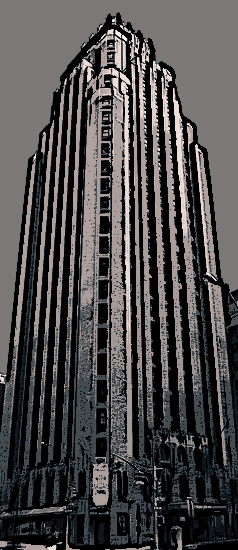 He forced himself to don his sweats and stretch the aches out of his bruised muscles. He didn’t want to overdo it, but he had to get blood flowing, working out the stiffness and swelling. He had a call in with the service and made an appointment for some body work in half an hour. By then he might be in good enough shape to face another board meeting. One of the things to be broached was the renovation of the old battery works in memory to his father and founder of Bruce Enterprise. And how that would be funded through a number of grants, federal and state, as well as the charitable foundation BE WELL, founded by Trish, his mother,. He had the votes and only Harold was against it. The consensus though was that it was a positive public relations move. They could feel good being civic minded without really having to do anything, aristo cake crumbs to the plebs in proclamation of their benevolence. If Harold made too much of a fuss, he would have to bring up the toxic site review and explain what the BATS lab has discovered. Harold was nervous over the government contracts being paused while the leadership issues were being worked out. He was heading to DC after the meeting with a plane load of lawyers for a big pow-wow with Agency lawyers.
Favoring his leg, Wayne wandered into the den once occupied by the old man, a guy surrounded by stacks of papers, happy as a kid in a sandbox, and took another swig from the protein shake. His gaze stopped on the photos of his car collection gathered for the catalog for the opening of a show in Los Angeles in a few months. Rich men once kept horses, it seemed like a natural progression to the motor vehicle, and like horses, some were for show and some for speed. He had a handful in storage on the coast, a few others he would have to ship out by cargo jet. He just had to decide which ones. He had a couple of vintage motor carriages from the early beginnings of private motorized transport in storage outside of Carmel that he entered in the annual Concours D’Elegance in Pebble Beach. For this show he wanted to display the iconic post war models as well as a few rare restored finds.
He picked through the glossies. His favorite was on top, the Pacific blue1948 Mercury Saturn Bob Hope Roadster Convertible, a look into the aerodynamic sleekness of the future and the beginning of marketing the automobile as a lifestyle accessory to the newly prosperous suburban middle class. He’d picked up the 58 Edsel Pacer Convertible for a song, red over white, white walls, spoked rims. Ten years later it signaled the demise of the fin, victim of its own popular excess. No one wanted it, but it was a place marker in the evolution of automotive styling. And the 1954 Packard Pacific two door white hardtop over deep purple, not much to distinguish it from the cheaper Ford models of that era, a brand that lost its pizzazz after the war. Staying with the blocky dreadnought design of the previous decade was its downfall. The 1958 Ford Ranchero was considered by some purists to be the only Ranchero worthy of the name. The three years that it was produced, from 1957 to 1959, marked a wily change in marketing strategy, gearing an essentially station wagon platform to men without the wife and kids cachet. On the other hand, his 1956 Dodge LaFemme hardtop convertible, mauve over white, white walls and chrome rims, was a finned confection marketed to the better half’s suburban counterpart. The motor vehicle would have never prospered and taken on a life of its own if it hadn’t been for the suburbs. The 1954 Cadillac Coupe De Ville hardtop, bronze, white walls, scooped fender skirts, he realized was an awkward blend of the old dreadnaught style of the postwar years and an inkling of the windswept style with its vestigial fin. Or maybe he’d read it somewhere. The 1958 Chrysler Firesweep four door, black with red side trim was a match for his all black 1960 Plymouth Fury, essentially the last of the finned dynasty that ruled for less than ten years.
Taste is changeable and the marketeers depend on that. What he was presenting at the show was a look at the transition from an industrialized post war economy still dependent on broad consumer consensus to the individual marketing that would ride the wave of post war affluence. Each of the classic cars depicted an economic trend and the move toward suburban two car families. Cars were no longer machines of utility but status objects, to be seen in, and with an annual style obsolescence that required the changing out of models yearly.
 And then there was the nostalgia market that gave new value to well preserved auto relics of the past. His fire engine red 1954 Studebaker Commander Convertible, a restoration from a barn find, and from another company that did not make the postwar transition especially after its failed merger with Packard, taking down the venerable carriage company known for its elegance and reliability. It wasn’t about quality anymore, especially if the consumer was buying a new car every year, it was about looks. Now everyone appreciated the durability of the older cars like his 1948 Chevrolet Fleetmaster Coupe, a pale green over forest green, it was built like a tank but totally uneconomical to manufacture. For personal use, the public wanted something light, fast, the kind of transportation that might appear in comic books or science fiction movies.
The concierge rang that the masseuse had arrived while he was shuffling through the stack of pictures, weeding out the foreign and prewar models. His name was Raymond and he’d used him once before, a tall well-built man with silver hair and a diffident professional manner. He set up his table in front of the wide windows in the large common room with a panoramic view of the city skyline.
Wayne stripped except for a towel and positioned his face in the well. He heard a low whistle as he felt the expert hands probing his shoulders.
“You’re pretty bruised to your upper arms. Fall?”
Wayne grunted, his field of vision restricted. “It was a pretty intense full contact session at the dojo. I got a few bumps.’
“I’ll say. That bruise on your thigh looks serious. Are you going to have that looked at?”
Wayne grunted an assent knowing that he wouldn’t. Raymond asked him to flip and he did.
“Caught a couple of good shots to the ribs, too. Think you might cracked one? Ok, and the forearm. I’d say you were tagged just about any place that could be. Except your face. You must have a good defense.”
He did, but against half a dozen thugs in a dark room, he needed a better game. He’d walked into a trap. The right shoulder the masseuse was working had taken the first hit when he went through the door. And he wouldn’t have been there if it hadn’t been for the phone number on his pager, old dad’s office number, the one that had been discontinued, the phantom account.
It had been late the previous night, after a full day of going over the details of relocating the BATS administrative office to the old battery works. The tech division’s schedule for testing of the new high powered portable battery backpacks for use by the military to power light mobile terrain equipment was proceeding and they were awaiting a technical overview from the Defense Department. He knew that the battery worked to specs so he was confident of that they could soon begin the funding phase through DARPA. In fact his lab crew had modified one of his off-road Spyders and fitted it with a compact battery pack that was lighter than the conventional engine with just as much torque. Other than that, it had been routine phone calls, mostly with lawyers.
 The out of service number was telling him something he was convinced. Nor did he think of it as random. He knew he would obsess over it. So why not start at the source, his father’s old office in the very building he was currently renovating. He resolved to find out and suited up in his riding leathers, the most obvious conveyance to make a stealth approach to the battery works was the modified Spyder XR he kept in storage and easily accessible. The black balaclava under the lightweight off road helmet was for an especially cold longer night.
The streets in front of the battery works had been deserted. The neon in the round window of Penn Quinn’s bar fluttered in the dull cold gel of drizzle, the gaping entrance forbidding in amber light. Otherwise no one was about. He’d steered the noiseless bike into the alley behind the battery works, a light from the back of the candy store where old Rick lived lessening the shadows on the overgrown gravel track, and parked it against the brick wall. Standing on the seat he was able to get a good grip on a row of damaged bricks to pull himself up high enough to reach the top of the wall. He had the key to the new installed reinforced gate but he didn’t want to announce himself. He landed in the employee courtyard in a crouch. He loosened the compact utility flashlight from the zippered pocket of his jacket and set the filter to red, keeping it low. The door to the back office area was secure, the windows boarded up. He worked his way around to the front of building where the street light in front of Quinn’s made long shadows near the front gate and illuminated the stretch of parking lot leading to the padlocked storage sheds.
He’d been about to step out into the open when he heard voices beyond the storage container and then movement as if someone were dragging something heavy. Then a few dark shapes come into view, men by their size and slope of shoulder, and the tenor of their hushed voices. One of them went over and pulled on the lock to the container and motioned to the others carrying something weighty between them, five men or boys altogether.
A light flashed over his shoulder illuminating the group. Wayne had ducked to the ground as he heard a voice demand, “What you boys doing over there? Get away, or I’m calling the police!” It was Rick. “Gowan, git!” He was perched on the scaffolding for the brick work repair on the other side of the wall.
“Go to hell old man!” the one fondling the lock shouted back, shading his eyes.
“I know that’s you I’Van. You and J’Van and those young’uns have to leave elsewise I’ll call the cops. I ain’t lying.”
The group carrying what looked like a piece of discarded machinery from the old factory had set it down and looked at each other before they started drifting away, the one called I’Van pointing a defiant fist at Rick had raged “I’m gonna kill you, old man!”
“Yeah try that and find out what happens,” old Rick had retorted and trained his flashlight on them until they had run off into the shadows before he clambered back down to the candy store.
He had raced after the departing group knowing that the two homies he’d encountered before meant trouble. He could hear them talking among themselves, spitting expletives, bravado building, swearing revenge. Eventually the walking and talking stopped when they’d reached the far end of the battery works property and a cluster of rusting machinery overgrown with weeds, grass and brush positioned against the crumbling brick wall. He’d watched from the shadows as one after the other climbed over the wall and dropped to the street of the neighborhood beyond, the last one he’d recognized by body size was J’Van who had scanned their retreat for anyone following before joining the rest of the group.
He’d waited a few beats before climbing in their path to the top of the wall. He spotted them trotting up D Street like a dog pack on the prowl in a stretch of neighborhood with an assortment of abandoned buildings and vacant lots on either side. He remembered it as a once thriving neighborhood of shops and apartments when the Bruce Battery Company was still in operation, before it had moved away to become Bruce Enterprise.
 He’d followed them, keeping to the shadows cast by the partial moon playing peekaboo with trundling clouds ready to drop more of their cold wet. They’d disappeared around a brick corner on Central and when he’d given a quick glance in the direction they had headed, they were no longer in sight. A few doors down was the entrance to the apartment space above an abandoned vacuum cleaner store. The door was open to the stairs leading up. A bare bulb flickered at the top of the landing. Unless they’d raced down to the next block where a street light illuminated the frozen air with a brilliant halo, they would have had to veer off. The stairwell was the only likely and immediate option.
He’d taken to the steps on the balls of his feet, putting his weight closer to the side of the tread to avoid the exhausted groan from the center of the plank. A strong scent of fresh body odor gave him confidence in his choice. At the top, the hallway stretched to a grated window at the far end. The first two doorways lacked doors and by the shadows of rubble appeared to have been trashed. The next one had a door but the reek that seeped from under it said that it was used as garbage pit and latrine. That left the last doorway, open a crack to reveal a faint light and sounds of movement. He’d pulled back just as the door swung open revealing I’Van’s cruel grin. He felt the rush of air behind him and the blow shoving him forward and off balance.
He’d blocked the blow from the man in front of him and catapulted himself into the room into the midst of the others, catching a few misplaced shots to an arm and a rib. The feeble light was coming from a battered lamp on the floor next to the socket. A kick sent it across the room plunged into darkness as he parried a charge from his left with a dropkick to the center of the body mass. He heard the effect, a violent exhalation from the solar plexus. The dark added to the sudden confusion. The trap had not been well planned. The next attack came from in front, a fist looking to make contact whose wrist he caught and cracked while using the inertia of his grip to swing the man by the arm like a cudgel into the bulk of the approaching J’Van and delaying him enough that he could deal with someone who had obviously watched too many martial arts movies. And the one with the pipe raised over his head.
He’d activated the strobe function on his flashlight and flipped it into the melee. The pulsing light illuminated the small space with an intensity that upset the equilibrium. He had practiced with a strobing light in combat sessions before. It was unnerving at first until you fell into the rhythm. It had given him the advantage. The faux martial artist froze long enough that he easily foot swept him, landing him on his back, the breath knocked out of him.
He’d tried to sidestep the pipe and elbow the face behind it. He felt the blow on his ribs. I’Van had got past his guard. His leathers absorbed most of the blow but he still felt it and it had thrown him off balance and into the clutches of J’Van who reached around to get him in a bear hug and pin his arms. He’d first disabled the ankle with a kick and with the grip loosed, he dislocated the large man’s knee with a twisting flat footed kick. J’Van fell to the floor with a howl. Someone was trying grab him by the leg and bring him down. He untangled himself and crushed a hand with his heavy boots. His focus was on I’Van who had tossed the pipe away and was backing away toward a boarded window, reaching into his jacket pocket for something that looked like a pistol.
He’d taken a running jump across the room and tackled I’Van just as he pulled the gun out. The pistol fired with an ear splitting flash of bright orange as the momentum of the tackle sent them both flying, crashing through the weak boards and broken window.
He’d felt suspended at first and then they dropped, I’Van screeching in his ear, the two stories to the partially covered dumpster in the alley below. I’Van had broken his fall and possibly broken his back. He wouldn’t be killing or threatening to kill anyone any time soon. But his leg had hit the edge of the dumpster and that had practically put him out of commission. He’d hobbled back to the battery works to retrieve his electric Spyder, pausing in the shadows to let a squad car creep by. Old Rick had likely called the precinct.
“Whoa, you’re tensing up on me, Mr. Bruce,” the masseuse said leaning down to catch his ear. “Just relax, we’ll work these knots out.”
After the session, he took a cold shower and then stepped into his closet to choose his clothes for the meeting, corporate casual which meant a top end sports coat, tieless silk shirt, dark slacks, and tasseled oxblood loafers. He returned the BATS lab director’s call once he was dressed and seated at his desk. He’d expected more on the source of the toxic material. It was instead about the vomit sample that the detective had pulled from the scene of his father’s death.
“We’ve detected a higher than normal amount of contaminants, especially in acetates that are used in manufacturing carpets. It’s an anomaly but we’ll run additional spectrometry to see if we can’t detect telling signatures.”
“Thanks, Judy, and why the focus on this particular compound?”
“It can be used as a poison, Mr. Bruce. The question then becomes why is there such a high concentration in the vomit sample. It can’t be solely contamination from the carpeting.”
Wayne rang off after instructing Judy to call him back as soon as she had additional information. Poisoning. Was that why there was a such a hurry to bury the old man? Would an autopsy have revealed traces of the poison? Was that why Linus Pall had rushed the death certificate? Red flags were signaling a conspiracy. Harold? Harold and Trish? How deep did it go? And how would a disinterment look? It would smudge BE’s brand with scandal. None of that mattered, his father demanded that his death be avenged.
The phone rang again and Wayne picked up expecting it to be Judy from the lab. It was Bion. His message was direct. “Rick’s been shot. Hold-up attempt. I’m on my way to the hospital. It doesn’t look good. He might not make it.”
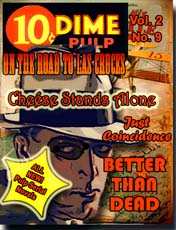
 In late February of 1908, a one-time drover, buffalo hunter, saloon owner, hog farmer, peach grower, horse rancher, US Customs inspector, private investigator, county sheriff, and Deputy US Marshal set out from his adobe home on the mesa above Organ, New Mexico accompanied by a young man in a black buggy on the journey to Las Cruces. He would never arrive. This is the story of that journey, a novel account of the last day in the life of a legendary lawman.
 In March of 1892, a Scotsman by the name of Arthur C. “Artie” Doyle was hanged by the neck until dead after being found guilty of a string of grisly murders of prostitutes in Whitechapel. At that moment, history veered off its presumed course and headed in a direction all its own in which the Great War never happened because the Kaiser was afraid of offending his grandmother, Queen Victoria, whose life has been prolonged by the wonders of biology. Her reign, known as the Pax Victoriana has lasted 180 years maintaining as many Victorian airs as possible while making accommodations to rapid advances in bio technology. Cheése Stands Alone poses a steampunk question, can Captain Lydia Cheése find her father, the antigovernment turncoat and radical, Commodore Jack “Wild Goose” Cheése. And furthermore, will her quest take her around the globe and through alternate world histories in the requisite 80 days or is it the beginning of a lifelong journey?
 In Just Coincidence, a privileged young man with the unremarkable name of Wayne Bruce returns to the site where his father once had his business, a battery manufacturing plant, and where he often spent his childhood days hanging around the factory and the neighborhood. His return is haunted by the mysterious circumstances surrounding his father’s death and the vague feeling that his uncle is somehow involved. Appalled by the poverty and crime of the place he remembers fondly, he is moved to resolve the injustice of the socially marginalized and to wreak vengeance on those he believes are responsible for the death of his father. A personal coincidence brings together dark prince and dark knight joined in a fateful and tragic quest for justice.

 He was occupying his father’s penthouse apartment now, a perk on the company dime. He could survey the entire city from his perch at the wide window looking out onto the marble deck of the balcony. The landing lights of a passenger jet heading for the municipal airport that the city council was now slated to vote on naming the Wallace W. Bruce Airport crossed his field of vision. The parallel arrays of lighted city streets and the winking red tail lights and white bright head light beams that travelled them. The cacophony of neon marking nightclub entertainment and dining, the garish ostentation of major brand billboards, the imposing corporate skyscrapers with their lighted empty offices emblazoned with their two story logos. Bruce Enterprise being one of the pretentious eyefuls with it cryptic minimalist brand of three horizontal lines followed by a full height vertical line and the three mirrored parallels again. BE, a minimalist icon if there ever was one. How many times had he stood at that window, taken in the night lit panorama and stopped his gaze at the office tower only to be nudged by that famous quote he often parodied: “To be or not to be is not the question.”
 The car service had picked him up and taken to the country club, his regular driver, Cornell, affirmed. That was just before ten. The country club listed his tee time for a foursome at ten. Linus Pall was one of the quartet, Aldo Ring, a city councilman, and also a name that was not familiar to him. One of the staff at the Pro Shop said she’d heard that there had been a loud argument in the locker room between Doctor Pall and another man who was not a club member but a guest. The restaurant staff served Mr. Bruce at his usual table and he had had his usual French Dip and iceberg lettuce salad with tomato and mayonnaise. And of course iced tea.
 When Wayne showed up at the club, it was closed but someone was inside cleaning up. It was a large open warehouse bay, painted black, catwalks skirting what was ostensibly a dance floor, cluttered with the debris of the previous night’s activity. There was a bar near the front of the door. The man sitting at the bar stool with the push broom in his hand was the manager as well as one of the bartenders, the DJ, and sometimes the doorman. His name was Peter. He’d looked at the corporate photo of Wallace Bruce and shook his head.
 Accompanying by his cogitations, Wayne’s pacing in the book lined study had brought him in front of the gas fireplace and the large portrait oil of his father that hung above the marble mantel. The old man hated the painting Trish had made him sit for as a mark of his status as a captain of industry. Old Dad had made many disparaging comments about the painting, particularly at the pretentiousness of such a display, and had hidden the canvas at the back of the wardrobe in master bedroom of the penthouse. Wayne had found it and restored to its spot above the flickering flames of the fireplace.
 The inspection official and two sinister looking men in black hats had roamed over the barge examining the cargo, and when they came into the cabin, stared wide eyed at her propped up in one of the bunks with the python wrapped over shoulders. Her terrified look might have suggested an otherwise haughty imperious annoyance at the intrusion. The station inspector apologized profusely, and the IOTA agents, not in the habit of showing deference to the general public, dropped their gazes awkwardly.
 The yoke fit comfortably across her shoulders as she shrugged into the coat, the sleeves extending a little ways past her wrists, the hem, past her knees. She was surprised, expecting it to be heavier. Her hand in the right pocket extracted a heavy dark blue cotton scarf. The left pocket was empty although it was shaped as if some object had had a permanent residence there. Lydia pulled on the lapels pleased by the way the coat fit. She felt something hard nudge under her left breast. Inside she found the pocket and the narrow object protruding from it. Throwing open the coat she extracted a long ornate double blade stiletto.
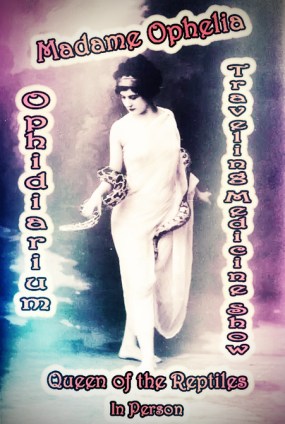
 At the cheers from the crowd Lydia made her way out from behind the large ophidiarium on wheels that attested to Serre-Pain’s claim of herpetology and proof of his knowledge, like an old library full of old books. The crowds had thinned out further under the arcade where merchants had set up their wares, most everyone wearing a face covering, and some, goggles, against the silicate laden air. Serre-Pain had asked her not to go out in public unaccompanied by one of them. She would appear out of place and thereby attract attention. She was willing to chance it. She had friends who might be able to help her slip back to Sao Paulo. Even though The Empire of Brazil had an extradition treaty with the Clockwork Commonwealth, she doubted that the Emperor’s court would allow it over such a trivial matter as a Citizen of the World Order searching for her paternity. She would have to stay out of IOTA’s jurisdiction which would make her an exile from the world hub of Greater London. She would certainly not be allowed to pilot airships outside of the Empire’s zone of influence which spanned the southern hemisphere and the Atlantic to the inter desert zone of New Mali and Congola further south. She would no longer be an airship commander in the glamourous passenger fleets like Aerosud or Canamair. Most of the navair traffic in the Free Corridor of Cancer was freight and third class which meant much of the world’s poor and retched, refugees from the camps adjacent the dead regions and the encroaching tundra.
 The woman nodded her head and spoke a single word in dialect, “O.” And again pointed at Lydia’s slippers seeming to infer how puny they were when compared to the rugged specimen Lydia was holding in her hand.
 Having spent time in an Admiralty intelligence unit when she was stationed at the Commonwealth embassy in Houllas in the Republic of Texas, she knew that she would have to secure new papers if she were going to cross physical borders. And that she would have to avoid travelling by air. It would have to overland until she was safely out of the reach of IOTA. The Capricorn Free Corridor was her best bet. Surely there was someone in Older Orleans who could provide her with a passport that would escape detection, especially if she stayed off the main routes and avoided the busy checkpoints. The strains of the violin concerto had a soothing effect on her although at times she knew that it could also be quite stimulating. She closed her eyes for a moment, amusing herself with the fact that the President of the ISR, the Invincible Swiss Republic, was Albert III, the great grandson of the world famous musician. Unexpectedly her mental image changed, as often happens in reverie, to that of Vlady fitting the bear head onto his own and she realized then why he seemed so familiar to her. How could she had forgotten?

 After I’d left my disappointment in the coalbin, I made my way to the railyard by the Serbian Social Club. There were a couple of squad cars parked out front and the guard at the front door was now a boy in blue. There was no chance that I was going to get close or even inside the building. Becky was gone, I had to face up to that. Kovic’s mob probably dumped the body somewhere it wouldn’t be found any time soon. If anyone looked like a sad sack that day, it was me. I had no choice but to pick up my gear at Alice’s and head out of town.
 I’d waited till the last person in line had boarded and the driver was about to close the door. The man behind the wheel gave me the ‘there’s one in every crowd’ squint as I made my way to the back and humped my satchel onto the seat next to me. I’d given a quick eyeball of the occupied seats and what I was seeing was a smattering of overdressed travelers, men and women looking out the window, some with children in their laps. Some were obviously vacationers heading up to Big Lake, one of the three lakes and most popular summer resort. And some, by their defeated expressions, were going back where they came from with only the clothes on their backs. Maybe I fit into that last category, but behind the dark glasses I had picked up at the terminal newsstand and my hat tipped back once the bus turned onto the road leading to the outskirts, I didn’t care. I had a half pint of Old Hickory and a pack of Lucky Strikes to while away the three hours it would take to get to where I was going.
 I’d gone through about half of the Old Hickory and smoked up the rear of the bus with a cigarette haze by the time the bus rolled into Ridley. I found my feet once I stumbled off the bus and watched it kick up the road dust on its way out of town. Ridley didn’t seem to have changed much since they last time I came through. They’d added a gas pump in front of the livery barn and a sign on the side that said mechanic. There was a streetlight I didn’t remember from before out front. Granny’s house was down the elm shaded road running behind it.
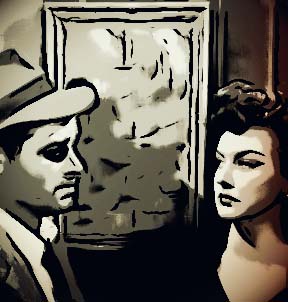 She ducked in the doorway with the wick on the lamp trimmed short so that just a dim pale glow lit part of her face. It looked like a face out of a Hollywood photo magazine. All of a sudden I wasn’t all that tuckered out as I thought I was. She came closer and I saw she was wearing a quilted house coat open at the front to reveal a frilly shimmering slip. And she’d perfumed up.

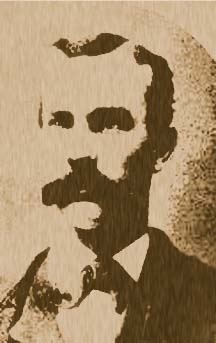 “Now I don’t know if the name Joe Miller is familiar to you, Mrs. Garrett, but it belongs to a notorious assassin who is believed to be part of this conspiracy and may even be the actual triggerman.”
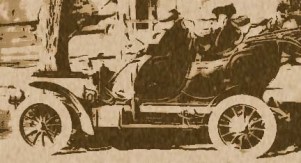 “It’s a motor carriage!” Paulita ran to the gate, her baby brother waddling behind her. The machine swayed and jogged from side to side, navigating the ruts in the wagon road, chased by outraged dogs and the town’s children. Scanly’s horse reared, shaking and tipping the buggy trying to free itself as the dust and noise rattled past. Seated high on the bench of the contraption were what appeared to be a man and a woman, he with a black hat held on his head with a chinstrap and she with a wide brimmed chapeau held in place with a yard of chiffon scarf. Both wore goggles. The woman waved at Paulita and her brother gaping through the pickets.
 Over the years numerous version of my manuscript, mostly typewritten, have languished in a drawer or gathered dust on my desk and to which I was drawn, on occasion, to reread and rethink the presentation of the material. In the process, a novel took shape, one that began as a bare bones cinematic adaptation of a biography and emerged as something more meaningful: the story of the relationship between two men, one garrulous, the other taciturn, the Mutt and Jeff of the old Southwest, and the tradition of storytelling and authoring of ‘true’ accounts. The life of this legendary lawman encompassed more than just that one episode, however. Garrett’s own violent death in the early years of the Twentieth Century seemed to punctuate the passing of an era. There is a resonance to the other particulars of his life as a lawman that belong to the saga of the Southwest.
 The late afternoon sky, losing some of its color, was hastening toward dark. A barricade of clouds hemmed in a sinking autumn sun, scattering its light as feeble rays. The hazmat team from the BATS Lab had packed up after a forensic sampling of the soils at various depths of the contaminated area and a thorough scanning of the site with sniffers. He could expect results overnight. He folded and stowed his protective gear in the utility box in back of his ’79 Land Rover. It was a souvenir of his time in Mali. The thing he liked about the old rugged square cab Rovers, although they weren’t built for speed, was that they came in any color you wanted as long as it was green. As well, the bed was long enough to hold his matte black BMW R12 motorcycle in its canvas sheath. If he wanted to go fast. The beeping pager brought him out of his reverie.
 Wayne Bruce retrieved the device from the pocket of his leather jacket and scrolled through the display. Uncle Harold had called multiple times. Everything was Urgent and ASAP with him. And a number he remembered as belonging to Detective Gordon James with Metro Homicide. There was a third number that he didn’t recognize. Very few people had his pager number and he was certain he knew all of them.
 “I might have figured as much. Do you remember Laverne Early or was that after you were sent away to school?” At Wayne’s shrug, he continued. “When the battery business started booming and your old man began diversifying, they expanded the accounts department. That’s where Laverne worked for a couple of years. There was a rumor that she might have been seeing the boss’s brother, your uncle Harold. He was in charge of sales back then. He was quite the ladies’ man in his younger days I heard tell.
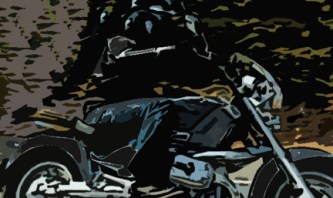 Once on Grant, the traffic was considerably heavier than in the old neighborhood it bordered. He weaved through traffic, stopping at the light before the freeway entrance. No sign of them. His choice was to continue down Grant or get on the freeway. But would they stick to surface streets considering that the raised four lane could take them further and faster? That was the question. He raced up the onramp at the change of the light and encountered the going home gridlock. No one was going to go anywhere fast. It was like a slow moving parking lot. There likely was an accident further down, but as far as he could see, it was a horizon of rooftops inching up the overpass incline. And there in the middle of it, in the number two lane, was the black box he was looking for.
 A large rectangle of light hovered nearby and she turned her head toward it. It was a window set into the severe slant of an attic room. Now she was aware of the vague itching of her legs, her torso, into her armpits and around her breasts. She scratched at the tiny tingles of pain on her arm and cleared her throat again. She blinked, focusing on the light at the window. It was maddeningly indistinct. A shadow crossed the brightness and she tracked it, her head heavy as lead and painfully molten as she moved it.
 Her name was Lydia Cheése, pronounced “chase,” and the butt of hilarity practically her entire life. She’d answered to it when the doctor spoke it. She was a senior pilot, captain for the Aerosud fleet of luxury airship liners. She was married to. Wait. She was married. Of course. To Seignior Professario Cornado de Belize Gutman, a member of the royal court in São Paulo. Nado. How long had it been since she’d seen him? Six months. Longer. Easily. But that was not so unusual. He was often ensconced at his research farm near the headwaters of the Orinoco. And she, even though she could have taken her place at his side as Doña Lydia de Belize Gutman-Cheése, loved to fly. As a child she had been fascinated by stories of the Admiralty Air Corps told by her father, Commadore Jack, and her grandfather, Harvey Thomas, stories about her great grandfather and hero of the First World Pandemic, Pandem I, in which nearly a quarter of the world’s population was wiped out by the persistent Black Mold virus. Colonel Bartholomew Cheése had been an army doctor on the front lines of the scourge that swept the world. Her ambition was to emulate and follow in the footsteps of her illustrious, and notorious, ancestors. And, yes, it was because of her father that she was in her present fix.
 Lydia counted two days passed in confinement on the barge slowly being hauled up the River Loire toward Older Orleans. She could view from the round ports on the barge cabin the undulating hillsides shimmering with tentative purple hues of biocrops still struggling to take root long after the Great Mold Devastation early in the previous century. There were dead spots that would never regenerate, she knew, yet the Commonwealth spent untold Vicotorines in trying to regenerate vast areas of the continent that had been sanitized in a misguided effort to eradicate the Black Mold. The lethal unproven bactophagic bug did eradicate the black mold and large swaths of the Northern Hemisphere’s flora down to mineral soil as well. It was her great grandfather who had pioneered the lactobacto that brought the bacterial scourge to a end. She remembered that one of her biostory professors in Pandem 101 at the Academy had said. “After Darwin came Mendal, and then the whole world changed.”
 Lydia was the adventurous one, commanding double hulled luxury superships, flying to exotic locations such as Neumonrèal, the intellectual capital of the Joual Republic, the wild ocean coast of Newer New York and the Jersy badlands beyond, Alta Morocco, and of course the popular Islands of Birds and Bees with their lush exotic interior jungles of pre-Dev flora and fauna. Winged creature had been steadily declining in the northern latitudes if one were to believe the Ice Age prophets of doom. Flying insects and the birds that feed on them were scarce. The poles were cooling, they said, the icepack thicker and creeping down the latitudes from the frost encased wastelands.
 The musty perfumed scent of the dress made Lydia sneeze as she pulled the sleeves down to her wrists and gave herself a cursory glance. The spangled costume had obviously belonged to someone a size larger than her, and reminded her of the times she dressed up in her mother’s old gowns as a child.
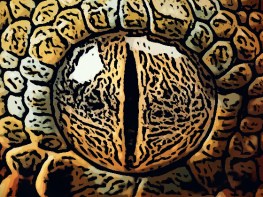 “Of course, so right!” Lydia cringed as the dummy snake was laid around her shoulders, the large head draped above her left beast. She was surprised by the weight and the peculiar clamminess of the skin exuding a rather moist earthy odor. Trying to get comfortable with the idea that she had to masquerade as a snake goddess to pass station inspection, she breathed a sigh to relax, taking a closer look at the imposingly powerful shape and intricate patterning of the scales of the python’s head. The large glistening orbs of its eyes, luminescent amber marbles bisected by vertical irises like cold cruel otherworldly suns, rolled awake. A thin naked tongue slithered out from the front lips and curled toward her, sensing the heat of her panic.
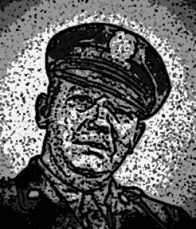 Hogan was shaking his head all the time I was telling him. “You believe this bum, O’Malley?” he asked the sergeant who was nodding in agreement. “You gotta lay off the dime detective fare, pal. It’s turning your brain to pulp!”
 The commotion was drawing a crowd of shipyard and dock workers just arriving to begin their shifts or leaving after a long uneventful night. Anything out of the ordinary was going to attract them like moths to a flame. Unfortunately I wasn’t invisible enough to get past the police line. They weren’t letting anybody in or anyone out. I scanned the faces of the crowd of workers being held back by the coppers. I recognized one of them, from Annie’s tug, The Narcissus, the tall one. I could tell from his expression that he recognized me, and he turned away quickly to disappear into the crowd. I lurked in the rapidly shrinking shadows dreading that Hogan would notice I had gone missing and raise the alarm. I did not at any cost want to go downtown to have a little chat and explain about Rebecca. Then I saw her, perfection in a sea of broken faces. It was Annie. Her mate had gone to fetch her. She caught my eye and gave a nod. She was up to something.
 “Gold,” she said with a frown, “Gold and jewels. People are fleeing the war in Europe and sending their wealth abroad. It’s an open secret. Everybody on the docks knows about it. But it’s scum like Kovic that’s gonna try and heist it.”
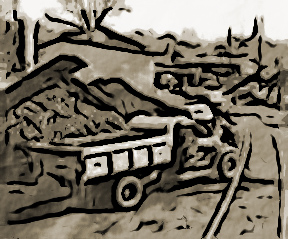 Pulling the flat cap down over my eyes, I made my way over to the coal yard. There was a queue of coal wagons backed to the chutes and I figured the guy with the papers in his hand was the foreman. Holding a sheaf of papers was not a hard job but the scowl on his face wanted you think that it was. He didn’t like the look of my mug, either. I asked him if he knew the coal company that delivered to the address of the building where Rebecca’s old man had his used clothes store because I had to do some work in the basement and didn’t want to do it if they were going to dump a load in the bin. The foreman was distracted by a wagon that had not pulled close enough to the chutes and the ore was spilling onto the ground. “Oreville Coal Company!” he yelled as he ran to chew out the coal wagon driver.
 Dime Pulp