
by Mark DuCharme
-v-
In truth it wasn’t the door I finally broke through, but the plastered drywall frame it had been latched to. When I managed to accomplish that feat— and not without some terrible cost to my bones— I remember her laughing. This struck me as odd, for the sight we found within those L-shaped quarters was hardly amusing. Her own father— for that is what she called him— Gruber, that crazy old goat— lay there with a great red stream trickling from his neck. He was obviously, incontestably dead— had died by most horrid means— yet it was quite unimaginable what beast, either human or animal, might have entered his chamber and delivered the wound. (Still more unimaginable, I had heard nothing of what must have been a terrible struggle, given the condition of the scene, with books and papers strewn about, though our adjoining apartments were only separated by a thin layer of drywall, through which I used to routinely hear even Gruber’s faintest mumblings.)
I remembered what Dr. Greenway had said. I looked closer at the departed— and yes, there were two wounds indeed, two small wounds, somewhat close, and exactly at the site of the jugular, just as the good doctor had described. In addition, I now noticed, from that closer vantage, the somewhat gray complexion of the skin and the increasingly jaundiced look in the eyes. No, this was no work of a beast as we know it, nor an intruder; Gruber, that strange, crazy old man, had clearly fallen victim to the plague. Well, that, at least, explained why I had heard no struggle: presumably, there had been none. And then it hit me: he had to be taken to the facility, and sooner than later! Gruber was now what my bosses would call a carrier. And even if I were off-duty, you see, I simply couldn’t let a carrier sleep— to go on sleeping. I had to get him to the facility as fast as I could.
His daughter— or the creature claiming to be such— seemed to feel less urgently or sadly about all of this than me. It’s not that she exulted; rather, a blankness overtook her affect, out of which she seemed lost to herself, benumbed. Perhaps the shock of loss had overwhelmed her; I suspected as much, but could not judge with certainty, having only just met her— yet she suddenly seemed not in this world at all, but in another.
“Can you help me get him down to my truck?” My question seemed to jar her. She stared into space a moment, then regained herself.
“Sure,” she nodded, half smiling. I had him by the armpits. She was about to grab his feet, but then blinked in awareness, veered, and made her way to the great, old, wooden desk where Gruber kept his ravings— the ones in written form, at least.
“Here, this is for you,” she said, handing me an envelope on which “Johnny” had been scrawled in idiotic hand. “He told me he wanted you to have it.”
I attempted to stuff it in my back pocket, but suddenly realized I was still attired in plaid, woolen pajamas. “Excuse me,” I said, looking down in embarrassment, then set the body back down and went straight back to my quarters. Once there, I hastily threw on yesterday’s pants, shirt and socks, in addition to my winter coat, a trench resembling military wear of several bygone eras ago. I tossed the envelope upon the small table that serves all my nutritional, social (when I have visitors) and business needs, but then thought better of it: this Mr. Thorne, or one of his agents, might well intrude again while I’m away, and though I doubted the envelope contained more than ravings, if only out of respect for the dead, I thought it best to keep it out of that Thorne’s reach. I stuffed it hastily into the inside pocket of my overcoat.
“What’s your name,” I inquired, on returning. I thought it best to have a way to contact her— just in case.
“Analeise. Analeise Gruber. You can call me Ana.” A smile broke upon her pallid face, and her brown eyes suddenly, briefly, regained their luster.
“That doesn’t matter now,” I retorted, striving to keep this all on strictly business terms. “Give me your card.”
I had no reason to expect that she would have one, but she produced a rectangular, off-white piece of stiff cardstock from her small, decorative, gold lamé handbag. It wasn’t until the next day that I noticed it was the same thick, off-white stock with the same dark, almost blood-red font as the card that Thorne, or someone in his employment, had deposited on my pillow.
We carried the body down the dilapidated, crooked flights of stairs. She was surprisingly much stronger than she looked.

-vi-
Although I did briefly consider taking Old Gruber straight to the arena, I judged that there would be enough time to take him directly to the facility before going to pick up my cargo. And besides, what else was there to do now? I wasn’t going to be able to get back to sleep, and even if I could, I wouldn’t be able to sleep for long. Besides, it was still dark. Sunup wouldn’t happen for a good hour. I considered waiting till the sun’s first rays, but the problem with that idea was twofold: if I did that, I’d never be able to get to the arena in time, and I was afraid of what might happen if I left Gruber alone before dawn. Oh, I’ve heard stories! You see, it seems that carriers sometimes can wake up. I don’t know much about it (or I didn’t then), but I knew enough to know that I didn’t want him left unattended in the event that did happen. Uneasy as I felt about the idea of driving him in the dark to the facility, I was more afraid of the alternative. So I went back upstairs, grabbed some food to eat in my cab, and I was off, down crooked streets.
Yet all that time, I felt that strange old fool’s dead, yellow eyes staring at me, hauntingly, in the rearview, neither quite alive nor entirely dead. Must I tell you how I feared him?
His eyes were cold, dead, now fully yellow— most devoid of expression. That blank, almost idiotic twist of his mouth— one achieved only through his death throes— threatened to break suddenly into a smile, a most wicked and evil grin. I watched for it, almost as carefully as I watched the twisted roads ahead of my careening vehicle— but I swear it never occurred.
I was racing down Pico Avenue— I mean really racing! Dawn was fast approaching. I could see better now, in the new, bluish half-light. I put my boot to the pedal and zoomed past trouble— for what had I, exactly, to fear? Wasn’t I a Transporter, an official agent of the Company? Who was anyone to interrupt my racing? Even the police didn’t care!
I was delirious with excitement and relief. The slowly awakening sun seemed to mark the end of my fears about Old Gruber, at least for the time being. I was getting close to the facility, when suddenly I turned a corner and caught a flash of rosy, post-dawn light in the rearview as I passed the towering hulk of an abandoned, formerly auspicious office structure. For all I knew, carriers were having their way in there at that very moment.
I turned another corner and at last could see the facility looming ahead in the distance.

-vii-
When I arrived, there was no one there, no dockworkers, no flatbeds on which to dump the remains. Now that the sun was almost fully up, I felt a little safer— and that was good, for it suddenly occurred to me that I would have to carry the old man in— and I had no idea whether the building would be open or not! Suddenly, the colossal mistake of my hasty decision fully dawned on me. For all I knew, I wouldn’t be able to leave him there at all— would have to transport him, in fact, back to the arena, to pick up my other cargo, only to race back here again before the pink sun sank.
I looked back through the tiny window separating the driver’s cab from the carriage proper. I could see no change in Gruber: same yellow eyes, same gray complexion (perhaps just a shade grayer now), same twisted half-smile. Perhaps my fears had been unfounded after all, I exulted to myself, in the eerie, bright light of new-day.
I steeled myself and exited the cab, swerved round, and unlocked the rear door of the transport. He didn’t move at all. Whatever had I been thinking?
I entered, situated my arms about his (I could tell) stiffening corpse, and lifted him up, as one would lift a new bride, and carried him out of the carriage, making my way toward the narrow flight of stairs leading up to the platform. I reached the top and headed to the door next to the warehouse gates. If anyone was there— if I had any hope of dropping off Old Gruber at this hour— that was where I might find him. I set down the stiff assortment of limbs and knocked hard— knocked and knocked with all my might, upon the heavy, unrelenting steel door. I knocked for what felt like nearly a quarter hour, and I was just about ready to give up, when I heard faint, approaching footsteps, some rustling keys, and a sharp metallic click. The door swung slowly open, and I could see Carlos behind it. He looked like he was still half asleep. I had no idea he would be here this early.
“Sorry, Carlos, but I got one for ya. I’ll be back at the usual.” He nodded mutely, then I turned and scooped up the cadaver— for what else was he now?— and brought it through the doorframe. I had never been through that door, but there was a pallet on the other side, and I decided that would be as good a place to leave Old Gruber as any. I laid him there, and Carlos kind of nodded, while making vacant eye contact. I veered back and walked out without saying goodbye. He hadn’t said a word the whole time.

 Carriers by Mark DuCharme returns with it’s gothic air of shadowy creatures who might just be the living dead. Carriers is a vampire novella with touches of black comedy and satirical bite, and is told from the perspective of its unreliable narrator and protagonist, Johnny. It takes place during a “plague” that has been going on for two years in an unnamed city. Dead bodies litter the streets, hallways, and homes. A corpse disposal company hires people like Johnny to transport them to a facility at the edge of town with the very important stipulation that the bodies be delivered there before sundown. No one ever says why. Read more in the latest installment of
  Phyllis Huldarsdottir returns with the continuing adventures of Airship Commander Lydia Cheése (pronounced “Chase”) searching for her anti-Commonwealth renegade father, Commodore Jack, with the help Doctor Professor Jean-Pierre Serre-Pain, proprietor the Madame Ophelia’s Ophidiarium, a traveling snake show, and his associates, former circus strongman, Vlady, and Serpina, the snake girl. On the run from IOTA (the Investigative Office of The Admiralty), she has narrowly escapes capture by her nemesis, Chief Inspector Karla Kola, in Oldest Orleans, and now with the help of a young wannabe airship pilot, Pyare, must traverse the Central Massif to rendezvous with Serre-Pain and the dirigible that will take them on a mercy mission to HOAR (the Horn Of Africa Republics), base for the anti-Commonwealth ICERS. Read more in
  Pierre Anton Taylor’s dark crimefighting serial, Just Coincidence is about a privileged young man with the unremarkable name of Wayne Bruce who returns to the site where his father once had his business, a battery manufacturing plant, and where he often spent his childhood days hanging around the factory and the neighborhood. His return is haunted by the mysterious circumstances surrounding his father’s death and the vague feeling that his uncle is somehow involved. Appalled by the poverty and crime of the place he remembers fondly, he is moved to resolve the injustice of the socially marginalized and to wreak vengeance on those he believes are responsible for the death of his father. In this new episode, the young crimefighter continues to investigate the unexplained death of his father, and the robbery murder of old Rick, the candy store owner, as well as the strange new street drug, Wacky Waxx. Read more in
 Last but certainly not least, Colin Deerwood’s long running serial, Better Than Dead, A Detective Story, continues its unpredictable peregrinations featuring private detective Lackland Ask, aka Stan Gardner, aka Sam Carter, on the run again when he learns that his bucolic hideaway in the Three Lakes area is also where his nemesis, mob boss Yan Kovic, aka Mr. K, is ducking the feds. Now it is even more imperative that he make himself scarce, especially after a crooked local constable in league with Mr. K’s hoods try to finish him off. In the meantime, thanks to the moonshiner’s daughter and a lusty cousin, he learns a surprising revelation about his paternity. On his return to the big city from the country, still on the lam, Lackland Ask has to scare up some cash and make plans to flee the country under an assumed name with one minor hitch: he has to be blind. Read more in

 Captain Lydia Cheése (pronounced “Chase”), Airship Commander for Aerosud, a luxury liner airship company based out of São Paulo in the Empire of Brazil, who is searching for her father, Commodore Jack Cheése, an outlaw and antigovernmental rabble rouser.
 Professor Doctor Jean-Pierre Serre-Pain, proprietor of Madame Ophelia’s Ophidiarium, a traveling snake show, who has abducted Lydia to get her to pilot an illegal unregistered airship to HOAR (the Horn Of Africa Republic) on a mission of mercy in exchange for helping her find her father.
 Serpina, a young girl who serves as Serre-Pain’s assistant and snake handler and who is also a psychic Vessel.
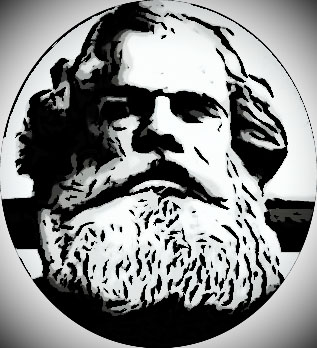 Vlady, an older bearlike man also in the employ of Madame Ophelia’s Ophidiarium and a traveling circus strongman Lydia recognizes from her past.
 Pyare, a young man with dreams of being an airship pilot, and member of LBFDS (the League Bousculier Francaise Du Sud) helping Lydia and Serpina rendezvous with Serre-Pain and Vlady at an illegal airship.
 Pax Victoriana, a period of peace imposed by the Clockwork Commonwealth and its enforcement arm, The Admiralty, dating from the beginning of Queen Victoria’s reign to the present for a total of 180 years which includes the TSR (Temporal Shift Realignment) of 56 PV (1893 AD) after which Commonwealth calendars where recalibrated to reflect Her Royal Majesty’s peaceful rule (following the devastation of the first Pandem and its resurgence 30 years later as Pandem II).
 Chief Inspector Karla Kola, head of the IOTA squad charged with capturing Commodore Jack Cheése and Lydia’s nemesis and pursuer.
 The reasoning behind the stealth of his action, the risky wingsuit flight from the penthouse, other than another opportunity to recharge the adrenaline, was that he was certain he was being watch, followed. Even as he made his way to the Battery Work along the deserted streets, the sirens wailing in the distance, fire and police, he stayed out of sight, reversing his path, scaling walls, cutting through alleys. He saw no one, but then the temperatures were freezing in the dark AM.


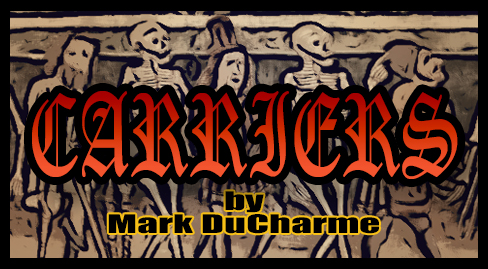 Dime Pulp is please to introduce a new seral fiction titled Carriers by Mark DuCharme (yes, that’s his real name). Born in Detroit, Michigan, Mark earned a BA from the University of Michigan and moved to Colorado in 1990 to attend the Jack Kerouac School of Disembodied Poetics at Naropa University, where he earned an MFA. A widely published author, Mark lives in Boulder where he works as an English instructor. Carriers is a vampire novella with touches of black comedy and satirical bite, and is told from the perspective of its unreliable narrator and protagonist, Johnny. It takes place during a “plague” that has been going on for two years in an unnamed city. Dead bodies litter the streets, hallways, and homes. A corpse disposal company hires people like Johnny to transport them to a facility at the edge of town with the very important stipulation that the bodies be delivered there before sundown. No one ever says why. Read Carriers,
 Dime Pulp