
by Pat Nolan

Apollinara did not want to hear another story of how her husband had been assassinated.
Her oldest son, Dudley, who was known to all as Pepe, had brought the young reporter to their doorstep. She did not show her anger or distress. They were decent folk. They would be polite.
He introduced himself as John Scanly and explained that he had once worked for the El Paso Herald. He claimed that he had been fired for showing too much interest in her husband’s murder.
“I believe there’s a conspiracy of silence surrounding the circumstances of your husband’s death. My original curiosity was piqued when I encountered resistance to anything but a cursory examination of the evidence. Now I’m determined to uncover just who might be behind this plot and expose their motives.” Then, almost as an afterthought, “The results of which I plan to publish as part of a larger book dealing with the life and exploits of the most remarkable lawman of the Southwest.”
They were seated on the verandah of a house on the outskirts of Las Cruces, less than fifty yards from the road to Organ. Abe Falk owned the house they were now living in, generously rented to her at a cut rate. It was his way of demonstrating to the public his benevolence. Apollinara was in no position to be ungracious or even ungrateful. The family had had to move down from the mesa after Cott had foreclosed on the mortgage, an action taken a few days following her husband’s funeral.
The bright early July afternoon was beginning to heat up. Paulita had set a pitcher of lemonade on the little table between her mother and the reporter, stirring the contents with a long wood spoon while her baby brother clung to her pinafore. Pepe, her older brother, was seated on the steps to the verandah, his long legs stretched down to the path that meandered out to the white picket fence where Scanly’s horse and buggy were hitched.
“Isn’t it out of the ordinary that he would be unprepared for trouble or even not on his guard? His shotgun was loaded with birdshot. Clearly, he did not expect to use the weapon offensively or defensively. In my interview with Doctor Fields, he stated that a man as wise in such matters as your husband would not have been in the position he had probably been in, wouldn’t have turned his back had he thought he was in any physical danger.”
Apollinara nodded, lips set in a grim line. She knew her husband’s caution. He had made many enemies over the years as a lawman. But she knew he could be careless, too, especially if he’d had too much to drink. It was then that his normally vigilant self became confused with its own deathless reputation.
“Doctor Fields also informed me that he had taken a thorough survey of the crime scene and found that it appeared there had been another party lying in wait along the trailside. There was evidence of fresh manure and the ground was trampled by boot prints.”
These were things that had been whispered to her countless times. They made her fearful, despondent.
“Also, on the day of your husband’s funeral, the Attorney General and Captain Short with the Territorial Mounted Police were sent down from Santa Fe by Governor Kerry. They confirmed the coroner’s suspicion that there had been a third party. What’s more, they found something he had over-looked, shell casings from a Winchester rifle.”
These details meant nothing now, would change nothing. He had died in a way she always feared that he would. She could not come to grips with the pervasive air of injustice that rumor stirred up. Self-righteousness had been his trait. For all his faults, though, she had never ceased her affection for him, even in the most trying of times, the most recent probably being the worst. She missed his familiar long, gangly, slightly stooped presence in the low ceilinged adobe. His predictability had made her life secure no matter the circumstances.
“I spoke with Captain Short a few days after he had interviewed Brazil. He expressed surprise at the boy’s docile demeanor. This evidently strengthened the suspicion that another party was involved. Clearly, Brazil is not the killer type. My conversations with folks who know him have confirmed that impression. He was never considered a dangerous man. As I was present at the preliminary hearing, I can testify that my sense of Brazil is similar to the prevailing opinion. He is a follower not a leader, and he is beholding to Mr. Cott who plainly holds the leash.
“Among other information that would point to collusion, I have come across the fact that Adams never had cattle to bring up from Mexico and graze on the disputed property. There was never any herd nor was there ever a ranch in Oklahoma, their purported final destination. Nor did Adams ever have any intention of buying Brazil’s goats! Why then would Adams and Brazil concoct such a fiction if not for some dark purpose?” Scanly paused to judge Apollinara’s comprehension of what he had been telling her. He took her grim silence as permission to continue. “I would also question whether either of them had the cunning or intelligence to devise such a scheme.”
Paulita could not help but continue to stir the lemonade, as she eavesdropped on the adults, the ice making a musical sound striking the side of the pewter pitcher.
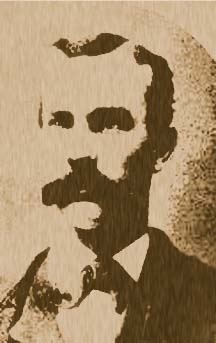 “Now I don’t know if the name Joe Miller is familiar to you, Mrs. Garrett, but it belongs to a notorious assassin who is believed to be part of this conspiracy and may even be the actual triggerman.”
“Don’t you mean Jim Miller?” Pepe stirred from his perch on the steps, stood up, and stretched his long legs.
“Jim Miller. Did I say Joe? I meant to say Jim. I was informed by a Texas Ranger, a friend of your pa’s, that he had interviewed the undertaker from El Paso who happened to be in Las Cruces that very day and had seen Miller in what can only be described as a conspiratorial conversation with none other than Mr. O’Lee! Also. . . .”
Apollinara excused herself. “It is a beautiful day, Señor, but perhaps a little too warm for me. My dark clothing is too welcoming of the light.”
Scanly rose to his feet. “Ma’am?”
“But please, stay seated, be our guest, enjoy the day.” She stood, stoic, dignified. The man lowered his eyes. If he had been homelier, he could have passed for a young Ashton Upson. There was the same love of the sound of his own voice. There was the same self-pride, but then all men had some of that. Full of himself, his insinuation could never be wrong. “Paulita, serve Mr. Scanly more lemonade, por favor.” Then she disappeared behind the summer door into the dark, cooler house.
Scanly turned to Pepe who had moved to sit in his mother’s rocker. “As I was saying, while in El Paso, I met with an informant who would most certainly be privy to these types of details. What he told me indicates a much wider conspiracy. A prominent rancher is involved, and who that might be is fairly obvious. As well, so is a well-known attorney who, in my estimation, is the only one with the intelligence to craft such a devious plan.”
Scanly got no argument from Pepe. “From what I’ve been able to learn, a meeting was held at the Regent Hotel that included Miller and the other two in which Miller agreed to do the killing. Coincidentally, that meeting took place in the very same hotel in which years earlier your pa met with the Governor of the Territory and agreed to take on the investigation of Jennings and his boy. And it included at least one of the same participants!”
Wide-eyed, Pepe shook his head. “Now don’t that beat all.”
“The twist to the plot,” Scanly continued, confident that he had his listener hooked, “and which I do believe the lawyer provided, was that someone would be furnished to admit to the shooting and someone else would testify that it was self-defense. That would be Adams and Brazil.”
“That copperhead! That snake!”
“Adams claims that your pa threatened Brazil. Now, from what I’ve heard about Mr. Garrett, he was not one to make idle threats. The consensus is that had he made the threat, he could have shot Brazil from where he sat in the buggy rather than after stepping down.”
Pepe’s mouth spread sideways in a smirk. “Now ain’t that the truth. If he’d figured for a scrape, he’d a taken his sixer with him. But he didn’t reckon that he needed to get rough with Brazil because he had a lawyer up in Santa Fe who swore we could get him off the land legally. Besides, he wasn’t any more scared of Brazil than he was of a jackrabbit!”
“My suspicions are all but confirmed at this point. There was more at stake than that hunk of overgrazed rangeland. There was indeed a plot to murder your father.”
An explosion sounded in the direction of Las Cruces, like a shot, but less distinct, hollow. Then another. A beige cloud advanced up the road toward them accompanied by shrieks, shouts, laughter and the barks of dogs. The horse tied to the fence post shied.
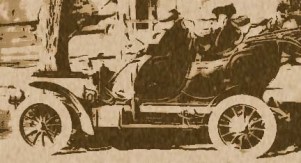 “It’s a motor carriage!” Paulita ran to the gate, her baby brother waddling behind her. The machine swayed and jogged from side to side, navigating the ruts in the wagon road, chased by outraged dogs and the town’s children. Scanly’s horse reared, shaking and tipping the buggy trying to free itself as the dust and noise rattled past. Seated high on the bench of the contraption were what appeared to be a man and a woman, he with a black hat held on his head with a chinstrap and she with a wide brimmed chapeau held in place with a yard of chiffon scarf. Both wore goggles. The woman waved at Paulita and her brother gaping through the pickets.
“They must be going up to Cott’s spread for the big barbeque.” Pepe said after the machine had gone from sight and he had settled back in the rocker.
“That’s right! O’Lee has been elected to the Territorial Legislature. I sincerely hope that that is the only thing they are celebrating.”
Pepe grunted and then noticed his mother had returned and stood to give her his seat. Apollinara made no indication that she wanted to sit. She had been drawn to view the noise and novelty as well.
Scanly addressed her. “There is a mystery about this tragedy, Mrs. Garrett, and it is my aim to try and bring it to light. If you will allow me.”
Apollinara nodded from the doorway more in resignation than agreement. There were those who sought to benefit from the misfortune of others. This young man was no different. She could almost hear Ash Upson saying so himself. “There are those who kill and get a reputation, and there are those who write about them, for a similar notoriety.” It was the code of men, of the West.
“I am the recipient of an anonymous note from someone who claims to have been a friend of Mr. Garrett. In it, the author advises me to steer clear of probing too deeply into the matter, for, and I quote, ‘I know the Organ Mountain bunch and Pat got himself killed trying to find out who killed Jennings and you will get killed trying to find out who killed Garrett.’
“Ma’am, I have been in contact with more than one person who has told me that your husband was gathering new evidence regarding the White Sands murders, that Gil Leland had told him or was going to tell him everything, and that he was writing a book about it. Would there be notes from these interviews or rough drafts regarding this matter among his effects?”
Apollinara closed her eyes as if to gather strength. Had her husband and Ash not written their book, perhaps things would have been different, that no-account boy would have faded from memory. Instead, that one event overshadowed his entire life. He was remembered only as the man who shot Billy, the Kid.
When she reopened her eyes, she spoke, slowly, firmly, “My husband was a man of few words, Mr. Scanly. There is no book.”

This novel is the culmination of a youthful ambition. It pays homage to the many sagas of the old West I devoured as a young reader, the countless B Westerns I watched on Saturday morning TV, the yards of paperback Westerns I burned through as an adolescent and as a young adult, the prime-time horse operas available to me almost nightly in the late fifties and sixties. I was smitten with Western lore and wanted to contribute to it. It was a subject that always caught my attention as was the case when I came upon Leon Metz’s biography of Patrick F. Garrett known the world over as the man who shot Billy, The Kid. Professor Metz’s thorough account presented Garrett as the quintessential lawman of the old West. One of the gems uncovered in my reading of the biography was that Garrett and his friend, Ashton Upson, had written and self-published a version of that crucial event entitled The Authentic Life of Billy, The Kid, with Upson, an ex-newspaper man, providing ‘biographical’ information and Garrett, the uncluttered directness of a police report in his pursuit of Bonney. As a result, some three decades ago, I sat down at my typewriter and set out to write a novel based on the life of a legendary lawman, a life overshadowed by one significant incident, the killing of William Bonney.
 Over the years numerous version of my manuscript, mostly typewritten, have languished in a drawer or gathered dust on my desk and to which I was drawn, on occasion, to reread and rethink the presentation of the material. In the process, a novel took shape, one that began as a bare bones cinematic adaptation of a biography and emerged as something more meaningful: the story of the relationship between two men, one garrulous, the other taciturn, the Mutt and Jeff of the old Southwest, and the tradition of storytelling and authoring of ‘true’ accounts. The life of this legendary lawman encompassed more than just that one episode, however. Garrett’s own violent death in the early years of the Twentieth Century seemed to punctuate the passing of an era. There is a resonance to the other particulars of his life as a lawman that belong to the saga of the Southwest.
On The Road To Las Cruces is a work of fiction tethered loosely to historical fact as any Western history buff will be quick to discern. The detail and color of the late Nineteenth Century Southwest presented here is due largely to the intrepid historians, both amateur and professional, whose bailiwick is that particular era. An author can feel comfortable writing about his contemporaries, but to travel to the past takes the expertise of those for whom the diligent tracking of detail is all consuming and, in many cases, a just and only reward. I am fortunate to benefit from such carefully researched knowledge. The quasi-fictional landscape that came into being in my imagination would have been noticeably paler had it not been for the writing of such excellent authors, storytellers, and historians as Mari Sandoz, J. Frank Dobie, Leon Metz, Owen Wister, Charlie Siringo, Jon Tuska, and Colin Rickards, to name but a few. It goes without saying that Garrett and Upson’s collaboration was invaluable.
In this work of fact-based fiction, I have allowed myself license to rename, upend, and fabricate certain details to hurry along the story. The inaccuracies, the anachronisms, the inventions are entirely mine. What is related on the road to Las Cruces is as much a retelling of some history as it is how such a retelling might come about, and is represented in the manner of a tall tale, the deadpan details of a crime story, melodrama, and the makings of a conspiracy to murder. The subtle hyperbole of the Western storyteller is a joy to hear, masking in understatement devilish wit and intelligence. It was my intention to evoke that tradition.
Pat Nolan, Monte Rio, 2011

 In late February of 1908, a one-time drover, buffalo hunter, saloon owner, hog farmer, peach grower, horse rancher, US Customs inspector, private investigator, county sheriff, and Deputy US Marshal set out from his adobe home on the mesa above Organ, New Mexico accompanied by a young man in a black buggy on the journey to Las Cruces. He would never arrive. This is the story of that journey, a novel account of the last day in the life of a legendary lawman.
 In March of 1892, a Scotsman by the name of Arthur C. “Artie” Doyle was hanged by the neck until dead after being found guilty of a string of grisly murders of prostitutes in Whitechapel. At that moment, history veered off its presumed course and headed in a direction all its own in which the Great War never happened because the Kaiser was afraid of offending his grandmother, Queen Victoria, whose life has been prolonged by the wonders of biology. Her reign, known as the Pax Victoriana has lasted 180 years maintaining as many Victorian airs as possible while making accommodations to rapid advances in bio technology. Cheése Stands Alone poses a steampunk question, can Captain Lydia Cheése find her father, the antigovernment turncoat and radical, Commodore Jack “Wild Goose” Cheése. And furthermore, will her quest take her around the globe and through alternate world histories in the requisite 80 days or is it the beginning of a lifelong journey?
 In Just Coincidence, a privileged young man with the unremarkable name of Wayne Bruce returns to the site where his father once had his business, a battery manufacturing plant, and where he often spent his childhood days hanging around the factory and the neighborhood. His return is haunted by the mysterious circumstances surrounding his father’s death and the vague feeling that his uncle is somehow involved. Appalled by the poverty and crime of the place he remembers fondly, he is moved to resolve the injustice of the socially marginalized and to wreak vengeance on those he believes are responsible for the death of his father. A personal coincidence brings together dark prince and dark knight joined in a fateful and tragic quest for justice.
 The late afternoon sky, losing some of its color, was hastening toward dark. A barricade of clouds hemmed in a sinking autumn sun, scattering its light as feeble rays. The hazmat team from the BATS Lab had packed up after a forensic sampling of the soils at various depths of the contaminated area and a thorough scanning of the site with sniffers. He could expect results overnight. He folded and stowed his protective gear in the utility box in back of his ’79 Land Rover. It was a souvenir of his time in Mali. The thing he liked about the old rugged square cab Rovers, although they weren’t built for speed, was that they came in any color you wanted as long as it was green. As well, the bed was long enough to hold his matte black BMW R12 motorcycle in its canvas sheath. If he wanted to go fast. The beeping pager brought him out of his reverie.
 Wayne Bruce retrieved the device from the pocket of his leather jacket and scrolled through the display. Uncle Harold had called multiple times. Everything was Urgent and ASAP with him. And a number he remembered as belonging to Detective Gordon James with Metro Homicide. There was a third number that he didn’t recognize. Very few people had his pager number and he was certain he knew all of them.
 “I might have figured as much. Do you remember Laverne Early or was that after you were sent away to school?” At Wayne’s shrug, he continued. “When the battery business started booming and your old man began diversifying, they expanded the accounts department. That’s where Laverne worked for a couple of years. There was a rumor that she might have been seeing the boss’s brother, your uncle Harold. He was in charge of sales back then. He was quite the ladies’ man in his younger days I heard tell.
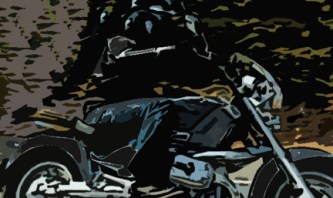 Once on Grant, the traffic was considerably heavier than in the old neighborhood it bordered. He weaved through traffic, stopping at the light before the freeway entrance. No sign of them. His choice was to continue down Grant or get on the freeway. But would they stick to surface streets considering that the raised four lane could take them further and faster? That was the question. He raced up the onramp at the change of the light and encountered the going home gridlock. No one was going to go anywhere fast. It was like a slow moving parking lot. There likely was an accident further down, but as far as he could see, it was a horizon of rooftops inching up the overpass incline. And there in the middle of it, in the number two lane, was the black box he was looking for.
 A large rectangle of light hovered nearby and she turned her head toward it. It was a window set into the severe slant of an attic room. Now she was aware of the vague itching of her legs, her torso, into her armpits and around her breasts. She scratched at the tiny tingles of pain on her arm and cleared her throat again. She blinked, focusing on the light at the window. It was maddeningly indistinct. A shadow crossed the brightness and she tracked it, her head heavy as lead and painfully molten as she moved it.
 Her name was Lydia Cheése, pronounced “chase,” and the butt of hilarity practically her entire life. She’d answered to it when the doctor spoke it. She was a senior pilot, captain for the Aerosud fleet of luxury airship liners. She was married to. Wait. She was married. Of course. To Seignior Professario Cornado de Belize Gutman, a member of the royal court in São Paulo. Nado. How long had it been since she’d seen him? Six months. Longer. Easily. But that was not so unusual. He was often ensconced at his research farm near the headwaters of the Orinoco. And she, even though she could have taken her place at his side as Doña Lydia de Belize Gutman-Cheése, loved to fly. As a child she had been fascinated by stories of the Admiralty Air Corps told by her father, Commadore Jack, and her grandfather, Harvey Thomas, stories about her great grandfather and hero of the First World Pandemic, Pandem I, in which nearly a quarter of the world’s population was wiped out by the persistent Black Mold virus. Colonel Bartholomew Cheése had been an army doctor on the front lines of the scourge that swept the world. Her ambition was to emulate and follow in the footsteps of her illustrious, and notorious, ancestors. And, yes, it was because of her father that she was in her present fix.
 Lydia counted two days passed in confinement on the barge slowly being hauled up the River Loire toward Older Orleans. She could view from the round ports on the barge cabin the undulating hillsides shimmering with tentative purple hues of biocrops still struggling to take root long after the Great Mold Devastation early in the previous century. There were dead spots that would never regenerate, she knew, yet the Commonwealth spent untold Vicotorines in trying to regenerate vast areas of the continent that had been sanitized in a misguided effort to eradicate the Black Mold. The lethal unproven bactophagic bug did eradicate the black mold and large swaths of the Northern Hemisphere’s flora down to mineral soil as well. It was her great grandfather who had pioneered the lactobacto that brought the bacterial scourge to a end. She remembered that one of her biostory professors in Pandem 101 at the Academy had said. “After Darwin came Mendal, and then the whole world changed.”
 Lydia was the adventurous one, commanding double hulled luxury superships, flying to exotic locations such as Neumonrèal, the intellectual capital of the Joual Republic, the wild ocean coast of Newer New York and the Jersy badlands beyond, Alta Morocco, and of course the popular Islands of Birds and Bees with their lush exotic interior jungles of pre-Dev flora and fauna. Winged creature had been steadily declining in the northern latitudes if one were to believe the Ice Age prophets of doom. Flying insects and the birds that feed on them were scarce. The poles were cooling, they said, the icepack thicker and creeping down the latitudes from the frost encased wastelands.
 The musty perfumed scent of the dress made Lydia sneeze as she pulled the sleeves down to her wrists and gave herself a cursory glance. The spangled costume had obviously belonged to someone a size larger than her, and reminded her of the times she dressed up in her mother’s old gowns as a child.
 “Of course, so right!” Lydia cringed as the dummy snake was laid around her shoulders, the large head draped above her left beast. She was surprised by the weight and the peculiar clamminess of the skin exuding a rather moist earthy odor. Trying to get comfortable with the idea that she had to masquerade as a snake goddess to pass station inspection, she breathed a sigh to relax, taking a closer look at the imposingly powerful shape and intricate patterning of the scales of the python’s head. The large glistening orbs of its eyes, luminescent amber marbles bisected by vertical irises like cold cruel otherworldly suns, rolled awake. A thin naked tongue slithered out from the front lips and curled toward her, sensing the heat of her panic.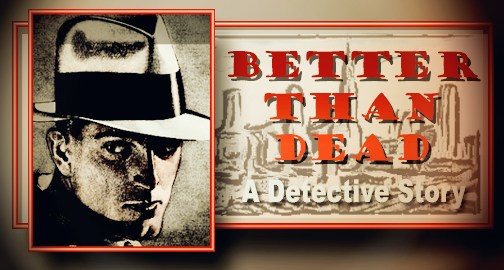

 Hogan was shaking his head all the time I was telling him. “You believe this bum, O’Malley?” he asked the sergeant who was nodding in agreement. “You gotta lay off the dime detective fare, pal. It’s turning your brain to pulp!”
 The commotion was drawing a crowd of shipyard and dock workers just arriving to begin their shifts or leaving after a long uneventful night. Anything out of the ordinary was going to attract them like moths to a flame. Unfortunately I wasn’t invisible enough to get past the police line. They weren’t letting anybody in or anyone out. I scanned the faces of the crowd of workers being held back by the coppers. I recognized one of them, from Annie’s tug, The Narcissus, the tall one. I could tell from his expression that he recognized me, and he turned away quickly to disappear into the crowd. I lurked in the rapidly shrinking shadows dreading that Hogan would notice I had gone missing and raise the alarm. I did not at any cost want to go downtown to have a little chat and explain about Rebecca. Then I saw her, perfection in a sea of broken faces. It was Annie. Her mate had gone to fetch her. She caught my eye and gave a nod. She was up to something.
 “Gold,” she said with a frown, “Gold and jewels. People are fleeing the war in Europe and sending their wealth abroad. It’s an open secret. Everybody on the docks knows about it. But it’s scum like Kovic that’s gonna try and heist it.”
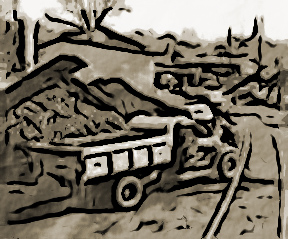 Pulling the flat cap down over my eyes, I made my way over to the coal yard. There was a queue of coal wagons backed to the chutes and I figured the guy with the papers in his hand was the foreman. Holding a sheaf of papers was not a hard job but the scowl on his face wanted you think that it was. He didn’t like the look of my mug, either. I asked him if he knew the coal company that delivered to the address of the building where Rebecca’s old man had his used clothes store because I had to do some work in the basement and didn’t want to do it if they were going to dump a load in the bin. The foreman was distracted by a wagon that had not pulled close enough to the chutes and the ore was spilling onto the ground. “Oreville Coal Company!” he yelled as he ran to chew out the coal wagon driver.

 “When we rode up to within half a mile of the shack, I knew we had them trapped. I divided the men up in two groups, and led my boys, Tip and Barney, up an arroyo to where we were able to get in close.”
 “He turned and reeled back into the adobe. Billy Wilson called out. I could tell it was him by that Yankee accent. He said we’d killed Charlie Bowdre and that he was sending him out. I replied that he could come out with his hands up.”
 “The problem is that my name on it says I wrote it.”
 In March of 1892, a Scotsman by the name of Arthur C. “Artie” Doyle was hanged by the neck until dead after being found guilty of a string of grisly murders of prostitutes in Whitechapel. At that moment, history veered off its presumed course and headed in a direction all its own in which the Great War never happened because the Kaiser was afraid of offending his grandmother, Queen Victoria, whose life has been prolonged by the wonders of biology. The peace of her reign, known as the Pax Victoriana, despite some major environmental disasters, has lasted 180 years keeping as many Victorian airs as possible while making accommodations to bio technology. Cheése Stands Alone poses a steampunk question, can Captain Lydia Cheése find her father, the antigovernment turncoat and radical, Commodore Jack “Wild Goose” Cheése. And furthermore, will her quest take her around the globe and through alternate world histories in the requisite 80 days or is it the beginning of a lifelong journey?
 In Just Coincidence, a privileged young man with the unremarkable name of Wayne Bruce returns to the site where his father once had his business, a battery manufacturing plant, and where he often spent his childhood days hanging around the factory and the neighborhood. His return is haunted by the mysterious circumstances surrounding his father’s death and the vague feeling that his uncle is somehow involved. Appalled by the poverty and crime of the place he remembers fondly, he is moved to resolve the injustice of the socially marginalized and to wreak vengeance on those he believes are responsible for the death of his father. A personal coincidence brings together dark prince and dark knight joined in a fateful and tragic quest for justice.
 She was pointing at the two armchairs and the table with the radio between them. She stumbled back with her hand held over her mouth and in doing so knocked the banker’s lamp off its perch with a shattering crash. “The radio!” she gasped.
 doorframe buckled, coughing out bits of brick and plaster. I dropped to one knee to keep from toppling over. My ears were ringing from the explosion. Dust and acrid smoke filled my nostrils. When I got over the initial shock I looked over at Rebecca. She was gone.
 The funeral was huge and, not surprisingly, resembled a business convention. The social occasion of old Bruce’s death itself required accommodations for those who had come to pay their respects. Politicians, local dignitaries from various denominations, prominent financiers and corporate honchos crowded the large assembly hall. Harold Bruce had made the arrangements with the exclusive Green Cove Country Club for the post interment reception which was beginning to have the air of a celebration on the verge of a cocktail party. Moderate words of tribute were spoken, tearfully, by Trish, his mother, huskily, by Harold, his uncle. Respectful, ardent words by others who had known and worked for and with him, a saint, a devoted father. When it came his turn, as the younger generation should have the final word, he had been as gracious as a psychopath, echoing their praise with a chorus of his own to the gathering of family, friends, and business associates, yet all the while considering that among them was his father’s murderer.
 “But wasn’t it an emergency?”
 “Crazy,” Wayne smiled, tucking the card into his inside jacket pocket, and glanced back at the tee box now in darkness and imagined the red canvas roof of the golf cart dropping down behind the mound and heading for the fairway. A silent vow welled up and tightened his jaw. Justice. Justice for old Dad. If it’s the last thing.
 Lydia crouched in a defensive stance, the training she had received as a young officer in the Admiralty’s Aerocorps returning to her tensed body like a remembered presence. She faced the bear, turning warily, sensing others in the shadows of the oil lamp’s mute orange glow. The flower girl sat on a very large ornately decorated trunk, feet dangling in picturesque innocence. She was the one Lydia wanted. About to demand her wallet back, she caught a third figure at the periphery, moving toward her. Tall, muscular, a dark skinned man with a crop of white hair and narrow, also white, iron jaw whiskers held his hand palm up in the universal gesture of no harm. On her guard, she turned to keep all three of them in her field of vision.
 Lydia was immobile, paralyzed, her entire body coursed with a fiery itch yet conscious of being lowered into a musty smelling box and a mesh cloth placed over her. Then snakes, a tangle of slithering vipers, were dumped on top of her prostrate form. She tried to scream but her vocal cords were affected as well. She heard Serre-Pain’s voice, a soft soothing whisper, “Please forgive me, Lydia, but it was necessary to prick you with a small dose of octopus venom. You will be immobilized for about twelve hours. You will remain conscious but unable to speak though you will be able to move your eyes. Don’t fret about the snakes. Since you can’t move, they won’t bother you though they will be attracted to your body heat. The mesh will protect you. Now I must deal with our visitors.”
 Chief Inspector? Lydia’s eyes snapped open. IOTA! IOTA was out there beyond the glass. Bright biotorches cast large shadows flickering at her peripheral vision. She could hear the scrapping and shuffling of large objects being moved around accompanied by Serre-Pain’s pleas for caution.
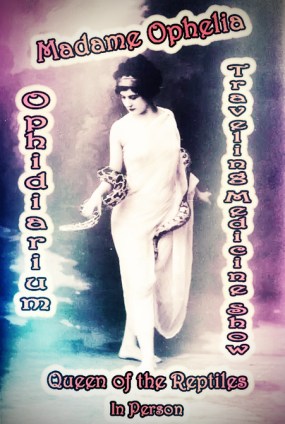
 “Interesting. I see by your papers you are proprietor of Madame Ophelia’s Ophidiarium and Traveling Medicine Show.”
 Dime Pulp