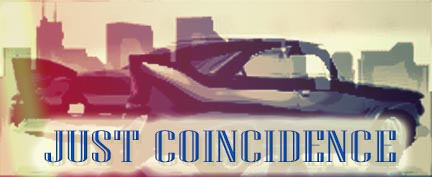
by Pierre Anton Taylor
 The funeral was huge and, not surprisingly, resembled a business convention. The social occasion of old Bruce’s death itself required accommodations for those who had come to pay their respects. Politicians, local dignitaries from various denominations, prominent financiers and corporate honchos crowded the large assembly hall. Harold Bruce had made the arrangements with the exclusive Green Cove Country Club for the post interment reception which was beginning to have the air of a celebration on the verge of a cocktail party. Moderate words of tribute were spoken, tearfully, by Trish, his mother, huskily, by Harold, his uncle. Respectful, ardent words by others who had known and worked for and with him, a saint, a devoted father. When it came his turn, as the younger generation should have the final word, he had been as gracious as a psychopath, echoing their praise with a chorus of his own to the gathering of family, friends, and business associates, yet all the while considering that among them was his father’s murderer.
He had stepped away from the reception hall to a wide windowed alcove overlooking the golf course, uncomfortable with the glad handing and the humorous reminiscences of the old and well off, the condolence ballet that seemed so artificial and rehearsed. In the reflection of the glass he imagined the old man in his beige polo shirt standing beside his red roofed golf cart taking a practice swing before teeing off.
God, how he hated that game, a ludicrous spectacle of status played by amateur athletes that doubled as a de facto boardroom for corporate deal makers and politicians. What did the golfers have to gain from Wally Bruce’s death?
He felt anger with himself first of all. And then everyone else. He wanted to confront them. Accuse them.
Old Dad was a centerpiece in the local business community. They could point to him as their good guy, the peak of integrity even though most of them were out and out crooks and fraudsters. The Bruce name on committees and charitable organizations gave them a shiny legitimacy that signaled trust. Although most of that was Trish’s doing, the non-profits, and political committees to free or stop things. And then there was Trish. And Harold, six years younger and same age as mother. Old Dad’s opinion of his brother, “He’s a real fun guy, he’ll grow on you.” And he did, like a cancerous tumor. As vice president of Bruce Enterprises, he steps into the old man’s shoes before they’re even cold. And into the widow’s bed? Is it not what it seems? Now in hindsight, had there always been something between Trish and Harold, signs of undue affection, of favoritism, She was not known as the “Queen” for nothing. Her wish, her whimsy, was her command. She accepted the deference she thought she deserved, watchful for any indication of disaffection or reticence from her liege. He was her husband, father of her only son, although she seemed to treat that almost as an afterthought, and perhaps that was why the Bruce offices, the old Battery Works, held such nostalgic fascination. It had been his nursery. The difficulty of his birth had ruined her, caused her no end of physical ailment, and was an oft repeated litany that mercifully diminished after being installed in various boarding schools in the States and abroad. Now she shamelessly paraded with her brother-in-law, pretender to the throne, the head of the Bruce empire. He, unlike old Dad, would indulge her every whim.
He watched them appear behind him as reflections in the panoramic window
“There you are!” It was always like to Trish to state the obvious.
Harold maintained a grim bulldog visage, his ledge of eyebrow in a frown. The square cut glass in his right fist like an appendage, he leaned a shoulder in. “That was a very eloquent tribute to Wall.”
His father disliked being called Wall but since it was only his brother who dared called him that, he bore it with long suffering tolerance.
Trish put a ring spangled hand on his arm. “It was a powerful eulogy. Your father would be proud.”
He felt himself blush at the insincerity of it all. Maybe even on the verge of tears for the falsehoods he endured. He felt anger with himself first of all. And then everyone else. He wanted to confront them. Accuse them.
“Thank you. There was so much more I could have said. There is so much left unsaid. And to pass away like that. In his prime, some would say. There is so much we, I, don’t know about his last day, his last hours. It just doesn’t make sense.”
“Wayne, he was not a well man, but he hid it from all of us. He had his pride, but as his wife I can say it was pride. He thought he was some kind of super human. Unfortunately he had the heart of a mere mortal. The negotiations were taking their toll on him.”
“But the circumstances. . . .”
“I know, I know, we’ve been through all this before.” Trish put on her practiced long-suffering face and sighed. “The doorman at the Legacy Tower saw him at around 11 that evening. He saw your father get into the penthouse elevator. Alone. He was the only one with a key. The trouble alarm sounded because the door to the elevator wouldn’t close after it arrived at the penthouse.”
“I think he panicked,” Harold offered.
“Father?”
“No, the doorman. He wasn’t the regular on that shift, but Ronald, who normally manned those hours had called in sick earlier that evening and so this other man who was actually a trainee didn’t know the procedure.”
“Which was?” Wayne had heard the official oft repeated version and they were all remarkably the same which should have allayed suspicion, but still he doubted and his doubt required reassurances.
“Why are we replaying the morbid details? We’ve been over them a thousand times,” Trish exaggerated.
Harold continued as if recounting someone else’s mistakes would give him satisfaction. “So he called the fire department.”
“Shouldn’t he have?” Wayne knew that here was where the details became rather vague.
“He should have called the night manager who has the key to the service elevator that would open to the penthouse. That was the protocol.”
 “But wasn’t it an emergency?”
Harold offered a placating gesture. “He didn’t know that. It could have been merely a mechanical problem. He did call up to the penthouse. And when no one answered he called the fire department.”
“So the police tagged along as well. And that only complicated matters,” Trish added with a tone of disgust.
“The commotion roused the night manager and they were able to get to the penthouse where they found. . . .”
“Oh, I don’t want to hear this. It is so undignified. Why couldn’t he have died in bed, alone or not, befitting a man of his stature!” Trish was on the verge of real tears not so much at the death of her husband but at the indignity of it all.
Harold shrugged and set his jaw with resolve to finish the story. “Wall had fallen, must have happened just as the door to the elevator opened, and wedged in the doorframe, triggered the alarm. The police should never had been called, Trish is right, it was a medical emergency. But because he was who he was, the cops at the scene called downtown, and downtown sent a detective, and because they sent a detective, they had to alert the medical examiner. . . .”
“They were going to take him to the morgue! Fortunately our lawyer, Dr. Linus Pall, and your father’s physician, put a stop to that.” Trish became clearly agitated.
“But the cause of death, it seems rather vague.”
“Death is vague, darling boy. It was his heart, your father had a bad heart. You’ll have to accept that.”
“He had a good heart, Mother. That I can guarantee. And I am my father’s son.”
“I hope you’re not going to make trouble now, are you, Wayne? Do something silly like call for an autopsy?” Harold squared his shoulders and became very grim along the jaw line where pink tinged the skin under his five o’clock shadow.
Wayne waited out the silence before giving a smile and a shrug. “No, of course not. Life goes on, open for business. I have my life, he had his. I have a new project I’m pursuing.”
“Oh mountain climbing again, Mount Everest, was it?”
“K2, Mother.”
“That as well. Black belting in some tournament or other? Sky diving? Jumping off bridges on a rubber band. I can never keep track.”
“No, actually, it’s something I’m quite excited about. It is local. I had been thinking about doing it before Dad died. We had talked about it briefly several times and he seemed in agreement.” Wayne inclined his head to each of them. “I will be renovating the old battery works and restoring it as a local landmark named in memory of Dad and at the same time preserving some of the history of that area.”
Harold arched his eyebrows in a show of interest. “You’re suggesting a gentrification project?”
“That’s a horribly depressed side of the city, dear. I heard the city council wants to bulldoze the entire area. That old foundry is in a high crime district. I read in the paper just this morning that yesterday or maybe the day before, three citizens were assaulted by a crazy masked man! There are daylight robberies!”
“My project would address the poverty in that area by hiring local labor and artisans to do the restoration work and maintenance thereby giving them a stake in their community.”
“Oh, dear, you’re starting to sound like a communist.”
Harold cleared his throat. “A good idea, my boy, but I’m afraid that will be impossible. We are in the middle of negotiating with a toxic cleanup fund contractor to comply with the federal. . . .”
“I’ve read the suit, and our inhouse analysis. I’m having my lab at Bruce Advanced Technical Systems review the soil samples from the Environmental Impact Report. I can bring the cost in lower than the big contractors by hiring locally. . . .”
“It’s a losing proposition,” Harold insisted, shaking his head and glaring fiercely, a family trait. “You’re crazy if you think you’ll get any decent returns, even after the entire issue of liability. . . .”
“Yes, listen to Harold, dear boy, how will you ever recoup your returns on your investment. What bank. . . ?”
Harold cleared his throat. “The funding for the new Defense Department contract is in the pipeline and everything is on track?”
“Once the toxic issue is settled, the old factory site will be turned into a historical park in memory of Dad’s civic contributions to the culture of the city.”
“A park? Those old brick relics? And for free. Harold is right, you are mad.”
“There’ll be a museum.”
“Of old batteries?”
“There would an historical display, of course, but primarily it will house my world renowned collection of classic cars.”
“Of course,” Harold nodded appreciatively, “they were part of the big auto show in Vagas a few years back.”
“Another one of your hobbies. When are you going to settle down, get married. Lotte has been asking after you.”
Wayne ignored his mother addressing Harold instead “Collectors and car enthusiasts the world over will flock to the museum just to be photographed alongside a favorite classic by a professional staff. For a fee, of course.”
Harold had shifted his eyes to the side making a calculation. “That’s a rather large parcel of land for a museum. What are you going to do with the rest of it? Parking lot?
“For some of it I’m sure. We’ll have to accommodate visitors. And much of it can be landscaped as a park. The old brick sheds will house the museum with certain alterations and additions. Perhaps an art gallery and a community center. I’m having one of our architects prepare a feasibility study and I’ll be taking over the old administration building as a satellite office of Bruce Advanced Technical Systems. That way I can keep an eye on the reconstruction of the old battery works while managing the research firm.”
Harold cleared his throat. “The funding for the new Defense Department contract is in the pipeline and everything is on track?”
“Red Ball.”
Trish sighed. “He would always say that when a plan of his was top priority. That, ‘going great guns” whatever that supposed to mean.” She smiled at her son. “Spoken like a true captain of industry!” She was turning away as she made the proclamation. The conversation had become boring and not a little impertinent.
Harold followed, a muttered “We have to talk” as he strode away.
Wayne returned his gaze to the wide window panorama and the fading day rendering the glass all the more opaque. Another shadow loomed behind him and was reflected in the glass. He turned, smiling, extending his hand.
“Ray Tso! It has been a long while! How many years?”
Ray returned the smile and the handshake. “I had to come and pay my respects. Your old man was one of those unique adults you knew you could trust.”
“Thanks, Ray, that’s good of you to say. And how about you? More kids? Still working for the District Attorney?”
“No and yes.”
“I’m glad you came. I have a favor to ask of you. I have to see the medical report of when they brought my father in.”
“I don’t think I can do that, Wayne. Why? Is something suspicious about his death? I would have heard.”
“No, no, just curiosity, and grief, I suppose. It feels so unresolved. I had talked to him on the phone not more than a week ago.”
“You’re not going to ask for an autopsy are you?”
Wayne gave a wan smile. “No, but you are the second person who’s mentioned it.”
Ray nodded in understanding. “Let me put you in touch with the detective who handled the case. His name is Gordon James. He might be able to help you.”
“Ok, put in a good word for me.”
“No problem,” Ray answered scribbling on the back of his business card and handing it to Wayne. “You know, when I walked up behind you I could see your reflection in the window and you looked just like your old dad.”
 “Crazy,” Wayne smiled, tucking the card into his inside jacket pocket, and glanced back at the tee box now in darkness and imagined the red canvas roof of the golf cart dropping down behind the mound and heading for the fairway. A silent vow welled up and tightened his jaw. Justice. Justice for old Dad. If it’s the last thing.
He accompanied Ray Tso back to the reception hall and stopped to view the thinning crowd of attendees from the top of the steps leading down. The black clad and somber gathered in clusters exchanging reminiscences and business cards, nodding gravely over their cocktails.
Off to one side where a shrouded grand piano sat unattended by the large floor to ceiling doors leading out to the terrace, Charlotte and her brother, Lawrence Taste, heirs to the vast Taste fortune, and Doctor Linus Pall appeared to be having a purposeful conversation. Charlotte, tall, willowy, blonde, a perfect example of privilege and beauty that even her subdued yet stylish mourning outfit could not suppress. Her long blond hair piled atop her head beneath a black lace doily, she was listening intently to something Linus Pall was saying. She must have sensed his gaze as she turned her head toward him and gave a weak smile. She lay a slender hand on Pall’s arm and said something to her brother before leaving them and walking his way. Larry Taste frowned at her departure and followed it with a scowl directed at Wayne. There was no love lost between them. Like Charlotte, her brother was a carefully sculpted specimen of the handsome aristocrat with a full crop of disheveled sun bleached hair breaching the collar of his casually tailored dark suit, fashionable sideburns and a moustache over a mouth of perfect teeth.
Charlotte had the same perfect teeth as she greeted him with a slight smile and a sad downturn to her beautiful blue eyes.
“Wayne, I’m so sorry,” she started but he shook his head. It was an emotional moment for both of them, her eyes welling up with tears and he trying to tamp down the sorrow and anger rising in his chest.
She instead threw her arms around him and sobbed into his lapel. As she caught her breath she pulled her head back and stared into his eyes. “I, I think I understand,” she said as if the words were strangling her, “You’re right, of course, to postpone the engagement. It’s not a good time. You have so much to deal with now.”
She was repeating back the message he had left on her answering machine almost word for word. It made him doubt the sincerity of her words.
“I thought the occasion should be put on hold considering the circumstances. Business has imposed impossible demands with Dad’s passing and I have to step in more actively now. The company is vulnerable to corporate raiders and ripe for a hostile takeover. Bruce Enterprises has to be prepared for that. I knew you’d understand.”
Larry Taste had followed his sister and wasn’t as contrite. “I ought to punch you in the face, Bruce! What kind of ill-mannered asshole calls off an engagement on the telephone? She’s lucky to be rid of you!” Taste had aggressively placed his face directly in Wayne’s line of sight to make his point.
A great calmness overcame him and deflected the rage with disarming acquiescence. “You’re right, she is lucky to be rid of me. I am cursed by an insane constancy that demands a balance be restored, wrongs righted, justice meted. It will not allow me to rest and it would not be reasonable to inflict my dark obsession on someone I love ”
Charlotte tugged on her brother’s arm, eyes agog at Wayne’s admission. “Larry, no!”
“You’re a psycho!” Larry spat.
“I am mad.”

 Lydia crouched in a defensive stance, the training she had received as a young officer in the Admiralty’s Aerocorps returning to her tensed body like a remembered presence. She faced the bear, turning warily, sensing others in the shadows of the oil lamp’s mute orange glow. The flower girl sat on a very large ornately decorated trunk, feet dangling in picturesque innocence. She was the one Lydia wanted. About to demand her wallet back, she caught a third figure at the periphery, moving toward her. Tall, muscular, a dark skinned man with a crop of white hair and narrow, also white, iron jaw whiskers held his hand palm up in the universal gesture of no harm. On her guard, she turned to keep all three of them in her field of vision.
 Lydia was immobile, paralyzed, her entire body coursed with a fiery itch yet conscious of being lowered into a musty smelling box and a mesh cloth placed over her. Then snakes, a tangle of slithering vipers, were dumped on top of her prostrate form. She tried to scream but her vocal cords were affected as well. She heard Serre-Pain’s voice, a soft soothing whisper, “Please forgive me, Lydia, but it was necessary to prick you with a small dose of octopus venom. You will be immobilized for about twelve hours. You will remain conscious but unable to speak though you will be able to move your eyes. Don’t fret about the snakes. Since you can’t move, they won’t bother you though they will be attracted to your body heat. The mesh will protect you. Now I must deal with our visitors.”
 Chief Inspector? Lydia’s eyes snapped open. IOTA! IOTA was out there beyond the glass. Bright biotorches cast large shadows flickering at her peripheral vision. She could hear the scrapping and shuffling of large objects being moved around accompanied by Serre-Pain’s pleas for caution.
 “Interesting. I see by your papers you are proprietor of Madame Ophelia’s Ophidiarium and Traveling Medicine Show.”

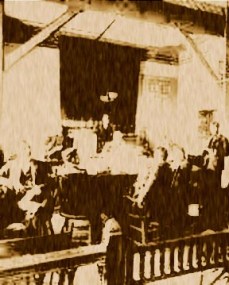 Adams, his green bowler clutched to his chest, took his seat in the chair next to the magistrate’s table.
 “And Pete was in his bed.”
 “Sir, your wit is like prairie lightning, bright and dry. Allow me to top your glass off with another jolt. But, please, please, continue. . .I apologize for my interjections.”
 “Dirty Dave Rudabaugh, Billy Wilson. . .”
 “Folliard was crying and moaning. He had received his death. He managed to wheel his horse and ride back toward me. He called out, ‘Don’t shoot me, Garrett, I’m killed!’ One of my men ran out toward him, yelling, ‘Take your medicine, old boy, take your medicine.’ I warned him off. ‘He may be killed but he’s still heeled and liable to spit lead!’ I stuck to the shadows. ‘Throw up your hands, Tom, I’m not going to give you the chance to shoot me,’ I said. His horse stopped right in front of where I was standing.”
 In late February of 1908, a one-time drover, buffalo hunter, saloon owner, hog farmer, peach grower, horse rancher, US Customs inspector, private investigator, county sheriff, and Deputy US Marshal set out from his adobe home on the mesa above Organ, New Mexico accompanied by a young man in a black buggy on the journey to Las Cruces. He would never arrive. This is the story of that journey, a novel account of the last day in the life of a legendary lawman.
 In March of 1892, a Scotsman by the name of Arthur C. “Artie” Doyle was hanged by the neck until dead after being found guilty of a string of grisly murders of prostitutes in Whitechapel. At that moment, history veered off its presumed course and headed in a direction all its own in which the Great War never happened because the Kaiser was afraid of offending his grandmother, Queen Victoria, whose life has been prolonged by the wonders of biology. The peace of her reign, known as the Pax Victoriana, despite some major environmental disasters, has lasted 180 years keeping as many Victorian airs as possible while making accommodations to bio technology. Cheése Stands Alone poses a steampunk question, can Captain Lydia Cheése find her father, the antigovernment turncoat and radical, Commodore Jack “Wild Goose” Cheése. And furthermore, will her quest take her around the globe and through alternate world histories in the requisite 80 days or is it the beginning of a lifelong journey?
 In Just Coincidence, a privileged young man with the unremarkable name of Wayne Bruce returns to the site where his father once had his business, a battery manufacturing plant, and where he often spent his childhood days hanging around the factory and the neighborhood. His return is haunted by the mysterious circumstances surrounding his father’s death and the vague feeling that his uncle is somehow involved. Appalled by the poverty and crime of the place he remembers fondly, he is moved to resolve the injustice of the socially marginalized and to wreak vengeance on those he believes are responsible for the death of his father. A personal coincidence brings together dark prince and a dark knight joined together in a fateful and tragic quest for justice
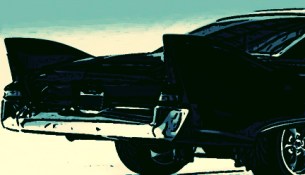 “That’s quite an antique.” A square shouldered black man on the step leading up into the store spoke the words. He was referring to the black sedan parked at the curb.
 “The Battery Man. I remember the billboards. Nobody Beats A Bruce! You that kid? I heard about you. Come on, come on in.” He pushed the door open and the hinge squeaked like a cry for help. “He’s in the back, come on.”
 Wayne paused to recall. “A quarter.” And then, “But I remember when they went up to fifty cents because I came in one day and all I had was twenty five cents, two dimes and a nickel, and you told me that the price had gone up. But you sold it to me anyway, that I could pay the rest next time.”
 Wet occupied the air and chilled it. In the yellow-brown light of the doorway to Quinn’s Tavern, the rain striking the concrete jumped like sparks off a hot griddle. The door opened quietly, disturbing neither the wide shouldered man with the bar towel over his shoulder, gaze intent on the square of color TV mounted above the bar, who laughed along with the track, a rheumy asthmatic rasp, or the other two hunched over in the shadows of a back booth, laughing, giggling, but not at the TV, a sitcom about people who frequent a bar similar to this one although certainly less sinister.
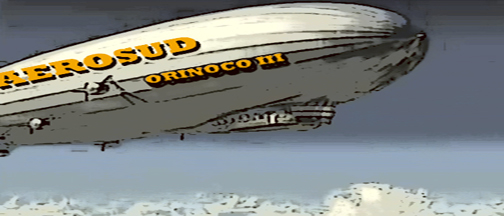 What she saw did not please her, a fringe of auburn hair, brow knit into a frown, grey eyes staring back in anger. Not again, she thought. Two groundings in as many weeks, and her suspension only just overturned. Tossing her tunic onto her grandfather’s vraisther smoking chair, she glanced at the stack of documents on the side table. In particular, she eyed the communication she had set aside the day before when she had been too preoccupied with preparing for her flight out of Lesser London to give it much more than a cursory glance. Addressed to her, handwritten in green ink, that in itself unusual, on what felt like a slip of parchment. “Parchment, really?” she said aloud. It was just one of the many come-ons and false leads she had received since she advertised a reward for information as to proof of life of Commander Jack Cheése, her father and the brilliant airship engineer who had disappeared many years ago, around the time she had entered the Air Academy for the freshman term.
 Baker’s Square was hemmed in by blocks of apartment dwellings designed to look like rowhouses, stacked one atop the other. They were all the same whichever way you looked. Their sameness caused her a momentary claustrophobia.
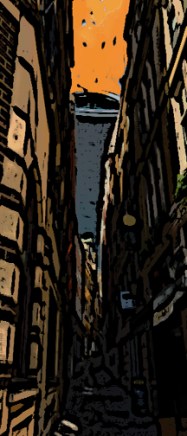 The pickpocket veered into the alley between two buildings with Lydia still in the tangle of panicked underdwellers. She kept her gaze fixed on the hobbling figure and once free of the mob ran swiftly to the entrance of the alleyway. The already inefficient bacso street lamps hardly penetrated the deep darkness of the cleft between buildings. Indignation overrode her sense of caution and she strode into the shadows. Slowly her eyes gathered the available light and sharpened to the dark. An oversplash of orange from the city above allowed her to discern edges and contours. The young purse snatch bobbed hurriedly toward the light of a parallel street at the other end.
 Perhaps it was the black and white cowhide vest trimmed with red piping that seemed so outlandish. The Montana peak of the Stetson’s crown was all the latest rage among the younger range hands and it did not surprise him that Brazil sported his in the same manner. The red flannel shirt was a little hard on the eyes and the stiff Levi’s pants looked brand new blue stuffed into the tops of his boots, a pointy toed, riding heel variety. And the big blood bay was enough horse for any man. Troubling too might have been the revolver the young man had strapped to his waist, but that also appeared part of a preposterous affectation. In his slightly inebriated state, the old man had the feeling that he was watching the final hand of a card game, but from a distance, a fuzzy distance.
 “I don’t care for them. They’re just a passing fancy. They will never catch on. The rich folk will use them to parade around. You can’t go any distance in the damn things without them breaking down or getting stuck and needing a horse or mule to haul them out or needing to feed on that stink water!”


 He and Black had gone out to the Cott Ranch in Black’s buckboard. Jorge had followed on horseback. Not far from the ranch house, he had left the buckboard and horse with Black and he and Jorge had gone on foot down around the bluff, following the path to the rear of the garden. They had quietly tripped the latch to the gate and quickly crossed the red tile patio to the open kitchen door. Billy Reed, a tall, burly young man with a crop of dirty blonde hair, had his back to them. He had been helping Shirley Cott in the kitchen. He had leveled his Colt at the large young man, asking, “Are you Billy Reed?” The young man had turned slowly and nodded yes. Informed of the warrant for his arrest, he had nodded his assent and extended his wrists giving the indication that he would go quietly.
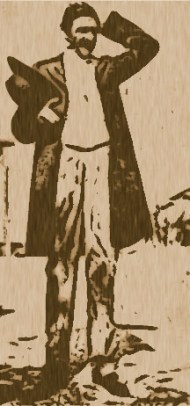 The old man would not show his profound disappointment. He managed a laugh though it was an empty one. “It makes no difference if you do or not.” He stood up, a little unsteadily, and dismounted from the buggy, leaning his shotgun against the bench. “I’ll get you off that land one way or another.” He turned his back to the two men, saying, “Think I’ll water a little mesquite myself,” and walked to the opposite side of the road. He was livid, the very notion that the deal he had counted on to reverse his fortunes had gone sour was almost more than he could stand. His legs felt weak, his gut churned, and it was not just from the aguadiente. His ears were ringing, his breathing labored. Again, Ash’s voice insinuated itself. It was as if he were calling his name, but from a far distance. He let himself go at the side of the road. The stub of cigar in his other hand had gone out. It was not worth firing up again. It was done. He tossed it aside. He was done.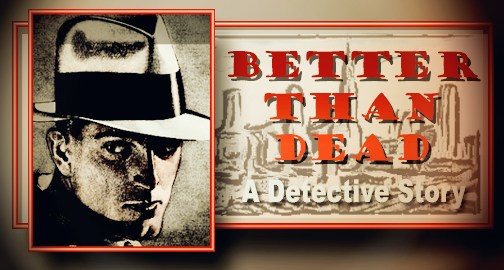
 At the end of the line the late afternoon sun passing behind a cloud defined a horizon of ship yard cranes and a thicket of masts. Fenced lots echoed with the barks of loud vigilant dogs and the brick warehouses, some seeming abandoned, maintained a grim silence. The rail yard was nearby, and a block of shabby businesses: a café and bakery, a corner grocer’s, a laundry, a hotel, a snooker parlor, and the address I was looking for.
 “No, no you’re doing it all wrong! Didn’t they teach you anything in that fancy Swiss boarding school of yours?” And I showed her how, breaking off a piece and dipping it in the coffee just enough to wet it but not get it soggy. “That’s the way it’s done, kid.”
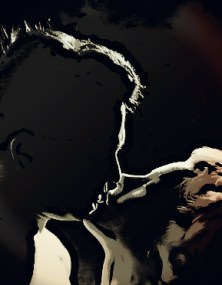 I was tempted, pulling her up against me, her head tilted back at my response. My judgement when it comes to women hasn’t always been the best, and maybe I could even blame my lapses on my inability to figure them out even when I gave it a try. The hardest part of this jobs was resisting that urge. How many unfaithful wives of unfaithful husbands had offered themselves as partial payment or as a bonus for my peeping, and every time I gave in I was reminded soon after of what a mistake that had been. I couldn’t afford to be swayed.
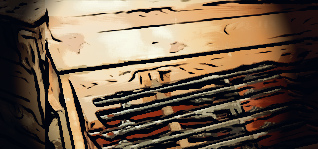 The lid of one of the crates had been pried up and I lifted it off. All of a sudden I felt like Ali Baba minus the forty thieves, and I didn’t have to say Open Sesame. Nestled in among the packing straw were five Thompson machine guns, gleaming with oil as if they’d just been foaled. This was my ticket out. Any one got in our way they’d get the business end of old Tommy.


 Ron Goulart may be viewed as a lightweight by the toting crowd but the sheer volume of his engagement in the pulp/comic genre allows him to claim the turf he helped established. He was the author of over two dozen compendiums on comics and golden age pulp fiction illustrating the comic book’s emergence from the fantastic pulp genre and the Sunday Funnies. He wrote numerous futuristic novels that played off the unintended Schumpeterian and most often hilarious consequences of mechano-tech—he was the gleeful saboteur of a Popular Science future. Of the over two dozen nonseries novels, including Clockwork Pirates (1971), The Robot in the Closet (1981), and Now He Thinks He’s Dead (1992), most are of a whacky dysfunctional Murphey’s Law universe. His Barnum System series of novels is a planetary circus of its own with such titles as Spacehawk, Inc. (1974) and Galaxy Jane (1986) among numerous other linked and obtuse permutations his agile mind could hatch: Hail Hibbler (1980), After Things Fell Apart (1970). Goulart’s era was the twenty years span from the mid-70s to the early 90s in which he wrote under many pen names (Chad Calhoun, Zeke Masters, Jillian Kearny) as well as his own, collaborating on a range of projects in the pulp comic book genres which included penning Flash Gordon stories, Vampirella, and Avenger. In the 1970s, he wrote several novels based on Lee Falk’s The Phantom (“the ghost who walks”), a character incorporating proto-super heroes, essentially Tarzan as Batman with a brace of 45’s, for Avon Books under the pseudonym “Frank Shawn”.
 Both PIs, Sughrue and Milodragovitch are hard drinkers, and hail from the cowboy states, Texas and Montana, the author’s home turf. They are the giants from the north exacting their version of justice in a particularly cockeyed world. A natural born storyteller, Crumley spins tales of mishaps and bad luck death defying scrapes that are often hilarious in their telling but also tragic in their own right as a history of bad choices. His characters inhabit a world of regret and wounded psyches. Often times the graphic violence seems gratuitous, yet no one would doubt the authenticity of the pictures Crumley paints. Crumley’s is a world of right and wrong with a lot of leeway gray viewed from the other side of the tracks where there is honor of a kind among outlaws and where some situations can only be resolved by violence. The plotting of the novels allows Crumley’s penchant for the shaggy dog tale and wide ranging hair of the dog that follows.
 Lew Griffin, Sallis’s PI, is portrayed realistically, not as a knight in shining armor, but as gritty, a survivor in spite of himself, haunted, flawed. Griffin is featured in six novellas, all titled after insects (companions of the loner or lonely man) beginning with The Long Legged Fly in 1992 and including Bluebottle in 1999, and Ghost Of A Flea in 2001.The action is often muted, viewed in the aftermath or off camera, the consequences telling the story that led to them. Lew Griffin is a black man, obviously self-educated and fond of quoting French authors, living in or on the edge of poverty in and around New Orleans. He finds people or saves them or kills them but always with lengthy soul searching consideration. He’s a tough guy because he is forced to be not because he wants to be. He has no illusions, thus the basis of his sustained noir ennui.. The tang of adrenaline is rare in Sallis’s crime fiction yet the depictions and progressions of the stories are always satisfying, literate contemplative ruminations on the human condition.
 Dime Pulp