All posts by Nuallain House, Publishers

Cheése Stands Alone IV

by Phyllis Huldarsdottir

Chapter Nine

Serpina was quite a practiced liar, and practical joker. Her laugh, a shrill whinny, was playful yet dangerous. Lydia had to reassess her assumptions about the young woman. Nor was she very talkative, and often inobtrusive as if she could make herself invisible. Orphy, the python, was kept soporific on a steady diet of who knows what, Doctor Serre-Pain didn’t specify or explain after he had rushed into the cabin at Lydia’s scream and had once again soothed her nerves with his calm, hypnotic voiced assurances, gently patting the blood back to her cheeks. His disapproving frown had caused Serpina to pout and after a long deliberate silence to mutter a reluctant “sorry.” Lydia would not have to interact with the other snakes, Serre-Pain swore, with the exception of Orphy, and then only on briefly while they were at the festival.

tristan_0123The inspection official and two sinister looking men in black hats had roamed over the barge examining the cargo, and when they came into the cabin, stared wide eyed at her propped up in one of the bunks with the python wrapped over shoulders. Her terrified look might have suggested an otherwise haughty imperious annoyance at the intrusion. The station inspector apologized profusely, and the IOTA agents, not in the habit of showing deference to the general public, dropped their gazes awkwardly.

Once past the inspection station and well up the Loire River approaching Oldest Orleans, the doctor had Vlady bring in a big trunk into the cabin. She had not seen much of the large man on their journey up the river. He spent most of his time on the deck of the barge with Serre-Pain. In the light of day, without the bear suit. he was still an imposing figure with a thick mane of steely gray hair that hung down to his shoulders. His dark eyes seemed to laugh as did the large white beard punctuated by the red dot of an imbiber’s nose. There was something unsettlingly familiar about his manner toward her.

“We have to change your attire,” Serre-Pain was saying, “Your fashionable dress will make you stand out as a privileged Victoriate, especially where we are headed. In the trunk you will find clothing that might fit you and conceal your identity. Even if where we are going is technically outside of IOTA’s jurisdiction, they have spies and informers everywhere. It is important that we avoid any hint of suspicion.”

Serpina stood back as Lydia lifted the heavy lid. The blouses befitting a snake priestess were laid out in layered trays, billowy sleeved embroidered with flowers, birds, animals, and snakes. Colorful skirts, long tasseled and tiered, none of which she felt she could wear with any conviction. Nor was it bioweave but actual antique cotton and silk. And could she ever convince herself to don someone else’s underwear? Pulling away another tray, she uncovered on the bottom a pair of folded trousers much like Serpina was wearing, possibly wool by the feel of the material, and a robust rust fabric shirt with a wide collar, two items she thought she could live with. There were also several pairs of spangled gold slippers that didn’t appear to be made for walking.

She pulled her hand back quickly when she felt under them. And she looked closer with Serpina peering over her shoulder and drawing a breath. For a moment she thought that it might be another of Serpina’s tricks. Then she made out the sleeve and lapels. An overcoat. But one of snakeskin. Dark mottled scales outlined the sleeves, large turned back cuffs lined with dark blue satin, the three quarter length of the coat ending with a slight upturn at the skirt and fitted with large slant pockets. The row of ovoid buttons were of a faded amber. And Lydia recognized them. Orphy had an identical pair. Holding it out at arm’s length, the scales seemed to undulate, tricking the eye with their meandering pattern. The coat lining was also a dark blue satin. A faded label sewn beneath the rear collar read SA I   E RO and spoke of its antiquity. “This is gorgeous!” Lydia exclaimed in spite of herself.

stilettoThe yoke fit comfortably across her shoulders as she shrugged into the coat, the sleeves extending a little ways past her wrists, the hem, past her knees. She was surprised, expecting it to be heavier. Her hand in the right pocket extracted a heavy dark blue cotton scarf. The left pocket was empty although it was shaped as if some object had had a permanent residence there. Lydia pulled on the lapels pleased by the way the coat fit. She felt something hard nudge under her left breast. Inside she found the pocket and the narrow object protruding from it. Throwing open the coat she extracted a long ornate double blade stiletto.

Serpina nodded her head, looking at the gleaming blade admiringly. “The fangs,” she said.

Chapter Ten

The streets of Oldest Orleans were filled with rubble, dust, debris, and choking air. The Victorianasance Faire was held in arcades along the perimeter of Place D’Arc. Outside the walls of the old city, in Older Orleans, vapors from the bioturbines of the factories warped the air adding a gloomy orange pall over the rooftops and the refracted rainbow sparkles of larger particulates gleaming like minor stars. Serre-Pain always staged his performances at dusk when the shadows were long. One of the Medicine Show wagons converted to a stage with a proscenium. At the back behind a red velvet curtain was a narrow antique settee upon which she was obliged to lounge with the coils of Ophy across her shoulders for several excruciating minutes while she was introduced as the descendant of an ancient Minoan queen who was in possession of the secret recipe for an antivenom elixir. Once the pitch was made, Serre-Pain would begin his lecture on the fascinating history and myths of snakes, and  the reason snakes were believed to be immortal. By then the curtain had come down and Serpina would come to get Orphy off her neck.

In the side closet Lydia changed out of her priestess garb and donned the snakeskin coat, wrapping the dark blue scarf around her head and over her nose, masking all but her eyes. She stepped down from the wagon and into the space behind where she saw Vlady getting into his Bear suit. He was just about to fit the head on when he turned and smiled at her with such childish mirth that she felt compelled to smile back. It was the sparkle of his eye. Once the costume was complete he maneuvered his prop, a large ball painted with serpents and moons, ready to make his entrance at Serre-Pain’s cue, and with amazing agility leapt to the top of the ball and rolled it with his feet to maintain a casual balance.

arcadeAt the cheers from the crowd Lydia made her way out from behind the large ophidiarium on wheels that attested to Serre-Pain’s claim of herpetology and proof of his knowledge, like an old library full of old books. The crowds had thinned out further under the arcade where merchants had set up their wares, most everyone wearing a face covering, and some, goggles, against the silicate laden air. Serre-Pain had asked her not to go out in public unaccompanied by one of them. She would appear out of place and thereby attract attention. She was willing to chance it. She had friends who might be able to help her slip back to Sao Paulo. Even though The Empire of Brazil had an extradition treaty with the Clockwork Commonwealth, she doubted that the Emperor’s court would allow it over such a trivial matter as a Citizen of the World Order searching for her paternity. She would have to stay out of IOTA’s jurisdiction which would make her an exile from the world hub of Greater London. She would certainly not be allowed to pilot airships outside of the Empire’s zone of influence which spanned the southern hemisphere and the Atlantic to the inter desert zone of New Mali and Congola further south. She would no longer be an airship commander in the glamourous passenger fleets like Aerosud or Canamair. Most of the navair traffic in the Free Corridor of Cancer was freight and third class which meant much of the world’s poor and retched, refugees from the camps adjacent the dead regions and the encroaching tundra.

A loud noise startled her and she turned to seek it’s origin. A crowd had gathered in front of the stall from where the noise was emanating. She glanced over a shoulder at the edge of the gathering. She could see clearly a man standing in front of a square block of gray bioluminium that was vibrating to a low purr of its working. A propeller whirling at one end and a small tube emitting gray vapors at the other. She identified it immediately. An internal combustion engine. Icers. She didn’t know why she was surprised. Many nonaligned nations allowed the development of petrol powered engines despite the scarcity of the fuel. The Scarce Resources Treaty of Pax Victoriana 80 had banned oil as a fuel source, with the exception of lighting. The bacteria that had been released to eradicate the Black Mold infestation of Pax Victoriana 75 unfortunately had had the characteristics of a petrophage and rendered practically the entire oil reserves of the Northern Hemisphere to a watery nonvolatile solution of less than seven percent accelerant.

She shouldn’t have been surprised. The most standard motor source in the Commonwealth’s zones of influence was the bug drive, the bio repro engine that powered everything. The giant factories that produced the bacterial strains, or seeds, were the same ones that were polluting the skies above Oldest Orleans and stretched further north up the valley past the precincts of Old Orleans. The waste accumulated in piles, attaching itself to the lifeless sands of the devastated deadlands, was blown about in the atmosphere by fierce hyperborean winds. The giant windmills erected around the perimeter of the old city on biostyl stilts were not that effective at deflecting the bitter cold of the poisonous sand storms of the north.

The man in front of her stepped back unexpectedly and stepped onto her slippered foot. He glared at her as if it was her fault after she had pushed back. She apologized. No need to draw attention to herself. She quickly moved through the throngs and clots to the end of the arcade where it made another turn paralleling the edge of the square. She could see the orange bacsodium lights of the medicine show and Serre-Pain leading the faux bear in the open space in front of the wagon. Serpina was likely in the tiny dressing space behind the stage fitting into her snake costume. The young woman’s contribution to the entertainment was her hyperflexability. She could literally twine herself around herself, but mostly she slithered along the stage and up the wall and then provocatively curled around a projection overhanging the top of the stage at which time a red round object like an apple appeared in her mouth.

To this backdrop the snake doctor made his pitch. The little pamphlet he held high over his head contained the secrets of Madame Ophelia’s most famous recipes for making antivenom, revealed for the first time, which he offered for a meager sum but within the affordable range of most everyone in a crowd of people who were not particularly interested in reading. As a bonus he offered free of charge with the purchase of Madame Ophelia’s Secret Recipes, a sample bottle of one of her most potent antivenom elixirs.

After the entertainment  ended and the crowds drifted away, the stretch of the Place D’Arc where the snake show had been held was littered with pamphlets but not one tiny bottle. Serpina had told her that the secret recipe’s ingredients were a local fruit distillate mixed with cayenne, the “dash of snake venom” Serre Pain claimed in his sales pitch.

Lydia look down to see a women pointing at her slippers. She had stopped in front of a footwear stall. Arrayed on neat shelves were a variety of sabots, some painted bright colors, others with intricate designs burned into the particulated nearwood. They were quite popular in Greater London where there was a strong artisan market and certain guilds and houses were recognized by name, their products highly sought after. Along with the display of shoes, apparently locally sourced, was a collection of boots. They attracted Lydia’s eye by their sturdy design, one pair reaching to calf length made of a stiff dark material, some kind of fauxhide. The boots had round pale buttons near the top and across the ankle. She was partial to that type of footwear, similar to the style she always wore but more rugged. She felt the dark material between her thumb and forefinger as the woman in the stall nodded approvingly. At first touch she realized that she had been mistaken. It was real leather, a forbidden pleasure as along with ivory and live animal pets, it had been banned by treaty among the states aligned with the CCCP, the Clockwork Commonwealth Cooperative Protocols that were at the foundation of the Pax Victoriana, hammered out over a hundred years ago. She fingered the buttons, tapping one with a fingernail. Bone, maybe ivory.

steampunkThe woman nodded her head and spoke a single word in dialect, “O.” And again pointed at Lydia’s slippers seeming to infer how puny they were when compared to the rugged specimen Lydia was holding in her hand.

Lydia asked, “Is this real leather?”

The woman canted her head to one side as if making a calculation and then nodded. “Queer.”

Lydia understood the problem. She had assumed the woman spoke Standard. She’d come across these language gaps before. Often they could speak Standard but chose not to in resistance to contempt that World Standard had for their native language that was thousand years in the making while WS was an Anglo-Saxon based universal language only recently seeded over the breadth and width of the Victorian Empire.

“Do you speak Standard?” Lydia was casting a practiced eye over the foot of the boot and at the same time removing her right foot out from the slipper.

The woman in the stall held up her thumb and forefinger to indicate how little, shrugging her shoulders in the heavy blanket coat covering her stooped figure. She too had a scarf wrapped around her head and pulled across her nose. She made agreeable noises as Lydia pulled the boot up around her ankle.

“How much,” she asked, “How much do you want for these boots?”

“Katrevaindees.”

Now it was Lydia’s turn to calculate. She shook her head. “How much? In Victorines.”

The woman showed her a faded piece of paper. The number 90 followed by three zeros was written on it, and slightly below, the letters nfr, meaning New Francs.

“All I have are Victorines. Is there somewhere I can exchange them for the local currency?”

The woman looked over Lydia’s shoulder and held up her hand to wave someone over. “Iceepyare!”

A young man in a beret, scarf slung below his wispy little chin beard and showing the beginnings of a moustache joined them. The woman rattled off something to the young man while pointing at Lydia, the young man nodding in understanding. Suddenly Lydia felt very conspicuous.

“I can help you with the exchange.” He reached into his inside coat pocket and retrieved a large mouchoir enveloping a sheaf of cash. “You wish to buy these boots it will cost you one hundred victorines not counting the exchange fee of ten percent.”

Lydia was astounded. She couldn’t believe her good luck. She had paid twice that much for her cold weather zipper boots and the workmanship had been shoddy. She tried to cover her elation by negotiating. “Ninety, but I’ll go as high as one hundred victorines to include your commission.”

The young man shrugged and turned to walk away, returning the cash to his pocket and revealing the dagger in the sheath at his waist. Lydia was reminded of the stiletto in her inside breast pocket. At the fringes of the civilized commonwealth a knife fight would not be unlikely.

The woman in the stall implored the departing banker. He stopped and looked over his shoulder at Lydia. He had read her.

She sighed and nodded her acquiescence. “Very well, one hundred and ten victorines.” She had a thousand victorines in her wallet. She was an easy mark when it came to footwear. And they fit perfectly as if they were made for her. She admired how nicely they suited her, the square stubby toe and sturdy utilitarian heel.

The woman in the stall was delighted to make such a big sale, shaking Lydia’s hand as did the young man congratulating her on her purchase. He looked at her closely.

“You are not from here. A guest of the Victoriannesance Festivities, perhaps?”

Lydia pointed across the square at the snake show. “I am with Doctor Serre-Pain.”

“Ah,” the young man raised his eyebrows, “The mysterious Madame Ophelia, am I correct?”

“At times,” Lydia admitted and at once realized that she might have revealed too much. She disengaged and moved swiftly away. She had acted frivolously and dallied too long. She was due back to the wagon for the finale of the snake show. Serre-Pain would raise the alarm and come looking for her.

Light spilled across her path from an alcove and she glimpsed the empty tables of a café from which emanated the sounds of Einstein’s first violin concerto, Relativity, her favorite, E in Minor C sharp. And it was the first thing in her flight from IOTA that beckoned to her with its familiarity. She found a table in a dark corner beneath some anti-IOTA graffiti, a common sentiment in the old city she had come to realize. It was time to consider her next step.

bear1Having spent time in an Admiralty intelligence unit when she was stationed at the Commonwealth embassy in Houllas in the Republic of Texas, she knew that she would have to secure new papers if she were going to cross physical borders. And that she would have to avoid travelling by air. It would have to overland until she was safely out of the reach of IOTA. The Capricorn Free Corridor was her best bet. Surely there was someone in Older Orleans who could provide her with a passport that would escape detection, especially if she stayed off the main routes and avoided the busy checkpoints. The strains of the violin concerto had a soothing effect on her although at times she knew that it could also be quite stimulating. She closed her eyes for a moment, amusing herself with the fact that the President of the ISR, the Invincible Swiss Republic, was Albert III, the great grandson of the world famous musician. Unexpectedly her mental image changed, as often happens in reverie, to that of Vlady fitting the bear head onto his own and she realized then why he seemed so familiar to her. How could she had forgotten?

When she opened her eyes there were two uniformed men standing in front of her table. Their patches and canted berets identified them as local gendarmes. “Your papers, please,” the shorter one spoke.

Next Time: The Massive Escape

Better Than Dead—21

by Colin Deerwood

Ads 93

I waited for the loudspeaker to announce the boarding of my cross country bus from a booth with a view of the door in the Happy Trails Bar and Grill next to the terminal. There were a few salesmen at the bar with their hats on the back of their heads washing away the taste of exaggerated claims with another shot, not looking forward to telling more lies to the missus behind the white picket fence in the suburbs. I’d spotted a few eyes I wanted to dodge but so far the mug in the flashy suit only had them for the young gal who’d just got off a bus in a summer dress, her best Sunday hat, and a suitcase tied with a length of rope. The beat cop was too busy paying attention to the giggly woman at the Traveler’s Aid desk. I nursed my beer and shoveled in another spoonful of chili. It was my second bowl. I was famished.

busbarAfter I’d left my disappointment in the coalbin, I made my way to the railyard by the Serbian Social Club. There were a couple of squad cars parked out front and the guard at the front door was now a boy in blue. There was no chance that I was going to get close or even inside the building. Becky was gone, I had to face up to that. Kovic’s mob probably dumped the body somewhere it wouldn’t be found any time soon. If anyone looked like a sad sack that day, it was me. I had no choice but to pick up my gear at Alice’s and head out of town.

Alice was all smiles when I got to her studio but I didn’t like the looks she gave me once I told her what had happened to Rebecca. She’d wanted to tell me that someone was interested in buying some of her art but I kind of rained on her parade with my news. I couldn’t tell if she was mad at me or that the news hurt her so bad that it made it look that way. Either way it was a crushing realization. I was responsible. Rebecca had been swept up in my blind quest for revenge. I should have ditched her and gone after Kovic on my own. Now I’d lost her for good. I needed a drink.

But Alice wasn’t having any of it. She walked me through the ordeal she had suffered when Ted died. She had gone on a binge she reminded me. And I remembered finding her a few times at Sid’s or Sammy’s Shamrock, and helping her home and to bed, limp as a washcloth wrung out of all her tears. She still felt the pain of the loss, and bitterness, and disappointment with herself that she hadn’t done more or noticed sooner. Most of all she was lonely. Drink wasn’t going to bring Rebecca back and I’d only end up doing something stupid. She was right, and I listened.

The plan that had come to me while I was on Annie’s tug involved taking the bus upstate to the one horse town of Ridley up in the Three Lakes district where my granny had lived. She’d passed away but I still had cousins up there I hadn’t been in touch with in more than a decade. Back then, when the market crashed, folks lost everything, businesses closed and homes were foreclosed on, and the streets crowded with homeless families looking for a handout. The only people with money were crooks and politicians although I don’t know how anyone could tell the difference. Granny had been smart, her mortgage paid off, managed to keep up with taxes so she still had a couple of acres of apple trees and a ten room two story house to which the less fortunate of her children and grandchildren flocked when the money ran out along with the jobs. I’d heard that it had become a zoo, and fortunately for the old gal she didn’t last much past the repeal because then it became a drunken zoo. I aimed to become part of that menagerie.

Alice promised to ask around for a legit buyer for Ted’s art piece. I was going to need the moola once my safety c-note ran out. And she gave me a goodbye present along with a heartfelt hug and squeeze, one of her mementos of her dead lover, Ted’s fedora.

“It suits you well,” she said as I flicked the brim. “Too bad it doesn’t hide your shiners. You look like you’re wearing a black mask.”

Ads 94

bustermI’d waited till the last person in line had boarded and the driver was about to close the door. The man behind the wheel gave me the ‘there’s one in every crowd’ squint as I made my way to the back and humped my satchel onto the seat next to me. I’d given a quick eyeball of the occupied seats and what I was seeing was a smattering of overdressed travelers, men and women looking out the window, some with children in their laps. Some were obviously vacationers heading up to Big Lake, one of the three lakes and most popular summer resort. And some, by their defeated expressions, were going back where they came from with only the clothes on their backs. Maybe I fit into that last category, but behind the dark glasses I had picked up at the terminal newsstand and my hat tipped back once the bus turned onto the road leading to the outskirts, I didn’t care. I had a half pint of Old Hickory and a pack of Lucky Strikes to while away the three hours it would take to get to where I was going.
Ridley was named after Colonel P.J. Ridley who owned the local livery and dry goods store and was given the rank of colonel for providing horses to the Army for its war in the South. It was a one horse town on the way up to the lakes and the resorts.

There were three lakes, Big Lake, Middle Lake, and Little Lake. The resorts were mainly clustered around Big Lake, and since the repeal they’d added a night club or two. Middle Lake was a not quite as big overgrown snake infested swamp and provided mosquitoes for the entire area. Little Lake lived up to its name, but it was clean and deep and cold. I know because granny kept a cabin up there where I’d spent a few summers as a kid. It didn’t have a big sandy beach like Big Lake and was bordered mainly by big rough outsized boulders and it had a mosquito population almost as dense as Middle Lake which didn’t make it as popular and inviting.

gaspumpstableI’d gone through about half of the Old Hickory and smoked up the rear of the bus with a cigarette haze by the time the bus rolled into Ridley. I found my feet once I stumbled off the bus and watched it kick up the road dust on its way out of town. Ridley didn’t seem to have changed much since they last time I came through. They’d added a gas pump in front of the livery barn and a sign on the side that said mechanic. There was a streetlight I didn’t remember from before out front. Granny’s house was down the elm shaded road running behind it.
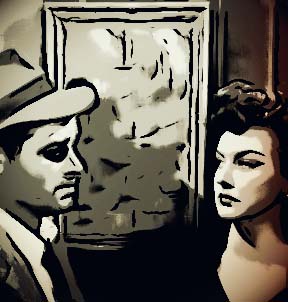
The sun was just settling on the horizon and it was still light enough that I found the old house without any problem. I was surprised by how run down it looked. The front yard was overgrown with weeds, the rusty metal gate squeaked, and one window on the upper story looked like it had a black eye or there’d been a fire. There was a familiar scent in the warm night air, rotting fermenting apples.

I glanced around the littered porch. It wasn’t the cozy welcoming place it had once been. I gave the peeling green door a rap with my knuckles and looked over both shoulders like I didn’t want to be caught by surprise. I waited before I gave the door another paradiddle. I heard a sound on the other side and then the handle turned and the door opened a crack. A dark eyeball stared at me.

“Go round the back,” it said and slammed the door.

I made my way through the overgrown path alongside the house to the covered porch that led to the kitchen. It could have used a coat of paint and the screen door was hanging crooked off a hinge.

Inside, the door to the kitchen was open and I stepped to it. The dark woman at the stove looked up with a frown. “Ain’t got no work. I can give you something to eat but you be on your way when you finish.”

I nodded and took off my hat. “Thank you, but you see my this is my granny’s house and I’m. . .”

The cook reached for the knife on the cutting board just as the door from the dining room opened and Ruth stepped through. She was a cousin, distant, about five years older than me. Tall, she’d kept the square shoulders, always kind of a tomboy and bully, beating on the younger kids, me included. Her hair looked like it belonged on Ritzy Ritz as did the big black spidery lash eyes. Her nose was cute as a button. The only thing that spoiled it was that she had a jaw like Joe Palooka. And maybe a little hint of a moustache.

“Sissy said that there’s a blindman begging at the door.” She had her fists to the hips of her polka dot house dress looking at me.

“Even if I was blind I could still hear you, Ruthie. Being blind ain’t the same as being deaf,” I said with a smile.

I thought her eyes were going to leap off her face and she got that set to her big jaw like she was going to let me have it.

I kept the smile froze on my face.

She gave me another gander. “Cousin Lack? Lackland Ask?”

Now the jaw didn’t look so bad supporting the big smile.

“Hello Ruthie, long time no see.”

“Whatever brings you all the way out here? I never thought I’d see you in a million years. Someone told me you were living in the city doing some kind of  investigations, is that true?”

I could tell she was a little confused and asking herself the same questions.

“And why are you wearing sunglasses at this time of day?”

I took them off and even the cook gasped.

“What happened?”

“Funny you should ask.”  And so I told her she was right. I was a private investigator. I even showed her my card where it said, Lackland Ask, Confidential Matters Investigated. I explained how as the result of an investigation I ended up on the wrong side of a mob boss and he has some of his goons worked me over. The cook was looking at me with narrowed eyes but Ruthie was fascinated. I told her that because of my investigation, the assassination of a federal judge and a gold heist had been foiled. Ruthie shivered at the word “heist.” Because I was a witness I had to lie low to avoid being knocked off. She mouth the words “knocked off.” “Nobody is likely to look for me in Ridley because they think I’m a born and bred city rat. So maybe I can lie low. . . .”

As I was talking the eyes that had met me at the front door peeked from behind her mother’s akimbo arms. She looked about seven, then a sullen looking boy of about ten, his hair freshly shorn, came to stand in the doorway, and a younger barefoot girl in a faded shift clung to the calf at the hem of her mother’s dress.

And it came to me. “Out at Little Lake. Does the cabin out there still belong to Granny?”

She had to think about that for a minute. “Granny’s will said that the summer cabin belonged to all of us so I guess it does, but no one goes there anymore. It’s falling apart. No one has any money to fix it up. And it’s so out of the way.” She said it like Ridley was the cat’s meow. “And the mosquitoes.”

“Sounds like just what the doctor ordered. Maybe I can spend my time out there fixing the place up. But no one can know I’m out there. If anyone asks you who is staying out there, just tell them my name is. . .Stan Gardner, a distant cousin, and I’m writing a book and need the peace and quiet.”

Ruthie nodded and said, “Oh, alright, Stan, the gardener. I don’t suppose Cousin Mack and Cousin Myrtle need to know. You can bunk in the shed out back where Uncle Ned tied his flies for tonight.”

The cook handed me a plate. “Siddown. You gonna do all that, you gonna need something to eat.”

Ads 95

Ruthie came to visit me that night. She wanted to catch me up on some family history, and maybe add to some of it. I was beat and the Old Hickory helped numb the fact that the dusty cot was missing a rib and it was like trying to sleep over a washtub on a mattress that wasn’t much more than a mangled washcloth. There wasn’t much light coming in through the one grimy window of the shed. I banged my knee against something large and hard under a ratty tarpaulin trying to find my way around in the dark, a machine of some kind before stumbling to the workbench and the cot beside it to set down my bag. I was moving dust that hadn’t been moved in a while and it made me sneeze. And I remembered the smell. Uncle Ned was a drinking man, and the walls seeped the familiar vapors of old alcohol. I’d heard my old man say that the only thing his cousin tied in the shed was “one on.” I toasted Uncle Ned with the last corner of the half pint and set about to make myself comfortable.

aunty ruthShe ducked in the doorway with the wick on the lamp trimmed short so that just a dim pale glow lit part of her face. It looked like a face out of a Hollywood photo magazine. All of a sudden I wasn’t all that tuckered out as I thought I was. She came closer and I saw she was wearing a quilted house coat open at the front to reveal a frilly shimmering slip. And she’d perfumed up.

“I just came out to see if you were doing all right.” She glanced around. “I was just about to turn in myself. I hope this is comfortable enough.” It was the smile that said everything.

After the cook had served me and I was allowed to sit at the kitchen table. Ruthie’s daughters had had difficulty restraining their curiosity, the boy, though, keeping a wary distance. And Ruthie, once she got over her surprise, had to explain to the kids who I was and where I placed on this branch of the family tree. “His father was Uncle Ned’s nephew by his sister’s brother who was Granny’s nephew by her brother.”

I’d been curious when I realized that Ruthie and her three kids, and the cook, seemed to be the only inhabitants. “Is your husband working late?” seemed like an imposition as soon as I said it.

Ruthie made a mad mouth and frowned. “Angel’s daddy works at Big Lake Resort and this is the busy season so he’s almost never home,” she said resentfully indicating the youngest. “Polly and Paul’s father went off to find work on the railroad and I ain’t heard from him since.”

The cook was giving me an eat your food and mind your own business glare.

“I heard that more of the cousins and family lived here.”

Ruthie cocked her head to one side and gave a big sigh. “Well, they did and then they didn’t. You musta heard that it was a real three ring circus out here, especially after Granny passed. The boys were always fighting with one another and getting thrown in jail. Or beating up other boys who were showing interests in the girl cousins. Eventually the girls left with their husbands or went to try their luck in the city. The boys kept fighting and causing mayhem so Constable Thorndyke told them if he found them out this way again he was gonna throw them in jail.”

The cook nodded her head. “It took him a few tries but they finally got the message. Ain’t been by in a long while. Ain’t seen hide nor hair of them.” She gave a good riddance nod of her chins.

That explained some of it, and explained why Ruthie was visiting me once the lights in the house had gone dark.


Next Time: Eaten Alive

Contents Vol. 2 No. 8

Welcome to Volume Two, Number Eight of Dime Pulp,
A Serial Pulp Fiction Magazine

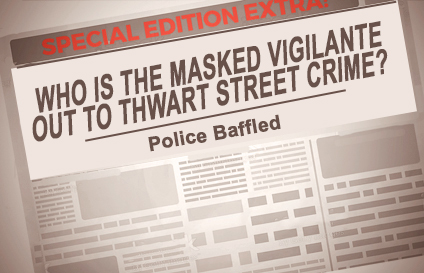
In Issue Eight, Dime Pulp, A Serial Pulp Fiction Magazine, continues with our two new pulp serials, Phyllis Haldursdottir’s global steampunk saga, Cheése Stands Alone, featuring Airship Commander Lydia Cheése (pronounced “Chase”), and Pierre Anton Taylor’s  Just Coincidence, a familiar fiction of dynastic intrigue and the dark revenge of a masked crime crusader.

In Act One, Scene 3 of Just Coincidence, Wayne Bruce continues the investigation into his father’s death.  A chance encounter leads him on a motorcycle chase  in pursuit of mysterious abducted young woman. An emotional connection to an old mentor and an overwhelming nostalgia  move him to act against the injustice of social marginalization. That he is a dark prince as well as a dark knight is just coincidence.

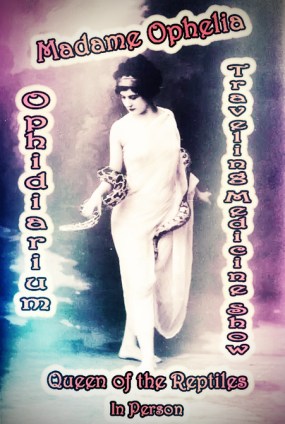
It is the year Pax Victoriana180.  For Airship Commander Lydia Cheése, Victoriana rules the waves as well as the airship lanes. In the continuing saga of Cheése Stands Alone, Captain Lydia Cheése  has fallen down the rabbit hole and finds herself in the clutches of a herpetologist by the name of Serre-Pain and his traveling snake show, Madame Ophelia’s Ophidiarium. If she is to find her father, the notorious Commodore Jack Cheése, she must bide her time and masquerade as the snake enchantress, Madame Ophelia.

Number Ten of On The Road To Las Cruces reaches a crucial point in this fictional retelling of the last day in the life of a legendary Western lawman where memory becomes a dialogue with one’s self in the justification of a killing and a blind pride that leads to to death. As an echo from the abyss, the famous retelling is retold as a rebuttal as well as an oral chronical.

And last but not least, Installment 20 of the 1940 detective story, Better Than Dead (Dime Pulp’s longest running serial),  hapless confidential investigator Lackland Ask  continually thwarted by kidnapping, murder, attempted murder in his quest for stolen diamonds and the mysterious Empress’s Cucumber. Things not only get worse, but he has lost someone whose youthful energy had stolen his heart. And now the cops have him and they want answers.

FYI: Dime Pulp Yearbook 21 contains the novels (The Last Resort and Better Than Dead) and the short fiction (Hard Boiled Myth and Gone Missing) of Volume One’s 12 issues,  available for perusal in their entirety. If you missed a few issues or lost the thread of a serial, clicking on the link at the beginning of this paragraph or on the menu bar above is a good way to catch up.

Dime Pulp continues its crime spree with two new pulp fiction serializations, Cheése Stands Alone by Phyllis Haldursdottir and Just Coincidence by Pierre Anton Taylor, as well as the continuing serialization of the pulp crime fiction of  Better Than DeadA Detective Story and the Western, On The Road To Las Cruces . If you’ve made it this far, go ahead and follow the links below to reading entertainment with the serial contents of Volume Two, Number 8

 —Perry O’Dickle, chief scribe
and word accountant


Knapp-Felt 1930 1930s USA mens hats

“Lackland Ask is the name. ‘Lack’ to my friends, ‘Don’t’ to those who think they’re funny. You might have seen my portrait on the cover of Black Mask, the crime fiction magazine. This is my story. It starts with a blonde. This kind of story always starts with a blonde.” Thus begins the seemingly non-stop, endless narrative of Better Than Dead in which women are not the only trouble although most of it, told with the wit and street savvy of Runyon and Parker.

Better Than Dead—20


otrpic1fi2In late February of 1908, a one-time drover, buffalo hunter, saloon owner, hog farmer, peach grower, horse rancher, US Customs inspector, private investigator, county sheriff, and Deputy US Marshal set out from his adobe home on the mesa above Organ, New Mexico accompanied by a young man in a black buggy on the journey to Las Cruces. He would never arrive. This is the story of that journey, a novel account of the last day in the life of a legendary lawman.

On The Road To Last Cruces ~Ten~


LCinset21In March of 1892, a Scotsman by the name of Arthur C. “Artie” Doyle was hanged by the neck until dead after being found guilty of a string of grisly murders of prostitutes in Whitechapel. At that moment, history veered off its presumed course and headed in a direction all its own in which the Great War never happened because the Kaiser was afraid of offending his grandmother, Queen Victoria, whose life has been prolonged by the wonders of biology. Her reign, known as the Pax Victoriana has lasted 180  years maintaining as many Victorian airs as possible while making accommodations to rapid advances in bio technology. Cheése Stands Alone poses a steampunk question, can Captain Lydia Cheése find her father, the antigovernment turncoat and radical, Commodore Jack “Wild Goose” Cheése. And furthermore, will her quest take her around the globe and through alternate world histories in the requisite 80 days or is it the beginning of a lifelong journey?

Cheése Stands Alone III


Batman-Logo-1In Just Coincidence, a privileged young man with the unremarkable name of Wayne Bruce returns to the site where his father once had his business, a battery manufacturing plant, and where he often spent his childhood days hanging around the factory and the neighborhood. His return is haunted by the mysterious circumstances surrounding his father’s death and the vague feeling that his uncle is somehow involved.  Appalled by the poverty and crime of the place he remembers fondly, he is moved to resolve the injustice of the socially marginalized and to wreak vengeance on those he believes are responsible for the death of his father. A personal coincidence brings together dark prince and dark knight joined in a fateful and tragic quest for justice.
Act One. Scene 3

Act One, Scene 3

by Pierre Anton Taylor

headlines s3The late afternoon sky, losing some of its color, was hastening toward dark. A barricade of clouds hemmed in a sinking autumn sun, scattering its light as feeble rays. The hazmat team from the BATS Lab had packed up after a forensic sampling of the soils at various depths of the contaminated area and a thorough scanning of the site with sniffers. He could expect results overnight. He folded and stowed his protective gear in the utility box in back of his ’79 Land Rover. It was a souvenir of his time in Mali. The thing he liked about the old rugged square cab Rovers, although they weren’t built for speed, was that they came in any color you wanted as long as it was green. As well, the bed was long enough to hold his matte black BMW R12 motorcycle in its canvas sheath. If he wanted to go fast. The beeping pager brought him out of his reverie.

land rover78Wayne Bruce retrieved the device from the pocket of his leather jacket and scrolled through the display. Uncle Harold had called multiple times. Everything was Urgent and ASAP with him. And a number he remembered as belonging to Detective Gordon James with Metro Homicide. There was a third number that he didn’t recognize. Very few people had his pager number and he was certain he knew all of them.

He could assume the reason for the panicky calls from his uncle. With Wallace Bruce’s death, the Defense Department’s Office of Acquisition and Development had called for a pause in the contract negotiations until the board of directors of Bruce Enterprises decided on the succession. No one doubted that it would be Wallace’s brother, Harold. Trish held the deciding vote and there was little chance she would vote otherwise. But that’s government for you, Old Dad had said more than once, cautious, inept, and wasteful, but what would you do without it. And then he’d go on about pirates, bandits, and spies. Harold was a worry wart. The negotiations would resume. That’s what they had lawyers for.

He had expected to hear from Detective James again. At their first meeting the day after the funeral, the homicide detective had explained that the medical examiner had turned over the body of the deceased to the family lawyer, Linus Pall, who, puzzling to him, was also the decedent’s personal physician. There was no medical report except for Pall’s signature on the death certificate. His own examination of the crime scene had been perfunctory, he’d made clear, as the assumption of his superiors was that it was a heart attack and that he was there merely as window dressing, which he was not terribly happy about. His case load had doubled with a recent spate of killings in an uptick of turf wars among dealers and gangs. He’d also noted that there was no video from the security camera on the penthouse elevator, a fact that Wayne had confirmed with the Legacy Arms management. All the elevators have cameras but it was a specific request from the penthouse lease, Bruce Enterprises, that the feed be disconnected. For privacy reasons. One other thing. There’d been a little vomit on the carpet exiting the elevator next to where Bruce’s head had hit. James had taken a sampling in case the death was deemed suspicious because he was a good detective and he was going to do his job even if he was just there as an official mannequin. But since the case was closed and out of his hands he was going to destroy the evidence. Unless, that is, young Bruce wanted to do it for him. It was pretty much a dead end Wayne realized, and he had thanked the detective for his time. And yes, he would take the carpet sampling off his hands.

Over the course of the week since the interment he’d turned his attention Old Dad’s last days, reaching out to the old man’s executive secretary, Rhona Samules, and obtained his father’s appointments and meetings calendar. The previous weeks had been a scattering of routine meetings with upper level staff, and with his brother, the Vice President of Operations. They were breaking ground on a new factory upstate. Almost in equal amounts of time were golf outings, one even to a country club out of state for which the company jet had been reserved. At a glance, the schedule might have given the impression that the old boy’s business was golfing.

Old Bruce had been staying at their country house in Bon Aire, chauffeured in regularly to the office on the top floor of Bruce Tower. For Trish, the country house, large and almost always empty was dull unless she was hosting a large charity event. She kept a town house in the city where she entertained. The week of his death, his father’s personal secretary of twenty years had been instructed to clear his calendar and informed that he would not be conducting any meetings at the Tower. Rhona had remarked that she thought it unusual because he had been intently focused on the merger project, and finalization of the new government contract. If need be, her boss had told her, he could be found either at the Country Club or at the company penthouse at the Legacy Arms. Wayne would have to give the schedule of appointments of the preceding weeks a more thorough going over when he returned to the penthouse where he was now staying.

The other number on the readout was unfamiliar yet something about the combination of numerals, maybe a locker combo when he had been in school, made him save it rather than delete. Other concerns nagged him as he scanned the deserted factory yard and tried to visualize how a classic car museum and community center could rise out of the crumbling brick structures. It would take a lot of money. But he had a lot of money. First step was converting the old brick office building into a temporary HQ for Bruce Advanced Tech.

Maybe it was just the late afternoon sun emerging from a break in the clouds, but he thought he caught a flash of movement in the shadow of a window looking out onto the parking lot. Curious, he stepped up the brick and cement steps bordered by wrought iron hand rails. The lock was broken and the door had been forced open. No surprise. How long had the company stepped away from the old Battery Works? Fac Ops had obviously placed the property low on its list of priorities.

BurgessBattery
He pushed the door open. The only resistance it met was layers of dust and loose floor tiles. Inside was deserted. The office furniture had either been hauled away or scavenged. Something else besides dust and mildew contributed to the closeness of the air. He noticed the fast food containers abandoned in a corner of the wide reception room. The gray dust of the floor showed obvious shoe and boot tracks, some appearing more recent than others. Someone had been living in the building or was still living there. Animal paw prints patterned the dust as well. He guessed cats. And rats. Most of the windows had been boarded up and his gaze led him down past the reception counter to the long hallway that connected to the offices and the staff kitchen at the rear. His father had had his offices at the far back with a sitting room where he often spent the night on the couch.

Everything in his head said it should have been so much more familiar yet now it was also strange and disorienting. He retrieved the mini flashlight in the utility pocket of his dark work pants and shined it ahead of him moving slowly down the corridor. Now the stench was overpowering the odor of dust and mildew. It was coming from ahead of him. He heard mewling and opened the door to what he remembered was the accounting office. He stepped back, startled at the scattering scramble of tiny paws. The reek of cat urine drove him back into the hallway as the flashlight played across the frantic melee of felines seeking shelter, their eyes glowing, startled, in the directed beam. A hole in the board over one window was allowing a line of raised agitated tails to flee the intrusion.

He heard the noise of the side door off the kitchen area slam shut. He reached the outside yard he remembered once being referred to as the “smoke pit” in time to see a lithe figure in black lift itself over the back wall of the compound. That someone had used stacked boxes and old lumber as a ladder to reach the top. He scaled the wall using the same path taken by the intruder, the similarity of the exertion reminiscent of the times he had competed in parkour tournaments. By the time he’d reached the top, whoever it was had disappeared. He dropped to the alleyway below and followed it around to where it exited on Battery Street and adjacent the candy store.

The old neighborhood might have been rundown and trash strewn, garbage piled at the curbs, but the front of the candy store was immaculate and swept debris free daily by the proprietor. Old Rick saw him advancing and waved with the broom in his hand. When Wayne inquired if he’d seen anyone run past, Rick couldn’t say that he had. And at the mention of the intruder and the office full of cats, he nodded sagely.

candystore2“I might have figured as much. Do you remember Laverne Early or was that after you were sent away to school?” At Wayne’s shrug, he continued. “When the battery business started booming and your old man began diversifying, they expanded the accounts department. That’s where Laverne worked for a couple of years. There was a rumor that she might have been seeing the boss’s brother, your uncle Harold. He was in charge of sales back then. He was quite the ladies’ man in his younger days I heard tell.
“Laverne had grown up in the neighborhood, tough family, no daddy, and too many new uncles. She did well in school apparently, and one of her teachers recommended her for an office job at the battery factory. And old Bruce, he liked to hire from the local community I’ll say that for him. Then she just up and left town, quit her job. Folks talking thought she might have met someone. I know she’d sometime come into the shop to buy a pack of chewing gum or some such. She was a skinny high strung young thing to begin with, all in a tizzy, scattered, excited, but in a happy way, you know. So I figured it was love or something close to it. About five years passed and she came back, kid in tow, girl, cute little thing.”

Rick shaded his eyes and gazed searchingly down the length of Battery with its weathered brick apartment blocks and empty lots where once had stood businesses that were only vague names barely remembered, now nothing but a dumping grounds for transient trash and broken appliances. “She tried to get her old job back but by then they were up to closing the old yard down and moving the manufacturing over there to Asia.” He shook his gray head at the folly. “The whole administration was moved to the new office building uptown. And Laverne, the new accounting office being staffed with uptown business school professionals, was always a downtown girl and wasn’t going to fit in. She worked odd jobs after that around here, waitressing when the Jewel Diner was still operating. And she did maid work at the Royal Hotel, cleaning up after hookers and junkies. Always pleasant when you run into her, but kept to herself. She had bad luck keeping a roof over her head, kept getting evicted from her apartments or rooming houses. It was tough on the kid too, and eventually she went into foster care I heard.

“And all because of her cats! She had to have her cats, and it just got harder and harder to find a place to rent with a dozen cats.” Rock gestured to the surrounding neighborhood. “She’s homeless now. You’re bound to see her if you’re going to set up shop in the old yard. I don’t know where she sleeps, maybe the shelter at St. Ursaline’s, but I’ll bet her cats ain’t welcome. Could be she’s bedding down in the old office building. But I can guarantee that wasn’t her leaping over the wall like you said.”

Locking up the gates to the Battery Works, Wayne reminded himself that he would have order a more effective means of securing the property in light of the contaminated soil. He decided to cruise the neighborhood on the off chance that he might encounter the cat loving trespasser. He had just turned off Battery onto Jefferson when he heard the scream, the call for help. He put the Land Rover in reverse, scanning doorways beyond the cyclone fenced enclosures of a couple of derelict warehouses. In the gap between the two large flat roofed  structures, he caught movement, signs of s struggle. Two figures each had an arm and a third was wrestling with the flailing legs and feet of a fourth and trying to avoid getting kicked in the face. Now the screaming had become an incomprehensible howl.

Braking to a stop, he jumped from the cab shouting out his own warning while rummaging through the toolbox in the pickup bed. The crowbar would do. Without a pause he ran toward the figures, three men he could now tell from their broad shouldered postures. They were dragging the fourth toward the open rear cargo doors of a black van, hurriedly, looking over their shoulders at the man racing toward them.

As he cleared the pedestrian access to the abandoned loading bay, the van gave a rough start and jerked forward before accelerating in the opposite direction, the unsecured rear doors flying open to reveal two men holding down a third. The yelps and shouts convinced him it was a female or a very young boy. They glared at him as one of them pulled the doors closed with a sadistic grin.

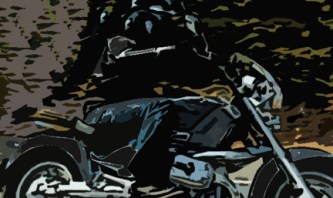
He raced back to the Rover, grabbing his helmet from the cab, and yanked the covering off the BMW, stowing the crowbar in the saddlebag. Dropping the tailgate he powered the R12 off the bed with a squeal of tires, skidding the rear wheel once he landed and veering back through the narrow gap to the loading bay of the old warehouse. At the far side of the lot, the gate access to the back street sagged on it hinges. The van no longer in sight, he had to considered going left or right, gunning the engine impatiently. There, close to the pavement off to the right, faintly visible, a narrow band of haze slowly drifted back to the dried mud of the asphalt from which it had been raised. To the left nothing stirred except for a grey rag caught on the cyclone fencing flapping in the late afternoon wind. Right also led to Grant which led to an onramp for the Arnold Expressway.

r121Once on Grant, the traffic was considerably heavier than in the old neighborhood it bordered. He weaved through traffic, stopping at the light before the freeway entrance. No sign of them. His choice was to continue down Grant or get on the freeway. But would they stick to surface streets considering that the raised four lane could take them further and faster? That was the question. He raced up the onramp at the change of the light and encountered the going home gridlock. No one was going to go anywhere fast. It was like a slow moving parking lot. There likely was an accident further down, but as far as he could see, it was a horizon of rooftops inching up the overpass incline. And there in the middle of it, in the number two lane, was the black box he was looking for.

He gunned the BMW and rode the line between the cars, cautiously making his way forward, ignoring the hostile stares of the exasperated drivers behind the steering wheels of their turtle paced rides. He had flipped down the dark visor of his helmet so that only his mouth and jaw were visible. In almost no time he had come in range of the black van, keeping his distance in the number three lane, using the groaningly slow traffic between them as a cover.

There were two of them in the front cab, the one in the passenger seat straining to say something to someone in the cargo hold, his broad back and shoulders to the window. The battered van was an older model with side cargo doors as well. It was missing a sideview mirror if the stub near the wing was any indication. The traffic continued to move slowly forward accompanied by the honking horns of frustrated drivers in a stagnant river of sheet metal  and glass on wheels. A police department helicopter flew overhead toward the head of the flow. Then the forward movement stopped altogether.

What were the risks going up against three men, possibly armed? They had abducted a girl, presumably against her will by the way she had fought them. He felt was compelled to act. And again a lethal calmness overtook him. So far his only advantage was surprise. He would need to change the odds. He had the crowbar in the saddlebag. That was one. In the saddlebag was also a tire repair kit that was original to the model. It came with a utility knife to cut and score the patches. That was two. And there was a packet of road flares that he had added to the emergency kit. That was three.

The traffic began rolling again, still at a snail’s pace, and he steered his way along the line adjacent the dark van. As it crept forward, he located the valve stem on the rear wheel. Bringing himself even with the slowly rotating tire, he severed the valve head releasing a gush of foul heated air. Maneuvering the motorcycle up to the passenger door he beat on the window with the side of his gloved fist. A scowling face turned to glare at him.

Wayne mouthed the words “tire” and pointed to the rear of the van. The rear wheel had deflated to the point that the driver was having difficulty controlling the van. He heard the driver curse angrily. The man in the passenger seat opened the door and poked his head out to put eyes on the problem. As he did, Wayne kicked the door, bouncing the man’s head against the door frame. Pulling the man out of the cab, he scraped the end of the flare on the pavement and tossed the orange red sparkler into the front seats.

Wayne pushed the door closed as the passenger fell to his knees on the pavement. He was reaching for something under his shirt. Using the crowbar he hooked the man’s wrist and sent the gun he was trying to grab from his waistband skittering into the number three lane. Just then the cargo doors exploded open with smoke as the third man threw himself out. The crook of the crowbar caught him behind the heel and with one swift uplifting motion flipped him onto his back.

Wayne dived into the van and found the young woman, mouth taped shut, hands bound. Her expression, if her eyes  were any indication, was of pure terror. The flare was burning between the front seats and had already caught some oily rags and fast food debris on fire. He dragged her out of the van and over to his BMW, placing her on the seat and slicing through her bindings with the utility knife. He yanked off the tape covering her mouth.

He didn’t see it coming and caught the blow from her fist on the side of his jaw. She kicked out with her feet, spitting and clawing, but he dodged them in time to catch the movement behind him. The driver had appeared around the front of the van with a lug wrench. Wayne felt the pain as it slammed into the arm he had put up to deflect the blow aimed at his head, the follow through glancing off the side of his dark visored helmet. He raised his booted foot and aimed a crushing blow at the driver’s right knee. The man sagged to one side dropping the wench as the display of pain contorted his face.

Wayne hopped on his motorcycle just as the traffic surged forward like an unclogged drain. The girl was gone. He caught a glimpse of her heading for the side of the freeway, hopping hoods and dodging screeching brakes. He gunned his bike to follow her but now the traffic was relentless and unpredictable and he lost sight of her as she leapt over the guard rail. He managed to gain the narrow shoulder off the number four lane and looked down on a maze of backstreets, back yards, and back alleys. He spied her at an intersection racing towards the shadows along the fence of a wrecking yard and the long succession of apartment blocks beyond. The drop from the overpass was considerable, but as he surveyed the ledges and angles he knew someone agile enough could make the descent without too much trouble. Like a cat, she had landed on her feet.


Next Time: Act One, Scene 4; The Stakes Are Raised

Cheése Stands Alone III

by Phyllis Huldarsdottir

Chapter Five

Lydia awoke, eyes throbbing, temples pulsing, moaning through the dry stickiness in her throat. Even her eye sockets registered pain. And shifting on her back, her hips, her knees, as she pulled them in, warned her, creaking with ache, to be more tentative about her movements. It seemed safer where she had come from, a silky wispy world of subdued light, a tangerine streak on tattered clouds hovering over a severe dark blue horizon. A woman, parasol held over her head, dressed in a shimmering pearlescent tutu skipped along the ledge of a tall building overlooking the acute angles of a pastel cityscape vying with the colorful atmosphere. It could have been London except for the throbbing green of jungle beyond so it was probably São Paulo. A man in a white tunic with gold epaulets of the Admiralty Medical Corps stood with his back to them. He and the woman with the parasol. Who was he? Who was she?

A large rectangle of light hovered nearby and she turned her head toward it. It was a window set into the severe slant of an attic room. Now she was aware of the vague itching of her legs, her torso, into her armpits and around her breasts. She scratched at the tiny tingles of pain on her arm and cleared her throat again. She blinked, focusing on the light at the window. It was maddeningly indistinct. A shadow crossed the brightness and she tracked it, her head heavy as lead and painfully molten as she moved it.
“She’s awake” a high voice spoke and was answered by the scrape of a chair across a floor.

A taller shadow joined the original one accompanied by a bright object from which she felt the need to shield her eyes. Sensation returned to her body and she struggled against her covering.

“There, there,” a voice spoke soothingly, “let’s untangle you from the quilt.”

She stared at the gray bearded dark face uncomprehendingly, panic joining her renewed sensitivity. She tried to sit up but her body protested. Dimly, it was a familiar feeling, but the circumstances were shrouded in insubstantiality. Her self-awareness was missing something. Who was she?

The dark face frowned, the light source that no longer bothered her as much held closer to her face.

“Lydia? Lydia Cheése?”

It was clear he was speaking to her. Lydia was a name, her name perhaps. She tried answering but her tongue wouldn’t listen to her. It rattled against her teeth and allowed guttural air to pass unaffected.

“Serpina,” the dark face spoke, “Fetch me my bag, quickly.”

The urgency in the voice alarmed her. She struggled to sit up in the bed and managed it. The dark arms belonging to the dark face assisted.

“Lydia, it is Doctor Jean-Pierre Serre-Pain, Lydia, how are you feeling?”

She said the word this time, “Pain.”

“I understand, yes, that’s to be expected. You are experiencing nerve shock from the venom. But it was a very low dosage and you will recover.”

The smaller shadow returned. “Good, now Serpina, find Vlady and tell him to begin loading the barge immediately.”


Chapter Six

The River Loire lapped at the stone quay where the barge rocked gently in the wake of passing river traffic. In the harbor copper hulled transport ships bobbed at anchor. Clouds like a mountainous gray escarpment over the expanse of sea further out provided the backdrop for a horizon hyphenated by the oblong shapes of Navair traffic. Lydia, wrapped in a dark blue carriage cape with the hood pulled close around her face, struggled with her still reluctant muscles, putting one foot in front of the next. Serre-Pain hurried at her side and indicated the stone stairway down to the large barge moored at the quay. Serpina laid hold of her other arm as she swayed looking down.

The large man called Vlady hopped among the stacks of tarp covered containers on the deck of the barge securing them with ropes. He glanced up and gave his master a nod to indicate that things were proceeding as planned. Lydia turned her head back to the street they were leaving, fretful, as if she had left something behind. She had no past thus far, the hasty steps across the acid eaten cobble of Vieux Quartier Nantes accompanied by the furtive and cautious snake doctor, collar of his great coat pulled up around his ears. As if to get some sense of bearing she glanced at the street name, a corroded brass plate affixed to the side of the column leading to the quay, Boul Verne. The name like a shadow flitted away as she returned her gaze to the path ahead and her future. Ever since awakening in the attic bedroom she had been trying to reorient herself. It was difficult at first since she had still to get a grip on who she was. And then as if a mist thinning, but selectively with whole areas of identity obscured, she began fitting the pieces together.

Orinoco1Her name was Lydia Cheése, pronounced “chase,” and the butt of hilarity practically her entire life. She’d answered to it when the doctor spoke it. She was a senior pilot, captain for the Aerosud fleet of luxury airship liners. She was married to. Wait. She was married. Of course. To Seignior Professario Cornado de Belize Gutman, a member of the royal court in São Paulo. Nado. How long had it been since she’d seen him? Six months. Longer. Easily. But that was not so unusual. He was often ensconced at his research farm near the headwaters of the Orinoco. And she, even though she could have taken her place at his side as Doña Lydia de Belize Gutman-Cheése, loved to fly. As a child she had been fascinated by stories of the Admiralty Air Corps told by her father, Commadore Jack, and her grandfather, Harvey Thomas, stories about her great grandfather and hero of the First World Pandemic, Pandem I, in which nearly a quarter of the world’s population was wiped out by the persistent Black Mold virus. Colonel Bartholomew Cheése had been an army doctor on the front lines of the scourge that swept the world. Her ambition was to emulate and follow in the footsteps of her illustrious, and notorious, ancestors. And, yes, it was because of her father that she was in her present fix.

Mother always said that Lydia’s father was a soft-headed idealist. But what of mother’s life choices? Give up a promising career as a ballerina to become a trapeze artist in a flea bitten French circus? She had to face it, both parents were a little loony. And she had tried so hard to be normal. First as an air cadet, then her tour of service with the Admiralty Air Corps, her marriage to Nado, and her employment with Aerosud, thanks to Nado’s sister, La-la,  and her influence at the Brazilian Royal Aeronautic and Science Society. She would not allow herself to be a rogue as her parents had been. She would fly the course according to the flight plan. It was those odd instances of impulsive mischievousness that led her to worry about her self-control and brought her to the attention of her superiors, that and her intractability in the face of coercion even when confronted by her own error. She did not like to be wrong. Or be told what to do.


Chapter Seven

 barge2Lydia counted two days passed in confinement on the barge slowly being hauled up the River Loire toward Older Orleans. She could view from the round ports on the barge cabin the undulating hillsides shimmering with tentative purple hues of biocrops still struggling to take root long after the Great Mold Devastation early in the previous century. There were dead spots that would never regenerate, she knew, yet the Commonwealth spent untold Vicotorines in trying to regenerate vast areas of the continent that had been sanitized in a misguided effort to eradicate the Black Mold. The lethal unproven bactophagic bug did eradicate the black mold and large swaths of the Northern Hemisphere’s flora down to mineral soil as well. It was her great grandfather who had  pioneered the lactobacto that brought the bacterial scourge to a end. She remembered that one of her biostory professors in Pandem 101 at the Academy had said. “After Darwin came Mendal, and then the whole world changed.”
A pale haze hung low over the self-pollinating fields, the bee population almost nonexistent at this latitude. Tank farms and spinning turbines blazoned with the ubiquitous Freud Werke logo dotted the expanse. An old wood pulp powered steam six wheeler hauled the barge along the towpath from one lock to another on their slow progress up the river. They were in a line of barges and boats being pulled along by a variety of steam powered mules, some with the standard bio turbines or the newer bio batteries. All, loaded with wares, performers and sight-seers, were headed for the annual Victorianaissance Festival in the old regional capitol.

Madame Ophelia’s Ophidiarium and Traveling Medicine Show would be participating in the festivities. Lydia tried comprehend just what Doctor Serre-Pain was suggesting. When she first felt completely conscious in the darkened cabin after the venom had left her system and had regained her wits about her, he had been there to calm her and to explain her predicament. She had struggled at first but both Serre-Pain and Serpina were able to hold her down as the snake doctor, his soothing hypnotic voice earnest, convincing, had explained that she was now a fugitive. IOTA had broadcast an all points fugitive alert on the coney frequencies for one Lydia Cheése, Aerosud Airship Captain, also known as Doña Lydia de Belize Gutman-Cheése. They were monitoring all the NavAir terminals leaving Greater London as well as roadways, ports, and borders. It was imperative that she remain incognito until they had passed the next lock. And the inspection station, ordinarily a minor provincial obstacle easily bribed to look the other way, was swarming with Agents of IOTA. She really had no choice but to pose as Madame Ophelia if she did not want to be found out. Of course, she could refuse and she would be arrested, as would he and his associates, the snakes impounded and undoubtedly destroyed. They would all be taken off to Rouen for questioning. Nobody wanted to go to Rouen, even for the cathedral and the fact of Flaubert, as it was the central headquarters of the Admiralty’s World Intelligence Tactical Services and home of the infamous Beau Vary Interrogation Center, the BVIC, where all the dissidents, rebels, radical icers, doomers, and bio insurrectionists were held, and from whose confines very few left alive.

Justice under the Admiralty was the removal of obstacles to a smooth operation in the Clockwork Victoriana Commonwealth, and of its client and aligned states. One of those obstacles was her father, Commadore Jack Cheése, the outspoken ex-Admiralty Officer, vocal critic of the bio corporations and the nav industry, questioning the validity of the Holoqueen, and the succession to the throne by the Rejuvenates, and those who sailed under the black flag of IOTA.

Lydia knew that. She was a citizen of the Empire of Brazil, and although the Empire was one of the non-aligned nation states, their security apparatus and IOTA worked to each other’s advantage. In other words, she couldn’t count on the Empire’s intelligence service, the Royal Intelligence Bureau, the RIB, also known as the Liège, to get her out of this fix.

They had fed her because she had to regain her strength and because she was ravenous. She’d raised an eyebrow at the crude unprocessed nonsterile comestibles grown in natural organic materials. She had balked at first, remembering her first contact with unprocessed native grub for a festival for the villagers at Nado’s research station at the source of the Orinoco. The retching revulsion at the smell, the vomiting and cramps afterwards, all for the sake of diplomacy and propriety. The fare on board the barge was not as repellent and certainly much more flavorful than the bland biomeal that was an accepted standard for a civilized Victorian cuisine. It took some getting used to and she knew she would have to get a  thorough probiome purge at the first opportunity. But it gave her time to think. And to observe. And plot her escape.


Chapter Eight

Lydia not only had to escape the captivity of Serre-Pain’s snake show, but she also had to elude the notice of IOTA’s spies and informants she would undoubtedly encounter in the occupied countryside of Former Burgundy now under direct grip of Greater London. Her resources were limited. Her friends were mostly across the corrosive Atlantic on another continent in the uberburbs of Amazonia. And they were all intellectuals. They certainly could be counted on to write letters and demand her release from Admiralty custody, but beyond that, their activity did not venture far from the comfort of their domed tropical bubble.

snake-charmer1Lydia was the adventurous one, commanding double hulled luxury superships, flying to exotic locations such as Neumonrèal, the intellectual capital of the Joual Republic, the wild ocean coast of Newer New York and the Jersy badlands beyond, Alta Morocco, and of course the popular Islands of Birds and Bees with their lush exotic interior jungles of pre-Dev flora and fauna. Winged creature had been steadily declining in the northern latitudes if one were to believe the Ice Age prophets of doom. Flying insects and the birds that feed on them were scarce. The poles were cooling, they said, the icepack thicker and creeping down the latitudes from the frost encased wastelands.

For most of her youth at prestigious private schools in Rio, the exclusive enclaves of Lisbon, and in residence at the family home in Amazonia, she had never had to experience the discomfort of prolonged cold. And only upon her enrollment as a cadet in the Admiralty Aerocorps Academy, the AAA, did she suffer bitter mornings on the parade grounds of the Hansiatic Campus, coming and going to classes, bracing against the gusts of frozen cinders and ash blown by fierce winds off the Baltic. She’d had to acclimate as well to the numbing cold of the upper atmospheres during pilot training in ancient unheated helium dirigibles. It was merely the condition of the northern latitudes she knew, and she had come to appreciate the vigor that brisk weather often initiated by the nip in the air, if for no other reason than to find some place warmer. She would always be a Glosud,  or a lowcator, the warmth of days expected almost year round as opposed to a Glonor, or upcator, if you were of a vertical rather than a horizontal persuasion, and as they had taught in the Academy, Top Down Is The Only Way.

She had been warned not to seek her father. Still she persisted. She would bide her time, she decided, until the opportunity arose to make her move. Now they were approaching the locks and the inspection station and positioned next in queue. Serre-Pain had brought Serpina with him. From an oblong box they removed  a mass of diaphanous material glistening with sequins shaped like half-moons, stars, and of course coiled snakes, and held it up for her to see.

“If you are to be Madame Ophilia you must dress the part.” Serre-Pain gave a slight smile, one that Lydia recognized, in the few days she had spent in his presence, as his ironic smile. She had the opportunity to get a closer look at the chief of her captors, an almost ageless African with the grace of wisdom whose dark skin was creased and scarred. Once she resigned herself to the fact of her abduction she realized that she had nothing to fear from him. She admired instead his calm demeanor and his honest straightforward judgements. In exchange for her help as a pilot, he would provide her with the means to contact her father and perhaps precipitate a reunion.

Everything was in flux he had explained. It would require the right circumstances and timing. Once the festival was over in the next few day they would be in touch with the LBFS, League bousculer française  du sud, the anti-Victorian rebels, who would guide them on the next leg of their journey through the Massif Central. In the meantime, she had to dress the part and he would leave Serpina to help her on with the Madame Ophelia costume.

Serpina’s hostility was not disguised. The young flower girl no longer seemed as young or as girlish in a loose fitting rust colored rough shirt and dark trousers of a heavy canvas material, definitely not bugweave, whose bottoms were rolled up at the ankles above a pair of wooden sabots. The girl’s hair, close cropped and accentuating the shapeliness of her head, was blond enough as to be almost white and exposed her tiny shell-like ears. Her pale blue eyes narrowed in impatience as Lydia removed her outer garments. She smiled a thin lipped smile, tongue flicking out in sadistic pleasure, when the diaphanous chiffon caught in Lydia’s luxuriant though disheveled red tresses, yanking it roughly down along the shoulders.

tristan_0123The musty perfumed scent of the dress made Lydia sneeze as she pulled the sleeves down to her wrists and gave herself a cursory glance. The spangled costume had obviously belonged to someone a size larger than her, and reminded her of the times she dressed up in her mother’s old gowns as a child.
“What happened to the original Madame Ophelia?” she asked as she flounced the skirt and adjusted the waist.

Serpina seemed reluctant to answer, averting her eyes from Lydia’s questioning look. She had reached into a round hat box to extract a large dark wig. “She is dead,” she muttered finally, twisting Lydia’s hair in a colorless scarf and tying it up at the top of her head to allow the big hairpiece to fit over it. Her slender fingers expertly tucked stray strands under the bejeweled headpiece and she stepped back to examine her handy work.

“Oh,” Lydia said, “How did she die?”

Serpina’s lips tightened in a half smile grimace, a mischievous sparkle to her blues. “Snake bite.”

Lydia shivered, looking around and over her shoulder for any signs of slithereens.

Serpina opened another larger hat box, this one with little holes in the sides and top, and set it next to Lydia. Coiled inside the box was a large headed python. “Madame Ophelia is never seen without her snake, Ophy.”

Lydia drew back with an intake of breath, the tension of her body making her shake. “No,” she gasped, “I can’t, I can’t!”

Serpina’s grin was diabolical. “Ophy, like Madame Ophelia, is dead.” She picked up the coils of snake skin and held it out. “He is stuffed with wool and weighted with sand.” She uncoiled a length near the head. “It is against the law to have human endangered animal interactive displays. According to the Endangered Animal Autonomy Act of Pax Victoria 130, all animals under the jurisdiction of the Clockwork Commonwealth are entitled to the dignity of their nature and shall not be deprived of that dignity by their interaction with humans.”

peye1“Of course, so right!” Lydia cringed as the dummy snake was laid around her shoulders, the large head draped above her left beast. She was surprised by the weight and the peculiar clamminess of the skin exuding a rather moist earthy odor. Trying to get comfortable with the idea that she had to masquerade as a snake goddess to pass station inspection, she breathed a sigh to relax, taking a closer look at the imposingly powerful shape and intricate patterning of the scales of the python’s head. The large glistening orbs of its eyes, luminescent amber marbles bisected by vertical irises like cold cruel otherworldly suns, rolled awake. A thin naked tongue slithered out from the front lips and curled toward her, sensing the heat of her panic.

Next Time: Lydia And The Snakes

Better Than Dead—20

by Colin Deerwood

Ads90

I was looking down the barrels of half a dozen police specials while they slapped the cuffs on me. I don’t think they suspected me of causing the carnage but they were playing it safe. I had started to explain but a police sergeant with the shoulders of hod carrier and face like a splintered plank told me to shut my yap until the lieutenant got there. They’d called for an ambulance and the coroner’s meat wagon. The ambulance was for the hulk in pajamas from the Bombay gang. From what I’d seen, the Asp twins, Al, and Al’s sister, Della, all had an appointment with a slab at the morgue. Kovic’s boys hadn’t fared much better. The guy with the shovel and one other unlucky goon in a pinstriped suit would be joining them. Mr. K and whoever else of his mob had made their escape. The nurse with the ambulance looked me over and gave a shrug and smile. “He’ll live,” she told the sergeant, “Looks like his face knows its way around a knuckle or two.”

I was about to make my usual wise crack about she shoulda seen the other guy when I saw the detective coming up under a full head of steam. I might have guessed. It was Hogan.

“You!” He pointed a finger in my face. “Tell me you didn’t have anything to do with this, wisenheimer!” He was giving me that withering guilt inducing stare that cops and priests can do so well.

I had to tell him that I did and didn’t. He didn’t like what he was hearing so he dragged me over to the fender of a big Packard that I recognized as belonging to the Thieves. He had me repeat the first part again.

I told him I’d been kidnapped but in order to explain how I’d been kidnapped I had to explain about the explosion at the Serbian Social Club. I couldn’t talk about the explosion at the social club without saying why I was at the social club and I knew that I didn’t want to admit to why I was there so I had to say that I was rescuing a damsel in distress who unfortunately had been killed by the explosion or the fall that it had caused.

omalleyHogan was shaking his head all the time I was telling him. “You believe this bum, O’Malley?” he asked the sergeant who was nodding in agreement. “You gotta lay off the dime detective fare, pal. It’s turning your brain to pulp!”

“He’s right about the explosion at the social club down by the railyards, Lieutenant. We got a call early in the AM about an explosion and sent a squad car to investigate. They were told that it was a boiler blew up and that they didn’t need any cops, what they needed was a plumber. All the same the squad did a perimeter inspection and didn’t find anything suspicious except for some debris that appeared to come from four floors up.”

“They didn’t find the body!?” I blurted.

Hogan didn’t try to hide his disbelief. “A body? Whose body?”

“Becky! The girl I’d gone to, uh, save. She fell from the terrace when the bomb exploded.”

“Now there’s a bomb.” I could tell that Hogan was starting his predictable slow burn by how red the tips of his ears got.

“Uh, right, the bomb that was planted there to take out some of the fascist mob.”

Hogan raised his eyes as if imploring the heavens.

The sergeant shook his head. “We’ve been looking for you, Ask, in connection with the murder of Ralph Silver, a two bit ambulance chaser.”

“And they have crates of Tommy guns hidden in the attic!”

Now Hogan brought his face close to mine. “Tommy guns, you don’t say.”

“Right, and Kovic and his gang were planning something, something big. I saw the map of what they were planning,”

“A map.”

“Something is going to go down, I heard Kovic say that they were gonna do it soon. They had the custom shed and the federal building downtown staked out.”

Hogan frowned. “The Federal building? That’s where the grand jury’s meeting to indict Kovic for tax evasion. Today.” He turned to the sergeant, “Get Neckker and his boys on the horn. If this palooka’s right, Kovic is going to try to ice the jurors. And get a couple of squads to following me down to the docks and the customs shed.” And then to me, “You better be right.”

“How about you take me out of these cuffs?

The sergeant shook his head. “We’ve been looking for you, Ask, in connection with the murder of Ralph Silver, a two bit ambulance chaser.”

“Naw, you can’t pin that on me. That was Kovic’s doing. He had Ralphie killed and then waited for me to show up and discover the body. Ralphie and me, we go way back, I’d a never. Just ask Hogan, he knows.”

Hogan nodded and the sergeant reluctantly keyed the bracelets.

I was curious. “How did your guys know to find Kovic down here at the abandoned warehouse?”

O’Malley explained. “One of the squads spotted this Packard as fitting the description of a car involved in a robbery at the Eastside Post Office. When he got out to take a closer look, he heard the gunfire and called for reinforcements. By the time they got here the shooting had stopped.”

I glance into the backseat of the Thieves’ car, and there it was, the bundle the tailor, Rebecca’s father, had mailed to me. I yanked open the door and pulled it out.

“This is mine, it’s addressed to me. I’m taking it.” I insisted.

“No you’re not.” Hogan took it from me. “It’s evidence. Because if it is what I think it is, why would these guys hold up a post office on a Sunday to get a bundle of old clothes. You got a lot of explaining to do, Ask. You’re coming with me. And when we get this matter at the customs shed settled, you’re coming downtown and we’re going to have a talk, a real long talk about how you come to be involved with Kovic in the first place.”

Ads91

It was just like those crime shows you hear on the radio. They put out a Calling All Cars bulletin. The patrolmen jumped on the running boards and were hanging on to the door frames, cranking the sirens and lights blazing. The squad car took a corner on two wheels and everyone in the back shifted toward the center of gravity. Reaching for a grip, Hogan let loose of the bundle and it landed on the space at our feet. And then we were there. A police van pulled up behind and unloaded half a dozen guys with long guns. Hogan took charge and deployed his men. Before long the robbers who had been trying to bust into the customs shed were being led away with their hands over their heads.

They’d forgotten about me. And I was just as glad. I picked up the bundle from where it had fallen and made my exit from the cop car. There were still uniforms heading for the fray, pistols in hand. I tried to make myself invisible in the dawn’s early light.

calling all carsThe commotion was drawing a crowd of shipyard and dock workers just arriving to begin their shifts or leaving after a long uneventful night. Anything out of the ordinary was going to attract them like moths to a flame. Unfortunately I wasn’t invisible enough to get past the police line. They weren’t letting anybody in or anyone out. I scanned the faces of the crowd of workers being held back by the coppers. I recognized one of them, from Annie’s tug, The Narcissus, the tall one. I could tell from his expression that he recognized me, and he turned away quickly to disappear into the crowd. I lurked in the rapidly shrinking shadows dreading that Hogan would notice I had gone missing and raise the alarm. I did not at any cost want to go downtown to have a little chat and explain about Rebecca. Then I saw her, perfection in a sea of broken faces. It was Annie. Her mate had gone to fetch her. She caught my eye and gave a nod. She was up to something.

As they were marching the bad guys into the back of the black Mariah and the cops were wrapping up their operation, I could see Hogan by the side of the squad car looking around like he wanted to find something. Just then the crowd surged against the police line. A fight had started in the crowd and the cops on the line rushed in to break it up. That was my cue to fade into the melee. I felt a tug on my sleeve and looked down to see the short one of the Annie’s crew leading me to the opposite side and away from where the action had been. We skirted the cargo bins and piles of pallets. The next thing I knew Annie was striding alongside me. She was smiling. “First the cops were looking for you and now you’re working with them. Who are you, mystery man?”

“It’s a long story.”

“You can tell it to me over a cup of java.” She cast an appraising eye over me. “You look like you might need it.”

I handed the bundle of clothes to her. “I thought I’d return these to you.”

She raised an eyebrow. “I didn’t think I’d ever see you or those rags again, but from the looks of you, I’d say you better hang on to them.”

Once below deck I settled behind the little table in the galley and sipped at the scalding hot brew. “Thanks for getting me out of that jam. Again.”

She gave me that beatific smile that always spun my head. She had a lot of miles on her but she was still a beauty and I guess she got a hint of what I was thinking because she kinda blushed and said, “Always glad to help a sailor in distress.”

“I ain’t no sailor.”

“Don’t give up. You’re still young.”

I groaned. “After the last couple of days, I don’t feel that young.” And I had to tell her how I ended up with Rebecca and how I’d foolishly let her follow me when I went to get my revenge on Kovic. I left out the part about the diamonds, but I had to tell her about the Thieves of Bombay, and how my friend Alice had been attacked by goggle wearing bandits and was saved by a former Russian aristocrat peeping tom, and how Rebecca’s old man was an anti-fascist bomb maker and that it was his bomb that had caused her death even though I held myself partly if not completely responsible. And how I ended up at the docks and the customs shed because I had no idea what Kovic was planning there except that my alerting the cops had stuck a stick in his spokes.

ADS Annie21“Gold,” she said with a frown, “Gold and jewels. People are fleeing the war in Europe and sending their wealth abroad. It’s an open secret. Everybody on the docks knows about it. But it’s scum like Kovic that’s gonna try and heist it.”
I nodded. “Yeah, now all the more reason for me to lie low. I got the cops, the Thieves, and Mr. K all trying to get a piece of me.”

“You’re safe here, mystery man. Nobody needs to know you’re not part of my crew.”

I shook my head, “I don’t want to get you involved in this, it’s dangerous. I got people after me that want to fill me full of lead, fit me for a pair of cement socks, or lock me up and throw away the key. I need to go to ground till the heat blows over. And I just thought of a way to do that.”

Ads92

Maybe the blow on the head knocked some sense into me. I didn’t want let on about the rocks, but my plan was to go find them in the coalbin and I had to do that in a hurry. I looked into Annie’s eyes as I stepped from the gunwales and onto the dock. I waved this time. “I won’t forget you.”

She waved back. “I’m not counting on it. Good luck. You know where I live.”

I grabbed a trolley to my office on 9th. I waited outside for about an hour and no one looked out of place. I tripped up the steps and through the door. Half way up the flight to the second floor, I heard the super’s door creak open. When I got to my office there was a new padlock, and I didn’t have the key. I heard the shallow breathing behind me and turned to see Curtis peek his head above the railing.

“Why’s there a new padlock on my door, Curtis?”

When I didn’t scream at him he stepped up to the top of the stairs. “Yer behind on yer rent. So th’owner said. . . .”

“I don’t care what the owner said. Curtis. I have to get into my office. It’s my place of business. I have business to conduct so that I can get paid and in turn pay my rent. You don’t have to go to Yale to figure that out.” I’d lowered my voice partly because I was exasperated at another road block. But Curtis was interested in my argument because hardly anyone talked to Curtis—they just told him what to do or listened to his excuse. He cocked an ear and strayed closer.

“Listen, I got five bucks here in my pocket. I can put it toward the back rent or you could forget I gave it to you.” He gave me a baleful look considering the offer. I made like I was going to pull the money from my pants but instead snagged his skinny arm and slammed him against the wall, not hard, but enough to get his attention and let him know that I meant business. “You got the key, Curtis?” The ring of keys he carried on his belt made him feel important and he never went anywhere with them.

“No,” he said feeling his face where it had hit the wall.

I wrenched his arm and bumped him with my chest. “See this face? Yours is gonna look worse. I don’t have time to mess around and I won’t mess around.”

He got the hint and fumbled with his keyring. Once the door opened I shoved him in ahead of me. I looked around. I wasn’t going to miss the dump although it had kept the rain off my head and was not a sidewalk where I could pass out drunk. It wasn’t a place I’d bring a dolly to. More of a lair where I could go lick my wounds. There wasn’t anything that had any value to me in the jumble of junk except for the one item squirreled away under a blanket in the closet. That was Ted’s diorama.

I grabbed a handful of change from my pocket and threw it on the floor. “For your trouble.” I said as Curtis scrambled to gather the coins.

I made my way over to Alice’s studio with the art piece under my arm. She wasn’t home but I knew where she kept the key. Inside the smell of fresh brew coffee said she would be back soon. I stripped off the clothes I was wearing and put on the working clothes that Annie had insisted I keep. I found the satchel where I’d left it under the kitchen table and stuffed the suit, vest, and pants into it. The cement damaged shoes, too. I placed Ted’s art piece under his portrait on the wall and found a pencil and wrote on a scrap of paper “I’ll be back to pick up my things later today. We have to talk.” I looked up into Ted’s eyes. They didn’t move.

coalyardPulling the flat cap down over my eyes, I made my way over to the coal yard. There was a queue of coal wagons backed to the chutes and I figured the guy with the papers in his hand was the foreman. Holding a sheaf of papers was not a hard job but the scowl on his face wanted you think that it was. He didn’t like the look of my mug, either. I asked him if he knew the coal company that delivered to the address of the building where Rebecca’s old man had his used clothes store because I had to do some work in the basement and didn’t want to do it if they were going to dump a load in the bin. The foreman was distracted by a wagon that had not pulled close enough to the chutes and the ore was spilling onto the ground. “Oreville Coal Company!” he yelled as he ran to chew out the coal wagon driver.

The coal company was a few block over from where the used clothing shop was located. The secretary looked like she’d had a rough Sunday and could barely keep her eyes open. I had to repeat twice what I’d come in for, the coal delivery schedule. She grumbled at having to lift the heavy ledger covers and ran a meticulously manicured finger down a row of entries. She shook her permed thatch and muttered. “This time of year, we’re on call, no more than once a month, if that.” I was out the door before she finished.

I found the super sitting on a stool inside the doorway to the building. I told him that I was with Oreville Coal Company and that there’d been a complaint about the way the coal chute operated. That was a surprised to him but he agreed to let me take a look and fix the problem. I glanced at the door to the tailor shop. There was a government seal over the lock. The super had to tell me all about how the G-Men busted into the building after a crazy woman, girl, actually, and her father who were obviously some sort of criminals or saboteurs if the feds were after them. He led me through the closet and to the stairs down to the basement. It looked familiar and the overhead light worked. I made a bee line for the coal bin. It had been dark the last time I’d passed through just days ago but judging by the amount of coal in the bin, it didn’t appear to be any more or less, and the super confirmed that he hadn’t used but a couple shovels full to keep the furnace going being the weekend and all. I scanned the greasy smelling chunks but nothing looked anything faintly resembling the little white pouch the diamonds had been in. I got that sinking feeling. I wasn’t going to find the diamonds because they weren’t there.


Next Time: High Tailing It Out Of Town

Contents Vol. 2 No. 7

Welcome to Volume Two, Number Seven of Dime Pulp,
A Serial Pulp Fiction Magazine

In Issue Seven, Dime Pulp, A Serial Pulp Fiction Magazine, continues with our two new pulp serials, Phyllis Haldursdottir’s global steampunk saga, Cheése Stands Alone, featuring Airship Commander Lydia Cheése (pronounced “Chase”), and Pierre Anton Taylor’s  Just Coincidence, a familiar fiction of dynastic intrigue and the dark revenge of a masked crime crusader.

In Act One, Scene 2 of Just Coincidence, at his father’s funeral, a privileged young man plots revenge on those he suspects of  his father’s murder.  An emotional connection to an old mentor and an overwhelming nostalgia  move him to act against the injustice of social marginalization. That he is a dark prince as well as a dark knight is just coincidence.

It is the year 180 of Pax Victoriana, one hundred and eighty years since Queen Victoria took the throne and whose persona if not the actual person, are kept alive as the paragon of world peace. For Airship Commander Lydia Cheése, Britannia still rules the waves as well as the airship lanes,  with the exception of  the carbon states of New Brazil and United Outlaw Africa. In the continuing saga of Cheése Stands Alone, Captain Lydia Cheése  has fallen down the rabbit hole and finds herself in the clutches of a herpetologist by the name of Serre-Pain and his traveling snake show, Madame Ophelia’s Ophidiarium. Then the agents for IOTA show up and things get (shudder) slithery. Lydia’s efforts to locate her fugitive father, the infamous Commodore Jack “Wild Goose” Cheése, have brought her to the attention of  the Investigative Office of The Admiralty and her flight from them will take her on an airship globetrotting adventure.

Number Nine of On The Road To Las Cruces reaches a crucial point in this fictional retelling of the last day in the life of a legendary Western lawman where memory becomes a dialogue with one’s self in the justification of a killing and a blind pride that leads to to death. As an echo from the abyss, the famous retelling is retold as a rebuttal as well as an oral chronical.

And last but not least, Installment 19 of The 1940 detective story, Better Than Dead (Dime Pulp’s longest running serial), follows hapless confidential investigator Lackland Ask through another tangle of tense circumstances as his quest for revenge and profit are continually thwarted by kidnapping, murder, attempted murder as well as stolen diamonds and the mysterious jade Empress’s Cucumber. Things only get worse when he loses someone close to him in an explosion and then finds himself being fit for a pair of cement overshoes.

FYI: Dime Pulp Yearbook 21 contains the novels (The Last Resort and Better Than Dead) and the short fiction (Hard Boiled Myth and Gone Missing) of Volume One’s 12 issues,  available for perusal in their entirety. If you missed a few issues or lost the thread of a serial, clicking on the link at the beginning of this paragraph or on the menu bar above is a good way to catch up.

Dime Pulp continues its crime spree with two new pulp fiction serializations, Cheése Stands Alone by Phyllis Haldursdottir and Just Coincidence by Pierre Anton Taylor, as well as the continuing serialization of the pulp crime fiction of  Better Than DeadA Detective Story and the Western, On The Road To Las Cruces . If you’ve made it this far, go ahead and follow the links below to reading entertainment with the serial contents of Volume Two, Number 7

 —Perry O’Dickle, chief scribe
and word accountant


Knapp-Felt 1930 1930s USA mens hats

“Lackland Ask is the name. ‘Lack’ to my friends, ‘Don’t’ to those who think they’re funny. You might have seen my portrait on the cover of Black Mask, the crime fiction magazine. This is my story. It starts with a blonde. This kind of story always starts with a blonde.” Thus begins the seemingly non-stop, endless narrative of Better Than Dead in which women are not the only trouble although most of it, told with the wit and street savvy of Runyon and Parker.

Better Than Dead—19


otrpic1fi2In late February of 1908, a one-time drover, buffalo hunter, saloon owner, hog farmer, peach grower, horse rancher, US Customs inspector, private investigator, county sheriff, and Deputy US Marshal set out from his adobe home on the mesa above Organ, New Mexico accompanied by a young man in a black buggy on the journey to Las Cruces. He would never arrive. This is the story of that journey, a novel account of the last day in the life of a legendary lawman.

On The Road To Last Cruces ~Nine~


lydcirIn March of 1892, a Scotsman by the name of Arthur C. “Artie” Doyle was hanged by the neck until dead after being found guilty of a string of grisly murders of prostitutes in Whitechapel. At that moment, history veered off its presumed course and headed in a direction all its own in which the Great War never happened because the Kaiser was afraid of offending his grandmother, Queen Victoria, whose life has been prolonged by the wonders of biology. The peace of her reign, known as the Pax Victoriana, despite some major environmental disasters, has lasted 180  years keeping as many Victorian airs as possible while making accommodations to bio technology. Cheése Stands Alone poses a steampunk question, can Captain Lydia Cheése find her father, the antigovernment turncoat and radical, Commodore Jack “Wild Goose” Cheése. And furthermore, will her quest take her around the globe and through alternate world histories in the requisite 80 days or is it the beginning of a lifelong journey?

Cheése Stands Alone II


fury circle1fiIn Just Coincidence, a privileged young man with the unremarkable name of Wayne Bruce returns to the site where his father once had his business, a battery manufacturing plant, and where he often spent his childhood days hanging around the factory and the neighborhood. His return is haunted by the mysterious circumstances surrounding his father’s death and the vague feeling that his uncle is somehow involved.  Appalled by the poverty and crime of the place he remembers fondly, he is moved to resolve the injustice of the socially marginalized and to wreak vengeance on those he believes are responsible for the death of his father. A personal coincidence brings together dark prince and dark knight joined in a fateful and tragic quest for justice.
Act One. Scene 2

Better Than Dead—19

by Colin Deerwood

Ads87

Then I had another think coming. My hands began to sweat. It wasn’t like I’d lost my nerve and even if I had, being suicidal wasn’t going to help me find it. Mister K’s operation looked like a little more than just controlling the waterfront action and trucking companies. The kind of firepower I was seeing here would outfit a small army. And that other think arrived to tell me that I had to get the hell out of there, fast. There was no going back the way I had come. Down the stairs and into the social club was the only way out. If we stuck to the stairwell we had the chance of cheese with a rat and the only hope was that the rat was on the cheese wagon.

“You still got your peashooter?”

She frowned obviously distracted by the same dilemma I found myself in. “A shooter of peas?”

“Your little Lady Remmington. Your piece.” I made my fist into a gun.

“No, Lack, I have left it at the loft. It was foolish. . . .”

“Never mind, these mugs would chew those slugs like licorice candy. We’re just going to have to take our chances. Like I said before, if there’s a dust up, run, I’ll hold ‘em off as long as I can.”

She gave me a smile that said I was her hero. “We are in this together, Lack. I will stay by you.”

I opened the door from the attic stairs to the top floor hallway. A globe fixture at the head of the stairway illuminated the next flight down. I peered cautiously over the banister to the further dark abyss of the interior stairwell. There were muffled sounds of laughter. Other voices drifted up and caught my ear because of the intensity of the conversation. I could only make out a few words, but I recognized the speaker, Yan Kovic. Out of the frying pan into the fire. I had him right where he wanted me. The indistinct dialogue seemed a few landings below, not inside one of the rooms where the raucous laughter was coming from.

“Why can you not find this weasel who has killed Milosh?” Kovic demanded.

The other voice sounded lower and all I got was “more important matters” and Kovic insisting that “everything taking care off.”

I knew we would never get past them and even though I would have loved to get my hands around Kovic’s neck, right now wasn’t the best opportunity. There had to be another way down, a fire escape or a back set of stairs. I went to the window at the end of the corridor and looked out. The rain was still pouring down. I lifted the sash and poked my head out. I saw my way out. A metal ladder out of reach from where I was standing reached from the roof to a small terrace one floor below. Off to one side of the terrace was a fire escape leading down to the back alley. All I had to do was descend one more floor without being noticed, make my way to the terrace and down the fire escape.

The treads were carpeted although each step held the potential of a riser’s groan, but the joint was a sturdy as a jail and my luck held. I crept to the end of the hallway where I judged the terrace would be. I could spy the edge of the parapet from the window and assumed that access would be through the large oak door set into the wall. There didn’t seem to be a lock and the brass knob turned easily. The hinge was as silent as the whisper of air being displaced. I found myself in a large room with a couple armchairs, a long table, a bar along one wall, and double glass doors leading out to the small terrace. The setup looked like it was a kind of meeting room. A map and a scattering of papers were spread out at one end of the table under the light of a green shaded banker’s lamp. An RCA tabletop radio sat on a side table between two leather armchairs.

Rebecca let out a gasp. She had one of the sheets of papers in her hand. “I am not very good reading Serbian but I think this is timetable for an attack!” She had moved to the map on the table and was studying the symbols. “Here with this symbol, where is this?”

It took a bit to swivel my head in the right direction but when I did I saw that I was looking at a map of the waterfront, and part of the downtown area. X marked the spot near the customs warehouses. I was familiar with the area. It was near where Annie Bassinger’s tug, The Narcissus, was berthed. The other was an arrow pointing to the district where the Federal Courthouse was located. I was trying to formulate a correlation of some criminal intent and about to give vent to my hunch when I saw the look on her face. Horror.

radio1She was pointing at the two armchairs and the table with the radio between them. She stumbled back with her hand held over her mouth and in doing so knocked the banker’s lamp off its perch with a shattering crash. “The radio!” she gasped.

I didn’t think she could blame the radio. It wasn’t even turned on. That wasn‘t my worry. I had a feeling that we might not have been the only two who heard the sound of glass breaking.

“Forget it. Let’s get out of here!” I caught her by the arm and led her to the double doors.

“But Lack, the radio! I know that radio! It is the one my father. . . .”

I didn’t let her finish. There were the sounds of fast approaching footsteps and voices, one of them saying loud enough, “It come from up here, try the smoking lounge!”

That’s what they called this place but I wasn’t gonna stick around to admire it. Outside the rain had let up and left behind a misty scrim in the warm night air. I made for the corner of the terrace near where the wrought iron scaffolding of the fire escape was attached to the bricks of the building. I had underestimated the distance between the parapet of the terrace and the iron rail. Only an acrobat was going to take that leap and make it, and it wasn’t me. Besides the racket was going to be a dead giveaway. There was a narrow ledge just below the parapet that ran along the façade but hardly wide enough for my size twelves.

He didn’t want to believe his eyes when he spotted me, but then his surprise grew grim before turning into a grin as he reached under his arm and unholstered the large pistol and took aim.

An overhead light switched on in the smoking lounge and threw a beam across the wet tiles of the terrace. I chanced a glance through the glass and saw the three bears, the one with the bald dome I knew was Kovic. I put my ear to the hinge to catch what they were saying.

“Hey, wadya know, the lamp fell and broke.”

“Who broke it?” Kovic demanded, “who is up here!?

“Naw, boss, it just fell. Everybody’s down below playing cards.”

“That noise we heard earlier, Mr. K, they said it was from the hotel next door.”

“One moment! This radio, where is other radio?”

“Oh, yeah, guy, radio repairman, come by this morning. This is the loaner while he fixes the other one.”

“Radio is broken. No one tells me.”

“I didn’t know either, boss, but he said somebody called and said it was broken and that he should come fix it. Said he’d need to take it to his shop to do that.”

“Someone call? Who does this? Sammy, bring others up here. I want search of entire building.”

“I’m sure it’s nothing, Mr. K, here let’s turn the radio on, maybe listen to a symphony broadcast.”

“Yeah, boss, maybe a ballgame, or Amos and Andy.”

“Has anyone think to look on terrace?”

That was my cue to make like a leaf and leave. I turned to see Rebecca standing on the edge of the parapet, fingers splayed clinging to the bricks and edging a bare foot onto the ledge and aiming to close the distance with the fire escape.

The door behind me opened and Kovic’s gorilla nonchalantly stepped out onto the terrace. He sniffed the air and glanced at the misty night drifting across the inky black of the dark alley below. He didn’t want to believe his eyes when he spotted me, but then his surprise grew grim before turning into a grin as he reached under his arm and unholstered the large pistol and took aim.

Ads88

The blast blew the double doors off their hinges, showering glass and splinters and knocking the goon with the gun off his feet and sending him flying across the narrow terrace like he was nothing but a dead leaf in a tornado. The building shuddered. The terrace tiles quaked. The glass-explosiondoorframe buckled, coughing out bits of brick and plaster. I dropped to one knee to keep from toppling over. My ears were ringing from the explosion. Dust and acrid smoke filled my nostrils. When I got over the initial shock I looked over at Rebecca. She was gone.
Coughing, I stumbled to the edge of the parapet. She had been trying to reach the fire escape. I stared over the edge focusing on the darkness below. Nothing, no sign of her. She had fallen forty feet and even if I could see her all I would have seen was her body sprawled on the pavement, dead.

A sinking gut churning sorrow overtook me. That little glow of hopefulness that had come into my life when I first met her, the sense that my crappy life might be worthwhile after Grace and I had split, was snuffed out like someone had just squelched the wick of a guttering candle between their two fingers. I let out a sob. It was an angry sob. I wanted to kill.

The palooka moaned and tried to sit up but couldn’t. He might have broken something. Amid the scattering of debris at his feet lay his pistol. I picked it up and hefted in my hand. My temples were pounding. He was going to be the first one and I pointed the gun at his head. I heard the crunch of broken glass behind me and a low howl of pain.

Kovic leaned against the blasted brick of the doorway with one hand, a bloody gash across the top of his bald pink dome and a smear of blood below an unfocused eye. He was trying to say something, but I wasn’t gonna let him. I raised the revolver and aimed for his head.

“I’m better than dead,” I spat back.

It was his fault. Everything was his fault. If he hadn’t tried to dun me out of my fee for finding his hophead daughter. And he did it over a lousy C note. Left me to rot in an upstate ditch. The guy had no class. Maybe I wouldn’t have been so set on getting mine back but if that’s what he thought of me I was gonna make him regret it. I’d tried once before. That ended me up in the drink. Along with the guy who had put me in the ditch who was too dead to swim. Kovic had my lawyer snuffed and put a hit out on me. And then Rebecca. Yeah, it was his fault. Here was my chance. He deserved to die.

My knee went numb and folded as pain shocked through me. I turned to find the cause and caught the brick full in the face. My arm went numb from another blow and the gun dropped from my hand. The next thing I knew I was laid out flat and Kovic’s ugly mug was dripping blood on my face.

“You!” he snarled, “You, the lousy private dick? You did this?” He grasped me by the front of my jacket and brought my face close to his. “You are as good as dead!” he spit.

“I’m better than dead,” I spat back.

Ads89

When I came to I was tied to a chair. My feet were sunk in a couple of large buckets. A bright spotlight shone in my face and lighted up the guy with the shovel as well. He was mixing something with sand and water in a large tub. He noticed when I raised my head.

“Hey boss, the pigeon just stirred.” He ladled a shovelful of cement into the bucket around one foot.

I heard a chair scrape across the wood floor and Kovic say, “Everything to go as planned. But first I have take care of this budala. He will swim with Milosh.” Then his hot breath on my throbbing face as he grasped a handful of hair and jerked my head back. His teeth shone in the light. He had a bandage over one eye and part of his dome. “Your death will give me great pleasure, American swine. You think you can kill me, Yan Kovic! I am a powerful man and you are nothing but bug I will crush.”

He landed a slap that numbed the other side of my face. “Hurry up with cement, I want to watch  when we drop him in river.”

The dankness of the air made sense. They had me in an abandoned warehouse along the river.

“Going as fast as I can, boss.”

“Make it hurry.”

“It still has to set before it’ll do any good.”

“Add big rocks! I must not have to be doing this work for you!”

Long shadows in abandoned factory building on sunny summer day.

“Boss! Hey!” The distant voice echoed in the large warehouse space. Then there was a gunshot, and then another. A muddle of gunfire from all directions followed. I felt a bullet whizz by an ear and tipped myself and the chair over, the half full buckets wrenching at my ankles. The guy with the shovel had a gun and was firing off into the shadows. Muzzle flashes sparked orange flames in the dark cavernous space. Kovic fired back as he scrambled away. His goons were holding their ground. There were screams and curses and more shots. The cement mixer went down with a groan and a big red hole in his neck. I heard movement near me and looked over to see my old pal, Al. He was crawling across the floor toward me with a pained look on his old drawn face. He had a gun in one hand and a knife in the other. He gave me a nod and dug the knife into the rope holding me to the chair. I tumbled free and worked to shake my feet out of the metal boots. A shot spit up near where I was and I lay still for a moment. Al snapped off a shot and got one in return. I heard him draw in a breath. The pained expression had left for one of surprise. I crawled over to him as the sides traded more gunfire. He was holding a hand over his chest and blood was leaking out between his fingers. He looked up at me as if asking why? I had my own questions I needed answering.

“Al, why are you here?”

“You pulled a fast one on us, Lack. You switched the postal slips.” He coughed and a little blood edged the corner of his mouth.

“The postal slip? What’s so important about that lousy postal slip?”

“You still have the slip from Della’s mailbox. That’s the one we want. We have to have it!” he tried to sit up and this time coughed up a lot of blood. “We followed you. We saw when they took you outta the building and brought you over here. You got the ticket and we want it back.”

Rebecca had the slip. Rebecca. She never gave it back to me. She still had it. But she was. “Rebecca” I breathed aloud.

Now Al’s expression grew curious. Even as he was fading, he had a question. “We saw you go into the hotel with her. Does she. . . ?” But there was no more.

The warehouse had grown silent. No one was popping off any shots and there were only the faint rustles and death rattles of the wounded and dying. Distantly there was the sound of sirens or it might have the wind vibrating the tin siding.

“He was dead when we got there. But I got what I wanted, the box with the Empress’s jade.

I got to my feet cautiously. I’d lost a shoe to the coagulated mess and had to pry it back out of the bucket. They were no longer the supple pair I had once worn. I pricked up my ears and swiveled my head. I could hear labored breathing in the shadows beyond the arc of light. I tilted the light in the direction of the sound.

Al’s sister had propped herself against a pocked stanchion, leaning one shoulder on the beam, head bent forward trying to catch a breath, an old dogleg Mauser in one hand and a snake of blood trailing down the inside of her other arm. She looked at me with blank eyes.

“What was so important about that postal slip?” I demanded.

A slight smile flexed her upper lip. “The Empress’s Cucumber.”

“The what?” I was about to ask and then I remembered Max’s story about the precious jade artifact that had belonged to the Chinese Empress. How it was key to the restoration of the Dynasty. “You had that hunk of jade?” Then it hit me. “You mailed it to yourself!”

“You don’t know,” she groaned, her body slumping forward. “We’re the Thieves of Bombay. That tattoo on the inside of Al’s arm, I have the same one on my shoulder blade. It’s a Sanskrit rosette that spells out our motto, ‘nothing too light, nothing too heavy for our diligent skills’. Al and the boys stole the jade from a prominent art collector in one of their penthouse heists, see. They gave it to me for safe keeping. Then my lousy boyfriend decides he’s gonna pawn it. He took it around a couple of places and musta realized that it was worth more than he thought. Someone probably told him he could get big money from the right people. So he hung on to it. That’s when you come into the picture.” Her eyes narrowed and brimmed with venom. Or maybe pain.

“You had me trace his new address and once you had it you went there ahead of me and bumped him off figuring I might get there around the same time as the cops and take the rap.”

“He was dead when we got there. But I got what I wanted, the box with the Empress’s jade. You’re the rat who stole the postal ticket from my mailbox. You thought you were smart by switching them and leaving me with a bundle of old clothes.”

The sirens grew closer and I could hear the screeching of tires and the loud thumping of vehicle doors being slammed shut. I watched Della stiffen as a pain tore through her. She wanted to point the Mauser at me but didn’t have the strength. “We’ll get you, you bastid, the Thieves is a worldwide organization. When they find out what happened to us, they’ll come after you and rub you out like the no good rat you are. You can count on that.” She tried to spit. “May the curse of Kali be upon your head. . . .” She gave what sounded like a little feminine giggle and a bubble of blood formed on one nostril before bursting. She closed her eyes.


Next Time: G-Men To The Rescue! (sort of)