
by Phyllis Huldarsdottir
Chapter XIII
Lydia set the near empty flagon on the roughhewn table between them and gave Peyare the benefit of her frown. Was he just stupid or willfully ignorant? His knowledge of current affairs was largely rumor, Icer propaganda, and conspiracy theories. She’d heard it before, that the Admiralty controlled the box broadcasts and the plasmovid media so they were unreliable as sources of the truth. It was not so much the outright lies but the half-truths. Truth had a relative value. When something could be ascertained as true, or at least partially so, it gave weight to the lies that accompanied it and downgraded the veracity of anything claimed to be true. The world is out of balance, he claimed, a popular catch phrase broadcast daily from the antiroyalist underground.
She gave his expectant expression a slight shake of her head. He was pitiful, and pitifully unaware of it. Naïve, and he did not care about anything that had not occurred during his life time, and hardly anything remarkable prior to adolescence. He’d received just enough education to make him arrogant, adopting the swagger of an air ship pilot, or what he believed was litherian swagger as depicted in lurid biopulp story boards. He was full of himself and youthful ambition. He was not uncomely, she had to admit, with a rugged virility that might serve him well if he could constrain his impulsiveness.
Yet he dismissed the entire extinction event of 77 PV, a bacterial explosion that ravaged large parts of the Northern Hemisphere and, to a lesser extent, the Southern, leaving behind bare mineral dead zones, barren frozen wastelands. As for the Queen’s Jubilee Proclamation that bound the industrial nations to a concerted effort in battling the plague that threatened humanity and ushered in an era of peace and prosperity under Victorian guidance, he rejected that as ancient history and suspect, especially after the forced Reconciliation and Alignment Act of 101 PV which he claimed, as preaxial shift adherents, so-called preaxers, did, that history had been revised and adjusted to suit the overall fiction of Pax Victoriana. And the idea that the Queen in her eightieth year of reign had become alarmed by the increased pace of life and declared that the brakes must be applied because, along with peace, she wanted quiet was a fairy tale told to children and which Lydia had to agree was a much simplified version of the actual Imperial motivation.
“Listen, this may be news to you, but I was at the siege of the Bushwhackers at the conclusion of the PanAm War!”
The Queen’s peace had been in jeopardy due to her belligerent nephew Willy’s threatening to go to war with Nicky, their Muscovite relations to the east, and with the regicide republic to the south. And her quiet, the story went, was threatened by the racket created by the development of the internal combustion engine to say nothing of its abhorrent stink. The greed and pretentiousness of the social climbing industrialist, biochem barons, and bankers whose titular aspirations were beneath dignity also was a factor. And those were the reasons given for why the Queen had formed a royal commission to look into these matters, known thenceforth as The Queen’s Royal Commission To Ensure The Queen’s Wishes, known to most as The Queen’s Wishes which he found both humorous and absurd.
Lydia wanted to slap that smug expression off his face. For someone who was so uninformed, he certainly rose on the heat of his own hot air. It was almost like he was chuckling to himself, amused by his own self-satisfaction. “What do you find so amusing? Do you find it funny that I am stuck with you in this fetid wine cave? Held prisoner by your underground group at the behest of a carnival snake doctor? I have been kidnapped and made to perform with snakes! And you are an accomplice to my captivity!”
Peyare didn’t restrain his guffaw. “I was just thinking of the expression you made when Leon told the gendarmes that you were a famous porn box courtesan. Shock would be an understatement.” He slapped the table for emphasis.
“How could you have possibly witnessed my reaction?”
“I was hiding in the shadows. I was the one who alerted Leon. I followed you to the café. I knew who you were when you bought those fancy boots. A good choice for where you’re going, I might add. I know the bootmaker. They’ll last a good long time.”
Maybe it was the wine, but she felt the lines of her otherwise staid Victorian demeanor blurring. She raised her voice. “You know where we’re going?”
Peyare was surprised by her question. “You don’t know where you’re going?” He shrugged matter of factly. “All I know is that Leon will arrange transport to Autre Lyons and pass you along to those who have the lighter-than-air.”
“A dirigible.”
“I don’t think it’s a balloon. An airship, but of an older generation.”
A derelict, no doubt, Lydia thought to herself. Anytime anyone referred to an airship as ‘older generation’ it inevitably meant something from the Zeppelin era.
“I would be honored to accompany you but my role is to keep you safe until you can leave Oldest Orleans without attracting attention. IOTA has their spies everywhere. Leon will provide you with new papers. You don’t need to be frightened.” He said it condescendingly.
“Do I look frightened to you?” She stood up in the low ceilinged wine cellar to make her point, a tall redheaded woman, blue scarf over the shoulder of her snakeskin jacket, pleated, pocketed trousers bloused over her new boots. “Listen, this may be news to you, but I was at the siege of the Bushwhackers at the conclusion of the PanAm War!”
Lydia could still picture the flaming wreckage falling onto the crowded tenements of the Outer Houllas slums and catching the tinder dry dwellings on fire.
That did the trick. Peyare, suddenly dead serious, sat up interested. Be it fighting and killing but deemed heroic and valiant, boys, men, have a precise affinity for legendary exploits. “PanAm One or Two?”
“Do I look old enough to have been in One?”
The young man grinned sheepishly, “No, I guess not. And besides the Siege of the Bushwhackers happened at the end of PAW II. You weren’t with the Royal Marines who rescued the hostages and broke the siege in the Greater Houllas Megalopolis, were you?” His eyes widened with disbelief on the verge of fawning respect.
Lydia managed a smile. “No, nothing so heroic. I was a young ensign assigned to the dirigible fleet at the Crown’s Embassy in the Slave State Republics confederation capital. I helped extract some of the hostages once a ceasefire was negotiated with the Counterforce Bushwhackers aligned with the rebellious slave republics.”
“You flew the rescue operation? That was heroic. I heard you lost some HV Airships.”
Lydia could still picture the flaming wreckage falling onto the crowded tenements of the Outer Houllas slums and catching the tinder dry dwellings on fire. The greatest loss of life was on the ground not the few hostages and embassy personnel killed by the rebels. The fire had practically razed the entirety of the makeshift sub-metropolis, the pall of smoke wreathing the tall buildings of the ruling elite in Greater Central Houllas for weeks. And she had known the pilots of the two HV Lighters that had been shot down, or had at least seen them in the Embassy cafeteria. She had flown high velocity lighters when she had trained at the Academy and realized that she was too sane to be a lighter pilot. Lighter pilots were a breed of their own.
“Yes, the negotiated truce was to allow for safe passage of the hostages as well as the obviously outnumbered Bushwhackers back to their home territories. But some in their ranks preferred death with honor over retreat and disgrace and began firing on the rescue airships as soon as we lifted off. The highvel escorts took fire to protect the dirigibles. But as soon as the shooting started, the Royal Marine Bionic Brigade aboard my airship deployed their glide platforms and neutralized the threat with only a few further casualties.”
“Bionics? You worked with Bionics? The indestructible air marines?”
Lydia could tell by his expression that she had made an impressionable fan. “Well, yes, as much as you can work with a bionic.”
“Really, what are they like?”
She thought that the name alone should have made it obvious. “They’re machines.”
A noise at the door drew her attention. Someone had lifted the bar and the heavy door creaked slowly open. There were two of them, revealed in the orange glow of their bacsodium torches. Behind them was pitch black. Then another figure moved in the shadow of the reflected light.
Leon strode in, raising a questioning eyebrow to Peyare, followed by Serre-Pain, grim jowled to a slow simmer, dark eyes flashing darkly. Then Serpina appeared at his side, her eyes shooting daggers.
Impulsively Lydia blurted. “Where’s Vlady?”
“Vlad had to prepare the wagons for transport.” The snake doctor’s tone was flat, impersonal. “I had hope to have more time to make preparations. But because of your foolishness we must now separate. Vlad and I will take the wagons on the main road to the northeast to throw IOTA off the scent. Leon has arranged for you and Serpina to leave from the south gate and travel with a group of agricultural workers. We must depart immediately. You will not see Vlady or I until we rendezvous at our destination.”
“But I know him, I know Vlady from my childhood. He knew my mother. We traveled with a circus!”
Serre-Pain threw her a concerned look and then glanced at the flagon at her elbow. “How much wine have you had to drink?”
Chapter XIV
At the break of dawn when they arrived at the transport, an ancient repurposed streetcar easily a century old. A cold gray brume had settled over the open air market and on the crowds of laborers in their brown canvas overcoats, hoods or scarves hiding all but a sliver of visage, a beard, made-up eyes, and jostling against each other to achieve their conveyances at the start of the work day.
Lydia and Serpina were attired similarly and mingled with the crowd of women before boarding the transit car to the work destination. According to Leon’s instruction, they were to travel to the fields several leagues south of the ancient city. Peyare would make sure they boarded the right transport but from then on they would have to be on their guard. Once passed the exit inspection to verify identities and head count, they would be met at the work site by someone who would take them up into the hills to a lumber mill where the operator of the mill would secret them in a special compartment of the lumber wagon and take them the rest of the way to Autre Lyons to meet with another agent of the League who would then take them to the rendezvous with the airship.
In return she would be led to the illusive Commodore Jack Cheése, her father.
Leon had provided her with a set of false papers. Lydia was now Odette O’Day, a Class III worker, one class above Class IV transient, but still at the bottom. Serpina had an assortment of identity papers and chose the one that would attract the least attention. He had warned her to keep her face covered and make sure no one looked at her too closely. He delicate features could easily be identified as a Victorian. And he had rounded up the rough working togs including a pair of gloves. “Wear these. If anyone sees your hands they might become suspicious. They’ve obviously never done any labor.”
To make matters worse, Serpina’s hostility toward her was undisguised and intense. Once aboard the ancient tram hitched to an equally ancient steam mule belching puffs of acrid smoke from its fore stack, the young woman had chosen to sit apart from her. Instead Lydia found herself next to a short round woman who smelled of cooking oil and who could not help staring at her all the while babbling in some argot that was barely comprehensible. She realized also that if she tried to engage in conversation, she would be quickly identified as a Victorian. Her Standard was just too proper and uninflected.
She caught Serpina giving her a smug smirk at her predicament over her shoulder. Fortunately she had the window seat and feigned that she was going to take a nap by placing her palms together and leaning her cheek against them. Then she rested her head on the discolored real glass of the window and watched the bustle of the marketplace through half closed eyes.
She understood that the further away from any large population centers she traveled, especially outside of the influence of the Clockwork Commonwealth, her obvious non-Class III mannerisms would give her away, that she was a World Citizen, t’zen as they were commonly called, and not just a Class I, but legacy ranked. Yet she found herself a prisoner of the Doctor’s manipulations and as much she chaffed at her constraints, she accepted that she had to play along until the circumstances turned in her favor. Serre-Pain had once again emphasized the importance of their mission and her role in bringing about its success. But even his persuasion had seemed muted when he had remonstrated with her in the wine cave, his dark skin ashen, a weariness around his eyes. She did not doubt that the intention of his mission was reasonable and dire. She wasn’t being given a choice in the matter.
In return she would be led to the illusive Commodore Jack Cheése, her father. She did want that, not having seen him in over a decade. He had mysteriously disappeared soon after she had entered the Air Academy. And the chance to reason with him, convince him, as only a daughter can, to reconsider his opposition to the hologram succession, the legitimacy of the Commonwealth, the Admiralty Court and the Lord High Inquisitor. She thought his hostility to the Crown foolish. After all had he not once been a loyal subject, rising through the ranks of the Admiralty Medical Corps, to become a Commodore in the Advanced Research Division? What had turned him. She’d heard it said that after her mother’s passing that he had gone rogue, publishing secret documents that pointed to the Commonwealth’s complicity in covering up the cause of the vast defoliation that ensued after the battle against the BMI, and aligning himself with Icers and anti-royalist factions. She believed in the benevolence of the State toward its t’zens, which was perhaps a little naïve considering her life of privilege growing up in the exclusive enclave in the Empire of Brazil’s vast Sao Rio mega province, attending the best schools in Lisbon, and obtaining a legacy appointment to the Admiralty Air Academy. She could conceive of no reason not to support the Crown and Pax Victoriana. She considered herself to be a Victorian and proud of it. The Queen had set the example long ago. As long as nations kept talking when they could go to war, a modicum of peace could be insured. It was the model of consensus. Although opponents to the Pax Commonwealth called it coercion. Her father being one of them. But she was following the Queen’s example. She just wanted a chance to talk to him. In person.
She sighed and let her eyes wander across the plaza beyond the pocked glass of the tram wagon. A considerable confusion of conveyances, some steam, some spring driven mechanicals, and even a few with live drayage teams sought purchase through the maze of merchants setting up their stalls.. The street carriage lurched forward with a sudden jolt and she realized that they were underway, pulled by the large wheeled steam tractor. They made their way through the packed market place and she got a better view of the streams of transports arriving, some of more recent vintages powered by the latest bacteria drives, known to all as bacteries, obvious from the pale breath of water vapors emitted by their exhaust stacks.
At the gate to the old city, their transport idled in line with others while teams of gendarmes worked their way through the vehicles checking identifications. A pair clambered onto her carriage and marched up and down the aisle looking bored and acting agressive.
Lydia averted her eyes and pretended to be sleeping. She felt the presence of one of the policemen hovering near her. He was demanding to see her papers, or so she assumed. The woman seated next to her was saying something to the official, imploring and repeating what sounded like the word “dorm.” Finally the gendarmes disembarked and Lydia cocked a cautious eye and saw her companion give a reassuring nod and smile. She was about to express her gratitude when out of the corner of her eye she caught a glimpse of the square black chassis of an armored carrier and watched as the men in the black hats, agents of IOTA, took up positions at the periphery of the waiting traffic.

 Pam pestered her with new documents and had new questions about old documents. She had scanned and copied them as files to her tablet.


 The violent event that occurred more than half a century ago is brought into focus in an assisted living home for an elderly woman whose memory of that time is blocked much to the frustration of an academic researcher and her partner who who see the old woman as the key to uncovering who was behind the conspiracy that changed the course of history.
 In March of 1892, a Scotsman by the name of Arthur C. “Artie” Doyle was hanged by the neck until dead after being found guilty of a string of grisly murders of prostitutes in Whitechapel. At that moment, history veered off its presumed course and headed in a direction all its own in which the Great War never happened because the Kaiser was afraid of offending his grandmother, Queen Victoria, whose life has been prolonged by the wonders of biology. Her reign, known as the Pax Victoriana has lasted 180 years maintaining as many Victorian airs as possible while making accommodations to rapid advances in bio technology. Cheése Stands Alone poses a steampunk question, can Captain Lydia Cheése (pronounced “Chase”) find her father, the antigovernment turncoat and radical, Commodore Jack “Wild Goose” Cheése. And furthermore, will her quest take her around the globe and through alternate world histories in the requisite 80 days or is it the beginning of a lifelong journey?
 In Just Coincidence, a privileged young man with the unremarkable name of Wayne Bruce returns to the site where his father once had his business, a battery manufacturing plant, and where he often spent his childhood days hanging around the factory and the neighborhood. His return is haunted by the mysterious circumstances surrounding his father’s death and the vague feeling that his uncle is somehow involved. Appalled by the poverty and crime of the place he remembers fondly, he is moved to resolve the injustice of the socially marginalized and to wreak vengeance on those he believes are responsible for the death of his father. A personal coincidence brings together dark prince and dark knight joined in a fateful and tragic quest for justice.
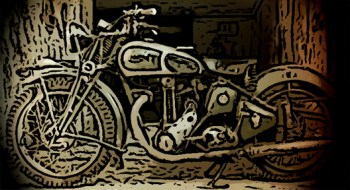 A quick once over told me that Uncle Ned and his old Indian Scout had had two things in common, they were both battered and well oiled. The tires were in need of some air, and something had been nibbling the edges of the leather seat. I rolled the motorcycle out into the backyard with a little effort. I throttled up and gave it a kick. I got a chuckle from the pistons. At least they weren’t frozen or screaming. Now that I had its attention, I gave it another go and it sputtered like it might do better next time. I goosed the gas and it caught with a loud shot and then a roar. But it didn’t last long, a cough and a shudder, and it was dead. I knew I would have to be poking around in places I wasn’t too comfortable in. But other than that, the motorcycle had definite possibilities.
 The road was familiar in that I recognized the climb toward the rolling hills across the wide open farmland dotted on either side by towering elms or stately oaks. Wild grasses and cattails, pollywogs and frogs ran wild in the ditches I liked to remember. Fields of young corn and rows of walnut trees glimmered in the sunlight. Towering white clouds edged with gray on the horizon added to the mugginess. I noticed a few flashes of lightning in the direction I was headed and figured the chances of my getting wet were pretty good. I had to get out of the open before the storm reached me. I gunned the Scout and it leapt forward like a good pony.
 Another flash of lightning revealed the old cabin as clear as if it were daylight and the thunder let out with an earsplitting bang before rolling away in a series of less loud concussions. I could smell the fried air as I hurried the motorcycle onto the shelter of the tiny front veranda. I stood there for a minute catching my breath and watching the rain wildly leaping off the eaves. The accompanying wind battered the tarpaper sides of the small cabin, blowing swirls of tree debris in every direction. Then the chill of being soaked through caught up with me and I pushed open the door to the shelter of the cabin.
 Looking behind me at the back of the door, it was where I thought it would be, the old kerosene lamp, hung on a nail next to a greasy leather apron. It was what us kids used to call the “outhouse lantern” in case it was the middle of the night and more than the spirit was moving you to unload your bad conscious and you didn’t want to be stepping on anything that might be out there crawling around in the dark. Mostly it was the adults that used it, the kids were no strangers to wetting the bed. And to my unbelievable luck, there was a handful of wood matches in the apron pocket, just like they’d always been. I carried the lantern over to the table and held it up to my ear. I heard a faint slosh. I lifted the glass chimney and sniffed the wick. There were enough fumes that it might catch. I scratched a match on the window sill and it burst to life like a sulfur flare. I rolled the flame carefully along the wick, adjusting the length. The flame leapt alive just as the match was about to burn my fingers. I lowered the chimney and the dark cabin held a warm amber light.
 The woman in the robin breast red pants suit brought the high heels of her black pumps together and looked down at her notes. A professor at a small college upstate, she had a grant to do archive research, and that had brought her to All Soul’s Care Home. The man with her was large boned, long limbed, square faced with the pale eyes of a northerner. He wore a dark blue suit that was not his, or one he had outgrown many years ago. His scuffed brown oxfords were massive. The professor had introduced his instantly forgettable foreign name which he acknowledged with an expressionless nod. He didn’t say what he did.
 When Vegas got to be too much and the man she had been living with was arrested for murder in the course of an armed robbery, she left for Reno, taking the bus upstate, all that she owned in one suitcase. Her impression of the biggest little city in the world was that it was a gritty bleaker version of Vegas, that the glitter and neon was hardly bright enough to hide the desperation of so many of its inhabitants.
 Lydia held up her own hand signaling she would comply and fumbled for her shoulder bag. There were only two of them, with her training and the element of surprised she could render them unconscious. She didn’t want to have to kill them, the viper stiletto nudging against her ribs. But that would only complicate things. Her Aerosud Executive Airship Pilot’s ID identified her as Lydia Cheése, Airship Commander, and if Doctor Serre-Pain’s words were true, the authorities within IOTA’s sphere of influence, as Oldest Orleans was, would be alerted to her fugitive status.

 Bion had looked up from his cup and said, “What you call this, Rick, coffee or taffy? The cream just sits on top.”
 He forced himself to don his sweats and stretch the aches out of his bruised muscles. He didn’t want to overdo it, but he had to get blood flowing, working out the stiffness and swelling. He had a call in with the service and made an appointment for some body work in half an hour. By then he might be in good enough shape to face another board meeting. One of the things to be broached was the renovation of the old battery works in memory to his father and founder of Bruce Enterprise. And how that would be funded through a number of grants, federal and state, as well as the charitable foundation BE WELL, founded by Trish, his mother,. He had the votes and only Harold was against it. The consensus though was that it was a positive public relations move. They could feel good being civic minded without really having to do anything, aristo cake crumbs to the plebs in proclamation of their benevolence. If Harold made too much of a fuss, he would have to bring up the toxic site review and explain what the BATS lab has discovered. Harold was nervous over the government contracts being paused while the leadership issues were being worked out. He was heading to DC after the meeting with a plane load of lawyers for a big pow-wow with Agency lawyers.
 And then there was the nostalgia market that gave new value to well preserved auto relics of the past. His fire engine red 1954 Studebaker Commander Convertible, a restoration from a barn find, and from another company that did not make the postwar transition especially after its failed merger with Packard, taking down the venerable carriage company known for its elegance and reliability. It wasn’t about quality anymore, especially if the consumer was buying a new car every year, it was about looks. Now everyone appreciated the durability of the older cars like his 1948 Chevrolet Fleetmaster Coupe, a pale green over forest green, it was built like a tank but totally uneconomical to manufacture. For personal use, the public wanted something light, fast, the kind of transportation that might appear in comic books or science fiction movies.
 The out of service number was telling him something he was convinced. Nor did he think of it as random. He knew he would obsess over it. So why not start at the source, his father’s old office in the very building he was currently renovating. He resolved to find out and suited up in his riding leathers, the most obvious conveyance to make a stealth approach to the battery works was the modified Spyder XR he kept in storage and easily accessible. The black balaclava under the lightweight off road helmet was for an especially cold longer night.
 He’d followed them, keeping to the shadows cast by the partial moon playing peekaboo with trundling clouds ready to drop more of their cold wet. They’d disappeared around a brick corner on Central and when he’d given a quick glance in the direction they had headed, they were no longer in sight. A few doors down was the entrance to the apartment space above an abandoned vacuum cleaner store. The door was open to the stairs leading up. A bare bulb flickered at the top of the landing. Unless they’d raced down to the next block where a street light illuminated the frozen air with a brilliant halo, they would have had to veer off. The stairwell was the only likely and immediate option.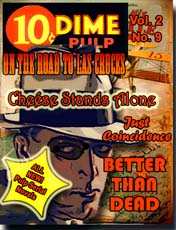
 In late February of 1908, a one-time drover, buffalo hunter, saloon owner, hog farmer, peach grower, horse rancher, US Customs inspector, private investigator, county sheriff, and Deputy US Marshal set out from his adobe home on the mesa above Organ, New Mexico accompanied by a young man in a black buggy on the journey to Las Cruces. He would never arrive. This is the story of that journey, a novel account of the last day in the life of a legendary lawman.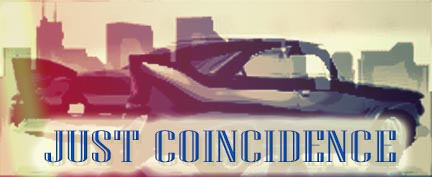

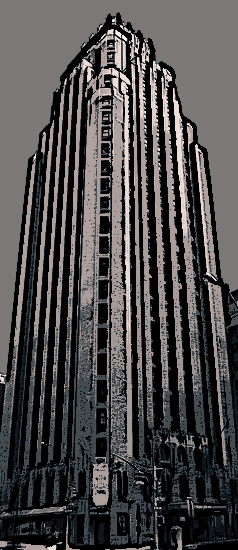
 He was occupying his father’s penthouse apartment now, a perk on the company dime. He could survey the entire city from his perch at the wide window looking out onto the marble deck of the balcony. The landing lights of a passenger jet heading for the municipal airport that the city council was now slated to vote on naming the Wallace W. Bruce Airport crossed his field of vision. The parallel arrays of lighted city streets and the winking red tail lights and white bright head light beams that travelled them. The cacophony of neon marking nightclub entertainment and dining, the garish ostentation of major brand billboards, the imposing corporate skyscrapers with their lighted empty offices emblazoned with their two story logos. Bruce Enterprise being one of the pretentious eyefuls with it cryptic minimalist brand of three horizontal lines followed by a full height vertical line and the three mirrored parallels again. BE, a minimalist icon if there ever was one. How many times had he stood at that window, taken in the night lit panorama and stopped his gaze at the office tower only to be nudged by that famous quote he often parodied: “To be or not to be is not the question.”
 The car service had picked him up and taken to the country club, his regular driver, Cornell, affirmed. That was just before ten. The country club listed his tee time for a foursome at ten. Linus Pall was one of the quartet, Aldo Ring, a city councilman, and also a name that was not familiar to him. One of the staff at the Pro Shop said she’d heard that there had been a loud argument in the locker room between Doctor Pall and another man who was not a club member but a guest. The restaurant staff served Mr. Bruce at his usual table and he had had his usual French Dip and iceberg lettuce salad with tomato and mayonnaise. And of course iced tea.
 When Wayne showed up at the club, it was closed but someone was inside cleaning up. It was a large open warehouse bay, painted black, catwalks skirting what was ostensibly a dance floor, cluttered with the debris of the previous night’s activity. There was a bar near the front of the door. The man sitting at the bar stool with the push broom in his hand was the manager as well as one of the bartenders, the DJ, and sometimes the doorman. His name was Peter. He’d looked at the corporate photo of Wallace Bruce and shook his head.
 Accompanying by his cogitations, Wayne’s pacing in the book lined study had brought him in front of the gas fireplace and the large portrait oil of his father that hung above the marble mantel. The old man hated the painting Trish had made him sit for as a mark of his status as a captain of industry. Old Dad had made many disparaging comments about the painting, particularly at the pretentiousness of such a display, and had hidden the canvas at the back of the wardrobe in master bedroom of the penthouse. Wayne had found it and restored to its spot above the flickering flames of the fireplace.
 Dime Pulp