All posts by Nuallain House, Publishers

The Last Resort, CHPS 7-10

Chapter Seven
NAKED TREES

Soon enough the rains came.  One storm after another marched in from the Pacific and like stiff wind-driven brooms swept all the leaves off the trees.  Leaves gathered in sodden lumps, blocking culverts. Water spread across roadways from the overflowing ditches.  Unprepared downspouts spit like spavined lunatics. Roiling creeks swirled gray with stirred sediment. Soggy downpour days took the heart out of jogging for me. I didn’t fight the urge to curl up on the divan with a fashion magazine or a mindless novel, the gas hearth exuding comfort like a purring cat. The horrible events of the previous week hadn’t been washed away by the dramatic change in the weather, however.

Detective Santos had taken my statement at the crime scene.  Gray at the temples, an inch or so shorter than me, and handsome in a rugged world weary way, his dark eyes fixed me with a studied gaze as he asked his questions.  He jotted notes. He was primarily interested in the timeline.  What time had I arrived at Kelley’s?  What time had I left home?  Had I stopped anywhere along the way?  What was my business with Fashwalla?   When I told him I wrote for the Grapevine, he asked if Ms. James was still the publisher.  Apparently he knew her from a tour of duty he’d done as a deputy at the substation in Timberton.  Years ago.  I caught a hint of something in that information.  Nothing specific, but a woman knows.

I had also voiced my suspicions about the gray van and its occupants. They might have had something to do with Fashwalla’s murder. He’d given me a skeptical squint. “Ok, I’ll make a note of that.” He closed his notepad and stuck it into the pocket of his windbreaker. “I have your number. And please, give me a call if you can think of anything else.  You have my card,” he said as he walked away.

The phone rang.  It wasn’t Detective Santos.  A voice teased, “Bet you don’t know who this is.”  The voice was familiar.  It came from a distant past.  It wasn’t the first.

The publicity from the murder put my name back in lights.  There had been a flurry of phone calls from relatives, old friends, and long forgotten business associates. The reporters from the entertainment media were the worst.  When I didn’t give them what they wanted, they stopped calling.  It took about a week.   JJ called excitedly one evening to tell me that Star Watch had actually insinuated that I was a suspect in Fashwalla’s murder. That had been followed by a panicked phone call from my mother. She must have seen the same show. Then I got a lecture about how inappropriate it was for a grown woman to seclude herself in a shack in the wilderness. The Santa Quinta Daily Republican was much kinder.  They called me an aging former fashion model. That said it all.

The voice continued.  “Don’t tell me you don’t recognized me, missy!” The edge of exasperation was a clue, and only one person called me “missy” and got away with it.

“Rikki,” I said, “so good to hear from you.” Rikki Tanguy had been one of my hairdressers when I was on the Paris, Berlin, Milan, Budapest circuit.

He snickered.  “What’s this I hear, missy, you’re stabbing people in the back?  I thought you retired from the fashion world!”

Rikki thought he was amusing, and sometimes he was.  “I had to get your attention somehow.  The only time you call me is when I’m in trouble.”

I heard him sigh into the mouthpiece. “Well, truth or dare, missy, I wouldn’t have called at all but I’m languishing in a motel room in Santa Quinta.  I’m here with a production company shooting a commercial.  This ghastly rain is creating a disaster with the talents’ coifs and I saw that atrocious item on Star Watch which, believe me, honey, is not you.  I mean, you get high marks in the girl beauty category and all, but very poor in the girly cat-fight-back-stabbing department so I thought why not, I’ll give her a call.  She probably needs a shoulder to cry on.”

“Rikki, it’s all right, I’m fine.  And thanks for your concern?  I think that’s the word I want to use.”

“Listen, girlfriend, I’m bored to tears playing tic-tac- toe with Wallace in this stuffy motel room.  I need to get out or I’ll go crazy! How do I get to your god-forsaken part of the world?  I’m coming out for a visit.”

I gave him the address and directions. Highway 8 from Santa Quinta to Timberton, left on Oak Lane to Vine, right on Vine, up the hill to Primrose Lane, Primrose to the end and Quince.  My cabin was on the corner of Primrose and Quince.

“Primrose, Quince, how quaint, how tres rustique as we used to say in Paree.  I guess it’d be appropriate for me to say I’ll be out there in two shakes of a lamb’s tail.”  Poor Rikki, he hardly ever said anything that didn’t come from someone else’s mouth.  An old friend, but still a walking cliché.

I stared out the window after he hung up.  The rain had stopped and I saw my neighbors who lived on Primrose, Rhonda and Ward, with rakes and shovels working to unplug the culvert in front of Rhonda’s driveway.  Rhonda was a silver haired sixty-something with a ready smile and a loud cheerful voice who always seemed remarkably uninhibited.  She had known my stepdad, Frank Zola, when he used the cabin as a retreat from the world of “stock breaking” as he used to call it. Ward lived with Anna, Rhonda’s neighbor on the upside of Primrose Lane.  I watched as Anna came out to join them.  Anna was close to Rhonda’s age, her raven tresses streaked with white. She was not as gregarious as Rhonda, but certainly pleasant enough when I had a chance to talk with her. She and Rhonda had been in business together before retiring to Corkscrew County.

I busied myself with tiding up the living room and putting the breakfast dishes away.  I replaced the towels in the bathroom with fresh ones. I fluffed the pillows on my bed and straightened the seams of the bedcovers. I ran a brush through my hair twenty six times. I glossed my lips. I put a kettle on for tea, though knowing Rikki, he didn’t drink only tea. From the top shelf of the cupboard, I pulled down the half full bottle of vodka that had been half full when I moved in and dusted the narrow shoulders.  Soon I heard the sound of a car out front.

A black SAAB had pulled up behind my Volvo in the driveway.  I stepped out onto the porch and waved at Rikki and his friend. Rikki had lost some weight and more hair. His friend was a lithe, younger Asian man. Rhonda, Anna, and Ward, still examining their handiwork, looked up and waved.  I waved back.

“You didn’t waste any time getting here,” I said to Rikki as I hugged him and invited them into the cabin.

“The hellhounds of boredom were on my trail.”  He looked around the cabin and sniffed, “But dearie me, I believe I’ve stumbled into their lair!” He handed me an unopened bottle of vodka with a flourish. “For you!  Happy reunion!” And proudly, as if displaying a prized possession, “This is my friend, Wallace Toms. He’s the make-up artist, or artiste, if you prefer, with the production company. Wallace, this is the once fabulous Lee Malone, queen of runways from New York to Paris, Milan to Madrid.  Let this be a lesson to you, dear boy, the next time you put on airs, how far the great can fall.”

Wallace smiled wanly.  “Enchanté,” he said, seeming a little distracted.  I usually don’t have that effect on gay men.  Rikki gave him the hairy eyeball.  Finally, he indicated outside with a discreet motion of his nicely coiffed head, courtesy of Rikki, no doubt.  “Those people out there, on the street, do you know them?”

I was a little perplexed at first. “You mean Rhonda and. . . .” We had come to stand by the window overlooking the street where my three neighbors were casually chatting.  “Ward and . . . .”

“Oh my god! I thought I recognized her!”

“Who?  What are you talking about?”  Rikki did his impression of an agitated owl.  “Who, who?”

“Rikki,” Wallace hissed, “Rhonda. . . .”

“Oh my god, you’re right, it is her!  The Blonda. . . .”

“La Londa!”

“What?” I still didn’t get what they were talking about.  “What?”

“Remember her in Help Me, Rhonda?  She played a nurse who helped men who were, ahem, sexually dysfunctional?”

“Remember! I was make-up on that set!”

“You’ll remember that particular gooey goody starred Wardell. . .”

“The Wad!”

“Ward?”

“Mitchell!” They exclaimed in unison.  I was starting to get the drift, but unwillingly.

“And the dark haired woman, what’s her name?”

“Anna.”

“The banana queen!” Rikki exclaimed triumphantly.

Wallace rolled his eyes. “Oh, what she did with a banana!”

“Well, she did star as a fag hag in one of my favorite movies, United Fruit,” Rikki said dreamily.

“Oh yes, the one with little Jimmy Handcock. . . .”

“Nothing little about Jimmy.”

“I know. . . .”

I looked from Rikki to Wallace and then to the trio in rain gear on the corner of Primrose and Quince.  Was I to believe my neighbors were porn stars? 

Chapter Eight
RAMBLE IN THE BRAMBLES

“Honey, we both made money with our bodies.  You made yours with your face and I made mine with my. . . .”  Rhonda’s words splashed up like the roadside puddle I hadn’t seen. I was running again. The air was thick with the sweet scent of post-storm decay.

I had to admire Rhonda’s candidness. After Wallace and Rikki had gone over to reacquaint themselves, more out of morbid curiosity than auld lang syne, I invited them all in for a drink. Anna and Ward had demurred, but Rhonda was game, and held us spellbound with her anecdotes of life as a porn actress. She was still very sassy and loved to shock as her racy stories demonstrated.  I’m not one to blush, but there were a few times my cheeks burned accompanying my hearty laughter.  I respected and perhaps even envied her tenacity, her toughness. Eventually Wallace and Rikki, having been drunk under the table by the old gal, passed out on the pullout couch and snored away like babies with apnea.  It was then that she spoke those words.  It was a truth I wasn’t going to deny.

I’d awakened, that late night a few days in the past, to the sounds of sirens but once I looked out the window I just assumed that they were clarions to celebrate the gorgeous sun smacked day.  I hurriedly downed my coffee, brushed my hair back into a ponytail, excited at the prospect of running again, and slipped into my jogging togs.

The first few breaths were crisp and cold and I savored them like fine nectar.  Soon my lungs ached with exertion, but it was a delicious ache.  Sweat trickles bumped down my rib cage, the fine hairs at the back of my neck damp, and tiny rivulets traced a course past my ears over my cheekbones to my jaw line. I was light on my feet and feeling as good and gorgeous as the day. Nothing was going to stop me.

Running always cleared my head, and like the fabled blonde, there was nothing behind my striking blue eyes.  Eventually, in rhythm with my breathing, images, like the shadows of hand puppets, imposed themselves on the blank slate. One reminded me of JJ.

JJ, thanks to my recent notoriety, now saw me as an asset rather that a pest and had taken me under her wing.  Not that I particularly cared to be hovered over.  It reminded me too much of my mother, my agent, my boyfriends, my accountant, my lawyer, my mother.  JJ had made me associate editor and placed my name below hers on the masthead, and above those of the regular contributors, some of whom had not penned a word for the Grapevine in years. And I continued working on the dog murders even though JJ had her reservations. The questions she asked when I let her see rough drafts only made me want to dig deeper. I had already met with Deputy Sheriff Charles Randall.

Deputy Randall was nothing if not beefcake, a steaming hunk of virile masculinity.  In his late twenties, with luminescent green eyes that seemed even more vivid set against his coffee complexion, he had a bright naïve knee-weakening grin.  Had he lived in Los Angeles, he’d have been a top model, a movie star, a gigolo, he was that stunning of a specimen.  I was almost old enough to be his mother.  He took his job very seriously.  Had I been his mother, I would have been very proud.  He was reluctant to share the results of the investigation with me.  I did learn, however, that half a dozen dogs had been killed over a three-day period, Goldstein’s Airedale and Creasy’s German shepherd among them. Maggie March over at Animal Control was much more helpful.

Maggie was a large gruff woman who carried her weight well. I had watched her expertly wrestle a reluctant mongrel into a kennel before she faced me to answer my questions. She was matter of fact with her answers. There were actually more than six dogs shot to death. The Sheriff was looking into reports of dog shootings that dated back a couple of months.  All in Corkscrew County.  She’d heard that they were also looking into animal shootings elsewhere.  There didn’t seem to be a common thread. The dead dogs were an assortment of mutts, mongrels and purebreds, large and small.  Some of dogs had been the sole companions to the elderly.  She didn’t understand why someone would do something like that.  And she wanted to know if I was that fashion model who had been in the news a while back.  When I admitted to it, she cocked her head to one side with a bemused smile and a look that said, “what’s that gotta be like?”

I made the turn onto Elm barely slacking my pace.  The brambles in the ditch glistened, draped with curled brown and yellow leaves from the bare trees above them.  Long blades of resurgent grass drooping with moisture beamed a hopeful green.  I was back in the flow, running with the world, as if my feet turned the planet with each step on the rain-damp ribbon of asphalt.

I sailed past Goldstein’s.  I’d heard that he’d taken a turn for the worse.  His daughter had come to stay with him for a while. She was planning to put him in a home. No smoke came from the chimney of his tiny green cube of a cabin. The windows were dark, blank, blind, vacant.  I felt an ache that had nothing to do with my running.  Then I noticed the wisps of dark smoke hovering over the tree line in the distance.

I smelled it first, the acrid stench of burning plastic.  When I came around the corner where River Way turns into Willow, a blind curve obscured by a thicket of bay and wild wisteria falling off into the steep sides of the creek, I saw the patrol car, the fire engine, the ambulance, and the tow truck.  The tow truck was poised to back up into the blackberries near where lazy strings of sooty smoke gathered among the treetops. As I got closer I saw Deputy Randall standing by the open door of the patrol car talking on the radio. I thought of stopping to say hello.  But he looked busy.  The paramedics, the firemen, the tow truck driver watched as I approached at a clip.  They were smiling as if what they were seeing gave them pleasant thoughts. I smiled back at them as I passed.  Their smiles brightened, brains blank with pure pleasure.  It’s atomic in its effect, my smile.

I glanced in the direction of the smoke.  There appeared to be a charred, boxy hulk of some kind of vehicle.  I kept up my pace, resolved to mind my own business and made to pass by the front of the tow truck partially blocking the road.  Then it occurred to me.  I’m a reporter for The Corkscrew County Grapevine.  I can, in an official capacity, ask what is going on.  Deputy Randall, filling out his tan and green uniform so uniformly, looked too intense as he spoke urgently into his police radio. I decided to try one of the firemen, an older man.  He eyed me suspiciously.
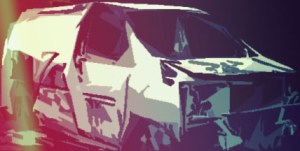
When I explained who I was and it suddenly dawned on him that I was the one who had been in the news, he took on a tone of fatherly authority. That’s the way it usually works with older guys. They figure if they can’t be my lover they might as well be my daddy.  Apparently there were, as he put it, crispy critters in the vehicle, bodies, so they had to wait for the coroner. I focused in the direction of the hulk of smoldering metal half hidden by the undergrowth. It was a long rectangle, like a van. I stepped a few paces forward to the edge of the bramble bank and strained for a closer look.  There was a round hole in the upper rear panel.  Below it, a tear of melted plastic adhered to the scorched and mottled gray paint.  It was the van.  My van!

“It’s the gray van!” I shouted at the fireman.

He smiled, weakly, unsure of the proper response.

Chapter Nine
COLD SNAP COLD TRAIL

I looked out over the raw silver of neighboring rooftops, my first cup of java warming my hands. A pale sun streaked the frost-gripped vegetation in the vacant lot across the way.  Blue gray shadows sheathed my side of the road.  I turned slowly in front of the gas heater, doing what the natives call “the California rotisserie.” My mind was occupied connecting the dots.

First there were the dog shootings that I tied to the gray van. Then Fashwalla’s murder, again connected to the gray van.  And finally the van itself, torched along with its occupants. To my mind these were more than just coincidences.  I’d left a message on JJ’s answering machine outlining my suspicions.  She’d been after me to finish a puff piece on Barbara’s Bakery to keep it from going out of business.  I knew I’d never be that good of a writer.  To her greater consternation, my dog shooting story was becoming “labyrinthine.”  That was JJ’s adjective.

The phone rang.  It was a little early for a social call so I guessed that it was her.

“I have some bad news, Lee.” She tried sounding appropriately sad.  “They made an arrest in Fashwalla’s murder.  His brother.  Apparently a business deal gone sour.”

I didn’t want to believe it.  “How can that be?”  The fine web of intrigue I had woven was unraveling like an old hairnet.

“Incidentally, have you finished that bakery piece?”

“How can we be sure they’ve got the right guy?”

“Who knows with cops?  Maybe they’ve heard that ninety percent of all murders are committed by relatives.”

“Something’s not right. . . .”

“And besides, if they can make the case, the guy is guilty.”

“I’m not buying it.  What about the medical examiner’s report?”

“They’re not releasing much. I only heard about it because Miss Nobody from the Daily Republican called to ask me for a comment on the story for tomorrow’s edition.” She paused.  “She really wanted to talk to you.”

“I can call her back.  What’s her number?”

“I took care of it.  Besides, do you think that Miss Big Time Reporter really cares what you have to say?  She’ll only use one or two sentences of the interview, just enough to make you sound stupid, and then she’ll misspell your name.”

JJ was starting to whine. I had to get off the phone.  “I’m done with the bakery piece. I’ll bring it down later this morning.” I was lying. I was going to have to throw something together in a hurry.

Frost had etched crystal patterns on the roof and down across the windshield of my Volvo.  I watched it melt, slowly, defroster on full blast.  Once I got going, it didn’t take me long to realize that sections of the road were slick with black ice.  The orange glare of a late rising sun was just topping the rows of dark leafless silhouettes as the road turned east toward Timberton. A compact sat with its rear wheels spinning, nose in the ditch. I slowed.  A face glowered from the driver’s side window.  I felt the back wheels of the Volvo slip and then grab.  I thought to stop but, as luck would have it, the pickup behind me slowed and flashed its hazards.
The anger on the driver’s face seemed directed at me, like it was all my fault, the freezing temperatures, the ice.  My thoughts turned on that odd reflection.  I had been called an ice queen, aloof, unsympathetic, freezing people out.  Personally I thought of my demeanor as radiant, more often too bright for mere mortals.  I believed in the power of my beauty and the access that it allowed.  And I used it.  The downside was that everyone thought I was unapproachable.  And manipulative.  That wasn’t the real me, though at this point I was still a little fuzzy as to who the real me might be.  Still, I could have been cashing in on any number of aging model endorsements, all legit.  Instead I was writing flack for a two bit rag out in the middle of nowhere for a woman with a serious sugar habit.

A square pink box sat open at JJ’s elbow, half a cruller among the blots of icing and grease.  She held her hand out for the puff piece after hastily wiping it with a napkin.

“Good, good.” She nodded and sipped from a styrofoam cup. “Hmm.” She looked over the chaos of her desk and found the red pencil.  Then she looked for a place to set her cup.  There was a narrow patch near the edge of the desk and she set it down like a Piper Cub gliding into a jungle airstrip.  Unfortunately, she misjudged.  The edge of the cup caught the bulge of a fat envelope and the contents spilled across the page I had just handed her.

JJ moved remarkably fast, like this had happened before.  The beige liquid dripped over the edge of the desk.  She found an old scarf to sop up the spill, muttering apologies mixed with curses.  She held up the baptized page, regarding it, head cocked to one side, with distress.  “I’m so sorry,” she intoned.  Then all sweetness and light, “Can you type up another copy?” She fumbled in the pocket of her oversized sweater and extracted a crumpled bill. “And can you go down to Barbara’s and get me another coffee? Cream, three sugars.”

I had stopped paying attention to her.  Among the papers I had saved from the au lait deluge was a press release from the Sheriff’s Office.  It was two paragraphs long.  One named the suspect, Faheed Fashwalla, the deceased’s brother, age 29, resident of Santa Quinta. The second dealt with the fact that the case had been turned over to the DA for indictment.

“This says nothing!” I eyed the dollar bill JJ had placed on the desk in front of me.

“What do you expect?  It’s a press release.” She was looking for a place to deposit the sopping scarf.

“I’d expect it to say what evidence they have against him.”

“That’s not likely.”  She gave me a little self-satisfied smile.  “But not to worry.”  She eyed the remaining section of donut.  “I’m having lunch with Detective Santos today.”

I guess my disappointment was evident.  I’d been trying to get an interview with him for weeks.  Why wasn’t I having lunch with him?  I had discovered the body.  To my mind that made it my story.

“Now, now, in the meantime, I have an important assignment for you.  I need you to find The Countess.”   The name ‘countess’ didn’t register right away. I’d known so many.  “You know, the Countess, the crazy women who distributes the newspapers for me.”

“She’s missing?

“She hasn’t come by crying for an advance on her paycheck and that’s unusual. And she has to distribute this week’s Grapevine. Try The Blue Ox, someone there might know where she is.”  She noticed my hesitance.  “Use the force, or whatever it is you call it.”  She seemed to be taking perverse pleasure in the fact that my conspiracy theory was falling apart.  “By the way, I forgot to tell you.  They determined that the van fire was an accident.  Faulty valve on the propane tank for the portable stove. They still haven’t identified the victims.”

I was beginning to feel like Nancy Drew.  Find the missing Countess?  She had to be kidding.

“Oh, and don’t forget the coffee!”

Chapter Ten
BABE IN THE BLUE OX

The Blue Ox was a cinderblock bunker painted a neon blue that gave it the look of a very large radioactive brick.  The last big wind storm had caused the rusty representation of the ox on the roof to break from its rear mooring, pitching it forward and miming a nosedive to the pavement below.

Contemplating suicide, I thought to myself as I crossed Main Street.  I was accompanied by an irksome suspicion.  JJ was having lunch with Detective Santos. She knew I had been after him for an interview as a follow-up on my theory that there was a connection between Fashwalla’s murder and the dog shootings. And she had brushed off any suggestion that there had ever been anything between her and Santos while he was a deputy assigned to the Timberton substation. I wasn’t convinced. I had called his office on numerous occasions and thought that I had finally secured an appointment. He said that he’d get back to me to confirm it.   And now she was sending me off on a fool’s errand?  If I didn’t know better I might think she was trying to steal my story.  Maybe I didn’t know better.

The Countess would be hard to miss. Pushing six feet tall, a heap of dirt brown hair piled high on her head and eye makeup the envy of local raccoons, she was often seen stalking Timberton attended by a Russian wolfhound and her male companion, a tall wiry shadow who resembled an exploded chimney brush.  I’d run into her a few times in the Grapevine office. She claimed to have come from Russian aristocracy living in exile in Paris.  When I tried to engage her in a bit of conversational French, she claimed that she had stopped speaking Russian years ago because of, as she hissed, “the Communisssts!” I figured then that the Countess was more likely from Poughkeepsie than Paris. Her accent gave her away, a froth of nasal New Englander and Natasha of Rocky and Bullwinkle.  The dog’s name was Tarzan and her mate was called Puppet.

I pushed open the door to the Ox and brought the light in with me.  A few of the gargoyles supporting the bar blinked. The light hovered around the shoulders of my yak skin jacket like an aura, catching the highlights in my hair and the gold of my earrings. The bar room was a low ceilinged affair or I was just feeling taller in my ostrich skin western style boots.  My motto has always been “dress for any occasion and any occasion calls for a dress.”  Mine was a modest number, a little something I had picked up in Monte Carlo.  It was red and black. I called it my roulette dress because it spun men’s heads

The place stank of cigarettes, stale beer and indigestion. I had dabbed a little Eau d’Or, my fabulously expensive French perfume, behind each ear earlier that morning but it was hardly enough. In the smoky haze off to my right I noticed a hulking shadow circling a green felt table.  Fluorescent lighting lit the grubby mirror behind the bar.  The bartender didn’t even look up from his newspaper at the far end.  A guy with a baseball cap propped on the back of his head was making faces at himself in the mirror, one hand around an empty beer mug.  He looked up at me, squinting, as if seeing me hurt his eyes.

I set my silk Sauzeer designer purse on the bar next to him.  “Buy you a drink?”

His expression said he wasn’t sure he’d heard me right.  I smiled and watched it happen. Suddenly the image he had of himself, not the one he’d been grimacing at in the mirror, but the one that lived between his ears, his self-image, was rapidly being re-assessed in a sudden fit of self-consciousness. Then the realization that he hadn’t shaved, showered, brushed his teeth or changed his underwear in more than a week dawned on him.  He was unprepared to be the stud he thought he was.  His face tightened as if in some desperate resolve but his lip quivered and gave him away.  “You drive that Volvo.”

I wasn’t surprised that he babbled.

“I don’t do Volvo’s.”

“Really?  That’s absolutely fascinating.”

He averted his gaze and stared at his hands.  “Mike,” he grunted at the top of a belch, “Mike, the mechanic.”  He threw a thumb over his shoulder indicating his shop across the street.  “I don’t do foreign cars.”

Our musical repartee had stirred the bartender.  The other denizens were craning their necks and looking down our way, suddenly alert.

“What’s it gonna be?” he asked as he sauntered over.  He was a large balding man with yesterday’s five o’clock shadow on both of his chins and a big belly his dingy t-shirt did nothing to hide. He fixed me with the passive gaze of someone who had seen it all.  He held a toothpick in the corner of his wide leering mouth.

“Beer for my friend.” I retrieved a bill from my purse. “I’ll have a bottle of your finest champagne. This twenty should cover it.”

Mike the mechanic didn’t know the whereabouts of The Countess, whom he referred to as the “gypsy witch,” nor did he much care.  He also informed me a few more times that he didn’t work on foreign cars.  He sucked at the suds of his full glass. A fleeting shadow crossed his brow. He’d just had an idea. It was that idea. The set of my lips told him he didn’t have a snowball’s chance.

I watched the bartender bending the ear of a man whose pointy chin seemed welded to his breastbone. He gave what passed for a nod and stepped over to the cue holding troglodyte at the pool table.  They exchanged words and the pool shooting brute sent a mean glare in my direction.             The champagne was flat. The bottle, however, was genuine heavy glass, a handy weapon and the secret as to why smart women always order champagne by the bottle.

The pool cue preceding the hairless gorilla resembled a large pencil in his mitt.  His shoulders strained the seams of a too small t-shirt whose faded slogan read “Ask Me If I Give A….”  Maybe it was the size of his head that made his eyes seem so tiny. I could only imagine what made them red.  I couldn’t imagine where he’d find the space to put his next tattoo.

“Why you askin’ after the Countess?” He got a little closer than I cared and his body odor told me that I was in the presence of a diehard water conservationist.

I grasped the champagne bottle firmly by the neck.  “Would you care for a glass of champagne?”

He wasn’t amused. “Don’t be stickin’ your nose in somebody’s business.”

I tried to make sense of what “somebody’s business” might be.  After all, I had only come looking for the Grapevine’s gofer. She hadn’t shown up to distribute this week’s edition, the one with my review of the sculpture show at The Mongoose Gallery. His reaction seemed overly dramatic to my way of thinking. My smile had little effect. It annoyed him, like having a mirror flashed in his eyes. I figured it was time to make an exit and take my champagne bottle with me.  It had a good heft as I dropped it down to my side at the ready. He caught the intent and grinned sadistically as if he had snared me in his trap. The use of force was his turf.  He stepped with me as I backed to the door. He was telegraphing his moves and I calculated the arc of my swing. Then he stopped, the sneer on his face replaced by a look of puzzlement. I too stopped, having bumped against a presence behind me.  I turned.  He was a tall man with a full head of silver hair.  He held an aluminum baseball bat against his shoulder as if he were readying to step up to the plate.
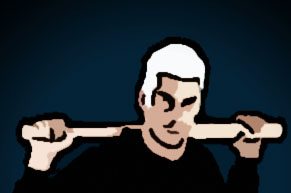
“Hello, Lee,” Blackie spoke evenly.  He was the owner of Blackie’s Antiques and Motorcycle Repair Shop downstairs from the Grapevine office. He kept his eyes fixed on the pool player. “I got curious as to why a nice girl like you would want to come into a dive like this so I thought I’d follow you over.”

I nodded at the bat over his shoulder.  “A little early for baseball season, isn’t it?”

“Never too early to bat a few balls around.”

No one objected as Blackie held the door open for me.  I stepped out into a steely gray overcast threatening more winter rain.

Next Time: Motorcycles, Antiques, & a Missing Countess

A Detective Story—3

by Colin Deerwood

I took the bus cross-town. I rattled around in the dim interior like a wooden pin, the only passenger. Raindrops slammed and squirmed into the black window reflecting my battered mug. The swelling had gone down and the bruises on my face were beginning to ripen. The egg on the back of my head had shrunk down to “over-easy.”  I had to take care of first things first. Della’s problem had sidetracked me. I had to get back what little self-esteem I had started out with and that meant I had to settle my score with Kovic and his goon.

There was a little Polish eatery over on 10th that Kovic frequented. Rain was still pouring down when I got off the bus and opened the umbrella. Occasionally a flash of lightning would send a clap of thunder rebounding down the brick canyon. I kept my hand on the butt of the revolver in the pocket of my overcoat. The drops were bouncing knee high off the sidewalk. I found a dark doorway across the street with a good view of the restaurant and settled down to wait.

It wasn’t long before Kovic’s limo swung into view followed by a big blocky sedan carrying the troops. They all hurried inside except for one guy who stayed in the car as a lookout. He wasn’t the one I wanted.

I waited. The rain kept up. The night passed. There was a street light about two doors down. It illuminated the scene in some places. In others it made long shadows. Finally I recognized the shoulders and square head of the gorilla I wanted. He ducked into the sedan, which rocked with his weight. Then the driver’s door swung open and the other mug got out and made a dash for the restaurant.

I waited till the door to the eatery closed and then stepped out of the shadows. I walked up behind the car and knocked on the window staying just behind his shoulder. He had to crane his neck and wipe his breath off the window. Finally he rolled it down.

“Whadyawant?”

I showed him the cigarette in my mouth. “Gotta light?”

He scowled and gave me a hard look. That must have been when he recognized his handiwork. He startled, eyes splayed open and his mouth followed seconds later.

I popped a slug into the dark cavern of his jaw and he slumped forward. I reached into the inside pocket of his coat and extracted his wallet. It felt as thick as a pocket dictionary. My umbrella had shielded the muzzle flash and as I edged away, I dropped the pistol into his lap. Maybe they’d think it was suicide.

I walked away pulling off my gloves. I made it around the corner before anyone came out of the joint to investigate whether it was a backfire, thunder or a gunshot that they’d heard.

My luck seemed to be changing. A yellow cab was dropping off a fare. “Grand Central,” I told him. We were there in no time at all. I pulled a page of currency from the wallet and told him to keep the change. He wasn’t sure.

“Whatsis? A gag? I want some real money.”

No matter how much I assured him, the cabbie wouldn’t take the hundred-dollar bill. I had to fish through my own pockets for the right change. I came up a nickel short. The guy was giving me the mean eyes.

“Gedoudayere!” he said finally.

Day and night Central Station is packed. I shifted from foot to foot in line to the ticket window. I kept glancing back at the revolving doors expecting an army of Kovic’s goons to come charging through, Tommy-guns at the ready.

The clerk wore a mask of complete indifference. He leafed through the pages of the large book at his elbow and quoted me the fare and departure time. I spread the bills on the marble tongue of the ticket window. He, in turn, folded, stamped, and inserted the ticket into an envelope marked with the Railroad’s insignia.

I walked out onto the platform. The din was incredible. People on the platform pushed by each other, maneuvering around clots of humanity standing in one spot, saying goodbye and trying to make themselves heard above the noise of locomotives shuffling and bumping cars around. The railroad men signaled with their lanterns and the engineers answered with a nod of the head or the wave of a hand.

What I first recognized was the back of her head, the way her hair, a shiny lustrous blond, defined the shape. I pushed past a family bidding farewell to their uniformed son and caught up with her.

“Grace?”  I was positive it was her. I wanted to tap her on the padded shoulder of her fox fur.

She turned a sidelong glance on me. It was Kovic’s hop head daughter. I couldn’t believe I’d made that mistake. I felt as if I should rub my eyes, but I just blinked. Then she was Della and she turned to me with a slow seductive smile.


I woke sitting straight up, sweat pouring out and over me, my undershirt drenched. I was going to have to change my shorts. Some dream.

I untangled my legs from the sopping bedcovers and threw them over the side. The cockroaches weren’t expecting me and scurried off to the corners when I pulled on the light. I looked at my face in the discolored mirror above the cracked, stained basin that often doubled as a urinal when the urge was too urgent or I simply didn’t have ambition to make the trek down the hall. My face didn’t look any better. But it was returning to normal.

I thought of climbing back into bed. A pale light was leaking in through the rips and tears in the blinds and around the frayed edges. Morning. No going back on what I had decided to do. I was determined to get my life back on track. First, the matter of Kovic and his wise guys. Then, Al’s sister.

I threw my arms into the sleeves of my burgundy bathrobe and headed down the hall to the shower. I was gonna start off clean.


Occupied. The sound of rushing water, steam curling up from under the door. Oh well, on to the next option.

My old man, he was a seaman and knew about these things, said that just like any other animal we’re always on our guard against predators, be they physical or supernatural. We’re all predators so we should know. And we’re the only ones who prey on the guts of our own species. He was a philosopher of sorts, my old man. He said that this caused us to close up the unconscious so as not to allow the real and secret self to be vulnerable to predation. There are these shields around our unconscious that don’t allow our real selves to come out unless we’re drunk, stoned, sleeping, or hypnotized, he said. He liked to repeat himself, my old man.

There are an infinite number of ways of expressing yourself, he’d say, why not try it. Repetition is the pulse of the universe. It’s so awesome that it terrifies us, which is where we get the word “repulse.”

Once you got my old man going there was no stopping him. No matter how far afield he wandered, he always came back.

“Only one other instance when we let those mental shields down,” I could hear him say. He would pause for effect at this point. “Yup, only one time. ‘ats when you got your dick in your hand and gonna pee. Or when you squat to shit.

“Just working the release on the old sphincter or bladder requires all your concentration. All of a sudden your guard is down and all this stuff comes pouring out. Great ideas, improbable inspiration, solutions to problems, all sorts of things. The greatest minds have all had their inspiration while sitting on the pot. Luther, Einstein, Picasso, Ford, Pythagoras, Archimedes. The great dialogues of philosophy were all conducted on the way to or from the shit house!”

He liked to exaggerate, my old man. He was always saying we should use language to its fullest capacity. Fact is but a seed from which the truth will grow. He was full of shit, my old man. One day he flushed the toilet and went down with the rest of it.

I watched the waters swirl in the yellow, blotched bowl. I knew what I had to do. Shave.


I pulled on a heavy peacoat and fit a stocking cap on my head. A pair of my rattier shoes and I looked like any mug that’d likely be drifting around the riverfront docks and warehouses.

Kovic’s turf was the waterfront. He ran the longshoreman action. He was king rat on the East River. And that’s where I headed. On the way I ran into Alice.

She was coming up the steps from her basement apartment. She had a thin hand on the black pipe railing and was stepping up onto the sidewalk. She fixed me with those deep sad watery eyes of hers. “Hi, Lack, where you off to?”  So much for my disguise.

We went for coffee down at Hopper’s Diner. Her long pale fingers wrapped around the thick white cup. She stared into the depths of the black coffee. It was a while before she said anything. But when she said it, I knew what she was going to say. “Have you heard from Grace?”

Grace was my ex. Alice and she had gone to school together. Alice had married Grace’s brother, Ted. Then he died. That made Alice a widow. Then I died for Grace. She moved to Hollywood. That made her a divorcee.

“No.”

Alice gave one of her sighs and lapsed into more silence. Sipped from her cup, pensive. Her bobbed hairdo fell around her ears like the puff of pantaloons and she was gazing out the window when she said, “I was more alone than I could have ever imagined when Ted died.”
Ted was one of those starving artist types, a small time painter who designed calendars and repaired furniture. He sold bits and pieces of himself just to survive so he could continue doing the same thing over and over again. I never saw any point in it. He also liked to take pills. Something else I never saw any point in. Alice wasn’t an artist. She was a starving widow.

I was depressed enough as it was. I held her limp hand in mine as I got up to leave. I slipped her a fiver. “Pay for the coffee, will ya?”


The Bucket Of Blood was the watering hole Kovic liked to operate from. It was a waterfront dive. The floor was covered in sawdust. The dominant cologne was obviously eau d’urine and essence de fart, and was favored by most of the splinter faced denizens. A haze of cigarette smoke topped the atmosphere like foam on the surface of fermenting juice. The din created by the inhabitants of this festering tide pool was about as soothing and pleasant as a herd of lovesick sea lions, and just as loud. I ordered a beer and found a corner in the shadows where I could keep an eye on the door at the top of the stairs where Kovic had his office. I’d been there before. I knew if I went in I’d recognize the red shag carpet. I didn’t have a plan. I just wanted to get even. I’d play the rest by ear.

I was just about to drain the last of my beer when they walked in. They stood out like terriers in a cat show. They were feds. None of the local gendarmes had the money or the taste for those suits. First there were just two, then six. I caught the bartender reaching beside the cash register for the alarm button. The hubbub had subsided to a murmur. The guys had obviously not come to drink. I spilled the rest of my beer down the front of my coat and staggered to the door. The clot of feds parted to let the drunk pass.

Outside, the street was crawling with suits. I brushed past one and he called to me. “Hey! You!”

Since that wasn’t my name I continued my stagger down to the alley next to the saloon. Once around the corner and in the dark between buildings, I put on speed. The alley was a dead end, a high wooden fence blocking my escape. Over the top went to the East River. Off to one side of the fence was a ladder going down through a square opening in the boardwalk. The fed was being a bit more insistent. “Hey, you, stop! I want to talk to you!”  He had his flashlight out and shined it on me as I hesitated before dropping down through the deck. As I did, I heard shots come from the saloon. The feds had not met with a friendly reception.

Under the wharf there was at first darkness. Then the glow of a red bulb showing toward the outer pilings, and a speedboat parked under it. There was a guy in a watchcap and peacoat standing by it, ready to cast off the line. He didn’t hear me behind him. I used my gat on the back of his head. He slumped to his knees and I rolled him off the catwalk into the water. I climbed into the boat and found the starter. The water bubbled up under the stern as the inboard motor rumbled to life. Then I had visitors. There were five of them. “Ok, ok, shove off!” a voice I recognized ordered. I pushed the throttle to full and the boat shot out of its berth. As I steered the craft out into the river, I looked over my shoulder just to make sure. It was Kovic.


Next Time: Into The Drink

GONE MISSING—2

By Patton D’Arque


The production company had reserved a conference room at the hotel for the reunion of the three principles. The idea was to get them to tell the story as they remembered it together. After some initial awkwardness, Kim picked up the thread. “When she didn’t come home, I tore the place apart. I found the envelope behind the broken toaster in the kitchen. Not a place I would normally look.”  And a tight shot of Fernando now in a suit and red tie seated to the left of Kim. “They were old faded photos of a young girl having sex with an older boy. I thought it was Kim! Why are you showing me this, I wanted to know.”

Kim nodded remembering. “Yeah, you thought it was me. It was mom. We kinda looked alike at that age. What age, 12, 13? Maybe younger. I was numb at first. And then the more I thought about it the more it explained mom. She’d carried the secret of this degradation like some stone in her gut.”

Paul had locked his gaze on Kim. “I checked the postmark. It was recent. Vacaville. Made sense. The hospital there says they treat sex predators. I made a few calls. They were mostly dead ends. Everyone I knew at the DA’s office or headquarters had retired or was now too important to talk to me. One snotty young cop told me to get a court order if I wanted that kind of information. I was getting nowhere.”
“I suggested Injun Jerry. He might have some inside connections.”

“I’d had an earful of Injun Jerry. I’d had the knife of his name twisted in my gut more times than I care to remember. If I was going to be compared unfavorably with anyone, it was Injun Jerry. He was a better lover. He took her places. They did things together. He wasn’t a cheapskate. And that was on the good days.”

Injun Jerry reacted, eyebrows raised like this was news to him, at Kim’s right.

“I’d checked into Injun Jerry. Ex-cop bounty hunter. I knew the type. Adrenalin junkies. Apparently he was involved in a takedown that went south on him. His nine fired accidentally, the report said. He took the plea. That surprised me. He could have probably beat it with a good lawyer.”  Fernando directed his words to Injun Jerry. “I asked Jackie about it. She’d been with him when it all went bad. She just shrugged and said something like ‘ya hadda be there.’   But that was all I could get out of her. By then, I knew not to make more waves than I had to.”

Injun Jerry tipped his head indicating Kim. “The kid’s always been a smart brat. And she’s right. Unless you’re vice, most cops hold their nose at that stuff. A lot of bail jumpers are sex-addicts. They run because they’re shamed and because they have to be getting more.”  The ghost of a smile fleeting in the hard eyes. “Paul wasn’t too happy I stuck a gun in the back of his head when he tried to sneak up on my trailer.”

“I wasn’t sneaking. I was approaching with caution. You have a rep, you know.”

“You two are just like those old guys on TV. You know, the neat one and the messy one. Always bickering.”

“Oh, yeah? Which one of us is the neat one?”

Kim stared at him with a shared secret. “OK, almost like those two old guys.”

“The man can’t admit it when he’s wrong. I told him. You start with hookers. Hookers gets you the pimp. The pimp’s gonna know where to steer you for the kiddy stuff.”

“And you’re getting your jollies.”

“Hey, gotta play the part if you’re gonna be real. Besides we got a couple of good leads.”

“Is that what you call a good lead? A dead end? Both of those names were either bogus or as stale as week old popcorn.”

“It was my idea to check the halfway house. The honcho there did time with me. He knew who’d been released in the last couple of weeks. We got some good names that time.”

“OK, I’ll give you that. What was the point of the hookers then?”

“You gotta start somewhere.”

“That was my hundred bucks!”

“What, you weren’t satisfied? I thought I heard you. . . ?”

“Guys, come on. What you did was nothing short of a miracle.”

“You’re right, I guess.” Paul gave Kim a smile of appreciation. “Well, so I remembered that I’d received an invite to a retirement party for someone in the DA’s office, a woman I’d worked with. I’m still on the list of retirees that get the standard invitation to those kinds of events. I usually didn’t go. But I put on a suit and a tie and went down to Q’s. It hadn’t changed all that much. The TV above the bar had gotten bigger is all. And everyone said they were glad to see me. Even Allison, one of the gals from records.

“You need to get out more.”  It was Kim.

Injun Jerry pointed for emphasis. “And you got lucky.”

“What of it? She said she’d always had a thing for me. I didn’t want to disappoint her!”

“Just saying, you got us a look at some rap sheets. I don’t care what you did with your dick, man.”

“Guys, come on. We don’t need to go there.”

“Right, and we got to peek at some records. Thanks to Allison. Matched the mug shot with the pictures Kim found. His rap sheet made him out to be the poster boy of sexual predators. Child rape, kidnap, kiddie porn, you name it, he had done it. He’d aged a lot but there was no mistaking that crazed look.”

“Yeah, I’ve seen some crazy eyes in my day, and his were definitely on the far side of evil. I leaned on one of the cabbies who was running the hooker shuttle at the motel down the street from the halfway house. He remembered our perv as the guy who wanted to know how much it would cost to get him out to the coast, near Bodega Bay. The cabbie told him to go pack sand.”

“So we were looking for an older guy, late fifties, sixties. . . .”  Paul threw a look at Injun Jerry, “kinda like us. . .and according to the honcho at the halfway house, still pretty spry. But other than that we were at a dead end.”

Kim had made the connection. “Then it occurred to me. We were thinking along the lines that mom would be heading some place safe, away from danger. But when I heard Bodega Bay, it suddenly made sense. She had lived on a ranch up along there when she was a kid. With her mother, her step dad, and her step brother. She never talked about it much. We’d driven out there once when I was younger. The barn that had been destroyed in a fire. She told me that it was an evil place. That she had died there. Back then I just thought it was mom talking crazy, being over dramatic.”

“So we figured why not. I rode with Paul, and Kim led the way in her car to this place on a deserted stretch of coast. It was one of those blast of blue windy days that flattens the grass to the ground.”

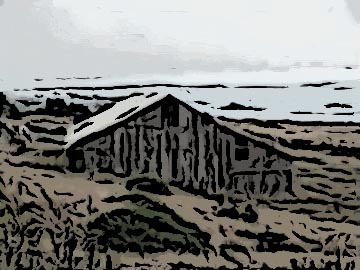
“There was a pull-out and what looked like a path leading to the rocks below. The ruins of the old barn were situated a little further down where erosion had eaten away at the surrounding landscape. The cinder block understory was still intact. Then Jerry noticed the parallel tracks headed toward the edge of the bluff.”

“They tried to keep me from looking but I looked anyway. There was no mistaking the calico rear end of mom’s Honda on the rocks below. What did she used to say? It had plenty of dings, but no dongs. That would crack her up, and she’d lose her breath and then she’d cough and wheeze, tears running down her cheeks.”

“One look at Paul and I knew what he was thinking. It was that old cop instinct. We both focused on it. The gray concrete bunker with the thatch of charred timbers perched at the edge of the bluff.”

“I knew Jerry saw it too. The weathered sheet of plywood propped against the side, and the right angle of shadow that indicated what might be a doorway behind it.”

“The next thing I knew they both had guns in their hands and they had started down the path toward the old foundation. Paul told me to stay up by the road and keep a lookout for any law. Jerry was already hunched down next to the wall, his pistol out in front of him. They didn’t look like a couple of old decrepit guys anymore. They may not have been quick or light on their feet but they moved like they knew what they were doing. Jerry ducked his head down and got a look behind the plywood and then nodded at Paul. It all happened so fast after that. They slammed the plywood out of the way and charged in. I don’t know if I expected to hear gunshots or screams or what. It was just very quiet. The wind had died some and the grass had straightened up like it was waiting to see what was going to happen next. But nothing happened. And I panicked and started to run down the hill. Then Jerry ducked out of the doorway and he had something over his shoulder and he was racing up the path toward me and I realized that it was a body, my mother’s naked body!”

“She looked like she was gonna scream and I told her, you’re mom’s alive, she’s gonna be ok. She got a blanket from the car and we wrapped Jackie in it. It’d been a while since I seen her like that. With the exception that she was close to comatose and had some bruises and scratches, she still had a great looking body.”

“I gave Jerry the keys to my truck and told him to put some distance between him and us. An ex-felon at a crime scene raises too many questions. I figured Jackie might be suffering from hypothermia, no telling how long she’d been down there without a stitch on. Kim made the emergency call on her cell phone. It wasn’t long before we heard the sirens. The Highway Patrol was there first followed by the State Park Ranger and finally the Deputy. The ambulance had arrived around the same time as the fire department. The medics decided on the copter. It got to be quite a circus. I should have packed a picnic lunch.”

“I was so glad to get her back. I couldn’t believe my eyes. I didn’t care how she looked. Or smelled. Like she’d fell into something putrid. She had rope burns on her wrists. And she had bite marks on her face and neck and breasts. I imagined rats crawling all over her and it just made me want to hold her tighter, closer. I didn’t know what had gone on down there and I didn’t care. I wasn’t going to let her go. Even when the medics came, they practically had to pry me off her.”

Kim had to get back to Portland and her mother. And her job. The kid reviewed the wrap up he’d filmed with just the grumpy and dangerous old men. He liked the dynamic.

“I told the highway cop what was in the bunker and he went down to have a looksee. He was green when he came back up the path. He told me I’d have to wait till the deputy arrived to take my statement. The Ranger showed up and the highway cop told him what was down there and he had to go down to take a peek as well. He came back looking like he was reconsidering that tuna sandwich he’d had for lunch. Then the deputy arrived and the Park guy told him what was down there and the deputy wanted to know if they’d secured the scene and they both said oh yeah, yeah, like they had never stepped away from where they were standing. The deputy took my statement and said I should stick around and talk to the detective sergeant who would be along shortly. I ID’d myself as ex-cop. I knew the routine. There was the inevitable wait. During that time, the ambulance carted Jackie to the hospital, the medics having determined that her condition was not life threatening. Kim went with them. I bummed a smoke from one of the firemen. My first in twenty five years. The detective sergeant finally showed and he was someone that I’d worked with in Metro years ago. I’d heard he’d gone County. But he agreed with me. Attempted murder, suicide.”

“More like accidental suicide if you ask me. I don’t think that’s the way the dude planned to go out.”

“It could have been any number of things. It’s best to follow a basic no frills scenario in a case like this. I learned that lesson working for the DA. It cuts way down on the paperwork. Sex pervert recently released from prison kidnaps woman and sexually assaults her and then dies in a suicide failed murder attempt. No need to mention the autoerotic asphyxia angle. That just muddies the water. Kidnapping, rape, penetration with a foreign object. That’s all anyone needs to know.”

“Yeah, I saw his foreign object, bright purple, swollen up like a toy football.”

“Don’t remind me. His hanging by his neck like that with a look of surprise, all the blood drained to that one body part. Usually when they do that kind of thing there’s a ledge or a stool they can step on to release the pressure. . . .”

“There was a milk crate that looked like it had been kicked to one side.”

“Maybe he just got a little too excited.”

“Or maybe somebody saw a chance to escape their demons once and for all.”

“Going there just complicates things. The idea is to keep it as simple as possible. Kim’s no dummy. She’s probably figured a lot of it out on her own. But her focus is getting her mom well again. That’s why they moved up to Portland. To put some distance between her and this bad movie. It’s up to Jackie to fill in the details, if and when she can.”

“That’s major trauma. You don’t get over something like that easy. And you’re right, why lay it on the kid. I don’t want to be the one to tell her that that was her uncle in there.”

“Step-uncle.”

“Father.”

“Yeah, father. What gave it away for you?”

“The eyes.”

“Me too. The eyes. She has the eyes.”  Paul patted his shirt pocket and looked around. “You got a smoke?”

“Nope. Don’t smoke. Never have. Filthy habit.”

“Yeah, I gotta quit.”

And that was the wrap. It was Jerry who asked the question.

“Who’s gonna star in this clusterfuck anyway?”

The kid looked up from behind the camera. “Bruce Willis? Mickey Rourke? Cameron Diaz? Yeah, but don’t hold me to it. Just what I heard.”


FIN


Contents Vol. I No. 2

Introducing Dime Pulp Number Two

In the second issue of Dime Pulp, The Serial Fiction Magazine, The Last Resort continues with the adventures of Lee Malone, former super model now small town newspaper reporter, a regular, backwoods Brenda Starr, as she finds her first body (not counting the Airedale). The second part of Long Shot in Helena Baron-Murdock’s Hard Boiled Myths series concludes with Weston County Sheriff Detective Jim Donovan on the carpet again. A Detective Story’s Lackland Ask, after being dupped once again, this time by a not so pretty face, is bent on murderous revenge. A new talent to the writing team, “Patton D’Arque is a pseudonym if there ever was one, in real life an aspiring screenwriter who has cleverly given himself a kind of bunraku cameo in his two part story about a couple of dangerous and grumpy old men, an ex-cop and an ex-bounty hunter, looking for their former girlfriend ex-wife who has Gone Missing.

In the first issue Dime Pulp presented the initial installments in the serialization of two full length novels, The Last Resort and A Detective Story, as well as a short story from the series of tales under the rubric of Hard Boiled Myths. As was often done in the days of yore, the writers appear under pseudonyms. “Colin Deerwood,” the author of A Detective Story, is an amateur historian who claims to have been inspired to write his period piece after contemplating the cover of an issue of Black Mask Magazine. “Helena Baron-Murdock,” under her own name is a scholar of comparative religions and myth and is the creator of Sheriff’s Detective Jim Donovan of the Hard Boiled Myths short story series. The Last Resort, A Lee Malone Adventure, by poet and publisher Pat Nolan (not a pseudonym but in Nolan’s estimation, he is obscure enough not to need one) was written to upend the stereotypical image of the hard boiled crime sleuth. The Last Resort was originally published by Nualláin House, Publishers, in 2012—it is serialized here for the first time.
While the primary focus will be on crime fiction, Dime Pulp hopes to also include Western and Steam Punk anachronism, and other popular fictional fare of a speculative nature. (By now you should have skipped down to the actual contents). Dime Pulp anticipates to publish as a monthly serial fiction magazine but should the workload prove too ambitious for the editorial staff (of one), the schedule will be adjusted to post as quarterly issues.

If you’ve made it this far, go ahead and follow the links below to reading entertainment with the serial contents of Volume One, Number Two.

  —Perry O’Dickle, chief scribe
and word accountant

The Last Resort A Lee Malone Adventure

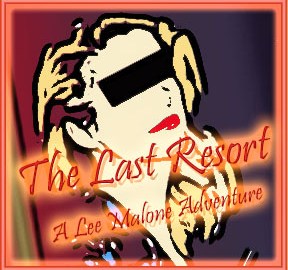
Deep in the redwood wilds along the Corkscrew River, someone is shooting neighborhood dogs. The year is 1985 and Lee Malone, former fashion model, queen of the runways from Paris to Milan, once dubbed the most beautiful woman in the world, now a part-time reporter for The Corkscrew County Grapevine, is looking for a story to sink her teeth into. When Lee finds the owner of Kelly’s Seaside Resort brutally murdered, it leads her on an adventure that includes a mysterious gray van, another murder, extortion, pornography, sex slavery, and a shadowy organization of militant feminists known as SAPHO.  In the process, Lee Malone’s notorious past catches up with her.  A rollicking imaginative romp in the neo-pulp hard boiled genre, THE LAST RESORT is told with the succinct directness of a Hammett, the witty hyperbole and lush locales of a Chandler as well as a sly nod to Nancy Drew and Hardy Boys adventures.

The Last Resort, Chapters 1-3 The Last Resort, Chapters 4-6

Hard Boiled Myths
Crime Fiction With A Classical Twist

Greek myth is rife with murder, mutilation, cannibalism, mayhem, and the ever popular incest.  Weston County Sheriff’s Detective Jim Donovan of the Violent Crimes Unit wouldn’t know a Greek myth from a Greek salad, but if he did he would find some troubling similarities to the cases he’s investigating.   

Long Shot I Long Shot II

A Detective Story

Lackland Ask is the name.  ‘Lack’ to my friends, ‘Don’t’ to those who think they’re funny. You might have seen my portrait on the cover of Black Mask, the crime friction magazine. This is my story.  It starts with a blonde.  This kind of story always starts with a blonde.
The brownstone was on the Westside and easy enough to find. So was the mug’s yellow roadster. It stuck out like a new shoe in a cobbler’s shop. I was being a sap again.

This kind of story always starts with a blonde
“I was being a sap again.”

Gone Missing

When you think of “grumpy old men” you don’t usually think of an ex-cop and an ex-bounty hunter answering a call for help from their step-daughter “niece” to look for her mother, their ex-wife former girlfriend, who has mysteriously disappeared.

Gone Missing I

GONE MISSING—1

By Patton D’Arque

“She was a waitress at Quentin’s Steakhouse down by the rail yard when I first met her. It was a popular cop hangout. So popular that they called it ‘Quentin’s Stakeout.’ A beauty, tall, blonde.  Seeing a lot of guys, law enforcement mostly.  And trouble. Two guys from homicide actually threw down over her.”

Paul Fernando had finally stopped talking to the camera as if it were an audience.  A retired cop, in his late sixties, balding, gray at the temples, he took a long pull on his cigarette as if retrieving a memory, his other hand firmly wrapped around a tall glass of high octane orange juice.

“She was few years past thirty then, but she could still drive men crazy with a look, a smile. She had a teenage daughter, fer crissake.”  He sat back in his chair shaking his head, his features obscured by shadows.  Of the three, he’d been the most reluctant to agree to tell his story even with the generous compensation for acting as a technical consultant on the production.  The initial interview took place at his country home.

“I was working for the DA’s office in those days.  Chasing paper.  Light duty after I took a bullet going after a bad guy.  They musta liked what I was doing because it soon became a permanent assignment.  I didn’t mind.  After ten years boredom on the Robbery and Burglary detail, I was ready for a change. I liked to hang out with old friends, though.  I was still a cop.  I went down to Q’s pretty regular.  Especially after my divorce.  I liked my steak and fries.

“I never planned it that way but she was my waitress most of the time.  Always real friendly, ready with a smile, a laugh at one of my lame wisecracks.  I wasn’t her type.  I knew that.  She went for the flashy fellahs.  Gold chains, fancy rings, Rolexes, expensive suits.  That wasn’t my style.  I bought my suits at the same place I bought my tools.  Sears and Roebucks.”

He chuckled at his little joke lifting the glass to his lips. The second unit director, a kid just out of film school, let the camera do the work occasionally focusing on the butt filled ashtray and  pale smoke curling up into the dark room.  He was shooting available light. The storm had knocked out the power.
“She flirted with everybody.  It seemed all very good-natured and fun.  And on some nights, after my steak and fries, when I stuck around in the company of a glass or two of scotch, I’d see her get her coat and purse, have a drink and some ear nuzzling with a young cop and then leave with him.

“I quit smoking twenty-five years ago.  I started up again not long after that phone call. It was from Kim.  We’d done time together in the domestic pen under the thumb of warden Jackie.   Her mother and my second wife.”


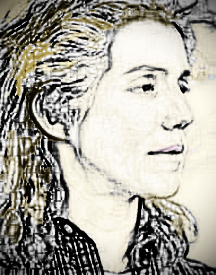
The production company had flown Jackie’s daughter down from Portland and put her up at the Marriot where the second unit crew was staying.  It was convenient and she’d agreed to tell her story in the comfort of her suite.  Kim Summers, in her early forties, was tall with a blond pixie cut, a little overweight, favoring men’s shirts and snug jeans.  Her most startling feature was the blue intensity of her eyes. The camera made her nervous and her hands moved all the while she talked, lightly touching an arm or knee or cheek as if to assure herself she was still there.

“I kept a calendar for her meds on the wall in the kitchen.  She’s on anti-depressants and tranquilizers and I knew she smoked a little weed on the side. Heck she’s almost sixty. I was just happy it wasn’t anything stronger.  Or booze.

“I noticed there were little ticks in the corner of certain days on the calendar.  I hadn’t made the marks and I didn’t exactly think too much about them.  I figured mom was keeping track of something though for the life of me I couldn’t figure out what that was.  There are some things about her that are just not explainable.  I’ve grown up with that.  She’s an incredibly intelligent woman.  I mean, I’ve always been in awe of the things she knows.  I’d say ‘mom, how do you know that stuff?’  And she’d say, ‘I seen it in a tabloid in the supermarket checkout line or I read it in the National Geographic at the doctor’s office.’  But you’d think that someone that smart would have some common sense.”

She looked at the camera as if she’d forgotten to mention something.  “I never knew my father.  He was killed in Viet Nam. She said she’d tell me about him some time.  But she never has.

“Before Paul, I hadn’t known a real father. With the exception of Injun Jerry, there was an endless parade of uncle so and so or cousin such and such.  Injun Jerry. . . he’s something different. . .wears his hair long like an Indian, more wild animal than human. . . which is probably why they say he’s crazy.  He was a bounty hunter.  Might be still is.”


The second unit director was supposed to be scouting locations but the weather wasn’t cooperating.  Being an ambitious sort with time to kill and wanting to make a good impression with the producer, he’d volunteered to shoot the interviews for the special features segments.  Principle shooting on the ‘based on a true story’ feature hadn’t even started and he’d already spliced a lot of the material into a rough narrative on his laptop.

“Now that was a fine piece of ass. More than a piece of ass.  It was more than just ass.  She made me do things I never dreamed of doing.  I don’t mean just in bed.  I mean all the time.   She was electric.  All the time.”

Injun Jerry, real name Jerome Sorenson, was ex-cop, former bounty hunter and one of Jackie’s ex-boyfriends.  In his late fifties, stocky, broad shouldered with a full head of long graying blonde hair down past his shoulders, he’d dressed in a dark suit, open collar dark shirt, strands of gold chain  showing in the thicket of graying chest hair, a large gold wristwatch, and dark sunglasses for the occasion.  He did his best to charm the lens, all smiles and exaggerated expression.  He had no qualms about telling it like it was. “I’d been a city cop, narcotics, vice.  I got splashed by some dirty partners and we all went down together.  I missed the rips so I got into skip tracing.  The money was good.  The crowd was fast.  That’s how I met her.  She was running with a couple of wannabe criminals with family money.”
Then Kim, frowning, looking down at her hands. “When she was with him, she was more alive than I’d ever seen her.  I think it was the danger.   They would go on takedowns together.  He taught her to shoot, how to take care of herself in tight situations. I resented him most because he alone could take her attention from me.”

“I wasn’t looking for a partner,” Jerry pled to the camera.  “We hadn’t hooked up but a short time. She had a kid, girl, pretty, like her.  Left the kid with a friend, or in a motel room in front of the TV.  She just took to it like she knew exactly what she was doing.  Fearless.  Careless, too, and that made her dangerous.”

Kim voiced concern. “I didn’t know he’d been let out on parole.  He’s dangerous.  He probably did what they said he did.  I’d heard mom say, ‘with him, you’re either shit at or shot at.’  He isn’t nice.”

Jerry waved a large hand to make his point, flashing a row of knuckle rings.  “I invited her out on a collar.  My mistake.  It was a wild ride while it lasted.”  He shrugged and looked away in a moment of self-reflection.  “I ended up getting fifteen for involuntary manslaughter.  I behaved myself and they let me out early.  I didn’t want to go back to man hunting.  I thought about looking her up but then I might have ended up back in a cell.”  He smirked.  “My ex-brother-in-law lets me stay in a trailer on his property.  I been there ever since.  Minding my own business.”

Kim smiled at a picture in her head. “But Paul, he was different. He wants you to think he’s a tough guy but he ain’t.   He’s a pushover. . .grumpy, but a pushover.  So Jackie, my mom, she shit all over him and I had to kinda protect him.  That’s how we got to be friends.”

Cutting in the Fernando material created too much of a continuity problem.  The kid played through it again just to make sure.

“Yeah, it was kinda like I’d won the lottery.  I felt like the bride walking up the aisle. . .in Vegas. . . I couldn’t believe that we were actually getting married. . .that I’d end up with someone. . .a beauty like her. . .I know that sounds crazy. . . .  Anyway her daughter . . .  Kim, she checks in on me every once in a while since my retirement. . .usually small talk, how the job’s going, and the new boy friend, how mom is holding up, like that.  And I had to give my report, too.  No I’m not drinking much. . .what’s much?  And no, I wasn’t going to be another retired cop suicide statistic.  I can’t say I didn’t appreciate the attention.”  Fernando fit a cigarette to his lips and lit it.  “We’d weathered the mood swings, the unexplained absences, the lies, the deep depressions, the lies about the lies together.  I made sure she finished high school.  She kept me off the potato juice.  Until the divorce anyway.  A woman is fine, but a vodka tonic don’t sass back.  Jackie terrorized herself and everyone around her.  After a while it was either cut loose or die of an ulcer.  I kept my pension and she got the house.”  The camera focused on the smoking ashtray and the near empty glass. “So Jackie’d taken off like she used to. Kim felt that this time was different. . .and in my gut I knew it was too.  She was on her way over.  She had found something she wanted to show me.”

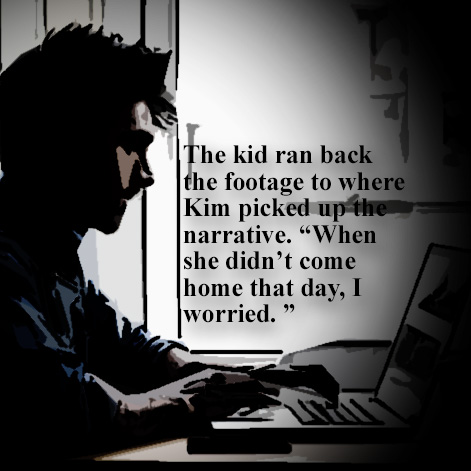
The kid ran back the footage to where Kim picked up the narrative. “When she didn’t come home that day, I worried.  I always do.  But I know her.  I called around. I went around.  Nobody had seen her.  I got more worried.  She needed her medication.  After day two, I called Paul.  He told me to notify missing persons, and that he’d check the hospitals.  That was all he could do.”  Kim’s face tensed trying to keep from losing it. “I had found something.  I wanted him to see it.  Maybe it’d help.”

Paul’s voice droning over the rising smoke of a fresh cigarette resting on the lip of the ashtray was a perfect segue. “After I looked through the envelope of photos Kim had brought with her, I realized that I should have been asking more questions about everything.”

Kim stared at the camera defiantly, her battle won.  “I looked through mom’s stuff all the time. Sure, I’ll admit it, I spied on her.  It was for her own good, I told myself.  She needed looking after.  Most of the time it was just making sure she kept her appointments and did the shopping.  She was either forgetful or just apathetic, depending on the way her meds were affecting her.  If she skipped her meds, she got very agitated and fearful.  Afraid of what, she wouldn’t say.  I used to think it was Injun Jerry.  Eventually I came to understand that it wasn’t him.  She wasn’t afraid of him.”

Injun Jerry had suggested they interview him in the café downtown he liked to frequent.  It wasn’t a bad idea, but the light was crap.  He draped an arm over the chair next to him and continued matter-of-factly.  “Yeah, we liked the coke.  I shoulda known better.  It added an edge.  A crazy edge.  We’d snort a few lines.  Then we’d do the takedown.  And then after we turned the jumper in, we’d go out and do it on the hood of a car in the precinct parking lot.  Any car.  It didn’t matter.”  He paused as the point was made. “Problem is you think you’re invulnerable when you’re on a power high like that, and it’s not something you can just walk away from.  You gotta do it again, and you gotta get higher and to do that you gotta take more chances.”

Kim looked thoughtful, the chain of events falling into place.  “I hadn’t been doing much snooping lately.  I knew where she kept her pot stash.  That wasn’t new.  Her journal read like she knew someone would be reading it.  It was a thinly veiled fantasy of her life, medicated as it was.  There were a few poems, one addressed to me saying things like how happy I would be when I found true love and blossomed.  Pretty conventional stuff.  There hadn’t been any recent entries as far as I could tell. Some pages had been ripped out.”

Injun Jerry sat forward in his chair, making a point. “You leave common sense behind like a failed marriage.  You’re running on adrenalin, pure, and super charged by the cocaine.  And when it’s all over, you’re ecstatic to have survived and so you go through the motions, the process of making it with a thrill seeking chemical junkie like yourself.”  He gave a you-better-believe-it nod. “But that’s all it was, going through the motions.  My boys had never been hearty swimmers.  Besides, I couldn’t feature a strung out pregnant Jackie on takedowns.  No, that’s all it was, thrill-seeking, and after a while, fried, charred, burnt out you start making mistakes.”  He looked up from the coffee cup in front of him. “That’s how I landed in the pen.  It was Jackie’s doing but I took the fall.”


Next: What Went On In The Deserted Barn?

A Detective Story—2

by Colin Deerwood

I was surprised. Al’s sister was a real looker. Al was the oldest of twelve kids and she was his baby sister. She was still older than me. A looker all the same, the kind of dame who knows how to keep herself up. She could have been thirty-five, more like forty, and right away, from the expression on her face, I could tell what she thought of me.

She didn’t waste any time. “Jesus, Al! How many times I gotta tell ya I don’t want to meet any of your creepy friends! You tell me a nice clean cut kid I don’t expect a runaway from the morgue, a goddamn zombie, for crissakes! Look at that face! I’ve seen better faces in an ashtray!”

She had spunk, that much was obvious, and her carrot colored hair had been permed to give it that Orphan Annie look.
“Now don’t start in on him, Della. Lackland, he’s a nice guy, he’s just in a rough line of work. He’s a. . .confidential investigator, you know, a private eye. . .you stand a chance of being pushed around. . . .”

She stopped in the long shadow of the light pole and fetched a cigarette from her purse to her lips. She glanced back at Al and then at me. “This guy?” she asked in disbelief pointing her cigarette at me.

I offered my lighter and she took the flame, eyeing me as she sucked in.

“Yeah, this is the guy, like I tole ya, maybe he can help you out.”

That made her smile. She blew a ball of smoke with practiced ease. At second glance, she did have a lot of make up on, a flesh-tone paste, rouged at the cheekbones, and a sort of green grease lining her eyes. Her eyelashes were unbelievably long, and her eyebrows, much too precise and too thin.

“Yeah, maybe. . . .”  The lipstick was a deep red but it didn’t altogether mask the tiny lines that indicated that those lips had been puckered to the limit.

“What’s this all about?” I wanted to know.

“I want you to find a man for me, and before you go suggesting that I look no further, the man I’m looking for walked out on me and took. . . .”  She drew on the cigarette and appraised me with one eye shut. “Let’s just say he took some of my valuables and money.”  She let that sink in, and then, “I don’t care about the money but there were a few items of, uh, sentimental value, and I’d like to recover them.”

I nodded my head, stifling a yawn.

Al suggested we all go have a drink and we went down into this little joint with a yellow and green neon palm tree in the window and a pale varnished bamboo interior. It was one of those places where you could order fancy exotic drinks with umbrellas in them. Too fancy for me so I ordered the usual, Al a beer, and Della something in half a pineapple when it came. The bartender was a seedy looking oriental in a Hawaiian shirt I thought I recognized from the track. He too took a long look at my mug.

It seemed that Della was more interested in getting her man back than the money or the jewelry. I was supposed to find him, find out where he’d moved to, and if he were living with anyone, female, for instance. She would take care of the rest. All she wanted to do was talk to him and she was positive she could convince him that they could work out their troubles. She sipped on the two tiny straws poking out of the pineapple and blinked her long lashes at me.

Maybe I looked like I had just fallen off the turnip truck. “You got a pair a socks or something I could use to track him down. I just feed ‘em to my bloodhounds and away we go!”

I got a cold stare. She reached into her handbag, a tiny green thing that matched her shoes and, incidentally, her eyes.

“This is the garage where he gets his roadster worked on.”

She handed me an old work order. “And he makes book in the barber shop down on Mulberry, the Italian’s”

I touched a finger to the swollen side of my mouth. “If you’ll pardon me for saying so, this guy is starting to sound like some kind of pimp.”

The green eyes glared. Al coughed nervously into his beer. I tried to smile but it hurt to move my mouth that way.

“Don’t make that any of your business, crumb. Find him, if you can, and stay out of his way because if he gets his hands on you. . . .”

The barbershop had a bell over the door that sounded when I walked in. The man in the polished hair behind the chair looked up from the array of combs in his hand. He chose one and pointed with it to the door behind me.

“Get outta here!”

“I’m looking for Eddie Cartucci. I got a message for him.”

“Wad I say? Get outta here, I doan need your kinds!”  He bared his teeth beneath the dark sliver of hair on his upper lip. “Gedout! gedout!”

A couple of toughs slid through a crack in the door at the back and hunched over toward me.

“Hey, creep, you heard the man, beat it!”

I caught a look at myself in the mirror behind the barber chair as a big hand slapped my shoulder and I was spun around and lifted out through the door, my shins slammed into the concrete steps leading up to street level.

I walked to the diner down the street and over the tracks by the row of warehouses. I sat on a round stool at the counter and ordered a cup from the chef in the sweat trimmed white paper hat. He drew the coffee from the huge steamer tank like a bartender drawing a beer from a keg. The air was sweet, thick, and greasy. I’d taken a sip and passed my hand over my head to slick the hair back before I noticed him.

He pretty much matched the description I had dragged out of Della. Broad shouldered, well dressed, patent leather hair, tanned features, and narrow, mean eyes. He was leaning over the table of the booth at the far end of the diner and talking to a couple of his employees like he meant business.

By the time I tuned in, he’d changed his tone and was saying something jokey like “you’ll know how long it gets when you get it up.”  One of the girls, a pale frail with a bright red smoocher, offered her cigarette for him to light. He snapped the flame to the tobacco and she blew out a puff with a knowing smile.

On the way out he gave me a sidelong glance, which immediately suspicioned me to the probability that this gent was slick enough to be checking over his shoulder, and that following him to his address would be dangerous to my life, limb, and safety. I chose a much pleasanter option.

I walked over to the booth, cup in hand.

“Buy you girls a coffee?”

The blonde with the soda took her mouth off the straw only long enough to say, “Take a walk, buster.”

The pale brunette held me with her eyes, cigarette in her hand poised by her chin, a sheer light blue neck scarf tied to one side over the shoulder.

I addressed her. “Come on, sister, nothing wrong with buying a cup of coffee for a couple of hard working ladies, is there?”

The blonde was doing the talking. “Ok, so what do you want, tough guy? Obviously we ain’t the coffee type. Maybe you think we ain’t nice girls or something.”
With that the brunette smiled her smile. It had a thrilling effect on me. I wanted to find a place for both of us to lie down and let her do her nasty stuff.

“No, no, I certainly wouldn’t think that of you ladies. I was just wondering about that friend of yours, the one who just left. He looks an awful lot like a guy I went to school with. What’s his name?”

The blonde sneered at me, the brunette still smiling. “You never went to school, fat head. What do you really want?”

I decided to play it straight and lay it on the line. What did I have to lose?

I leaned over the table and got confidential. I told them I was a private dick. That raised a chuckle. And I told them about the bump on my head. I told them about Al’s sister and about their man. They laughed at everything I said. The details had them in stitches. Pretty soon I was sitting down taking a refill from the chef, lighting the brunette’s cigarette, and making small talk with the blonde. She was interested in Al’s sister. It wasn’t inconceivable that their man was traveling with a straight woman. She wanted to know more, and we traded information in an off the cuff fashion bit by bit.

I left the diner pleased by my audacity and, best of all, with the information I wanted. I felt a little less stupid though the bruises on my face still ached and my shins smarted.

The brownstone was on the Westside and easy enough to find. So was the mug’s yellow roadster. It stuck out like a new shoe in a cobbler’s shop. I was being a sap again.

Al’s sister had me come up to her apartment after I’d called her to say that I’d got a line on her Eddie’s new address. She was sociable this time, maybe a tiny bit seductive. She didn’t object when I asked for an advance and gave me the fifty bucks I wanted. Then she smiled a smile that seemed to say everything.

“Lack, I want you to go to Eddie’s place for me. Ask him to return my things, tell him I still love him, tell him I want to see him soon, ask him to call or come by.”

I looked at the drink in my hand. Drugged? I shook my head even though that made it hurt. “That’s a good way of getting myself killed, lady, not on my life am I gonna do that!”

She didn’t blink. “I’ll add another hundred to your fee.”

I blinked. I started to think but stopped at the dollar sign. “What is it you want. . . returned? I could leave a note, you know, saying ‘Della really misses you and she wants you to call or come by or something, and by the way, I’m taking the. . .what was it again?”

“A jewelry box, a black lacquer jewelry box.”  She mimed the size and shape with her hands.

“Jewelry box. Ok. Do you get my drift? I can get the jewelry box back, but I don’t particularly want to be anybody’s messenger boy.”  Maybe it was the drink, but I felt dangerously close to being a messenger boy just then.

She smiled thin. “Suit yourself.”

Then I stopped in at McCauley’s to pay off my tab. The bartender asked me if I was practicing to be a wino as he took my money. I had to order another drink after that crack. I put it on my tab. And another after that. And another so that by the time I stood in front of the brownstone, my face didn’t hurt anymore, it only looked like it did.

I hadn’t sent for the ambulance, either, but there was one there, parked out front of the brownstone and flanked by squad cars of the city’s finest. There was also a fair sized crowd gathered around the entrance to the building. I weaved through the throng, easy enough in my condition, and up to the uniforms holding the on-lookers back. They were just wheeling the stretcher out followed by a couple of plainclothes guys and a blonde dame who looked awfully familiar. Then it all came together as she caught my gaze and recognized me. She was one of Eddie’s girls, the one I had entertained at the diner. Her finger was pointing at me and I knew then that that was Eddie with the sheet over his face. The thing that struck me funny was that these plainclothes cops were wearing exactly the same kind of fedora. The guy behind me was craning around me to get a better look and didn’t understand that I wanted to get back through. He didn’t like it when I shoved him, but he didn’t get a chance to shove me back. I had a hat on each arm leading me aside.

“Hey, what’s going on, boys?” I said nonchalantly.

“Let’s go downtown and talk about it,” one or the other said.

Hogan looked in on me cooling my heels in the holding tank.

“Whatsa matter, wisenheimer, vagrancy again? Or is it drunk and disorderly?”

“Murder,” and I watched his bulldog face turn to mud.

“Ya don’t say?”  He had his fists on his hips, sheaf of papers in one, tie loosened around the collar, sweat darkened yoke and pits, cuffs rolled up to the elbows. If it weren’t for the revolver on his hip, you’d swear he smelled just like a parish priest. Now he was interested.
“I always took you to be dumber than that. Murder takes guts. And some smarts. You got neither.”

“Thanks, Hogan, I really appreciate your concern but don’t bother. I know you think I’m a good for nothing asshole and you’re probably right. . . .”

“Not probably, positively. What happened to your face?”

“I fell down on some guy’s knuckles or the toe of his shoe, something like that.”

Hogan was starting to bore me. He must have got the hint because he left after razing me with a long pitying look, the kind you get from the padre when you tell him you don’t care if you go to Hell.

Della didn’t answer. When I got through with the doorbell I started in on the door. I thought I heard the wood crack, but that could have been my fist. A woman in wire curlers stuck her head out the door down the hallway.

“She left about an hour ago.”

“Thanks,” I said, “I’ll bet you say that to all the boys. Wanna try for the sixty-four dollar question? Any idea where she might have gone?”

I got a slammed door dead bolt triple lock chain rattle for my answer. I cursed loud enough for the entire floor to hear. First I’d been beaten to a pulp by some no-bit hood and then set up by some ball-busting torch. I stood there on the moth eaten carpet in the hallway not knowing which one was worse. That the cops had bought my alibi was about the only bright smudge in the whole dismal chain of events.

I dragged myself down the three flights of stairs to the street below. A cold rain had begun to fall, the failing light failed even more, and me without an umbrella. I paused in the foyer before making a dash for it. The row of mailboxes caught my eye. Hers was number thirty-four. It had a little paper strip fastened to the front with “D. Street” written in a neat hand. A mother and her daughter rushed by on the sidewalk sharing an umbrella. I dug out my pocketknife and pried the box open. Advertisers, bills, a reminder from her dentist, and a pink slip from the post office that had the “article too large for box” square checked. I put everything back except for that.

I stepped out into the rain, out into the slick dark street, out in front of a yellow cab that screeched to a halt a few inches from me. I got in and gave the driver my address. He screamed at me, said he was going to strangle me, beat me to a pulp, kill me for that stunt.

“Why’d ya stop?” I shouted back. I thought his hat was going to blow off the top of his head.

“Where’d ya say, chump?”   A true cabbie.

I unlocked the door to my office. It smelled wet. I figured the leak down the outside wall still hadn’t fixed itself. I switched on the overhead light. A mess, from the bed and the dingy sheets piled up in the middle like a tower of fungus, the reek of stale tobacco, garbage over spilling the can, butt crammed ashtrays on the table, to the unmistakable scuttle of tiny insects hightailing it for the shadows. I should have been disgusted but I was too preoccupied.

I had revenge on my mind and there wasn’t room for anything else. I reached under the mattress and pulled out a bundled oily rag wrapped around an old .38 Smith & Wesson with the serial numbers filed off. It was something that had come my way a few years earlier and I had stashed it away for just such a time. I dug through a box of papers on the floor of the closet. No bullets there. I went through a couple of coat pockets and found one .38 caliber bullet. Then I remembered I’d been using one to add up expenses and it was still on the table among the bottle caps and paper matches. That made two. I stood on a chair and reached my hand into the dark recesses of the closet shelf. Nothing but an old suitcase I’d all but forgotten. Full of old papers from a novel I was going to write. And yes, one lone bullet rattling around in the bottom. I had no idea how it got there.

Next Time: Out To Get Even

Long Shot—2

by Helena Baron-Murdock

The pulled pork sandwich was as good as it got at the barbeque joint Donovan favored in Old Town. Since the Fed had an expense account, he sprung for lunch. Dabbing a corner of his mouth with a napkin, Donovan continued, “It wasn’t originally my call. This is about two years ago. We had a new guy, Hutter.”   Butler nodded like he knew the name. “And Collins, who was undersheriff then, had me go in and back him up. Considering that it was at the Horsemen’s compound, he thought that it might be a little intimidating to the new guy. I’d dealt with Herko before so I wasn’t going to be put off by his bullshit.”
“What went down?”  The agent had barely touched his ribs.

“They all said it was an accident. I didn’t expect anything less. Hutter was falling for it. A kid, maybe 16 or 17 was dead from a fist to the face. Apparently there was a party and the kid, the son of one of Herko’s lieutenants, was drunk and staggered into Herko just as he was about to take a hit of blow from the blade of his Bowie knife.”

“Oh, oh, I see what’s coming.”

“Right, Herko who is notorious for his foul temper smashes the kid in the face and kills him with one blow.”

“He’s a big guy, makes Hulk Hogan look like a midget wrestler,” Butler added spearing a fry with his fork.

“You couldn’t charge him? That’s a pretty damning story.”

“Well, it was one I heard only after the fact. The story the witnesses were giving was that the kid was drunk and had run into a post in the compound patio. Place they used for dog fights if you ask me. We could have got him on manslaughter maybe, contributing to the delinquency of a minor leading to mortal injury. The DA didn’t think we had enough so they let it slide.”

“Killed the kid with one blow for messing with his blow. Almost poetic.”

“I dunno about that, but I’ve been wanting to nail Herko for something since then. He paid a blood price to the parents of the kid. I hear the mother wasn’t too happy about it. And he promotes the kid’s old man to second in command and then sends him on a buy down south where lo and behold he gets popped with a load of product by the Feds and local gendarmes who got the tip from an anonymous caller and now poppa-san is doing large in a federal institution.”

Butler’s phone rang first. “Yeah, when was that? You sure it’s him?”  He turned to look at Mendez who was bringing his own phone to his ear. “Ok, ok, hang tight. Yes, go with them, get out of there!”  He looked across the table, worried. Donovan was taking the call from dispatch. “On the way to Community? Alright, thanks Carol, I owe you.”

Butler blurted, “Something’s gone down at the compound. They think it’s Herko!”

Mendez nodded. “I’ve got someone inside. She says it looks like an overdose of some kind. It’s Herko.”

Donovan stood, dropping his napkin on his plate. “Meet you in emergency at Community.”


When they wheeled Herko into emergency he was screaming that he was on fire. He struggled against the restraints on the gurney and finally broke free of them. He careened down the hallway in agony, tearing at his clothes, his cut, his shirt, insisting that he was burning up. An EMT tried to tackle him and got a blast in the chops from an elbow that landed him crumpled against a wall. Security and deputies who were attending a stabbing call joined the fray. They tased him but he merely ripped the barbs out of his skin and continued to rage, batting at anyone who came near him. He raised his dusty leonine head and roared at the ceiling, digging his nails into his bare flesh. He fell to his knees and gasped for breath. Then he was silent and dead.

At the same time Bridgette, his longtime old lady, added to the cacophony, hysterically screaming “It’s all my fault! It’s all my fault!” She was being consoled by another biker momma who looked very much on edge, eyes wild, jumping at every sound and motion, spring loaded like a feral cat. Donovan directed a nurse he knew over to help with the grieving girlfriend. A phalanx of club members muscled their way through security to see their leader, face and arms scratched and bleeding, shriveled into a fetal position. They couldn’t help but notice the spent taser wires. Their eyes darted around the room looking for someone to blame. Donovan gave them a choice. “Let’s step outside, boys, and let the hospital staff do their job.”

The snarl lasted only as long as it took Donovan to place the barrel of his weapon to the biker’s tattooed forehead. “You may be in an emergency room, pal, but I’ll make sure you get a hole they can’t do anything about.”  The biker’s resolve melted away so apparently he wasn’t as stupid as he looked. “Don’t go too far, boys, I’m going to want to ask you some questions.”  He heard a chortle, “Yeah, like that’s gonna happen.”  And moments later, the roar of two stroke engines snarling with menace driven away.

Mendez had the skittish momma by the elbow, leading her into the little office behind the reception desk that the shift nurse hurriedly vacated. He motioned Donovan over with a tilt of his head. Butler joined them in the tiny room and closed the door.

“Ok, Angie,” Mendez demanded, “What the hell went down?”

The woman, a nondescript brunette, still rather young but trying to look hard, nodded her head, her hands shaking. “It was totally freaky, man. I was watching TV and I could hear them arguing in the kitchen. He was on her about Mark. About how she should have told him the first time Mark came on to her. Someone else in the club must have seen something go down between them. And told Herko. I mean Mark was a good looking guy and he liked to play. But he should have been smarter than that.”

Donovan held up a printout of the Florida license. “This the man, Mark Nesso?”

The woman pulled her head back in shock. “Yeah, that’s Mark. How. . . ?”  She stopped and looked inquiringly at Mendez.

“They found him in a field almost mile behind the compound, Angie. He’d been shot in the back.”  He addressed Butler and Donovan, “This is Angie Renfro, she’s one of ours.”

Donovan nodded and smiled. “Pleased to meet you Angie. I think you’re going to help me solve a murder.”

Angie fixed him with a dumb stare and scratching her arms turned to Mendez. “You gotta get me into detox, Eric, my skin’s beginning to crawl.”


Donovan was on the carpet. The carpet was in Sheriff Tim Collins’ office. It was a large office, conference table off to one side, designed to make everyone else feel small. Donovan didn’t feel small and he didn’t like the implication that he didn’t know how to do his job.

“I put down a murder in less than eight hours. If that’s not enough, I closed a case that was over two years old. And I got the killer for both. Jerzy Herkovanic.

“The most you could have got on Herko was manslaughter for killing the kid with his fist.”  Tim Collins, a large man who spent too much time behind his desk and the dining table, rested his elbows on the arms of his large chair behind the wide oak desk and put the tips of his fingers together. Donovan knew that face. It was his I’m-gonna- stick-it-to-you-no-matter-what-you-say face. “How can you tie Herko to the shooting?”

“It’s all there in the report, Tim. The slug they dug out of  Nesso was a .223. Stopped right in the center of the heart. The DEA’s undercover confirmed what I suspected. Herko had a trophy room, strictly off limits to anyone not in the inner circle, on the second floor of the compound with a large window overlooking the undeveloped field that abuts to a number of rural dead ends about a mile away, one of them being Willig near where we found Nesso’s body. Herko had a shooting range set up in the room that allowed him to target practice in the vacant lot behind. He had everything in there, competition rifles worth a couple grand easy, tripods, sandbags, scopes, range finders. Looked like he did his own loads, too. Apparently, according to one of my sources, he did a lot of plinking from his perch.
“Right, now it’s coming back to me. Wasn’t he on an Olympic rifle team when he was a kid?”

“The Serbian team. He comes from a family of sharpshooters, there’s generations of them, snipers, all dead shots. I’m putting Herko up there drawing a bead on Nesso’s back.”

“Wait a minute, I used to patrol that neck of the woods. That’s impossible. It’s at least a mile as the crow flies. And what’s his motive? Bad drug deal?”

“What I put together from what I’ve been told, Nesso made a play for Herko’s woman and got caught. Nesso tried to deal his way out of it with some of the hybrid blow everyone was raving about. Herko had another idea. He would take all of Nesso’s stash and give him a running start across the field. If Nesso made it to the pavement of one of the dead end streets he would let him live. Nesso didn’t have much of a choice and he gambled that he could get out of range of the average weapon.”

“Why’d Herko even let him get that far? He almost made it.”

“You’re right. The ME said that had Nesso made it a few more yards he might have lived. The round was starting to tumble. On the other hand, Herko, being the show-off and sadist that he was, probably let Nesso think he was going to reach the pavement when he took that gold medal long shot.”

“OK, I suppose congratulations are in order. You solved two killings in on day. And Herkovanic overdosed and saved the County the added expensive of trying him and sending him away.”

“Herko may have overdosed, but it was deliberate, murder.”

Collins rolled his eyes. “Come on, out with it.”

“We could never make a case on it, but here’s how I figure it went down. The blow that Nesso gave Herko was a tainted batch. The DEA lab confirmed it. They said it was a very sophisticated formula. It produced euphoria in small amounts, but there was a tipping point if you overdid it. It was designed to attack the nerves under the skin and make the user feel like his entire body was on fire. That much stimulus caused the brain to shut down and death was not far behind. Nesso must have known that Herko would have overindulged when he handed over his entire stash.”

“Alright, what’s this Nesso’s motive?”

“Murder for hire.”

“Aw, jeez, Donovan, gimme a break!”

“You’ll remember that Herko killed the kid of one of his lieutenants and had to pay a blood price. And then by coincidence, the kid’s old man who gets promoted to number two is popped on a Fed drug bust and ends up doing large in a Fed pen. But the kid’s mother wasn’t having any of it. She took the payoff and bided her time. She knew that revenge is a dish best served cold. The opportunity came along when Nesso bolted from the cartel and needed cash to get his own operation going. She connected with the chemist and he gave Herko the deadly product. Killer blow for a killing blow. I think that’s called poetic justice.”

“You realize I’m still going to have to reprimand you for pulling your weapon and threatening a citizen. I have to appear before the grand jury today to explain your actions. A citizen’s group filed the complaint.”

“Tim, I was doing my job. That situation could have gone south in a hurry. Cut me some slack! Your job, I don’t have to tell you, is to run interference for your people. Do your job so I can do my job!”

Sheriff Tim Collins gave his detective a blank look. The corners of his mouth turned up slightly. “You’re getting pretty close to retirement age, aren’t you?”


The Last Resort, CHPS 4-6

by Pat Nolan

Chapter Four
THE GRAPEVINE

Joyce James flicked a speck of powdered sugar off the showy burgundy scarf that was meant to complement her dark blue pantsuit. She held a half-eaten doughnut in the other hand. JJ, as she liked to be called, had once been a cute girl. The dimples were still there in spite of her puffy cheeks, and the upturned nose, a little rosier than it had been in her youth. She was late for an appointment with a prospective advertiser which was why she was trying, as delicately as possible, to insert the remainder of the doughnut into her mouth without dusting herself with white powder.

She motioned to the confusion of her desk with her free hand. I was supposed to understand what the charade meant. I waited for her to finish licking the tips of her fingers. She smacked her lips once she swallowed. “Your article on the art show is here somewhere. I had to cut a few paragraphs. We’re really strapped for space this week.”  She started to shuffle through the papers on her desk but stopped because pages were sticking to her fingers. “Sticky,” she muttered to no one in particular. She glanced at her wristwatch and made a face. “I’ve got to get going.” She looked at me in that imploring manner I was becoming familiar with. “Be a dear and look for it yourself. I can’t be late for this appointment. It’s here, somewhere,” she repeated. I was about to protest but she had already thrown a beige alpaca shawl over her shoulders and was digging through her oversized handbag for her car keys as she disappeared out the door.

I found myself alone, in the cramped little square that housed the editorial office of Corkscrew County’s weekly newspaper, The Grapevine. Bundled back issues were stacked on the floor and against the walls, and in turn, file folders bulging with clippings and black and white photos were placed precariously on top of the none-too-steady bundles. There were two chairs in the room, one at the desk and one by the door, both of which were piled with more shapeless folders and assorted papers. The one window that looked out onto the street below was being used as a de-facto bulletin board, plastered with sticky note reminders, editorials from other newspapers, announcements, flyers, and various New Yorker style cartoons commenting on the vagaries of fourth estate culture.

The chaos of JJ’s desk reflected the random clutter of the tiny office, but to my surprise, I found my article easily. It was in a stack of papers alongside the rather large electric typewriter. The red ink bloodying the top page caught my eye. At first glance I couldn’t believe it was mine. But it was. My face turned the color of the ink as I read through the butchering of what had been my review of a painting and sculpture show at a local gallery.

JJ had slashed all but a few paragraphs. What remained intact was the name and location of the business, the names of the artists, and a quote from the proprietor to the effect that the gallery featured work by local artists with a new show each month. I had found the painter’s canvases to be clichéd, amateurish landscapes whose only saving grace was the odd use of color. JJ kept the comment favoring the color. I had liked the sculptures better even though they were unimaginative in their execution. She had substituted the word graceful.

I was chewing my cheek and about to become very perturbed when I heard the door open behind me. JJ stood there, legs slightly apart, arms dangling loosely, with a look of consternation on her face. It was such an unusual posture for her that I forgot my anger for a moment.

“I’m having car trouble. Would you be a dear and give me a lift?” she pleaded.


“That’s the newspaper business,” JJ explained once we were headed out Highway 8 toward the coast. “It has nothing to do with journalism or artistic integrity or whatever else you want to call it. The reality is that a review of an art show or a restaurant or any type of business is actually free advertisement, and an inducement to that business to buy ad space if they haven’t already, and to keep them buying if they have. If I print a bad review of any business, I stand a chance of losing them as advertisers. Now with a big city newspaper, like the Santa Quinta Daily Republican, the pressures aren’t so obvious, but believe me, their big money accounts have a say in the editorial content.”

I steered in silence. I thought her outlook was cynical. But I didn’t say so. What about journalistic ethics, the duty of the press to print the truth? But I didn’t ask. I concentrated on driving and allowed myself to marvel at the beauty of the rolling yellow green hills and the fading colors of autumn as the road wound its way to Feather, the tiny hamlet where JJ had her appointment with the proprietor of Kelly’s Seaside Resort. It hardly seemed the time to bring up my idea for a story on the dog murders.

Feather was a cluster of seedy little homes and fishing shacks on a bluff overlooking the Pacific. It had charm, in a rundown sort of way. Now and then the light glancing off the vast expanse of water gave each of the little hovels a jewel-like sparkle. Other times, the wind howled across the plateau so hard and cold that anyone foolish enough to venture out into the blast was rewarded with an instant migraine. Or, while the interior of the county sweltered in triple digit heat, Feather was wrapped in a shroud of fog. This day, however, happened to be a sparkler.

Kelly’s owner was a man by the name of Ralph Fashwalla, or so he introduced himself. Kelly’s hadn’t been owned by anyone named Kelly in quite a while JJ had explained on the way out. In fact, in her opinion, the place was jinxed. The last three owners had gone bankrupt. Business was generally good in the summer and early fall. But revenues from the so-called tourist season were hardly ever enough to sustain the resort during the lean winter months. Part of Kelly’s problem was its rundown appearance. The shredded fishnets, the broken life rings, and rusting nautical knick knacks littering the verandah were just plain tacky. JJ was making vague promises that an ad in her paper would help assuage the coming dearth of business.

Mr. Fashwalla didn’t seem to be paying much attention to her pitch. He only had eyes for me. It always happened. The mouth full of teeth and lidded eyes, the lingering handshake when we were introduced had been the giveaway. I was a knock-out. That was that.

I stepped outside to lessen the distraction and give JJ a fighting chance. The porch boards creaked and I hesitated to lean against the peeling paint of the railing. I glanced down at the patch of coastal weeds that had taken over the flowerbed. In of themselves, they had a natural beauty, but their random encroachment didn’t help the already deteriorating image that came with a first glance at the place.

The ocean breeze was turning into a wind and I walked out to my Volvo to get a jacket. The view from Kelly’s parking lot was certainly terrific, a sweeping vista that included the rugged bluffs jutting up from the mouth of the Corkscrew River. I turned back to see JJ on the front porch shaking hands with Fashwalla. “I hope we can do business,” she said as a final pitch. “And the rates are very reasonable.”  Too bad it was such a firetrap. He was looking over her shoulder at me. He waved as JJ trundled down the steps, scowling.

We had driven a ways before she spoke. “He wants your telephone number.”  There was a trace of a tremor to her voice. She was ready to explode.

“Come again?” I had to act incredulous, though it happened to me more times than I cared to count. They always want my phone number.

“He wants your phone number! He wanted to know if you were seeing anyone. I don’t think he heard a word I said about buying an ad in the paper!”  She started to sob, her padded shoulders shaking. “I really can’t afford to lose this account.” She sighed. “The paper is barely making it. I owe the printer, I owe rent on the office, I owe the phone company, I owe the production staff. . . .”  She paused to gulp a breath. “I haven’t paid myself in months, I owe on my utilities. . . .”  Her cheeks were wet and her eyeliner smudged.

I shouldn’t have felt guilty, but I did. All my life my beauty had got me what I wanted. But it had its negative side as well. This was a case in point. My looks had cost JJ a customer. When I was in High School, all the other girls on the cheerleading squad resented me because I made them look ugly, or so it was reported to me, and the boys wouldn’t give them a second glance. I‘d been given special consideration all my life, at times to the detriment of others worthier of the attention. As a beauty contestant, I was never in fear of losing. And as a model, I was always in demand. Undeniably, there was carnage along the way. Back then, I accepted it as my due. I should have felt guilty, but I didn’t.

“Tell you what, we’ll go back and I’ll get him to place an ad.”

She shook her head. “No. . .it’s too late.”  Her voice had become plaintive. She sounded at the end of her rope.

“No, I’m serious, I’ll do it.”

JJ fixed me with a puzzled stare. “Why are you even doing this? What are you even doing out here in the middle of nowhere? Are you running away from something, someone? I mean, you can practically have any job you want. I don’t get it. Why do you want to write color pieces for a newspaper with a circulation of less than five thousand?”

I had answers, but I wasn’t in a hurry to disabuse JJ of her notions just yet. I slowed behind a mottled old pick-up truck whose progress down the three blocks of Main Street could only be described as a slow trot. After we passed the old Coast Heritage Bank and Barbara’s Bakery with the Going Out Of Business sign in the window, I steered for the space in front of JJ’s car, an old Dodge Dart that had seen better days. When she said she had car trouble I’d assumed she meant it wouldn’t start or that it had a flat. It was listing to one side, as if an incredibly heavy object had been placed in the passenger’s seat. Then I noticed the web of smashed windshield.


 Chapter Five
TIMBERTON Pop. 1,985

I wondered if anyone in Timberton, a wide spot in the road on the way to the coast, had noticed that this year in particular, 1985, matched the population displayed on the sign into town. It was an old sign and probably inaccurate, and I didn’t expect that the doddering relics on the Chamber of Commerce really cared. Both sides of Main Street were lined with near empty stores and dilapidated shops on the verge of bankruptcy. Even those with quaint Western-style false fronts failed to attract business once the days got shorter and the nights longer and colder. Lumber trucks, delivery vans, pick-ups, and recreational vehicles roared right through and never looked back. Unless they had to fuel up. Then they pulled into the Last Gasp gas station at the far end of town where they were thoroughly gouged.

Next to the gas station and heading back into town was Elaine’s Pottery and Knick Knacks with a big hand-lettered Closed Till April sign on the front door. Directly across the street was Henderson’s Realty and next door was Carlyle’s Hardware and Equipment Rental. A weed clogged vacant lot provided the space between the hardware store and The Blue Ox, a garish blue cinderblock bunker adorned with an oversized representation of Bunyan’s pet with particular emphasis on the horned mammal’s gender. The red neon knot in the only window advertised a brand of beer known the world over. Across the street and completing the first block of businesses was a cyclone fence enclosure that contained a Quonset hut surrounded by the rusting hulks of autos. The sign on the double drive gate read Mike The Mechanic and underneath, in smaller print, American Cars Only – Beware of Dogs.

I had a clear view of The Blue Ox from my table at Barbara’s Bakery one block down. Barbara had placed a couple of tables in the front window and had started serving cappuccinos in hopes of staying in business. It wasn’t working. Across the table JJ babbled about how they were out to get her. They were not anyone specific, but a parade of imagined tormentors, mostly ex-boyfriends, businessmen she had slighted, or persons she had exposed in the pursuit of her hard hitting, no-holds-barred journalism. I tried not to smirk. As long as I’d read the Grapevine, any story JJ had written was always tempered by her awareness of her advertisers’ concerns. There was never any hard news in the Grapevine, only congratulatory puff pieces. Still, I was puzzled as to why she hadn’t mentioned her car being vandalized anytime on the drive to and from Feather.

“JJ, someone slashed your tires and smashed your windshield! Shouldn’t you be reporting that to the police?”  I felt that I had to be outraged for her.

She flapped a chubby hand in dismissal. “First things first. That’s the way it is in this business. I couldn’t take the time to deal with it just then. I had to keep my focus. . .and my appointment at Kelly’s.”  She sighed, segmenting the pastry on the plate in front of her into bite sized bits. “Lot of good that did. Of course, if my car hadn’t been trashed and I had gone to Kelly’s on my own. . . .”  She stopped to savor a piece of pastry. “I wonder if Fashwalla would have bought an ad. . . .”  She feigned coy innocence.

I was way ahead of her. “Are you saying I screwed up the deal for you?”

She spread her fingers in a gesture of mock resistance. “No, no, of course not.”  And looked back down at her plate. “But he was distracted by your being there. That was quite evident. You shouldn’t underestimate your. . . .”  She blushed saying it. “Beauty.”

I’d heard this song and dance before. “Alright, JJ. I’ll help you out anyway I can. I’ll go back to Kelly’s. I’m sure I can talk him into buying an ad.”

Maybe it was the sight of her damaged Dodge that led JJ to reconsider. She had the rate sheet out of her oversized purse and spread on the table before I finished the sentence. She smiled as she explained the rates, her voice cloying like an old maid aunt reading nursery rhymes.

Ideally, with a new client, you wanted to start with a full page and then discount them to a half page, and finally quarter page ads for the length of the contract. She circled the New Client package. Six months for fifteen hundred dollars. If I sold Fashwalla the package, I‘d get a commission. Seventy-five dollars. I made her sweeten the deal. If I brought in this account, she’d consider publishing my article on the dog murders. She hesitated at first, stuffing the remaining pastry into her mouth, and then agreed.


A fine drizzle had had fallen overnight and the roads were still damp as I drove back to Feather and Kelly’s Seaside Resort the next morning. I had called Kelly’s the previous evening and made an appointment. Fashwalla wasn’t in a very personable mood. He agreed on a time and hung up. Apparently my good looks weren’t as effective over the phone.

I thought it best to dress as a professional so as not to give Fashwalla the impression I was there for anything but business. I chose a pair of light brown slacks, a long sleeve white blouse, and a pair of sensible brown loafers. I pulled my hair into a prim bun at the back of my head held in place with a salmon colored ribbon. I added a small gold chain around my neck and a gold bracelet watch. I didn’t bother with my contact lenses and wore my prescription glasses in their Fabregianni frames. If I was supposed to be such a super woman, it seemed only fitting that I go as my alter ego, Clarissa Kent, reporter for the Corkscrew County Grapevine.

I met with very little traffic until I got to the intersection of Highway 8 and the Coast Highway. There were two cars ahead of me, a maroon convertible sports car with the top down and a pale green family sedan. The sports car was turning left, waiting for a gravel truck to rumble by. The family sedan and I were both turning right. The driver of the sports car must not have seen the van tailgating the gravel truck. The van hooked a left right into his path. There’s nothing like the screech of brakes to stiffen the spine.

I gaped in disbelief. The van was steel gray and had a little bubble window at the back in the shape of an Iron Cross. A burly bearded man jumped out of the driver’s seat and made for the sports car with a menacing stride. He was screaming something, his arms raised. The driver of the sports car appeared stunned from the near collision. The bearded man made as if to strike the driver of the convertible. His fist hesitated in the air above the driver’s head, now aware of the stopped traffic and multiple witnesses. He gave the sportster the finger instead, got back in the van and roared off.

I got a look at the two men in the front seat as the van sped past. They were the same guys who had harassed me on my jog days earlier. Of that, I was positive.

The sports car had pulled over to the shoulder as the driver collected his wits. He’d lost his color and maybe even his breakfast. I continued right on the Coast Highway and up into Feather.

A dark billowing mass was trundling in from the ocean. The wind had picked up with it, buffeting my Volvo with regular gusts. The radio had said that this storm signaled the beginning of the rainy season. The dead weeds at the entrance to Kelly’s Seaside Resort were being blown parallel to the ground and dust devils stirred in the colorless dirt of the parking area. I stepped out of the car and held on to my hair. The odd pieces of nautical knick-knacks on the front porch were banging together and making a muffled clang. The wind had also pushed open the front door. I knocked on the frame and announced myself with “Hello?”  I saw a light through an open doorway just behind the front desk. I rang the bell on the reception desk once. A single clear note emphasized the eerie quiet. The sound was perfect but something wasn’t right. I saw an arm in a shirtsleeve in the office from where I was standing. “Hello,” I announced again, “Lee Malone, with the Grapevine, I have an appointment!”  I stepped around the front desk and into the office. Fashwalla wasn’t going to be dazzled by my subtle beauty. Blood dripped off the seat of his chair and his back looked like it had been opened by a boar rooting for truffles.


Chapter Six
RUNWAY PAST

“You with the Network?”

“Excuse me?”

A perfectly proportioned mannequin with a sunny expression posed the question. Barely five feet tall, he held a microphone in his hand. A Vietnamese man stood behind him, TV camera braced on a shoulder.

“ABC, CBS, CNN, NBC?”

“I don’t understand.”

Every hair on the man’s head was flawlessly in place as if it had been painted on. He wore a navy blazer over a white shirt, and around his neck, a speckled yellow power tie. A pair of Bermuda shorts and sandals completed the outfit. Typical of TV reporters. Since they were only viewed from the midriff up, they went casual below the belly button.

“Don’t tell me now. I never forget a face. Didn’t you anchor. . .no, that’s not it. . .Sundays with Charles Osgood . . . you were the news reader!”

I shook my head. “I think you’ve got me mixed up with someone else.”  I got a lot of that, though not so much since I’d moved out to the relative obscurity of Corkscrew County. People remembered my face but didn’t immediately place where they’d seen it before. It’s difficult being invisible once you’ve been in the public eye. But I was working on it.

I turned to watch the forensics crew. The perimeter had been cordoned off. They shuttled in and out of Kelly’s carrying large evidence envelopes and paper shopping bags. A few deputies stood watch, their thumbs hooked over their gun belts.

“Wait, wait, you were a guest on Sundays with Charles Osgood!”

He was getting close. Down the highway another news van drove into view. That brought the total to three. The first reporter on the scene had been from the Santa Quinta paper, The Daily Republican. He and his photographer pulled in right after the first deputy arrived. It had taken the deputy 15 minutes from the time I dialed 911.

“He was doing a segment on over-the-hill. . .I mean, former models!”

He had me. I had appeared on that show along with a clutch of models, mostly trophy wives set up in small businesses by their CEO husbands or those marketing organic jams from upstate farms with their domestic partners. I‘d been the only one still at loose ends, knocking about Europe, aimlessly staying with friends or house sitting, trying to escape the aftermath of more bad publicity, waiting for my case to be heard. That seemed so long ago.

“Lee. . .Leeann. . .that’s it!”

He had me. Leeann had been my mononym on the billboards, fashion pages, and runways.

“The glasses threw me. Marty, Marty Steele, KSQU TV News.” He held out his hand for me to shake. “So, what are you doing here? Are you covering this for CBS?”

“No, I’m not with the Network.”  I turned to address him. When ignoring attention doesn’t work, surrender and charm.

“Wow, I can’t believe it, Leeann. Who are you working for?”

I was about to deny any affiliation but perversity is a small pleasure I sometimes allow myself. “The Corkscrew County Grapevine.”

At first there was a look of incomprehension on his little wooden face, and then an embarrassed flush colored the grain under the layer of makeup. He choked out, “You’re joking. . .right?”

I’d had my fun. “No, I’m not joking, but I’m not here as a reporter. I found the body and called it in.”

“That’s a relief. For a minute, I thought The Grapevine had beaten us to a story. I mean, no offense, but JJ’s paper isn’t much more than a throw-away advertiser.”

“None taken.” I gave him a one-sun smile. He basked in its glow. “Technically, though, since I am a reporter for The Grapevine, I did beat you to the story, as you put it.”

A shadow crossed his face. “What I don’t get is why a. . .a famous model like yourself is working for a nothing little rag. I mean, what kind of money can you be making?”

“I’m on commission. I sell ads as well as write for the paper.”  I was exaggerating a little. My first attempt had been a dismal failure, evidenced by the annoying beep of the coroner’s van backing up to the front of the resort.

He looked surprised. “That can’t be much.”

“I get by.”  My finances and my sex life are two things I don’t discuss with total strangers. He didn’t need to know that my parents had wisely insisted, at the height of my career, that I start a retirement fund and now, in my later years, it allowed me to pay utilities, buy food, keep the Volvo running, and occasionally splurge on a really expensive pair of shoes. My career had ended in my late 20’s. Designers were looking for less developed body types. Then there was my ill-advised return as a runway model on the Euro-trash circuit in my mid 30’s. My step-dad had left me his summer cabin just outside of Timberton. That was how I ended up in Corkscrew County where I was trying to live a low stress, low calorie, low tech, low profile existence.

“Well, this is news! International fashion model discovers gruesome murder while reporting for obscure country journal!”  His face lit up like a cheap paper lantern.
“Please don’t.”  I gave him two suns. It didn’t seem to faze him. The story he‘d report on the evening news had more dazzle, human interest plus crime and punishment. It had Network news potential. His cheeks grew rigid imagining himself on camera nationwide. “Seriously. I hope you’ll be discreet.”  Three suns followed by a plaintive yet seductive look.

‘But. . . .”

“Look, let me be honest with you. I don’t need the past dredged up. I mean, it’s not exactly pretty. . . .”

“Something about a fire. At a villa. . . outside of Paris? I seem to remember. . . that was pretty. . . .”

“. . .bad, yes, I know. That was an accident, as I’m sure you know.” I sighed, not solely for effect. “Unfortunately, the focus tends to be on these unpleasant things and they get blown way out of proportion.” I got an understanding nod.

“Wasn’t there that thing with the sheik. . . ?

He was obviously familiar with my dossier and my spate of bad luck, but then they were the things that made the biggest splash on the entertainment news. Party girl fashion model outrages again! I was hoping he wasn’t going to start listing all my public indiscretions.

“And how about that mysterious abduction?!”

“Ms. Malone?”  The gruff voice belonged to a handsome slender man in his fifties. He handed me his card. “Detective Richard Santos, County Sheriff.”

I blinked a smile. He wasn’t going to be easy to impress.


Next Time: Enter The Porn Queen

Contents Vol. I No. 1

Introducing Dime Pulp

What is pulp fiction, anyway? Immediately the lurid color illustrations of pulp magazines covers depicting a damsel in some sort of distress or at least dominating the picture plane and advertising an unspoken prurience come to mind. For many, the bygone era of pulp fiction was reading entertainment before movies, radio and then television replaced that particular skill.  Whatever designation anyone might want to tack on to it, pulp is a unique American prose style based on the economy of storytelling needed to fit into the word count constraints of the magazines that published them. Many of those pulp writers were also journalists skilled in succinctness and cutting to the chase. While much of the writing could be considered uncouth, déclassé, or trash, the penny-a-word hacks churned out a kind of fantastic storytelling that’s been around since practically the invention of writing (if one is to believe Mikhail Bakhtin). Crime fiction itself has an American origin, in Baltimore, from the pen of Edgar Allen Poe. The superstars of that genre, Hammett, Chandler, and Gardner, were published in the highly respected Black Mask Magazine but also in magazines like Dime Detective, and Spicy Detective.  An abundance of irony and a certain cynicism set the requisite tone. There are only bad people and less bad people and they don’t even think of themselves in that way. The modern gaze is blurred in discerning right from wrong because we inhabit the age of relativity. It’s all very dark, particularly after the war, some might even say “noir.” Crime fiction and westerns are where the tough hombres and mujeres live, lines are drawn in the sand or around corpses and someone is always on the wrong side (or so it seems). In the early pulps, those shady characters were roughly drawn, sketchy, succinct, the dialogue terse, wisecracking, the action constant.

The first issue of Dime Pulp Volume I, presents the initial installments in the serialization of two full length novels, The Last Resort and A Detective Story, as well as a short story from the series of tales under the rubric of Hard Boiled Myths. As was often done in the days of yore, the writers appear under pseudonyms. “Colin Deerwood,” the author of A Detective Story, is an amateur historian who claims to have been inspired to write his period piece after contemplating the cover of an issue of Black Mask. “Helena Baron-Murdock,” under her own name is a scholar of comparative religions and myth and is the creator of Sheriff’s Detective Jim Donovan of the Hard Boiled Myths short story series. The Last Resort, A Lee Malone Adventure, by poet and publisher Pat Nolan (not a pseudonym but in Nolan’s estimation, he is obscure enough not to need one) was written to upend the stereotypical image of the hard boiled crime sleuth. The Last Resort was originally published by Nualláin House, Publishers, in 2012—it is serialized here for the first time. There are also a few more authors waiting in the wings (chaffing at the bit) to contribute to future issues. The authors are given a free hand to have fun in writing their pulp fiction because they certainly aren’t getting paid. But let’s not get ahead of ourselves. First things first: click the bold text below each story header and start your reading of Dime Pulp, Number One, Volume One.

                                                                          —Perry O’Dickle, chief scribe
and word accountant

The Last Resort A Lee Malone Adventure

Deep in the redwood wilds along the Corkscrew River, someone is shooting neighborhood dogs. The year is 1985 and Lee Malone, former fashion model, queen of the runways from Paris to Milan, once dubbed the most beautiful woman in the world, now a part-time reporter for The Corkscrew County Grapevine, is looking for a story to sink her teeth into. When Lee finds the owner of Kelly’s Seaside Resort brutally murdered, it leads her on an adventure that includes a mysterious gray van, another murder, extortion, pornography, sex slavery, and a shadowy organization of militant feminists known as SAPHO.  In the process, Lee Malone’s notorious past catches up with her.  A rollicking imaginative romp in the neo-pulp hard boiled genre, THE LAST RESORT is told with the succinct directness of a Hammett, the witty hyperbole and lush locales of a Chandler as well as a sly nod to Nancy Drew and Hardy Boys adventures.

The Last Resort, Chapters 1-3

Hard Boiled Myths
Crime Fiction With A Classical Twist

Greek myth is rife with murder, mutilation, cannibalism, mayhem, and the ever popular incest.  Weston County Sheriff’s Detective Jim Donovan of the Violent Crimes Unit wouldn’t know a Greek myth from a Greek salad, but if he did he would find some troubling similarities to the cases he’s investigating.   

Long Shot I

A Detective Story

Lackland Ask is the name.  ‘Lack’ to my friends, ‘Don’t’ to those who think they’re funny. You might have seen my portrait on the cover of Black Mask, the crime friction magazine. This is my story.  It starts with a blonde.  This kind of story always starts with a blonde.
I was wearing my only suit, a barely stylish, casual lapel pinstripe black coat over a high vest and loosened at the neck a small knot red, blue and gold school tie.  The frayed cuff of my white shirt at my left wrist nudged the square crystal of the watch held there with an alligator hide strap. That hand rested casually half out of the pocket of the matching pinstriped trousers.  My other hand held a police special, finger on the trigger, pointed in the general direction of the sawdust and dirt floor.

This kind of story always starts with a blonde

The Last Resort, Ch. 1-3

by Pat Nolan

Chapter One

ON THE RUN

I ran. Not awkwardly puffing out big breaths like I used to, striding across the black sand beach of Sabbia Negru in ‘protective custody’ under the watchful eye of SAPHO. I breathed easily, free, my feet barely touching the asphalt. It was exhilarating. My peripheral vision expanded to take in the panorama of a tranquil dew drenched morning.

I passed my first mile mark, a rank of sentinel-like poplars turned from green to gold in just the last week. There were a half dozen of them guarding an abandoned property, and tall enough that I had to tilt my head back to see their tips pressed into the swirl of thick morning fog. Their leaves littered the late greening grasses at the shoulder of the road like a scattering of large yellow coins.

The road followed a dry creek bed lined with brambles and took me past a cluster of summer homes boarded up for the season, the back half of one of them in charred ruins from a suspicious fire.

In the distance a milky white mass undulated and shifted with the air currents. The top of a fir or redwood on the ridge across the river poked through like the silhouette of a man chest deep in snow. The whole of the landscape, in fact, was enveloped in fog and mist nearly every morning at this time of year. It crept up the Corkscrew River from the coast in late evening and by early morning blanketed everything for at least ten miles inland.

Wispy pale blue geysers spiraled up to join the low dripping ceiling, signaling the presence of wood stoves and fireplaces in the damp dark woods. The acrid spicy smoke added a pleasant bite to the moist chill air. Under a streetlamp giving off an eerie greenish glow, a covey of quail scattered for the underbrush and low branches of prolific maples. I heard barks and sounds of dogs quarreling in the distance. Elsewhere, the echo-like barks of other dogs took up the call.

It was not unusual for dogs to launch themselves off of porches or out from behind fences after me. It’s more annoying than dangerous. Still, it’s disturbing enough to put me on my guard. Most of the dogs on my run were used to me by now, satisfied with a few perfunctory barks to acknowledge my passing through their turf. Creasy’s German shepherd pup was my only real worry of late. He still thought of me as sport. I carried a length of leash in the pocket of my sweat jacket to whack him a good one across the snout and teach him a lesson if need be.

An explosion careened off the slopes of the surrounding hills, shattering as it died. I imagined the gun of some leftover vacationer flexing his citified fantasies, but likely only an engine backfiring.

After Grove Street joined Oak Lane, there was a straightaway where I liked to put on speed. And, as usual, there was old Manny’s banana yellow pick-up truck crawling along, right wheels off the pavement, churning the soft shoulder. I knew he was watching me in his sideview mirror as I overtook the truck. He did it practically every morning, the old letch. Understandable in summer because then I only wore shorts and a light tank top. But at this time of year, what was there to see? A match-my-eyes blue hooded sweat jacket covered practically my entire torso! I was being naïve. I knew only too well the answer to that question. Legs and no panty line.

Manny honked and waved. An older man with graying hair and brown leathery skin, his black button eyes peered at me over the steering wheel and a wide grin of uneven teeth set in purple gums hardly masked what he was thinking.

As my run brought me closer to Timberton, I was often forced to the shoulder by a car or truck roaring past. This was the stretch I liked least. The increased traffic crowded the air with exhaust fumes and I sucked them in by the lungful. It couldn’t be healthy.

The halfway point was a huge burnt-out stump, the grandmother of all redwoods. Even in its truncated and diminished state, it was monstrous, easily seventeen feet across, a network of brilliant red poison oak reaching up the side of the charred hulk like spreading fire. Beyond it, at the crest of a gentle rise, Oak ended at Highway 8, the two lane thoroughfare that ran through Timberton on its way to the coast.

I made a wide turn and headed for home. I’d been lucky so far, no dogs had tried to nip the wings at my heels. My medium length blonde hair was limp and matted with sweat, yet the tiny hairs on the nape of my neck bristled. A chill coursed through my overheated body.


Chapter Two

ENTER EVIL

The rumble of a blown muffler gave substance to my foreboding. I steered to the side of the road and threw a glance over my shoulder. A steel gray van with a raised rear-end and oversized chrome wheels had down-shifted to match my speed. A tinted bubble window in the shape of an Iron Cross adorned the right rear side. The van cruised by and the passenger gave me the long onceover. I watched his mouth drop open.

The front end bit the pavement as the van skidded to a stop. Gears complained, forced into reverse, rear tires smoking, propelling the gray box wildly backwards.

I maintained my pace, determined to remain calm. They weren’t really trying to run me over. It was just their way of getting acquainted. I’d been recognized. Nothing new, I assured myself.

The passenger rolled his window down. “Honey, you look good enough to eat!”  It was a thin, reedy voice.

I kept running, wishing them away. Fat chance of that.

The van caught up with a burst of acceleration, sailed past, and braked to a stop, lifting the rear off the pavement and spinning it at an angle across the road. The passenger door swung open. A skinny creep, forelock of black oily hair limp across a sallow forehead, ragged goatee surrounding a thin-lipped mouth, grinned maliciously. “Hey, baby, come on, get in.”  Chipped yellow teeth, pointed cheekbones, large protruding ears.

I smiled the smile I reserve for fools, skirting the door blocking my path, and kept on.

What he shouted after me showed what little respect he had for women. I can’t say that I hadn’t heard it before. What woman hasn’t? Any number of times. It used to shock me but now it only makes me angry.

The van sped past again and then stopped, blocking my path. Oil Can Willie stuck his head and shoulders out of the window.  “Come on, sweet cheeks, there’s plenty of room in here! You can sit on my face!”

He made a grab for me and I lashed out with the length of leash I saved for pesky dogs. It missed but my intention was clear. I heard a repulsive laugh and guessed that it came from the driver.

I put on a burst in the hope of outrunning them. The Miller place was about a hundred yards further up. The van came up behind me and forced me off the road. As they pulled alongside, my hair was standing on end. A cockroach brown Doberman lunged at me from the open window, choke chain creasing its neck as it gargled menacing barks, fangs dripping with yellow saliva.

They got a big kick out of that. The skinny one had a high-pitched hysterical laugh. I still hadn’t caught a glimpse of the driver, but I heard a deep voice say something that sounded an awful lot like “tits”. They peeled out, leaving the stink of burned rubber behind.

The first thing I noticed was swastikas made of red reflector tape on each side of the rear bumper. I focused on the blue and gold license plate but it was a blur. I rarely wear my contacts when I run.

My heart pounded. What assholes! The surge of adrenaline made my knees wobbly. I felt lightheaded, gut in turmoil. I nearly puked, but steeled myself and continued, walking briskly at first and then building into my stride.

A whistle or a cat-call from a passing car, the wet, kissing sound of some street corner zero was not out of the ordinary. But this was extreme. Men’s eyes, and occasionally women’s, had undressed me since I’d reached puberty. I can’t say that I ever got used to it, but as a young beauty contestant and then as a fashion model, I accepted that it came with the territory. In my presence, most men become tongue-tied, their mouths gape open, eyes bulging, dumb and mesmerized as the blood rushes to their anterior parts instead of their pea brains.

Sure, if I wasn’t Lee Malone, former Teen America princess, internationally famous cover girl and runway celebrity, if my provocative good looks hadn’t advertised cigarettes − “I like them. Don’t you?” − or adorned automobile ads − “Why don’t you come along for the ride?” I could not have so easily pressed my advantage. But I’m drop-dead gorgeous. It’s my superpower.


Chapter Three

HITLER

A succession of sharp explosions collapsed into nothing. I was positive they were gunshots this time. I was taking the back road home. I had to pass through a redwood grove situated at the base of a ridge where a number of cabins were built in among the trees on the incline. There were lights in a few of the cabins in what I took to be the kitchens. A stovepipe jutting like an arm crooked at the elbow spewed billows of yellow smoke. As I passed under a tear shaped streetlight, I sensed a hand pulling aside a curtain and eyes peering out.

The road brought me out into an open alluvial plain where the gray low ceiling seemed bright by comparison. Banks of brambles lined both sides of the road, and scattered throughout the thicket, the reds and yellows of poison oak pennants. A row of birches partially divided a weed-choked field alongside a driveway at the head of which stood a tiny cabin, roofed and sided with the same green tar-paper brick. An anemic thread of smoke rose from the rusted stovepipe on the roof. I saw old man Goldstein cutting across the field to the road ahead of me, elbows pumping like a tiny old-fashioned locomotive. He hailed me as I was about to run by. It sounded like Chinese at first.

“Hoy! Lee! Lee Malone!”

I circled back. He came up to the edge of the field, hesitated, and then jumped across the narrow ditch to the road. I never saw him without his tweed sports cap. Under it was a bulbous nose and a face like a washed out prune.

“You haven’t seen Hitler, have you, Lee?”  A bright yellow, green and red Aloha shirt draped his wiry frame. Wrinkled, oil-stained tan permanent press slacks, red and blue argyle socks, and scuffed red leather slippers soaked by the heavy dew completed his outfit.

I shook my head, still not totally slowed down. I turned in a wide circle in front of him, decelerating and drawing my breaths carefully. His eyes, large brown yolks behind thick lenses, followed me, concerned. Hitler was his Airedale, a big brown and black dog, as old as Goldstein it seemed. He always chased me when I took this route, though all I had to do was put on a burst of speed to easily outrun him.

“I heard him barking earlier, he sounded upset,” he continued, “and then those shots. . . you’re going to be alright, aren’t you? Lee? Yes?”

I smiled and nodded. “Sure. I’m fine.” Inhaled deeply, and then, “I haven’t seen Hitler this morning, Mr. Goldstein.”  Deep breath. Then I remembered. “Funny, Creasy’s pup wasn’t on the road this morning either. . . .”

Goldstein rubbed his skinny arms with bony mottled hands. He glanced anxiously in the direction of the large stump that marked where River Way let out onto Holly Court.

“You’re gonna catch cold in that outfit, Mr. Goldstein,” I said.

“Cold? Youcallthis cold? Letmetellyousomething, younglady, I’ve been where it’s cold! This? Thisisn’t cold! This is California!”

I can always count on an argument from Goldstein.

“But yes, I did feel a little chill.”  He passed a hand across the back of his neck. “Odd what your imagination will do. . . .”  He walked towards the corner. “That numbness at the back of my head, I haven’t felt such a totally unreasonable fear since ‘39 when the Nazis came for my aunt and uncle. We, my cousins and I were hidden. . .ah, already, you’ve heard that story too many times, haven’t you?”  He sighed and shook his head. “Sometimes I think that’s all that’s left of my life, those memories of fear and horror.” He still spoke with a trace of an accent. “Did I ever tell you, Lee, how I got Hitler?”

I shook my head in a little white lie.

“After we escaped, and finally made our way to America! Thelandofthe free!”  He struck a pose, arm upraised as if holding a torch. “We landed in upstate New York, of all places. The Goldglass Estate. Distant relations.”  He dismissed them with a wave of his hand.

“They had an Irish woman caretaking the place. Count on the Jews to have the Irish do their dirty work for them.”  He flashed me a little wrinkled smile. “She had a mutt who had just produced a litter of part Airedale puppies. One of them became mine because we were both recent arrivals to a new world. And the joy! Beyond words! In German. Or in American, of which I knew very little back then. I didn’t want to call him Hot Dog, which my cousin, whose idea it was to name him that thought was very clever. One day we were playing as we usually did. I’d push him away and he’d jump back on me, trying to nip me. Playfully, of course. But suddenly he wrapped his mouth around my wrist and wouldn’t let go. Even though he was just a little guy, it began to hurt and I got scared. So I yelled ‘Let go of me!’ and then, strangely, as if inadream, I said ‘Hitler! Letgoofme, Hitler!’  And he did, he let go of me because he knew that was his name, it fit him.”

In the differing versions of that story I’d heard before Goldstein never admitted that the original dog named Hitler would have died years ago and that the present Hitler was either a grandson or some descendant of the original dog. And he never admitted what I’d come to suspect, that he had named his Airedale Hitler because it was shocking for a Jew to have a dog with that name.

A retching sound came from his throat rising in pitch to a whimper of grief. “Mr. Goldstein. . . .”  I was at the edge of the road with him. There, where the ground sloped down, in among the thorny tentacles of blackberry and the tangle of bright red yellow poison oak, was Hitler, scarlet foam flecking his jaw, quite dead.

Goldstein dragged the dog up to the road muttering and crying something in a language I didn’t know. It sounded pitiful though, and I was touched. He rolled the dog over, its limp limbs flopping against the pavement. There was a round red blot behind Hitler’s ear and I recognized it from seeing its facsimile on TV, a bullet hole. Goldstein saw it too.

“Some bastard shot my dog!”  He sounded angry and scared. “Some putz shot my dog!”  He looked at me, bewildered. “Who? Did you see. . . ?  Lee? Who. . . ?”

The steel gray van immediately rolled into mind. “Some creeps in a van tried to harass me a while ago. . .I mean, I can’t say for sure that they had anything to do with this, but just from my impression of them, I’d say they’d be the type.”

“Who. . .who. . . ?” he hooted.

I shrugged, helpless. “I’ve never seen them before. I only got a good look at one of them. And their dog.”  The thought of them made me shudder again.

“Some putzes in a van are going around shooting dogs? I didn’t think I’d live that long.” His face lengthened with heavy sadness.

I too was feeling knots in my throat. “It was one of those kind of vans, you know, with the raised rear end and big shiny chrome wheels. . .steel gray with green trim. . .one of those tinted bubble windows at the back shaped like a cross, an Iron Cross, you know. . . .”

Goldstein gaped at me like he was hearing the words but not understanding what I was saying.

“. . .and they had these red swastikas on the rear bumper. . . .”  I felt stupid as soon as I said it.

Goldstein dropped to his knees and hugged his dog’s lifeless body. “Nazis!” he spit, breaking into sobs, “Nazis killed you, Hitler!”


Next Time: Shades of Brenda Starr!