
by Pat Nolan

“I’m dead, old boy, all this chin wagging has me exhausted.”
“I suppose I shouldn’t expect more from a literary novice such as yourself. To be a true scribe, you have to have a fire in the belly, a passion to pen words, and once you get rolling, like a locomotive, you have a hell of a time coming to a stop. I figure if we keep up this pace, we’ll have to buy the ink by the pound. . .”
“And the whiskey by the barrel.”
“A writer needs fuel, a little liquid inspiration, and the distilled kind burns brighter and hotter than coal oil.”
“Hell, I hope you’re not thinking of drinking that, too!”
“You misjudge me, sir, and the refinement of my tastes. I will admit to having imbibed in drink that was as vile though never that whose purpose was to fuel a lamp.”
“All the same, I don’t know how you do it. I’m having a hard time understanding why. I’m no book writer.”
“Pat, we have to get our version of the events before the public in a credible, verifiable manner, and we must put to rest the claims of your critics who say that you are nothing more than a hired assassin.”
“That’s a damn lie!”
He took me by surprise. Had I known he was due, I would have done what any man in his right mind would have done.
“I showed you the editorial in the Messila Democrat, the one they reprinted from that San Francisco paper. The writer was of the opinion that you should have been brought up on charges. . . .”
“I was performing my duties as a sworn officer of the law! I knew when I went after him that I might have to kill him. I can only humbly apologize, at this late hour, for not having consulted with that San Francisco editor!”
“You know as well as I do, Pat, the scribblers live for scandal and controversy. It butters their bread, and assures that the bottle will always be close to their elbow. They are a low-down, cynical, vituperative, disparaging, backbiting, slanderous lot who wield a lurid and poisonous pen with no regard for veracity, fairness, honor, and integrity. They defame your person in print, and in illustration, by portraying you as shooting him from behind the bed, from under the bed, among other places of concealment.”
“Hell, I wasn’t behind the bed for the simple reason I couldn’t fit there. A bible leaf couldn’t have fit there! I wasn’t under the bed either. I could have been under the bed but that would assume that I was expecting him, and I wasn’t. He took me by surprise. Had I known he was due, I would have done what any man in his right mind would have done.”
“Exactly my point, and then they charge that you are writing an account of the ordeal with the nefarious object of making money! They are continually astounded by the obvious and do their best to cast it in a malicious light. They are a mongrel pack of asinine pencil pushers. What in the Hell do they suppose your object to be? Do they really believe that you should not attempt to make money out of what they are calling a lucky shot? Scribblers of every ilk who have never been to New Mexico and have never got within a thousand miles of their subject can compile newspaper rumors and pen as many lies about you and about him as they please—I have counted eight ‘authentic’ biographies to date—and make as much money out of their bogus, unreliable heroics as can be exhorted from a gullible public, and they are acclaimed! Yet, our truthful, factual history should be suppressed because you were paid for ridding the countryside of an outlaw! How do these impertinent meddlers, these penny-a-line hacks know how much money you have made by this accident or incident or whatever name they choose to designate it? You had to petition the Territorial Legislature just to get the reward money that was rightfully yours! How many thousands of dollars worth of stock and property did you save the citizens of this Territory by accomplishing your sworn duty? If they were reasonable men, they might be swayed by these considerations, but they are not. They are nigglers, parasites, pasquinaders of dubious parentage, sneering traducers who elevate the mangiest of curs to a lofty position by comparison!”

“Now where were we? Ah, yes, you had dogged those boys and cornered them in an abandoned line shack at Stinking Springs. How did you know where to find them?”
“I followed their trail from Wilcox’s place. I could see by the direction the tracks were taking that they had made for Stinking Springs.”
“After that gun fray in Fort Sumner, you’d figure they’d make a bee line for Mexico”
 “When we rode up to within half a mile of the shack, I knew we had them trapped. I divided the men up in two groups, and led my boys, Tip and Barney, up an arroyo to where we were able to get in close.”
“How could you be sure it was them? What led you to suspect that it was actually them and not some local sheepherders who had taken shelter from the weather?”
“The tracks led right up to where there were three horses tied to the projecting rafters of the adobe hut. I knew there to be five of them. They were all mounted, and so I concluded that two of the horses were inside.”
“Of course, an elementary deduction, old boy. We have the horses, but what about the criminals? How could you pick out the leader from among his mangy cohorts?”
“I had an accurate description of his outfit, especially his hat, a green bowler. I told my men that should he show himself, I intended to kill him then and there. With their chief dead, I was positive that the others would surrender.
“You don’t think that he could have been taken alive?”
“He had sworn that he would never give up, that he would die fighting, a pistol at each ear. In regards to this tendency, I knew him to be good to his word.”
“He could be reckless, I would attest.”
“I informed the men that the signal would be when I brought my rifle up to my shoulder. We would all rise and fire.”
“This had to be in the wee hours of the morning, six feet of snow on the ground, not able to light a fire to keep warm. How long did you have to wait?”
“Just before daylight a man appeared in the door-way. His size and dress, especially his hat, matched exactly the description I had of him. I raised my rifle and fired. The men did the same.”
“I’ll assume that at least one of that volley found its mark.”
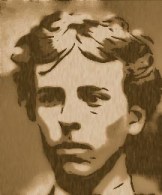 “He turned and reeled back into the adobe. Billy Wilson called out. I could tell it was him by that Yankee accent. He said we’d killed Charlie Bowdre and that he was sending him out. I replied that he could come out with his hands up.”
“I heard that someone instructed him when they pushed him to the doorway. Who do you suppose it was?”
“It would be impossible to tell. We were in shouting distance but still a ways from where we might be able to eavesdrop.”
“Could he have said something like, ‘They murdered you, Charlie, but you can get revenge, kill some of those sons of bitches before you die?’ That sentiment would be in keeping with his ruthlessness, even in the aftermath of his close chum’s mortal wounds.”
“We can only speculate as to what was said. All the same, Charlie stumbled out, his pistol still in its scabbard, and when he recognized me, he came straight at me.”
“Did he go for his gun? Did he speak? What did he say?”
“He motioned with his hand toward the shack. I think he was trying to say something.”
“He didn’t offer any regret?”
“What do you mean?”
“Perhaps he expressed remorse over not accepting your offer of leniency when you had met with him a fortnight previous. Or sorrow over leaving a young wife and child unprovided for. He might have said something like ‘I wish, I wish’ by way of repentance.”
“No. He keeled over and I caught him as he fell. I laid him down on the ground and he died right then, that green bowler pulled down over his ears.”
“I guess you could say that he died with his boots and his hat on. Did he gasp, ‘I’m dying’ or anything to that effect?”
“He was gargling and choking on his blood even if he had wanted to say something.”
“Gargling on his blood, you say.”
“It wasn’t whiskey.”
“I propose a toast, sir, to the completion of our noble effort. This modest volume is as fine a book as has ever been writ on the subject, and whose exposition sets the record straight once and for all.
No finer endeavor can man put forth than the edification of the populace, especially when they are accustomed to the fallacious assumptions advanced by the partisan press and in the crimson screed of penny dreadfuls. I hold in my hand history, pure and simple. I am confident that you share in the assessment of our triumph.”
“Yes, I don’t doubt that it is a coup. The title itself constitutes quite a mouthful.”
“The truth, my good fellow, is always a mouthful. I could have pandered to the crowd with a lurid nomination but for my sense of dignity, my sense of correctness in the pursuit of literary style, my sense of history, and above all, my sense of righteousness. Would I dare sully our genuine enterprise with such florid designations as ‘King of The American Highwaymen’ or ‘The Great Detective’s Chase’ or the supercilious puffery by that pseudonymic author who borrows on the exalted heritage of Spanish ancestry to give himself a mere hint of veracity, ‘The True Life of Billy The Kid’? I can go him one better if one equals a hundred. What I hold here, my good friend, is the authentic life of that noted desperado of the Southwest, whose deeds of daring and blood made his name a terror in New Mexico, Arizona, and Northern Mexico. It is a faithful narrative unlike the fabrications emanating from the mephitic crypt of the Atlantic literary syndicate!”
“It appears that the truth, like a new rope, can always stand some stretching.”
“To what are you referring, sir? I stand by the sincerity of our account. True, I did engage in hyperbole when dealing with the formative years of this hellion. But this is merely a literary device to engage the reader. In a duel, you don’t start off with a knife when your opponent has a revolver. We are in a contest with mendacious mongrels who slash the truth to shreds with their rabid nibs. I speak with authority on this subject as I have numbered among their rank and am aware of the crude inventions tendered as fact just to entice the reader into another month’s subscription. I have excised that pecuniary coarseness from my literary character. Truth is my mistress! I serve only her!”
“Consuela will be very disappointed to hear that.”
“Don’t try to sidetrack me, Pat, I am offended that you suspect my motivation. In the attempt to make an honorable yet marketable presentation, I have had to tread the same terrain as the purveyors of cheap cowboy claptrap. However, what I bring to the poker table is a sophisticated sense of style, wide erudition, and the simple fact that I’ve looked in the eyes of many of the participants of this chronicle. I’d say that’s akin to a royal flush!
“The entire length of our collaboration, I had as my compass the shining example of the inimitable Walter Scott. His rousing sagas of medieval times transposed to the dusty arroyos of the Southwest, this was the object of my elevated style. As for the verses in the early chapters, they announce to the reader that they have entered a domain in which the Muse is honored. Poetry is edifying, it sings to the soul. Even the most delicate of readers of this rugged yarn will take heart that they are in the company of educated sensibilities. The very ink with which all of history is written is merely fluid prejudice! I, sir, am simply diverting the flow to a higher ground!”
 “The problem is that my name on it says I wrote it.”
“Your name is your contribution and testament to the legitimacy of the account. You are the hero of this narrative. I am Boswell to your Johnson, a mere quill driver, a scrivener of tolerable skill, a shade, a genial hack. I put into words your experience, your man hunting savvy, your dogged determination in apprehending this rabid, murdering cur!”
“I was just doing my job.”
“And you’re too modest a man to flaunt your accomplishments. Yet your due is denied you. You are disrespected in the press by politicians who puff themselves up by disparaging you. Your decency is an anathema to them.”
“Another jolt?”
“My pleasure. But to reiterate, this book is a testament to a man who put himself in harm’s way to bring law and order to the decent folks of Lincoln County and the New Mexico Territory. And it is our endeavor to set the record straight.”
“Still, I am troubled.”
“Pat, I’m all ears.”
“This is not about your physical appearance, Ash.”
“Touché, old man. Continue.”
“It’s been bothering me ever since we corrected the galleys. Now I know my part was mainly in relating the facts of my hunting him down, capturing him at Stinking Springs, going after him when he escaped from jail, and flushing him out back in Fort Sumner. You wrote everything else. . . .”
“Tut, tut, old fellow, I’ll get my due just in knowing that in tandem we pulled together to create an opus of unparalleled authenticity.”
“That’s not what I’m getting at.”
“Open the sluice gates then, I’m anxious to glimpse the glint of your precious mettle.”
“You puffed up this no-account son of a bitch and made him appear thrilling and romantic just like some character in a novel. But that’s not him. He never saved a wagon train from Indians, or rode a horse eighty-one miles in six hours. If twenty Indians had chased him as you say, he would have left a trail of yellow shit a mile wide from here to Santa Fe. He wasn’t reckless and daring, he was cunning and deceitful. He always watched his back. The time he dropped his guard was the night I killed him.”
“Now, Pat, I fully appreciate your concerns. But for the thoroughness of our account, I could not have a man of your substance and very real stature go against a flimsy stick figure villain. That would not have played well, either. He had to be someone with enough flesh to give blood to the chase. If I had not allowed myself the license to elaborate as I did, he would have been nothing more than a lifeless scarecrow. I believe I made him a worthy opponent.”
“All the same, I come off badly, more like that Sheriff in England. . . .”
“Nottingham?”
“That’s the one, and that other fellow. . . .”
“Robin Hood.”
“That’s right, that’s the way you made him out to be. And I look like a damn fool. . . .”
“Whoa up, old man. It’s time to dismount and rest the horses. What you forget is that you are the hero. He is the one who killed twenty-one men by the time he had reached that very age.”
“He was lucky if he killed half a dozen.”
“Be that as it may. He was a cold-blooded killer. He could never elicit sympathy from the public. You represent justice. He represents the miscreant who must pay the toll on the road to Hell. Justice has been done. In the final verdict, my good man, the truth rests on your side of the scale. The facts speak for themselves. Everything that has bearing on this episode in the history of the Southwest is contained in this volume. Everything!”
“Not everything.”
“You don’t say. Now then, enlighten me as to my omissions.”
I have no regrets in ending the life of such a treacherous, double-dealing coward.
“When I told you John Poe had found out that our man was still skulking about in Fort Sumner, I was protecting the identity of the true informant.”
“Who was?”
“Ash, this cannot go beyond this room.”
“You have my word as a gentleman and an author.”
“It was Pete Maxwell. He was concerned that his little sister, Rosalina, was much too deeply involved with our man, and if it went on much longer that she would calf his desperate breed.”
“Pat, that news is about as fresh as last week’s El Paso Herald. Everyone knows John Poe is inept at anything but being a politician. He’s more interested in shaking hands than putting irons on them. What else?”
“As you’ll recall, when I explained what occurred at Stinking Springs, I was certain that I had him in my sights because I had been given an exact description of his apparel, right down to that green bowler.”
“Yes, I do.”
“I was sorely disappointed when it turned out that it was Charlie Bowdre I killed. When we passed back by the Wilcox ranch with our prisoners, I mentioned this to old man Wilcox, and he told me something quite surprising. He said that the night we caught that bunch off guard in Fort Sumner and killed Tom Folliard, they held a pow-wow at the ranch in which they reviled me and my posse.”
“Understandable.”
“He also told me that at one point our man made a big show of giving Charlie his vest and his hat, the two distinguishing items of clothing by which he could be identified. Charlie, it appeared to Wilcox, was genuinely touched by his chum’s generosity. Little did he know that he was being set up as a target. I have no regrets in ending the life of such a treacherous, double-dealing coward.”
“And rightfully so. History will judge you fairly, my friend. We can include that conjecture in the second edition, if you wish.”
“You think there will be a second edition?”
“Without a doubt. I’m already at work on a sequel of sorts. ‘Colorful Characters of the Southwest.’ It will be an omnibus of facts and fancy regarding our corner of the world. Pioneers like Chisum and his clan, celebrities such as Governor Wallace. . .it will include sketches of all the denizens of our locality, ranchers and sodbusters alike, brush poppers and snoozers, and wild Indians, a rich panoply of life on the frontier. It will play big back East where they are hungry for the rustic. While you are tending your peach orchards, I will be plying my pen to the work of history!”
“Did you say ‘Indians’?”
“Why, yes, I did.”
“I could tell you a story.”

 Perhaps it was the black and white cowhide vest trimmed with red piping that seemed so outlandish. The Montana peak of the Stetson’s crown was all the latest rage among the younger range hands and it did not surprise him that Brazil sported his in the same manner. The red flannel shirt was a little hard on the eyes and the stiff Levi’s pants looked brand new blue stuffed into the tops of his boots, a pointy toed, riding heel variety. And the big blood bay was enough horse for any man. Troubling too might have been the revolver the young man had strapped to his waist, but that also appeared part of a preposterous affectation. In his slightly inebriated state, the old man had the feeling that he was watching the final hand of a card game, but from a distance, a fuzzy distance.
 “I don’t care for them. They’re just a passing fancy. They will never catch on. The rich folk will use them to parade around. You can’t go any distance in the damn things without them breaking down or getting stuck and needing a horse or mule to haul them out or needing to feed on that stink water!”


 He and Black had gone out to the Cott Ranch in Black’s buckboard. Jorge had followed on horseback. Not far from the ranch house, he had left the buckboard and horse with Black and he and Jorge had gone on foot down around the bluff, following the path to the rear of the garden. They had quietly tripped the latch to the gate and quickly crossed the red tile patio to the open kitchen door. Billy Reed, a tall, burly young man with a crop of dirty blonde hair, had his back to them. He had been helping Shirley Cott in the kitchen. He had leveled his Colt at the large young man, asking, “Are you Billy Reed?” The young man had turned slowly and nodded yes. Informed of the warrant for his arrest, he had nodded his assent and extended his wrists giving the indication that he would go quietly.
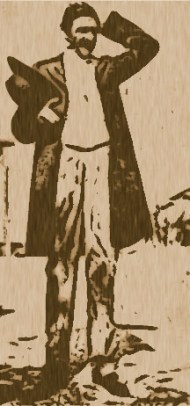 The old man would not show his profound disappointment. He managed a laugh though it was an empty one. “It makes no difference if you do or not.” He stood up, a little unsteadily, and dismounted from the buggy, leaning his shotgun against the bench. “I’ll get you off that land one way or another.” He turned his back to the two men, saying, “Think I’ll water a little mesquite myself,” and walked to the opposite side of the road. He was livid, the very notion that the deal he had counted on to reverse his fortunes had gone sour was almost more than he could stand. His legs felt weak, his gut churned, and it was not just from the aguadiente. His ears were ringing, his breathing labored. Again, Ash’s voice insinuated itself. It was as if he were calling his name, but from a far distance. He let himself go at the side of the road. The stub of cigar in his other hand had gone out. It was not worth firing up again. It was done. He tossed it aside. He was done.
 The facts of the investigation had been straightforward. A posse had been assembled soon after the postman had alerted the family to what Jennings had told him. By then, the Colonel had been overdue, long enough to cause concern.
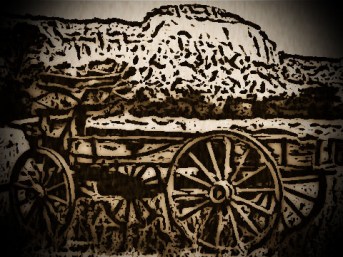 The posse had then followed the horsemen’s trail east toward Wildy Well where they knew that there was a line shack used by O’Lee’s drovers. Dog Canyon, O’Lee’s ranch house, lay just beyond. At one point, the tracks of three riders had diverged, one going southeast in the direction of Wildy Well, and the other two towards Dog Canyon. The posse had split up also. Two men had gone after the lone rider, five followed after the two headed northeast. The remaining searchers had returned to Mesilla with the wagon.
 Outrage had swept through the Rio Grande valley. A two thousand-dollar reward and full immunity from prosecution had been offered to any of the accomplices who would come forward to give evidence against the principals.
 “What with the Governor’s offer and the potential of collecting the reward, I was sorely tempted. I know that there was talk of how I rubbed a lot of people the wrong way. But the people who hired me knew that I would get the job done no matter who my enemies were.
 “By the time I was finally appointed Sheriff, I had enough evidence against O’Lee, and his accomplices, Gil Leland and Jim Mcann, that I felt I could secure an indictment from the grand jury. I was not going to be bullied by any Texans and I made no secret my intentions. I had the authority to arrest and bring them to trial. My case was ready to be made.
 The old man shook his head. “That game was played to a draw. But it wasn’t because of George Kerry’s lack of trying to precipitate a fracas. At first, they were all worried that I would start some kind of gunplay though of course they tried not to show it. I was heeled, I had my .44 Colt, and I could see by the plow handle stuck in his belt that O’Lee was as well. I calmly called for a fresh deck and had Tiptoe deal me in. The first hand I drew was a three, jack, and an ace showing, with a deuce in my hand. I drew the other jack on my last card. O’Lee, Kerry, Falk folded with Tobey paying to get a look at it. The pair of tens showing was all that he had.
 “Rudolph.”
 “The same. In fact, that’s where I first met the Colonel. Even then, he had a reputation that made Bonney look like a pipsqueak by comparison. Al Jennings was a hardheaded, no-holds-barred politician. There’s a story about him that while he as a member of the Texas legislature he fought a pistol duel with a political rival. He got the worst of it and was wounded in the shoulder but he managed to get to his horse and ride off.
 There was a special hatred for Mexicans among Texans, and O’Lee as well as the two other men implicated in Jennings’ murder, Jim Mcann and Gil Leland, were prime examples.
  Curly O’Lee was a Texas range rat, a mongrel breed all his own. Cocky, brass, and ruthless, he’d had the ambition to be a cattle baron, and the determination to attempt it. He was built close to the ground and he walked with the unsteady gait of a man used to letting his horse do it for him. Wiry, with long gangling arms stretched, no doubt, from a lifetime of roping cows, he looked like a saddle bum down from the line shack after six months. A pale moon face topped the slightly stooped shoulders. The crooked toothy smile and pale blue eyes masked a sadistic killer. His big sandy moustache seemed to float under a red puff of nose. He had what the natives called a “Yankee face”. Red, white and blue. Whenever without the big white Stetson on his head, he combed the thinning wisps of hair from one temple to the other to cover the obviously barren terrain. This was the picture of O’Lee he remembered.
 “Now you’d think that a man who was implicated in the disappearance and murder of a prominent citizen and his son would not be your likely candidate for a seat in the Santa Fe Legislature, would you?
  “Obviously you ain’t the only one. He is made out to be a respected businessman now, but he murdered Jennings and his son. That fact will never change for me. True, the jury acquitted him, Leland, and Macann, but the jury was intimidated by the ruffians and Texas cowboys O’Lee imported up to Hillsboro and billeted in the only hotel in town. Hell, the jury had to sleep in the hayloft at the livery! It was a jamboree up there. People came from all over the Southwest, pitched their tents, and lined up every day hoping to get in to see the trial. The jury got wind of what some of the tougher O’Lee guns were planning if they even considered finding their boss guilty. But he didn’t need them. His lawyer, Abe Falk, destroyed the prosecution’s case. The attorney for the Territory was a political hack from Santa Fe who could have cared less who O’Lee had killed. He had been sent to make sure that Falk, the Democrat, did not win. Everyone knew that. What had been a clear-cut case of kidnap, murder, and conspiracy was made hostage to political maneuvering. What I had believed to be right and the law suddenly shifted in the political wind like it was no more than the smoke off this cigar!”
 Ash had admonished him against politics more than once. He had had his ambition to sit in Santa Fe, but Ash had told him, “You’re too upright a fellow to be mingling with those old foxes.
  Santa Fe was being pressured from both Washing-ton and the local citizenry to resolve the case and bring the criminals to justice. The Sheriff of Dona Ana County at the time was doing nothing because of his fear of O’Lee and the fact that they were both Democrats. Everyone knew or said they knew who the guilty parties were. O’Lee’s confederates tried to blame it on disgruntled Mexicans. That was highly unlikely as Jennings received much of his support from that segment of the population. The most widely accepted version was that O’Lee had done the deed or had hired someone to do it.
 Ash had the habit of adding flourishes to the facts. He, on the other hand, felt confident only to tell the facts the way he had experienced them.
  Dime Pulp