
by Helene Baron-Murdock
 Donovan followed Delphi Road up the lee side of Mount Oly. The narrow paved road wound around the base of the coastal peak still shrouded in fog. Vistas of dry yellow grass and oak woodlands, dotted in the near distance by grazing animals, stretched on either side broken occasionally by a trailer home set back under a cluster of trees or a barn and some farm machinery. Driveways were indicated by rural mailboxes and posts marked with large red reflector buttons. Some areas included sheds, corrals, and chutes indicating working ranches. Then a manicured hedge, stone or stucco wall and large wrought iron gates spoke of money that could afford to live that far out and not worry about the commute.
Baxter had remarked when he’d pulled up to the fire station, “They got you driving an unmarked patrol ride now?”
He could have offered the explanation that his assigned vehicle was in the shop for routine maintenance. “It’s a nostalgia ride,” he’d answered instead. And that it was. It certainly rode heavier than his sedan and just tapping the accelerator said that there was more under the hood, much more. It had taken a few miles on his return to the coast to get used to the dashboard mounted shotgun in his field of vision again. And the heads-up display mapping the road ahead along with speedometer and a variety of indicators that he didn’t want to bother deciphering, made him feel like he was in the cockpit of a fighter jet, or what he imagined that would be like. The radio was a new high end digital voice activated model that did just about everything except talk for you. At least the rig was still equipped with a push bar on the front end, a pit bull bar to tactical drivers, that hadn’t changed. It was a familiar space, nonetheless, one he had not been in for many years, more high tec than he remembered, but the sense of 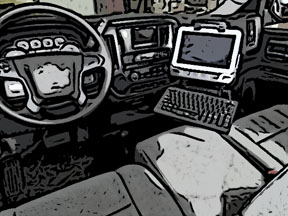 identity as law enforcement, of purpose at its most elemental was still there. Gadget porn was not his thing yet there was also something to be said for its effects.
Curious, he’d checked his console mounted computer for the County GIS topo before leaving the fire station. There in big red letters was the warning, Restricted Area, hashed over with wide red bars obscuring the topographical features along with the small print Federal Code citation. He’d switched to satellite image and encountered a blur no matter how far down he zoomed in. It didn’t make any sense, and that bothered him.
Baxter had laid out an old site map of Camp Minnoknosso across his desk. “This is what it used to look like before the feds took over.”
Donovan followed as the fire chief’s finger conducted the tour. “These squares here represent the tent platforms scattered along the main trail kinda like in a maze. Back then, the site had a functioning fire lookout staffed by the gals here at the high point in a structure they called the Mini-Tower. It’s the highest point on this part of the coast. Unobstructed view all the way to the east side of the county. Of course, no telling what it looks like now.”
“When did all this happen? Was it in the news? I don’t recall it being disseminated in operational bulletins.”
“Oh, probably ten or so years ago. There were protests by the local tree huggers when the land was handed over to the feds.”
Donovan remembered vaguely. He’d been in Narcotics at the time and his focus had been mainly on gangs and drugs. “No one’s been up there since? Folks around here must be curious about what they’re doing up there.”
Baxter shook his head. “There’s some who’ve tried. Met with dogs and armed patrols on ATVs. Scared the bejesus out of most of them. They’ve got a helipad up there and occasionally there’ll be heavy duty whirlybird traffic flying in and out. Road up’s been blocked and according to some when you get up close all of a sudden your GPS and digital gadgets stop working or go glitchy like there’s a big electronic shadow over the whole area. Once you get past the second cattle guard up on Delphi you’re playing by their rules. Some folks report being harassed or being run off the road by security vehicles.” Baxter didn’t hide his disgust. “It’s like someone took a dump on your living room rug and won’t let you get near it.”
Donovan had just bumped over the first cattle guard as the road began winding up through a switchback toward the summit. The landscape had changed from rolling yellow hills to a mix of a tangled foliage, pine, and fir into whose upper reaches the coastal fog lapped. He encountered the first yellow and black road sign, Not A Through Road and Turnout Ahead. He passed the turnout and a few hundred yards later rumbled over the second cattle guard. There followed a red and white sign with a more forceful message Do Not Enter Restricted Area Ahead Authorized Personnel Only. The road had stopped climbing and around the next curve he encountered the barricade with the same red and white sign and an even more dire warning Lethal Force Authorized. The road at that point was too narrow to make a three point turn and he had to back up to a break in the thick roadside understory.
 Once he nosed the front end into the gap, he saw that it was the beginning of an obscured fire road. He steered around the rutted unpaved path several hundred yards in to a clearing and a cyclone fence topped with razor wire. Along with an identical red and white sign threatening lethal force and the specific Federal Codes that allowed the authority was another official sign.
He stepped out of the sedan, following with his eye the fence as it disappeared into the woods on either side of the gate, and walked up to the sign. Large letters stated Defense Advanced Research Projects Agency followed below by an even larger set of initials, IDA, the acronym revealed by the third line as Institute for Dynamic Application.
“There’s a name that says a whole lot of nothing,” he muttered to himself. Requisite fine print followed, restating the prohibition on trespass and the likelihood of death by armed guards.
Before getting back into his rig and returning to Delphi Road, he took a picture of the sign and the fence with his smart phone, and peered through the diamond links at the road continuing further on into an overarching tunnel of trees.
He didn’t noticed at first, occupied with mulling over the implications of the restricted zone, on auto pilot as if he were in his own sedan. The heads up display was showing just a row of meaningless blank squares, the GPS was flashing like it was trying to establish a link to a signal, and the readout on the radio console scanned furiously from one end of the band to the other.
He’d had the training on the new Voicue radios. “Manual” he spoke. The readout scanning stopped and showed a set of red zeros. “Channel 3,” and the frequency flashed on the display once and then read Channel 3. Nothing but static from the speakers. So much for high tech. At least the mirrors were still working.
Donovan glanced in the rearview again. Now the hint of vehicle he’d noticed earlier as a vague shadow rounding a bend in the road behind was gaining steadily and soon was close enough to make out the blocky front end of a government issue Suburban. Then it was in tailgate range.
He maintained his speed anticipating the road ahead while considering his options and any evasive action he might need to take. He gripped the wheel. With a high powered roar, the dark hulk overtook him and passed close enough to cause his ride to shudder and almost leave the pavement. Then the tinted window Suburban was in front and no longer accelerating as the road made a gentle curve in its decent into the switchbacks before the straightaway to the valley floor.
Another glance in the rearview and his suspicions were confirmed. There was another Suburban drawing up behind. Whoever they were, they weren’t playing around.
“10-BOY-9, what’s your 10-20” It was a long shot. The SUV behind was closing fast. He was about to try the coast deputy again when riding a garbled static wave came the transmission, weak, distant, “. . .oy-ni. . .elphi. . .oad. . . .” Whatever he’d said, it sounded like Greek to him.
Donovan started down the switchback in among stands of eucalyptus, thick foliage on the upside and the downside of the narrowing road. The vehicle in front was slowing, brake lights flashing. He was in a pocket, and it was making him sweat. The adrenaline had kicked in. “BOY 9 confirm you are on Delphi Road.”
“Victor 5, affirm,” the radio crackled.
As the vehicle ahead started into the outside turn, he closed on it. “Code 30. I’ve got two 11-54’s, one on my tail and one hindering forward progress. Code 3 to my location. Evasive tactics in progress.”
 He took a breath. How long ago had he taken that advanced tactical driving course? Something you don’t get much practice doing once you become a detective. He closed on the bumper, aiming the bull bar for the right rear. Current speed dropping to 30 MPH, he had to hit it just right. Activating the lights and siren as a distraction, he wheeled a sharp turn. The bull bar made contact with the outer edge of the Suburban’s bumper. He accelerated, pushing the large SUV off center to deprive the rear wheels of traction. The Suburban went into a skid, swerved to regain control but only ended up facing the way it had come, what Tac drivers euphemistically called a “committed lane change,” both side wheels dangling over the steep drop.
There was enough of a gap on the inside heading into the next turn. Low branches and shrubs scraped the driver’s side, snapping the sideview mirror. Donovan pulled a hard right as he approached the bend, engaged the emergency brake long enough to fishtail, cant on two wheels, and come down facing an unobstructed road. Punching the accelerator he skidded around the last switchback at top speed. Out in the clear he had a good view of the road snaking its way up the gentle curve of the coastal hill and the flashing lights of the patrol unit speeding in his direction. A quick glance in the rearview and it appeared that his pursuers had given up the chase.
He pulled over to the side of the road adjacent a sagging rusty barbed wire fence holding back a large field of tall dry grass. And waited for the patrol unit to arrive. He was shaking, breathing hard, the adrenaline sending his heart rate through the roof. His eyes were watering and he had to step out of the vehicle. He held the door open and used it do steady himself.
Royce pulled his unit to a stop and shut down the flashing lights. He stepped out and jogged over to Donovan. “You alright? What’s going on?”
“I had a couple of dreadnaughts on my tail, they tried to get me in the pocket.” He took a breath. “And they weren’t at all friendly about it.”
Royce was nodding, a look of concern in his eyes. “You gonna be alright?”
Donovan laughed. “Yeah, yeah. Just as soon as my asshole unpuckers.” He laughed again, looking back the way he’d come. “I’m good.”
“I thought you knew about the top of Mt Oly being off limits. That’s why when I heard you going 10-8 to the old Girl Scout camp I thought I’d head up to warn you off. But I was all the way down at Argo State Beach coordinating with the new Park Ranger down there.”
“How long’s the restriction been in effect?”
Royce shrugged. “I don’t know. It was that way when I took up this post. That’s what it says in the procedure manual for the coast district. The feds want hands off, no peeks, no peeps, their personnel handles everything up there. It’s their own private country. They get to do what they want and how they want was the way it was explained to me by the coast deputy I replaced.”
“Baxter says there’ve been complaints of threats, intimidation by their security?”
“Yeah, I’ve taken complaints, sent them on for review. Next thing I know the complaint’s been dropped. Word comes back to me to warn potential hikers in that vicinity to steer clear. The ranchers round here know the drill so I don’t hear from them too often.”
Donovan’s head shook in disbelief. “No, this is bullshit. I’ll be looking into this.”
Royce smiled in return. “You mustn’t be planning to retire any time soon. You’re gonna run into an avalanche of paperwork that’ll keep you in the courts till you’re pushing a walker and dragging an oxygen cannister.”
“You’re probably right, but what the hey, if I’m on my way out, why not stir a little shit, light a fire under some bureaucrat’s ass.”
Royce’s radio squawked. “10BOY9, status of VICTOR5?” He keyed his epaulet mic, “Code 4.”
“Request VICTOR5 10-21 SAMOCEAN1,” dispatch returned. “10-4.” Royce answered and then to Donovan, “Sounds like the Sheriff wants a word with you.”
“Won’t be the first time,” Donovan said as he looked up from his device. “Finally got an ID on the flyer, and not coincidentally, a frequent flyer.” He held up his device so Royce could see the booking photo. “Dwight Carey.”
“That’s Ike! Or ‘Ikey’ as he’s known at the Sparta Creek Trailer Park.”
“You know him?”
“I’ve had interactions with him, 5150, disorderly conduct mostly. He gets a little manic when he’s off his meds. Not violent. just what you might say, too happy.”
“That scares people.”
“Apparently.”
“I’d like to go to Sparta Creek Trailer Park and ask around about Ike Carey. Interested in being my tour guide?”
“Follow me.” Royce started toward his unit. “Aren’t going to call the boss?”
“Why bother, he’s only going to chew me out,” Donovan said, getting back behind the wheel, “and after what I did to his brand new tactical rig, can’t say I’d blame him, but I’m not interested in getting my ass chewed over the phone. If it’s going to happen, I’d rather it be in person, and later in the day. Otherwise, I’ve got work to do.”
 The gravel road into Sparta Creek trailer park ran along a wide dribble of questionable water between sand dunes and beach grass, and was accessed from the paved road that wound up to the parking lot of the overlook popular with hang gliders. A few bright colored sails had drifted down onto the wide beachfront as he turned off the coast highway and followed Royce down the narrow track into the nest of antique trailers, really tiny homes, rusty camper shells, and lean-to’s, most supplemented with one or more blue tarps. He didn’t want to guess how many vehicle violations were parked in front of the dilapidated aluminum dwellings. A profusion of surf boards, either atop of dune buggy type vehicles or leaning against old board fences, spoke of the occupants’ preoccupations.
Royce said he wanted to check up on the victim of the domestic from the previous day. Being a long time resident, she would likely know Ike Carey. Her name was Heron. “Like the bird,” he’d added.
The woman who stepped out from under the awning of the trailer had a young face struggling to stay that way framed by a tangle of gray and blond deadlocks. A bruise burnished one cheek and above the other, a pale blue eye contained by purple lids engorged with blood. Skinny tan arms clustered with tattoos jutted out from an oversized mauve down vest and across her chest, pale thin lips turned downward, licked by a nervous tongue.
“I wondered where he’d got off to.” She dropped her head and shook her mane, “So sorry to hear. I just thought he’d gone off with Dad.” She paused to give Royce a meaningful look. “Besides I had other things to deal with.” And addressing the deputy “They gonna let Billy go? I ain’t gonna press charges. He was just mad cause I loaned his car without asking.”
“Dad is his father, his next of kin?” Donovan wrote in the battered notepad he carried in his jacket pocket.
“Uh, no, don’t think so, just an old guy everybody calls Dad, kinda looks like that poster of Einstein, you known, big floppy moustache with the tongue sticking out? He stays mostly up in the parking lot with the hang glider schleppers. And so does Ikey. Kinda funny, they are almost like father and son, the way I’ve seen them argue and get on.”
“Schleppers?”
“The guys the hang gliders hire to carry their gear up to the highest point above the overlook.” She pointed up toward the top of the cliff, scrawny wrist bespangled with bracelets. “We call them schleppers, kind like Sherpas, because they have to cart the sail outfits up a skinny dirt trail to the higher point and help with the setup. Course they can’t go to the highest point because of the dogs and barbed wire.”
Of course. The other residents knew about as much as Heron did about Ike Carey, or even less. They all agreed that Dad did not live in the trailer park but showed up every once in a while to watch the hang gliders. He didn’t have wheels according to one resident because he had asked to borrow his Datsun station wagon. “Said he’d give me a hundred bucks, he just had to get to Santa Lena for a doctor’s appointment. I wanted his driver’s license for collateral. That stopped him. But the next day, he shows up with this out of State drivers id. So I said what the heck, a hundred bucks is a hundred bucks.”
“Remember what the name on the id was?”
“Well, it wasn’t Dad, that’s for sure. Daniel something. Something weird like Ailess or Ailuz, I don’t know.”
Donovan sat at his desk where the real work got done unlike how it was portrayed on TV cop shows. Detective work was essentially paperwork, scanning the details, sorting the facts, gathering the evidence. He had a friend who was a program analyst for Social Services and she had put together a timeline spreadsheet template for him. All he had to do was fill in the cells with approximate times and dates, add a few notations, and look for any patterns that might emerge.
Working backward, 12 to 36 hours prior to the discovery, calculating the dates which placed the TOD within a two to three day period. He had interviewed a few idling schleppers in the overlook parking lot. No one had seen Dwight Carey for at least two days prior to his drowning. When informed of the young man’s death, one of the schleppers had mentioned something about going into a “white room.”
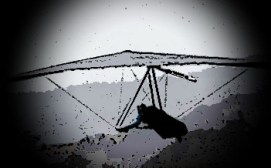 He consulted his notebook. A “white room” was the interior of a cloud and a very dangerous place to be as it was disorienting to the hang glider. Entering the white room was also a term used to signified someone who had died while hang gliding.
Had Ikey gone into the white room and had that led to his demise? Not unless someone else had also been in the white room and gut shot him. The bullet had entered the abdomen above the hip. Whoever shot him would have been positioned lower or below the subject assuming that he was in the air and attached to a pair of homemade wings. He examined the stick figures drawn and numbered in his notebook. Number one was the victim, number two, the assailant. Obviously #1 was in the air. Where was #2 standing when he or she fired the shot? He had a hunch.
Quizzing the schleppers and the gliders waiting for what they called “magic air,” Donovan had learned that there were three spots to launch from: the overlook by the parking lot where mostly beginners were “chucked off the hill” by their instructors, and the next highest point on the bluff overlooking the beach some three to four hundred feet further up where the “sky gods” might “glass off” and no “launch potatoes” were allowed. The third level was for the advanced “airborne,” as they were sometimes called, high enough that sky gods or goddesses might catch a “bullet thermal” and “speck out,” but it was no longer accessible because it was in the restricted zone. That had been the most frequent gripe in all the interviews, that the government was spoiling their fun.
The phone on his desk warbled. He stared at it, distracted. He had a good idea who it might be and let it go to voicemail.
Looking over Carey’s arrest record, he came across an old booking entry, almost a dozen years prior. His first, in fact. Resisting arrest at a demonstration by the local environmental group, EAF, Earth Action Front. He’d required hospitalization and had been released on probation. There’d been a lawsuit, dismissed. All subsequent arrests had been for disorderly conduct, nothing criminal.
Donovan paused his finger on the keyboard and then with a few deft pokes called up the EAF file. It was password protected. He paged back through his notebook. He wondered if they had changed the password since the last time he’d accessed a secure file. They hadn’t.
The EAF dossier was mostly routine. Court orders for communication monitoring, CI interviews, a few audio files indicating listening devices. He was surprised at the extent of the coverage. EAF (the D is silent, as the cops liked to say), once a fairly radical militant group, had not made the news cycle in quite some time, now mostly affiliated with more mainstream enviros, limiting their activities to leafletting and demonstrations. He scanned the membership list. No surprise, there was Dwight Carey’s name.
Dad had come up in the interviews about Ikey with a few of the schleppers. No one knew where he lived. Not at the trailer park, that had been confirmed. He’d show up out of nowhere. Some suspected he was camping up the hill near the old waterfall. He always dressed in the same ratty blue coveralls. Ikey followed him around like a lost puppy. Nor had Dad been spotted in the last few days. One of the schleppers had mentioned that he thought that Dad might have been going somewhere. The last time he’d seen him was the same morning that Ike’s body had been found. He looked different, too, shaved off his moustache, slicked his hair back, might have even cut it, wearing a sports jacket and slacks.
Donovan stared at the notebook where he had written Daniel “Dad” Ailess followed by a question mark. What was his connection to Ike Carey’s death, if any?

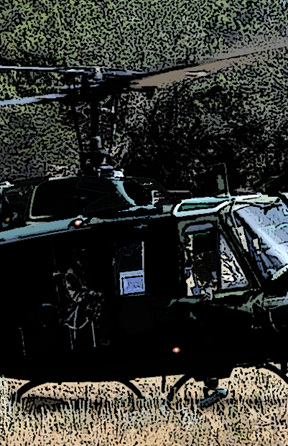 He heard it first, and the black chattering shape grew larger coming in from the southwest. The chopper swept low over the farmhouse and then back toward the access road where he’d been waiting by his sedan. There was a wide spot in the stubble field beyond the gnarly giant live oak near the entrance to the front yard. A tornado of fine beige dust and sand engulfed the chopper as it set down. The rear passenger door opened once the dust settled and two figures stepped out.
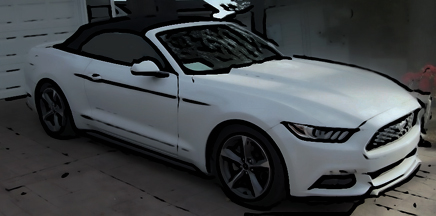 of the small backyard crowded with a detached garage probably built in the early fifties. It was a sturdy two hundred plus square feet that housed his personal vehicle, a Mustang convertible boy toy, a midlife crisis gift to himself. Maybe the original owner didn’t like mowing the lawn although the piebald patch of turf in the front yard had been well maintained when he bought the place almost twelve years ago. He was the one responsible for its current shabby overgrown neglect. So what was he hiding under the slab? Bodies? Something that had occurred to him more than once. Cop thinking, he called it.
 He remembered the day well, Valentine’s Day. He was on a domestic violence call on the west side of Santa Lena, in an unincorporated neighborhood on High Creek Rd. A rundown two story Queen Anne knockoff in need of some TLC fronted the High Creek address. Just inside the door a shaggy white haired unshaven older gent lay in a heap at the bottom of a flight of stairs. Accident, at first glance, yet the man was naked below the waist, his pants and briefs wrapped around his ankles. That appeared to have been the cause of his fall. At the top of the stairs sat a woman in a wheelchair, close in age to the dead man. With her was a social worker from Adult Protective Services or Apes, as they were sometimes called, a young woman in her thirties with shiny caramel colored hair and a bright green overcoat. She had a pretty face, but it was marred by a frown and severe expression. She was the one who had found the body and called it in. First responders had arrived about the same time as the deputy. They’d both agreed, a coroner’s case. Something the Ape said to the deputy had made him request a detective from Violent Crimes.
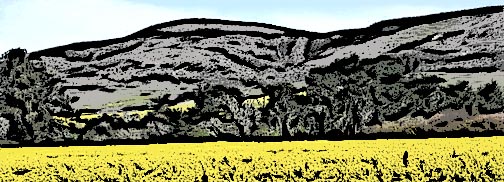 Weston County in February was awash in yellow mustard and acacia blooms. A political compromise in the early 20th Century had created Weston County as a trapezoidal wedge between the conservatives of the Anderson County timberlands to the north, and the well to-do liberals in the agri-burbs of Tolay County to the south. Weston was a sampler of both of those ideologies and equally representative in its topography. To the West, Weston was bound by the rugged coast and the wide blue yonder of the Pacific. Consisting mostly of sparsely inhabited timberland vacation destinations and upscale enclaves notched into and around sheer granite oceanside cliffs, it stretched north to the county line as a continuation of the coastal range. The south and east of the county were taken up by arable lands, home to vineyards, orchards, and truck farms encroached on, steadily and year after year, by housing developments and the attendant paving.
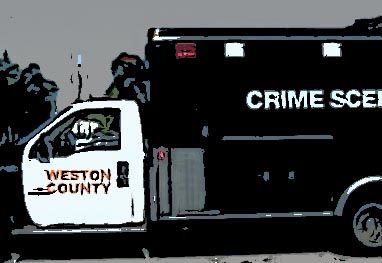 Nelson indicated the Crime Scene van and the elderly woman seated on the passenger’s side with the door open. “Mrs. Elma Snyder. Lives in the granny unit out back. Didn’t hear a thing. She found the bodies.” And as an afterthought, “The tech, Fisher, knows her.”
 The sitting room immediately inside the front door was just as immaculate and well cared for as the verandah. Had it not been for the bodies. The tech had placed yellow A-frame number placards by each of the corpses. Donovan stood in the middle of the room and observed the position of each of the dead men. Number one and two, caught sitting, right between the eyes, mouths still open in surprise. Number three, not quite a center shot and may have been standing by the way he had fallen over the arm of the chair. Four looked like he had a defensive wound on his right hand, but the bullet tore right through it and entered just below the right eye. Number five caught a slug just below the laryngeal prominence and then another at the hairline. The efficiency of the killing was chilling.
 Woodrow Ames, also known as Woody, was an animal behavior vet who deprecatingly called himself a glorified dog-catcher. A green County issue mesh ballcap held down the explosion of curly red hair that topped his skinny frame. And anyone one who knew Woody would agree with the assessment that he was fastidious about his uniform attire. A neat freak as the not-so polite would say. His new assistant, a young woman, retrieved the wire lasso at the end of a length of pole and he directed her to walk parallel to the fence in plain view of the large mastiff, attracting its attention. In the meantime, he retrieved a long dark case, the kind a pool shark might carry his professional cue in and extracted two long hollow tubes that he fit together to form an even longer tube. One end was fitted with a round rubber mouthpiece. He propped the blowgun on the open window of the driver’s side door of his truck, inserted the dart in the opening of the tube, and positioned himself to aim. His assistant, glancing back over her shoulder once, moved closer to the fence and the dog on the other side that had by then worked itself into a froth of rage.
 Donovan shrugged. “It’s a CYA operation. Considering the identity of the road burger, everyone who’s politically connected is going to want to be in on it, if for no other reason than to cover their asses.” He stopped a short distance from the carnage, a crumpled upended vintage sports car. “That an old Porsche?”
 “Yes, when a large wave breaks close to shore it makes a thunderous noise hitting the sand. The ancients called it the ‘bull of the sea.’ They meant Poseidon, of course.” She pointed to the slide show on a flat screen TV mounted on the wall. “Here are some photos of the recent sculptures we assembled. And the artists. And their friends.” She froze a frame with the remote. “And this is Pol.” The photo was of a young, very handsome man with a long dark mane and a captivating demeanor.
 Donovan closed his notebook and turned to leave. “Thanks for your time. Sorry if I inconvenienced you.” He stopped at a small shelf near the entrance to the gallery to look at a bronze statue of a nude woman with a stag’s head that would make a nice base for a table lamp. Inscribed on the pedestal was the artist’s signature, R. Temis.
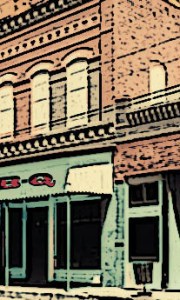 The pulled pork sandwich was as good as it got at the barbeque joint Donovan favored in Old Town. Since the Fed had an expense account, he sprung for lunch. Dabbing a corner of his mouth with a napkin, Donovan continued, “It wasn’t originally my call. This is about two years ago. We had a new guy, Hutter.” Butler nodded like he knew the name. “And Collins, who was undersheriff then, had me go in and back him up. Considering that it was at the Horsemen’s compound, he thought that it might be a little intimidating to the new guy. I’d dealt with Herko before so I wasn’t going to be put off by his bullshit.”
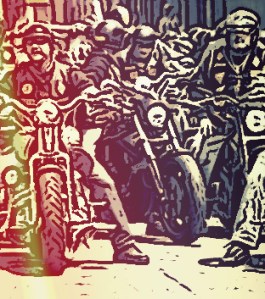 When they wheeled Herko into emergency he was screaming that he was on fire. He struggled against the restraints on the gurney and finally broke free of them. He careened down the hallway in agony, tearing at his clothes, his cut, his shirt, insisting that he was burning up. An EMT tried to tackle him and got a blast in the chops from an elbow that landed him crumpled against a wall. Security and deputies who were attending a stabbing call joined the fray. They tased him but he merely ripped the barbs out of his skin and continued to rage, batting at anyone who came near him. He raised his dusty leonine head and roared at the ceiling, digging his nails into his bare flesh. He fell to his knees and gasped for breath. Then he was silent and dead.
 “It’s all there in the report, Tim. The slug they dug out of Nesso was a .223. Stopped right in the center of the heart. The DEA’s undercover confirmed what I suspected. Herko had a trophy room, strictly off limits to anyone not in the inner circle, on the second floor of the compound with a large window overlooking the undeveloped field that abuts to a number of rural dead ends about a mile away, one of them being Willig near where we found Nesso’s body. Herko had a shooting range set up in the room that allowed him to target practice in the vacant lot behind. He had everything in there, competition rifles worth a couple grand easy, tripods, sandbags, scopes, range finders. Looked like he did his own loads, too. Apparently, according to one of my sources, he did a lot of plinking from his perch.

 The dog had almost strangled itself on its tether chain trying to get to him when he approached the gate. He couldn’t be bothered and had gone back to his sedan to call dispatch.
 “That’s all they had left at the souvenir shop.” He wasn’t going to tell them it was a present from Miriam, the emergency room nurse he’d been seeing. She’d gone back to Baltimore to live with “her people” as she’d told him. The coast was just too white. Even the black folk were too white. She’d sent him the bobble-head to say that she still thought of him. Not that he was a baseball fan. Miriam knew he cared only for round ball.
 “Right, that’s the Horseman compound right there and home of Jerzy Herkovanic, the president of Apocalypse Inc. So anybody in that neighborhood knows better than to report gunshots or even a gunshot.
 Dime Pulp