
by Pierre Anton Taylor
From the wide window of his penthouse in the Legacy Arms, Wayne Bruce considered the whirling tempest. The wind whipped the flurry of flakes against the skyscrapers, obscuring them at times and then just as quickly revealing the ranks of tall buildings impervious to the onslaught. It was not a time to try out his aerial antics in search of crime in the inner city. He still felt the weight of guilt from his last foray, the deaths that had resulted in his breaching of the abandoned building where the drug lab had been housed.
Shock headlines had claimed that the inferno was the work of a vigilante, one who had been rumored operating in the East Central part of the city. Talking heads decried the lawlessness. The District Attorney was quoted as saying that taking the law into one’s hands only leads to tragedy. And that no matter how well meaning, the fight against crime was best left to professionals. She also vowed to apprehend the perpetrator of these attacks.
At the city paper news desk, a reporter with the byline of Valerie Vicks had written a feature article on the mysterious crimefighter who had so recently set out to battle rampant crime and corruption in one of the city’s poorest neighborhoods. Relying on witness testimony and rumors, the reporter had pieced together an ineffectual campaign against crime. She had pointed out a very significant flaw in the “pseudo crusader” plan. The unspoken truth was that it wasn’t a problem one man could solve. Even if he were the wealthiest man in the world.
But this late afternoon, with the snow storm shutting down the city, that wasn’t the only thing weighing on Wayne’s mind. Robin, with assistance from the engineers at BATS Lab, had been able to bypass the encryption allowing access to the laser disks from the old man’s surveillance system. The data load, they’d ascertained, was light, signifying that the system was relatively new or had been used only occasionally. There was a remote control wired to the recorder at the old man’s desk that would allow him to record meetings in his office at will. The time stamp on the recovered video displayed the dates they were recorded, going back a little over eighteen months and argued for its relatively recent installation.
When he’d viewed the material, what he’d seen was his father, Wallace Bruce, in meetings with his staff. And his brother, Harold, of course. Usually one of his secretaries would be visible taking notes. And when she wasn’t, it was an occasion for cigars and scotch, and as old Dad had once remarked, “when the real business gets done.” Linus Pall was present in many of the recordings. As his father’s lawyer and physician, it was to be expected. Then there were men he didn’t know or recognize, businessmen, corporate leaders, like old Bruce, and from the cut of their suits, they afforded luxury and privilege. Even meeting their ilk in person as his father’s protege, he’d felt the prickle of irritation at their mannered superiority. Whoever they were, they were serious in their disposition, severe in some respects, which had immediately aroused his suspicions. And there were no secretaries taking notes. The audio track had been corrupted in the process of extracting the visual data resulting in garble and white noise. Robin had assured him that the lab techs were working on reconstructing the data but it would take some time.
Seeing himself had been startling at first. He rarely went to corporate headquarters and to the old man’s eagle’s nest, or belfry, as he’d sometimes thought of it. He was too busy with his extracurricular activities. And the times he was present were generally social or ceremonial affairs judging by the cocktail glasses. Charlotte was in a few of those, as was Trish.
There was one instance Wayne remembered specifically discussing the trip to Mali. Dr. Fledermann was present as well, sour faced, wanting to object to what old Dad was saying, and recalled it as the moment that Wallace Bruce had appointed him as the director of the BATS Lab. He had not been aware of it at the time, but Feldermann was staring daggers at him when his father made the announcement.
For the most recent footage, it appeared that the recorder had been run continuously, activated by a motion detector, time stamped over a period just before and shortly after Wallace Bruce’s death. It appeared that the old man had been in his office late the day prior, and following there had been a flurry of activity by staff, frequent visitations from Harold issuing orders and looking over papers handed to him by old Dad’s confidential secretary. Dr. Pall made a few appearances, often accompanied by Harold. It didn’t seem unusual. His uncle was taking charge of the reorganization. Pall had been his father’s close advisor. They had reason to consult. In one instance their body language indicated a disagreement, a dispute in which Pall had placed a finger in front of Harold’s face, agitated and emphatic in what he was mouthing. Wayne read what Pall was saying. It looked like he was saying “Charlotte.”
Wayne had replayed the footage to make certain he was hearing what he was seeing. There was no doubt, Pall was distinctly mouthing Charlotte’s name but anything else was lost in guess work. Harold’s reaction had been just as vehement in the denial of what the doctor was insisting. He replayed the footage in his memory. What were they arguing about? The time stamp indicated that it had occurred on the day of the old man’s funeral. Pall and the acting head of Bruce Enterprise were meeting in his father’s office later that day. He could understand that they might want to conduct some post mortem business, strategize, but how did Charlotte figure into the picture? He had broken up with her, true. It was a decision he’d made upon his return from Mali. He wanted to reconsider their engagement. Although he enjoyed her company, her wit to his darker proclivities, their pairing was taking on an air of inevitability, as if it were following a script. And he had other ideas. Questions.
Who was he, and who did he want to be? Shouldn’t he be satisfied with the benefits of the wealth he was heir to? Or should he pursue the mission of justice for the sufferers of misfortune at whose root was the corruption and wealth of the privileged few? It left him sleepless, an insomnia that only death could cure. Sleep would only come with the resolution to the mystery of his father’s death. As for the end to the injustice in the world, nothing but a dream, a fitful ache that begins in the gut, the ancient seat of knowledge, and ends up between the ears as a throbbing obsession. It would be easy enough to continue as a prince of industry, and never question the path of his career, as a leader, as an innovator, perhaps? He had such ambition, his father’s spirit lived in him, only quieter and maybe more disaffected of the vanity that comes with privilege. Yet now at the prow of his future, he was being pulled into an undiscovered country, one that coupled compassion with a thirst for a specific vengeance against the oppression of capital. He could be a champion of those proud people who suffered at the whims and scorn of insolent corporate greed. That the disadvantaged should be returned their birthright, a freedom to live or die, to sleep, to endure untroubled dream’s advantage. It would be easy enough to let that inclination toward justice die on the vine. Was it really his to regret? He had made a commitment to Charlotte, and although he had broken their engagement, he understood that it could be easily repaired, attributed to the shock of his father’s sudden death. It would please his mother, certainly, and Pall would be placated, undoubtedly poised to insert himself at the beginning of a commercial dynasty. And Harold would be satisfied to helm Bruce Enterprise as president and CEO without any immediate threat from Wayne. But he couldn’t let a guilty conscience make him a coward, let his better instincts be overshadowed by overthinking. His short stay in the refugee camp had upended his world and he had resolved to make a difference, a momentous decision that could not be ignored as merely wishful altruism of a new money aristocrat. And there was his father’s ghost and the suspicious circumstances of his death.
Wayne had uncovered in the process of moving his wardrobe into the penthouse, the metal traveling case that had belonged to old Fledermann. It was sitting in the middle of the desk in the study. So much had transpired since his return from Africa. The metal case with its field notes had lost in importance. He had snapped the locks and opened the case that emitted a sharp acrid odor, one that he immediately recognized as that of the arid lands of the Sahel. A metal clipboard still gripped a sheaf of stained dogeared notes and lab reports. Vials of sand were secured in a row in the lid of the case. File folders wedged into the bottom along with a few prescription pill bottles that had nothing to do with the research. The old scientist had been having heart palpitation and other health problems, one of the reasons why Wayne was replacing him as head of the Lab.
Wayne flipped through the papers attached to the clipboard. Nothing caught his eye, the letterheads suggested that they were all interdepartmental memos. The clip board had a compartment on its back, and he undid the clasp. A manila envelope fell out and onto the desk. There was no addressee or return address. As he picked it up he saw the note that Harold had sent him via messenger on the desk. It was about the family meeting he had scheduled the next day before the reading of the will. As a postscript his uncle had added “Charlotte will be in attendance.”
That had left him conflicted. He didn’t understand why she would be present at the family meeting. And he thought he had been quite clear that his decision was firm, they would not be wed. It occurred to him that Trish and Harold might be trying to affect a reconciliation. He wouldn’t put it past Trish. And there was Linus Pall. He had a vested interest in their union.
Wayne turned his attention again to the sealed manila envelope. It was bulky, too bulky for documents. As he picked up the ornate letter opener from the blotter, his pager pinged. He knew what number was on the display without looking at it. It was the ghost of old Dad’s, calling him to the Battery Works. Someone was in trouble.
He dialed a number and punched in a code. It was something he had worked out with Robin. He changed into his bike leathers, checking the watch on his wrist. If he didn’t receive an answering page, he could assume that she would be in the parking garage in fifteen minutes. He accessed the service entrance to the penthouse and rode down to the basement in the freight elevator. He waited in the shadows of a pillar in the underground parking garage, a blind spot to the security cameras. Before too long, the distinct sound of a motorbike echoed in the cavernous space. Robin steered the bike to a dark corner and dismounted, leaving the keys in the ignition. She unfolded a large shopping bag when she reached Wayne and handed him the helmet, depositing her bundled riding gear into the bag. Undoing the ponytail, she let her long red hair fall to her shoulders.
“You know there’s a blizzard out there, right? And it’s freezing,” she said with a shiver.
“I’ll wait till you board the elevator before I leave. Take a cab back to your place and I’ll meet you there when I’m done.”
“You sure you don’t want me to ride with you? That seat holds two.”
“No, not this time.” Wayne watched in silence as a party of couples exited their parked car and strolled casually to the parking garage elevator. “Ok, here’s your chance.”
“I know I don’t have to say this but, watch your back,” Robin cautioned over her shoulder.
Once the elevator doors closed, Wayne rode the bike out into the traffic of the blustering snowstorm whipping between the concrete and steel canyons. If there were watchers tonight, they most certainly were seeking refuge from the storm, and their surveillance likely impaired. He dodged the cabs, and few limousines, lumbering commercial carriers and delivery vans until he reached the outskirts of the downtown area, and sped east toward the bleak snowbound fringes of urban decay. He knew that city would not deploy the snowplows until after midnight. He would have to make his own way through the drifts and snow banks. The wind was howling like a banshee, effectively muting the sound of the motorcycle’s engine. He wiped the accumulation of snow and ice off his visor. His approach would not be noticed. The streets were deserted, and he wondered who would even be out in such weather intent on inflicting thoughtless misery on others. Penn Quinn’s Tavern appeared deserted although a red knot of neon glowed in the small oval side window.
Wayne meant to access the Battery Works from the alley behind the shuttered candy store as he had done on his stealth missions several times before. The narrow rutted path was blocked by a drift. He dismounted and muscled the wheels through the snow. On the lee side, he made out an overturned shopping cart, tufts of snow caught on the metal ribs and covering the piled boxes and clothing in disarray. Someone homeless had abandoned their cart to seek shelter he assumed. Then he noticed the boots, and the legs attached to the boots, and the body stretched out against the wall. He recognized Laverne Early, the woman they called the cat lady. When he reached her she was still breathing. He sat her up and spoke her name. She cautiously open her eyes and belched a sour wine breath at him. And then, eyes wide with fright, she screamed, “What have you done with my Cat?”


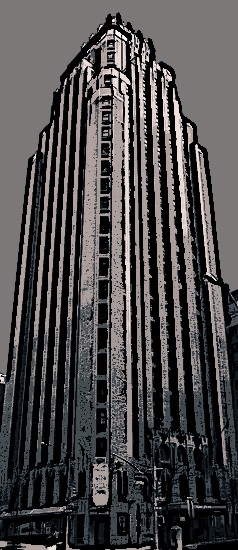
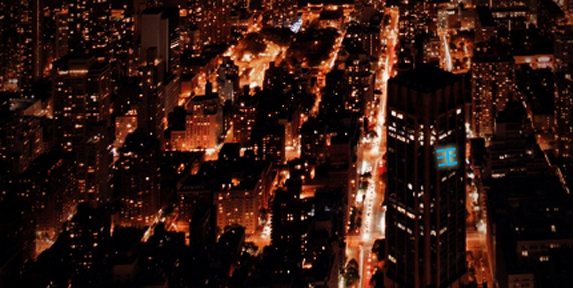 He was occupying his father’s penthouse apartment now, a perk on the company dime. He could survey the entire city from his perch at the wide window looking out onto the marble deck of the balcony. The landing lights of a passenger jet heading for the municipal airport that the city council was now slated to vote on naming the Wallace W. Bruce Airport crossed his field of vision. The parallel arrays of lighted city streets and the winking red tail lights and white bright head light beams that travelled them. The cacophony of neon marking nightclub entertainment and dining, the garish ostentation of major brand billboards, the imposing corporate skyscrapers with their lighted empty offices emblazoned with their two story logos. Bruce Enterprise being one of the pretentious eyefuls with it cryptic minimalist brand of three horizontal lines followed by a full height vertical line and the three mirrored parallels again. BE, a minimalist icon if there ever was one. How many times had he stood at that window, taken in the night lit panorama and stopped his gaze at the office tower only to be nudged by that famous quote he often parodied: “To be or not to be is not the question.”
 The car service had picked him up and taken to the country club, his regular driver, Cornell, affirmed. That was just before ten. The country club listed his tee time for a foursome at ten. Linus Pall was one of the quartet, Aldo Ring, a city councilman, and also a name that was not familiar to him. One of the staff at the Pro Shop said she’d heard that there had been a loud argument in the locker room between Doctor Pall and another man who was not a club member but a guest. The restaurant staff served Mr. Bruce at his usual table and he had had his usual French Dip and iceberg lettuce salad with tomato and mayonnaise. And of course iced tea.
 When Wayne showed up at the club, it was closed but someone was inside cleaning up. It was a large open warehouse bay, painted black, catwalks skirting what was ostensibly a dance floor, cluttered with the debris of the previous night’s activity. There was a bar near the front of the door. The man sitting at the bar stool with the push broom in his hand was the manager as well as one of the bartenders, the DJ, and sometimes the doorman. His name was Peter. He’d looked at the corporate photo of Wallace Bruce and shook his head.
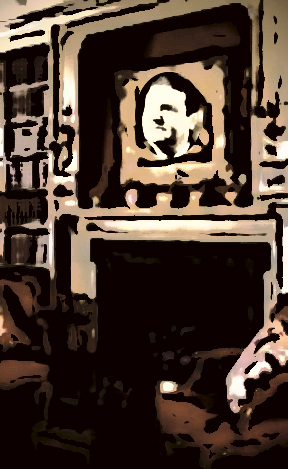 Accompanying by his cogitations, Wayne’s pacing in the book lined study had brought him in front of the gas fireplace and the large portrait oil of his father that hung above the marble mantel. The old man hated the painting Trish had made him sit for as a mark of his status as a captain of industry. Old Dad had made many disparaging comments about the painting, particularly at the pretentiousness of such a display, and had hidden the canvas at the back of the wardrobe in master bedroom of the penthouse. Wayne had found it and restored to its spot above the flickering flames of the fireplace.
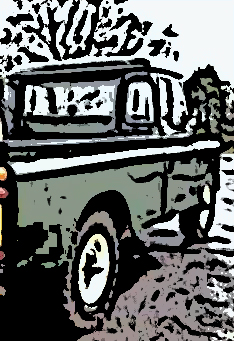
 The late afternoon sky, losing some of its color, was hastening toward dark. A barricade of clouds hemmed in a sinking autumn sun, scattering its light as feeble rays. The hazmat team from the BATS Lab had packed up after a forensic sampling of the soils at various depths of the contaminated area and a thorough scanning of the site with sniffers. He could expect results overnight. He folded and stowed his protective gear in the utility box in back of his ’79 Land Rover. It was a souvenir of his time in Mali. The thing he liked about the old rugged square cab Rovers, although they weren’t built for speed, was that they came in any color you wanted as long as it was green. As well, the bed was long enough to hold his matte black BMW R12 motorcycle in its canvas sheath. If he wanted to go fast. The beeping pager brought him out of his reverie.
 Wayne Bruce retrieved the device from the pocket of his leather jacket and scrolled through the display. Uncle Harold had called multiple times. Everything was Urgent and ASAP with him. And a number he remembered as belonging to Detective Gordon James with Metro Homicide. There was a third number that he didn’t recognize. Very few people had his pager number and he was certain he knew all of them.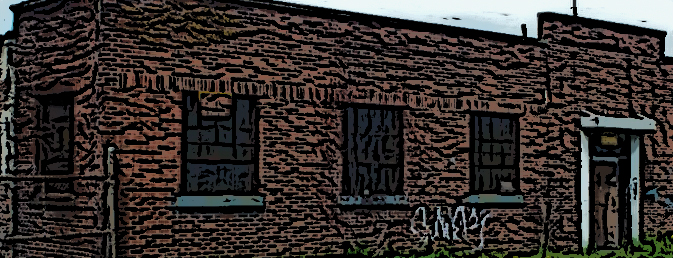
 “I might have figured as much. Do you remember Laverne Early or was that after you were sent away to school?” At Wayne’s shrug, he continued. “When the battery business started booming and your old man began diversifying, they expanded the accounts department. That’s where Laverne worked for a couple of years. There was a rumor that she might have been seeing the boss’s brother, your uncle Harold. He was in charge of sales back then. He was quite the ladies’ man in his younger days I heard tell.
 Once on Grant, the traffic was considerably heavier than in the old neighborhood it bordered. He weaved through traffic, stopping at the light before the freeway entrance. No sign of them. His choice was to continue down Grant or get on the freeway. But would they stick to surface streets considering that the raised four lane could take them further and faster? That was the question. He raced up the onramp at the change of the light and encountered the going home gridlock. No one was going to go anywhere fast. It was like a slow moving parking lot. There likely was an accident further down, but as far as he could see, it was a horizon of rooftops inching up the overpass incline. And there in the middle of it, in the number two lane, was the black box he was looking for.
 The funeral was huge and, not surprisingly, resembled a business convention. The social occasion of old Bruce’s death itself required accommodations for those who had come to pay their respects. Politicians, local dignitaries from various denominations, prominent financiers and corporate honchos crowded the large assembly hall. Harold Bruce had made the arrangements with the exclusive Green Cove Country Club for the post interment reception which was beginning to have the air of a celebration on the verge of a cocktail party. Moderate words of tribute were spoken, tearfully, by Trish, his mother, huskily, by Harold, his uncle. Respectful, ardent words by others who had known and worked for and with him, a saint, a devoted father. When it came his turn, as the younger generation should have the final word, he had been as gracious as a psychopath, echoing their praise with a chorus of his own to the gathering of family, friends, and business associates, yet all the while considering that among them was his father’s murderer.
 “But wasn’t it an emergency?”
 “Crazy,” Wayne smiled, tucking the card into his inside jacket pocket, and glanced back at the tee box now in darkness and imagined the red canvas roof of the golf cart dropping down behind the mound and heading for the fairway. A silent vow welled up and tightened his jaw. Justice. Justice for old Dad. If it’s the last thing.
 Dime Pulp