
by Phylis Huldarsdottir
Cast of Characters (Partial):
 Captain Lydia Cheése (pronounced “Chase”), Airship Commander for Aerosud, a luxury liner airship company based out of São Paulo in the Empire of Brazil, who is searching for her father, Commodore Jack Cheése, an outlaw and antigovernmental rabble rouser.
 Professor Doctor Jean-Pierre Serre-Pain, proprietor of Madame Ophelia’s Ophidiarium, a traveling snake show, who has abducted Lydia to get her to pilot an illegal unregistered airship to HOAR (the Horn Of Africa Republic) on a mission of mercy in exchange for helping her find her father.
 Serpina, a young girl who serves as Serre-Pain’s assistant and snake handler and who is also a psychic Vessel.
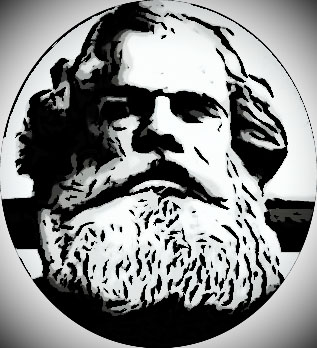 Vlady, an older bearlike man also in the employ of Madame Ophelia’s Ophidiarium and a traveling circus strongman Lydia recognizes from her past.
 Pyare, a young man with dreams of being an airship pilot, and member of LBFDS (the League Bousculier Francaise Du Sud) helping Lydia and Serpina rendezvous with Serre-Pain and Vlady at an illegal airship.
 Pax Victoriana, a period of peace imposed by the Clockwork Commonwealth and its enforcement arm, The Admiralty, dating from the beginning of Queen Victoria’s reign to the present for a total of 180 years which includes the TSR (Temporal Shift Realignment) of 56 PV (1893 AD) after which Commonwealth calendars where recalibrated to reflect Her Royal Majesty’s peaceful rule (following the devastation of the first Pandem and its resurgence 30 years later as Pandem II).
 Chief Inspector Karla Kola, head of the IOTA squad charged with capturing Commodore Jack Cheése and Lydia’s nemesis and pursuer.
Chapter XXV
Lydia felt dirty. She hadn’t washed in days, really washed bio clean in weeks. Her pores were caked. And a hard rain was falling, chilling the air and blocking the light. They had made it to the chapel just as the rain began. The primary reason the chapel was abandoned was that it did not have a roof. A stone archway and overgrown trellis provided a refuge of sorts out of the rain from the downpour. Pyare had removed the slot velo’s bioweave tarpaulin from the boot and they clustered under it as large drops splashed in the pooling rain at their feet.
Serpina had withdrawn into herself, huddled, arms folded acrost her chest. Pyare was agitated, scowling and fidgeting. They had hidden their vehicles in the underbrush overtaking the crumbling stone walls at the edge of a deep darker wood. Now they awaited a let up in the weather. They could travel cross country following the occasional stream or animal track and the contours of the landscape keeping to a southwest direction. They would undoubtedly run into clansmen. Everything depended on which of the clans they encountered. If they were Fourierists or Communards, there could be a problem. Briefly that was Pyare’s plan and he assured Lydia that he had an acutely sensitive sense of direction.
Lydia had not been impressed. With the best of luck it would take them at least two days to reach Autre Lyons. The biobars were not enough to sustain them over that time.
“We’ll have to go raw,” he’d offered cavalierly, “We’ll forage, berries, wild fruit, gardens, maybe even fish.”
The thought still alarmed her. Organic material. Lydia shuddered.
Why am I here? She stared at her hands clasped before her around her knees. It was simple enough, or started out that way. She remembered her father as the most reasonable of men, except. There was a flash point. She’d heard stories, and witnessed once while her grandmother, Brie, was dying, the incredible energy of his anger. The last time she saw him was when he wished her good luck as she left to train at the Admiralty Air Academy. Brie had passed the year before and left her son a small fortune, large even by Commonwealth standards. He was never around much, traveling. She never really knew him as an adult. And now ten years later she was a hunted fugitive because she was looking for him.
Jack Cheése had retired as a ranking officer in the Admiralty Medical Corps, a top bio research clinician with the rank of Commodore, as had been his father, Harvey T., and the aged patriarch, great grandfather Bart who had been in the forefront in the fight against the global black mold infestation and variant spoors which some had claimed was an invasion from a hostile planet, disproved by great grandfather and his formulated bacterial strain that neutralized the spread of the invasive rapidly reproducing mold. Bart was one of the heroes of Pandem One, as they called it, a team of men in white lab coats conducting tests, analyzing, experimenting, failing, succeeding, and finally producing a strain that would stop the replication. From that work a number of novel bacterial strains were developed and later refined to serve industry and society. A second outbreak, long after the great Bart had retired, of a mutating fractal variant that further devastated large regions of the globe, especially in the Northern Hemisphere, wiping out vast tracts of forests and grass lands down to mineral soil. Grandfather, Harvey T, was involved in what was dubbed Pandem Two, but primarily in research on the campus of the Mendel Institute for Biological Research which had developed the reproductive drive, the technology that revolutionized modern airship transportation. She had never learned what her father’s work involved only that it was top secret. His retirement from the Corps was unexpected, hardly anyone retired from the Admiralty, but was attributed to his mother’s death.
When she returned at holiday break after her first semester she found him gone, He had disappeared, leaving not a word. His friends in Rio Paulo were mystified. Everyone feared the worst, an accident. Polite inquiries were made with the police, hospitals, a missing person’s report filed. IOTA was notified as he was a retired Admiralty officer. The men in the black hats had interviewed her, asking their probing insinuating questions. She was put off by their arrogant demeanor.
And then it was time to return to the Academy overlooking the dunes of Gdansk. She’d considered dropping out when she received a message in the most unlikely place. She had wandered into a bookstore in a plaza near the family home in Rio Rio which everyone pronounced Rio-io. She was browsing for something to keep her mind off the worry for her missing father and resigning her dream of becoming an airship captain.
She’d picked up a book titled Don’t Tell Anyone, the story of an illicit affair late in the reign of the Queen, around the time of her rapprochement with her nephew, Wilhelm. It was by the bestselling Commonwealth author Anthony Blair, also available on voice box. It was on a table display of a new memoir of a Panam War veteran titled, I Am Alive. She was also attracted by a rather bold spine that read Have Faith in large gilt letters.
Lydia had returned to the Triple A, as the cadets called it, and resumed her studies and training under the sponsorship of the Brazilian airship behemoth, Aerosud Luxury Air Ships. Friends in Rio Rio kept her apprised of any news of which there was none. Jack Cheése had disappeared without a trace. The Emperor’s secret service had closed its investigation. She had friends and in-laws at the Court in Nova Brasilia because of her Guzman connection, her husband being one of that royal clan. No one knew anything or was saying anything if they knew. He was missing and presumed dead.
She had graduated at the top of her class with distinction as well as a gold medal in combat arts in her final year, defeating the reigning champion, her Russair rival, Karla Kola. Her compulsory two year service in the Admiralty Air Corps was spent in an intelligence brigade stationed at the Clockwork Commonwealth’s embassy compound in Greater Houllas in the Slave State Republic of Texas in charge of the lighter than air transport pens, an assignment certainly well below her abilities. She did distinguish herself during the Bushwhacker Rebellion, ferrying hostages to safety after the ceasefire. She should have been stationed at the Admiralty Headquarters in Greater London, but that post went to Karla Kola, her raven haired nemesis. The feeling that she had been singled out, sidelined, isolated from the real intelligence action stayed with her through her service. Upon discharge she began her career as an airship pilot, rising in rank to Captain with the honorific of Commander when she was put in charge of the large luxury dirigibles.
It was while she was stationed in Greater Houllas that she’d first heard the rumors of an anti-government agitator known as Commodore Jack. She had gone to the favelas that had grown up around Greater Houllas and found herself in an early American artifact shop. The shopkeeper, obviously a native with long white hair and a scar on his forehead, had eyed her suspiciously. She browsed among the artifacts of the old West, native bead work and antique weapons, arrowheads and real skin moccasins. On the door to the shop was an announcement for a boxcast titled The Queen Is Light, The Victorian Mirage, one whose subject would be banned in the CC, by an underground boxcaster who went by the name of Commodore Jack. She noted that the broadcast was on a prohibited band, one most certainly monitored by IOTA as not only was it illegal to tune in to the frequency but it required some illegal modifications to the box receiver filter. In the lawless USSR, those prohibitions were regularly ignored, despite the treaty with the Crown.
The modifications were easy enough to make on an unsanctioned box she bought on the black market. She recognized the voice of the boxcast immediately and it shock her so that she had to power down the device. Once the spinning of her thoughts subsided and the realization that it was her father’s voice, she tuned back in to the banned frequency. Yes, it was her father spewing toxic chemtrails, a soup of gibberish antigovernment conspiracy theories and ICER propaganda, and invective against the royal family, especially the crown prince, Victor, whom Commodore Jack claimed was a hologram. It was trash and she was mortified that it was in her father’s voice. She soon learned, after discrete inquiries, that Commodore Jack’s boxcasts were immensely popular in the unaffiliated states of North America and on the African and Indian subcontinents. She couldn’t comprehend that her father would subscribe to such sloppy thinking and base idiocy. It disgusted her.
Nonetheless, she was determined to find him. Perhaps he had been kidnapped by anti-monarchists and rebel environmentalists who were predicting a climate change that would cover the earth in glaciers. She felt that she had to talk to him, convince him of his error, and if all else failed, commit him to a care facility in Rio Rio. Her first inquiries resulted in visits from the men in the black hats with more of their insinuations. She realized then that she was under surveillance by IOTA.
She had hit upon a solution. She remembered that her father read the London Tines, a micro-macro manufactured food gastro culture magazine, religiously. He read every word even the classified ads at the back of the magazine. She had placed her notice asking for information to his whereabouts using her father’s childhood nickname of “Pepper” along with a tidy reward to be paid in Victorines.
The answer had come in the person of Jean-Pierre Sere Pain and his itinerant medicine snake show at which point she was effectively kidnapped to pilot an unregistered airship from the vicinity of Autre Lyons to Djibouti in the Horn Of Africa Republic, a rat’s nest of air pirates, Icers, and anti-Commonwealth discontents, on a mission of mercy. In return for her assistance, she would be reunited with her father or at least receive assurances of his proof of life.
Which was how she found herself listening to the rain beat on the tarp covering her and her two companions and watching pearls of light form along its frayed edge.
Chapter XXVI
A house stood attended by large oaks and surrounded by a gaggle of geese, picking and rooting and disputing loudly suddenly alert to their presence. The house was quiet in itself and a lazy canopy of smoke hovered about the chimney and indicated that it was inhabited. The road leading up to it appeared well traveled and as Lydia and her companions drew closer they could make out a faded signboard hanging over the entrance. It depicted a lion and a bear in an embrace, either dancing or fighting. The geese raised a ruckus and reared back with their wings flapping in challenge to the intruders.
The trio had spent the previous day slogging through the underbrush. Once the rain had let up, they had left the soggy shelter of the abandoned chapel, their destination, the vague misty shape of the steep sided razorback ridge of the upper Massif. They made their way slowly, laboriously, climbing higher, scurrying across the barren fields from copse to copse of trees and in the shadows of large boulders. They’d watched the air activity taking place below, close to where they had just left, from their vantage point on the steep hillside. The gendarmes had deployed observation blimps and light gliders that circled over the tree tops like birds of prey.
Once the sun went down, they had had to take shelter under a rock outcropping on the upside of the slope. The bio energy bars had long been devoured and their trek having itself devoured the consumed energy, they ended up hungrier than ever. Fortunately Pyare had had the presence of mind to roll up the tarp, slinging it over his shoulder, and they huddled under it, keeping close to each other and sharing their exhaustion and sweaty body heat.
The earthy scents assailed Lydia’s nostrils. It reminded her of bivouacking with the other cadets in her squad at the Air Academy. It had been pleasant because of the camaraderie of her peers. And she didn’t dream that years later she’d ever be called to experience exposure to the elements again. She didn’t feel like making small talk, numb as she was from the encroaching cold. And Pyare’s enthused optimism had retreated to dour brooding. Yet Serpina’s physical closeness to the young man had turned her cheeks rosy, eyes half closed as if she were seeing something at a distance.
The discomfort of the makeshift shelter had caused them to continuously shift position and displace previously advantageous perches in trying to seek some comfort on the rough rocky ground. Finally, Pyare rolled himself up into a ball and Serpina spooned him, Lydia having no other choice but to wrap her arms and the trap around both of them.
First light found them cresting a ridge and staring down into a rough rock strewn valley coursed with ravines and fissures. Conifers and oak groves dotted the rolling expanse as clumps of bright greenery.
Serpina had pointed down to a layer of smoke hovering above a row of oaks. There was a small settlement in the crook of a paved road. They knew that they could get food in the village but also ran the risk of being detained by the local militia. They’d agreed to keep to the fields and the hillside, avoiding the inhabitants if at all possible. They could easily be mistaken for refugees and turned over to the authorities.
Pyare had gone ahead of them to reconnoiter, looking for a farm or an orchard where food might be found. He’d returned shortly grinning, a smear of purple around his mouth. He had found an abandoned vineyard and had retrieved a few clusters of grapes the birds and animals had missed.
Serpina had plucked the fruit eagerly. Lydia was a little more cautious. Ingesting unprocessed organic matter was something she was not wild about. She had brought the deep purple pearl to her nose to gauge its scent, but that told her nothing. She put it in her mouth and rolled it around her taste buds. Earthy, but then she was covered in dirt so why should it matter. She bit down. The liquid that filled her mouth shocked her and she’d almost spit it out. A sweet sourish taste that wasn’t entirely unpleasant led her to sample a few more until she was no longer concerned that the fruit was not factory grown.
Somewhat refreshed they’d followed a stream from which Lydia had wet a handkerchief to wipe some of the dirt from her face but according to Serpina’s comments, now her face was streaked with mud and she looked like a wild savage.
It was about then that they crossed a little stone bridge to find themselves before the public house at the sign of the bear and the lion guarded by a flock of geese. Accompanying the honking fowl was the aroma of cooking food which hasten their advance at the behest of their stomachs.
Lydia in the lead paid no heed to Pyare’s comment that they were about to encounter one of the clans, the most dreaded of them all, the Ancient Order of the Phalange, if the sign board said what he thought it meant.
 Dime Pulp