
by Pat Nolan

“Let’s begin the proceedings. How does the defendant plead?”
Billy Brazil stared blankly at the magistrate. Then, as if startled, answered, “What’s that?”
His lawyer, Abe Falk, leaned over and whispered into his client’s ear.
“How does the defendant plead?” the judge repeated.
“Not guilty, your Honor,” Brazil replied quietly.
“Very well, Mr. Prosecutor, call your witness.
“I call Mr. Adams to the stand.”
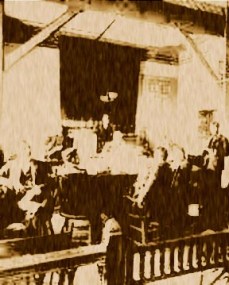 Adams, his green bowler clutched to his chest, took his seat in the chair next to the magistrate’s table.
“Do you swear to tell the truth and nothing but the truth so help you God?”
“I do.”
“State your full name for the record.”
“Charles Adams.”
“To the best of your recollection, what took place on the road to Las Cruces?”
“I stopped the buggy to urinate, and while I was standing there, I heard the old man say ‘Well, damn you, if I don’t get you off one way, I will another,’ or something like that.”
“Where were these people in relation to you?”
“The old man was in the buggy and Brazil was on his horse. They were at my back.”
“So you did not see the deceased standing upright at all?”
“I think when I seen him, the first shot had been fired and he was staggering.”
“Did he fall to the side, to the front, or to the rear of the buggy?”
“About two feet to the side.”
“Where was the defendant at the time?”
“He was on horseback, about even with the buggy. He had a six-shooter in his hand.”
“Who fired the second shot?”
“My horse bolted and I had to grab the lines and wrap them around the hub of the wheel to stop him from running. Then I went over to where the old man lay.”
“What about the defendant?”
“He was still on his horse and about in the same place.”
“Did the deceased speak?”
“When I got to him he was just stretching out. He did groan a little, and he might have said something. It sounded Mexican.”
“And what was that?”
“I can’t be sure.”
“Could you venture a guess?”
“It sounded like he might have said quien es?”
“What about the defendant, what did he say after all this had transpired?”
“He did not say much. He said, ‘This is hell.’ and he handed me his six-shooter.”
“Your Honor, I have no further questions.”
“Very well, Mr. Adams, you may step down. Mr. Prosecutor, call your next witness.”
“I call the Dona Ana County medical examiner, Doctor Fields, to the stand.”
A large man with a wide intelligent brow and graying muttonchops removed himself from the chair behind the prosecuting attorney’s table and strode to the witness stand.
“Do you swear to tell the truth and nothing but the truth so help you God?”
“I do.”
“State your full name for the record.”
“Walter Charles Fields.”
“You are the medical examiner for the County, is that correct?”
“Yes, it is.”
“Can you describe what you found when you arrived at the scene of the crime?”
“I found the deceased in a six-inch sand drift about four miles from town on the road to Las Cruces in an area known as Alameda Arroyo.”
“And what was the disposition of the body?”
“The deceased had been shot twice, once in the head and once in the body. He was lying flat on his back, one knee was drawn up. His trousers were unbuttoned and his male organ was visible which would indicate that he had been urinating at the time he was killed.”
“Was there a weapon at the scene?”
“Yes, there was. A shotgun identified as belonging to the deceased lay parallel to his body about three feet away. It lay on top of the ground without any sand kicked around it.”
“And what were the findings of your autopsy?”
“The deceased had been shot twice, one shot hitting him in the back of the head and emerging just over the right eye. The second shot was fired when the deceased was on the ground, the bullet striking the region of the stomach and ranging upward.”
“Thank you, Doctor Fields.”
“When a man is shot in the back of the head, he does one of two things with what he has in his hand. Either he clutches it convulsively tight or he throws it wide. There were no signs in the sand that the gun had been violently thrown. I would therefore conclude that this could not possibly be a case of self-defense as claimed by the defendant, but murder in the first degree.”
Abe Falk leaped to his feet. “I object! The witness offered conclusions that go beyond the scope of the original question!”
“Mr. Falk, this is not a trial, merely a hearing to determine the circumstances. . . .”
“All the same, your Honor, I respectfully request that the last comment by the witness be struck from the record.”
“Very well. Objection sustained. Doctor Fields please restrict your answers to questions asked by the prosecutor. Mr. Prosecutor, you may continue.”
“No further questions, your Honor.”

“Quien es?”
“That’s all he said?”
“Near as I can recollect, yes.”
“Could you see his expression?”
“No, he was pretty much just a shadow.”
“So you couldn’t tell if he saw you.”
“No, I don’t think he saw me.”
“Then why did he ask, ‘Who is it?’”
“He was asking Pete who the boys on the front porch were.”
 “And Pete was in his bed.”
“That’s right, and I was crouched down in the dark next to him.”
“How did you know it was him?”
“Pete said, ‘That’s him!’”
“Then what happened?”
“I shot him.”
“How many shots were fired?”
“Two.”
“He fired back then.”
“No, both shots were mine.”
“What did you do after you shot him?”
“I got the hell out of there. I didn’t know if I’d killed him or just wounded him.”
“He was armed, though.”
“I couldn’t tell at the time that I shot him. Later, after I was sure that he was dead, I saw that he had a butcher knife in his hand.”
“I find it hard to believe that a desperado of his reputation would be walking about without a firearm.”
“He did favor that self-cocking revolver.”
“He didn’t have it on him?”
“I didn’t see it if he did.”
“Did you look for it?”
“No, once he was dead, I figured that no amount of pistols were going to make him any more dangerous.”
“Pat, I’d hate to think that you shot an unarmed man.”
“I had no way of knowing if he was armed or not, Ash. I wasn’t going to take the chance that he was and ask him.”

“You had a chance to see how cool and calculating he could be, when you were operating Beaver Smith’s saloon over in Fort Sumner, didn’t you?”
“He had come in with some of his compadres. That lot had been in there a few times before. They generally behaved, hoisted a few and played cards like most of the regulars.”
“I’ll wager he did like to belly up to the bar.”
“Can’t say that I ever saw him take a drink of liquor. He was partial to the paste boards, though.”
“Yes sir, he was adept at cards from a very early age. I should know, I boarded at his mother’s establishment in Silver City. He was quite a handful even in those days.”
“As I was saying, I was engaged in a game of chance at a nearby table and I had a good view of the goings-on.”
“Some hold that poker is more of a game of skill than chance, Pat.”
“Ash, you know as well as I do that when I play poker, it’s a game of chance. . .there’s always a chance I might win!”
 “Sir, your wit is like prairie lightning, bright and dry. Allow me to top your glass off with another jolt. But, please, please, continue. . .I apologize for my interjections.”
“One of their bunch, an hombre with the go-by of Grant looked to be getting pretty damn drunk pretty damn fast. He yanked a six-shooter out from an old saddle tramp’s scabbard at the bar. He waved it around, keeping it away from the old man, teasing him. He was an accident waiting to happen.”
“Certainly, that gun could have easily gone off and pelted somebody with a lead plum.”
“The boy came over to Grant, laid his hand on the pistol, said a few quiet words to him, and got Grant to let go of it.”
“That should have been the end of it.”
“Well yes, but no sooner had he gone back to his game, Grant snatched up the revolver again, walked be-hind the bar, and began breaking bottles and smashing glasses. I’d about had it with him by then.”
“I’ll say. He’d made himself pretty unwelcome.”
“But before I could get to him, little Jimmy Chisum collared Grant and was about to do my job for me.”
“Jimmy Chisum, now there’s a rooster.”
“Grant turned on him like a snake caught by the tail. He threw down on him with that old tramp’s six-shooter and cocked the hammer back.”
“That sounds like a mighty close situation.”
“Things got very quiet right about then. But as I said, the boy was a cool customer. He walked right over to Grant and said to him ‘why don’t he put that gun down and get the hell out of here before someone gets hurt.’”
“Now Grant was not a greenhorn desperado, was he?”
“That’s right, and he was on the prod!”
“But the kid was cool as the shade.”
“He didn’t take his eyes off Grant. And Grant, who had the look of a man gone too long to the bottle, was suddenly as sober as a country Baptist. What’s more, he had the drop on him. Then he said something like ‘now, you little bucktoothed sonofabitch, I got you!’ and he pulled the trigger.”
“What happened?”
“Nothing. The gun misfired.”
“You don’t say.”
“And they weren’t any further apart than you and me.”
“What did he do?”
“He blew the man’s head off. I was finding bits of brain behind the bar for weeks!”
“Last week you talked about how you couldn’t scare up a posse to go out after him and his gang. How did you manage to secure the assistance of the Canadian River boys?”
“The Panhandle Cattlemen’s Association had charged them with locating and bringing back stock that had supposedly been rustled by the men we were after.”
“So just who were those Canadian River boys?”
“Damn it, you know as well as I do who they were, Ash!”
“Refresh my memory, Pat. For the purposes of our narrative and the eventual readers of this book, it’s important that we get the details right.”
“Let’s see. Frank Stewart, of course, Lee Halls, Jim East, Lon Chambers, a character they called ‘The Animal,’ Poker Tom, and Tenderfoot Bob. Charlie Siringo was among that bunch, but he and a couple of others declined to take up the manhunt. I didn’t blame them, they were mostly cowhands. That was not what they had hired on to do.”
“Stewart must have understood that if you captured those boys, the stock depredations would most likely stop.”
“I had developed information that the men we were after had been seen in the vicinity of Fort Sumner.”
“Yes, you might say that Sumner had a fatal attraction for him, like a moth for a flame.”
“Once there, I had the men lie low and keep their presence concealed. I took a turn around the Plaza. There I ran into old man Wilcox’s son-in-law, Juan. I had suspicions that he might have information I was after. I was right. He had been sent to town by the gang with instructions to return and report on the lay of the land.”
“All right. Hold up while I get all this down. This was in December of ’80, am I correct?”
“That’s right. The weather had been particularly bad. A blizzard had blown through just the day before. There was a foot of snow on the ground if there was an inch. ”
“Good, good, weather conditions are important. They set the scene for the events about to transpire.”
“Juan confirmed that the men I wanted were at his father-in-law’s place. I knew Wilcox was a law-abiding citizen, but had he betrayed them, they would have killed him without second thoughts.”
“They were nothing if not cold blooded and ruth-less.”
“It seems that they had planned to come into town the following day with a load of beef. They learned that I was on my way to Sumner and so Juan had been sent in to size up the number of my force.
“I asked Juan if he would work with me to set a trap. He agreed immediately. I hunted up someone I knew to be sympathetic to these men and forced him to write a note saying that my party and I had left for Roswell and there was no danger. I also wrote a note to Wilcox stating that I was in Fort Sumner with my men, that I was on the trail of the gang, and that I would not let up until I got them. I gave the two notes to Juan. I warned him not to mix them up as his father-in-law’s safety depended on it.”
“You were confident that if those boys took the bait that they would ride for Fort Sumner that night.”
“That is so. I also knew he would be leading his gang. . .”
“Consisting of. . .”
 “Dirty Dave Rudabaugh, Billy Wilson. . .”
“A wanted murderer and a counterfeiter.”
“Tom Pickett, Tom Folliard, and Charlie Bowdre.”
“Guilty by association.”
“The old military hospital building was on the east side of the Plaza, the direction I expected them to come in from. Bowdre’s wife also occupied a room in that building. I figured that they would pay her a visit first. I took my posse there, placed a guard about the house, and awaited the game.”
“The boys got the cards out and engaged in a little prairie pastime while we waited. It was getting on dark and we had secured a room in another part of the old hospital to keep out of the cold. Snow was lying on the ground increasing the light from the full moon outside.
“Around eight o’clock, one of the guards called from the door, ‘Someone is coming!’ They were two hours earlier than I had expected them. ‘Get your guns, boys,’ I said, ‘None but the men we want are riding tonight!’
“Lon Chambers and I stepped out onto the verandah. The rest of the men went round the building to intercept them should they aim to pass on into the Plaza. The gang was in full sight approaching. Folliard and Pickett rode in front. I was close against the adobe wall hidden by the harnesses hanging there. Chambers was next to me. They rode up until Folliard’s horse poked its head under the porch. I called out ‘Halt!’
“Folliard reached for his pistol. Lon and I both fired. His horse wheeled and ran. I fired at Pickett but the muzzle flash from Lon’s rifle had blinded me and so I missed him.”
“I’ll bet he was taken aback.”
“You would have thought by the way he ran and yelped that he had a dozen balls in him.”
“What about Tom?”
 “Folliard was crying and moaning. He had received his death. He managed to wheel his horse and ride back toward me. He called out, ‘Don’t shoot me, Garrett, I’m killed!’ One of my men ran out toward him, yelling, ‘Take your medicine, old boy, take your medicine.’ I warned him off. ‘He may be killed but he’s still heeled and liable to spit lead!’ I stuck to the shadows. ‘Throw up your hands, Tom, I’m not going to give you the chance to shoot me,’ I said. His horse stopped right in front of where I was standing.”
“Did he say something like ‘I’m dying, goddamn it’?”
“He moaned some. He was doubled up in the saddle.”
“I’ll wager he said something like, ‘I can’t even lift my head!’ and ‘It hurts, it hurts.’ And finally ‘help me down, let me die as easy as possible, boys.’”
“I don’t recall his exact words if he even spoke any. He was in a world of pain.”
“What happened to the rest of the gang? How did they fare under the onslaught?”
“During the encounter with Folliard and Pickett, the party on the other side had engaged the rest of the gang, had fired on them, and killed Rudabaugh’s horse. I learned later that it ran twelve miles under him, to Wilcox’s ranch, before it died. Soon as my men fired, the remaining outlaws ran off like a bunch of wild cattle. They were completely surprised and demoralized.”
“But Tom Folliard’s luck had run out.”
“That it had. We unhorsed him and disarmed him and laid him out on a blanket on the floor of the hospital. He begged me to end his misery. ‘Kill me,’ he said, ‘if you was ever a friend of mine, Garrett, you’ll kill me and end this torture.’
“‘I have no sympathy for you, Tom,’ I replied, ‘I called for you to halt and you went for your sidearm instead. I’m no friend of a man who would shoot me simply because I was doing my duty. Besides,’ I said, ‘I would never shoot a friend as bad as you have been shot.’
“Now when one of my men came up to where we were, he changed his tune. ‘Don’t shoot anymore, for God’s sake, I’m already killed.’”
“Who would that be?”
“It was Barney Mason who, along with Tip McKinney, was part of my original posse.”
“Married to Polly’s sister.”
“That’s correct.”
“And a notorious horse thief.”
“So some claim, but he proved invaluable in tracking down these desperados.”
“What did he say to Folliard?”
“Oh, he said something like ‘take your medicine like a man, you ain’t got much of a choice.’ And Tom answered, ‘It’s the best medicine I ever took, pard, but it hurts like Hell.’ He asked, ‘Could you have McKinney write my old grandma in Fort Worth and tell her that I died, can you do that, old chum?’ Barney answered him, ‘Hell, you’d kill your old grandma if she found out that you died with your boots on, Tom, it’s best that she didn’t know.’
“At one point he exclaimed, ‘Oh my God, is it possible that I must die?’ I said to him ‘Tom, your time is short.’ and he replied, ‘the sooner the better. I will be out of pain.’ He expired soon after that.”

 Fourteen years had passed since the old buzzard died. Lately his memories of Ash had been frequent.
  “Well, Abe Falk didn’t get to be one of the most powerful men in the Southwest by being a pussycat. He tore into Welkin like an auger into rotten wood. By the time Falk was done with him, he was lucky if he knew who he was. It even looked to me that he had made him into a witness for the defense!
 “I supposed you eventually apprehended O’Lee and Leland. They did stand trial, if I recollect.”
 “I knew that an arrangement had been made for O’Lee and Leland to surrender themselves to George Kerry in Las Cruces but no date had been determined. I was up in Santa Fe collecting a prisoner for extradition to Texas when an acquaintance who worked in the Governor’s office informed me that O’Lee and Leland would be boarding the train somewhere along the line between Santa Fe and Las Cruces in the custody of Kerry’s deputy. As luck would have it that was the very train I would be taking to El Paso with my prisoner. Accompanying me was John Hume, a Texas Ranger.
 “I explained my plan to Captain Hume. We chained our prisoner to his seat and then we walked back to the smoking car. Those boys must have seen us coming as it was mighty quiet when we stepped into that car. Right away, I recognized the men I had been chasing. Both had full beards. Leland wore dark glasses and pretended to be asleep. The deputy had his face buried in some French blue book. The man I wanted, O’Lee, was hiding under a railroad cap. We had worked it out beforehand that Hume would cover Leland and the deputy, and I would have a go at O’Lee. I went over to where O’Lee was sitting, stiff as a raw hide in a snowdrift. I planted my foot on the armrest of the seat next to his and made like I was looking for some reading material in the newspapers and magazines stacked there. Then I leaned against the back of his seat and looked out the window, casual-like, as if I was enjoying the scenery. I was close enough to see the sweat rolling down the back of his neck. Those boys didn’t know whether to shit or go blind.” The old man chuckled, replacing the cork. “I’d say that’s a memory I’ll always savor.”
 “Falk had the venue of the trial changed because he claimed that his clients would not receive a fair trial in either Dona Ana County or Ortega Country.
  “You would have thought it was fiesta week in Hillsboro. Why, Western Union even ran a wire up there just for the trial! They had reporters come from as far away as New York and London. Folks were arriving by the wagonload everyday just to get a seat in the courtroom as if it was some kind of opera or musical concert. The hotel was packed four to a room in no time, mostly with O’Lee partisans. Tent camps were set up all over the hillside on the outskirts of town. The truth is, the jury had to sleep in the hayloft at Hank’s livery!
 The old man’s children, four boys and three girls, stood at graveside, their heads bowed. Paulita, the youngest of the girls, held the three-year old boy on one hip. Apollinara stared solemnly, stoically at the long plain coffin holding her husband’s body. In her black-gloved hand, she clutched the telegram of condolence from the President, Theodore Roosevelt. At her side, a grim Governor Kerry stared intently at the red muck that encased his new boots. The old man’s brothers, long estranged, had made the trip from Louisiana, tall and gangly like their departed sibling. A young reporter from the El Paso Herald stood off to one side, unobtrusively, jotting in a narrow notebook.
 “Oh, he’s always said plenty. You see, the killing of Colonel Jennings was thought to be a feather in their cap by some, including themselves. Leland was just a boy himself when the murders were committed, and he was cocky, boastful and impulsive as most boys are. And not too bright.
 The old man took another swig. The answer to that question led to the unraveling of the entire unfortunate adventure. They had not surprised O’Lee and Leland under the blankets. Instead they had rousted the Madisons, a family O’Lee had hired as caretakers. Old lady Madison had sat up stiff as a plank and started screaming when she woke to see a pistol barrel stuck in her face, and that in turn had awakened her husband and the two children. There had been another adult sleeping in the room too, but he was no one they could identify. He had ordered them to light a candle, and after a quick search of the single room and the sleeping loft where the children had been, he had found no one else.
 The facts of the investigation had been straightforward. A posse had been assembled soon after the postman had alerted the family to what Jennings had told him. By then, the Colonel had been overdue, long enough to cause concern.
 The posse had then followed the horsemen’s trail east toward Wildy Well where they knew that there was a line shack used by O’Lee’s drovers. Dog Canyon, O’Lee’s ranch house, lay just beyond. At one point, the tracks of three riders had diverged, one going southeast in the direction of Wildy Well, and the other two towards Dog Canyon. The posse had split up also. Two men had gone after the lone rider, five followed after the two headed northeast. The remaining searchers had returned to Mesilla with the wagon.
 Outrage had swept through the Rio Grande valley. A two thousand-dollar reward and full immunity from prosecution had been offered to any of the accomplices who would come forward to give evidence against the principals.
 “What with the Governor’s offer and the potential of collecting the reward, I was sorely tempted. I know that there was talk of how I rubbed a lot of people the wrong way. But the people who hired me knew that I would get the job done no matter who my enemies were.
 “By the time I was finally appointed Sheriff, I had enough evidence against O’Lee, and his accomplices, Gil Leland and Jim Mcann, that I felt I could secure an indictment from the grand jury. I was not going to be bullied by any Texans and I made no secret my intentions. I had the authority to arrest and bring them to trial. My case was ready to be made.
 The old man shook his head. “That game was played to a draw. But it wasn’t because of George Kerry’s lack of trying to precipitate a fracas. At first, they were all worried that I would start some kind of gunplay though of course they tried not to show it. I was heeled, I had my .44 Colt, and I could see by the plow handle stuck in his belt that O’Lee was as well. I calmly called for a fresh deck and had Tiptoe deal me in. The first hand I drew was a three, jack, and an ace showing, with a deuce in my hand. I drew the other jack on my last card. O’Lee, Kerry, Falk folded with Tobey paying to get a look at it. The pair of tens showing was all that he had.
 “Rudolph.”
 “The same. In fact, that’s where I first met the Colonel. Even then, he had a reputation that made Bonney look like a pipsqueak by comparison. Al Jennings was a hardheaded, no-holds-barred politician. There’s a story about him that while he as a member of the Texas legislature he fought a pistol duel with a political rival. He got the worst of it and was wounded in the shoulder but he managed to get to his horse and ride off.
 There was a special hatred for Mexicans among Texans, and O’Lee as well as the two other men implicated in Jennings’ murder, Jim Mcann and Gil Leland, were prime examples.
 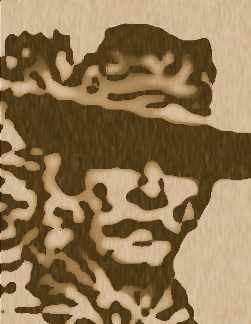 Curly O’Lee was a Texas range rat, a mongrel breed all his own. Cocky, brass, and ruthless, he’d had the ambition to be a cattle baron, and the determination to attempt it. He was built close to the ground and he walked with the unsteady gait of a man used to letting his horse do it for him. Wiry, with long gangling arms stretched, no doubt, from a lifetime of roping cows, he looked like a saddle bum down from the line shack after six months. A pale moon face topped the slightly stooped shoulders. The crooked toothy smile and pale blue eyes masked a sadistic killer. His big sandy moustache seemed to float under a red puff of nose. He had what the natives called a “Yankee face”. Red, white and blue. Whenever without the big white Stetson on his head, he combed the thinning wisps of hair from one temple to the other to cover the obviously barren terrain. This was the picture of O’Lee he remembered.
 “Now you’d think that a man who was implicated in the disappearance and murder of a prominent citizen and his son would not be your likely candidate for a seat in the Santa Fe Legislature, would you?
  Ash had admonished him against politics more than once. He had had his ambition to sit in Santa Fe, but Ash had told him, “You’re too upright a fellow to be mingling with those old foxes.
 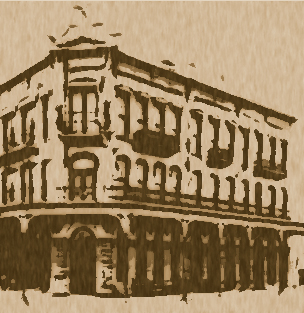 Santa Fe was being pressured from both Washing-ton and the local citizenry to resolve the case and bring the criminals to justice. The Sheriff of Dona Ana County at the time was doing nothing because of his fear of O’Lee and the fact that they were both Democrats. Everyone knew or said they knew who the guilty parties were. O’Lee’s confederates tried to blame it on disgruntled Mexicans. That was highly unlikely as Jennings received much of his support from that segment of the population. The most widely accepted version was that O’Lee had done the deed or had hired someone to do it.
 Ash had the habit of adding flourishes to the facts. He, on the other hand, felt confident only to tell the facts the way he had experienced them.
  Dime Pulp