
By Patton D’Arque
“She was a waitress at Quentin’s Steakhouse down by the rail yard when I first met her. It was a popular cop hangout. So popular that they called it ‘Quentin’s Stakeout.’ A beauty, tall, blonde. Seeing a lot of guys, law enforcement mostly. And trouble. Two guys from homicide actually threw down over her.”
 Paul Fernando had finally stopped talking to the camera as if it were an audience. A retired cop, in his late sixties, balding, gray at the temples, he took a long pull on his cigarette as if retrieving a memory, his other hand firmly wrapped around a tall glass of high octane orange juice.
“She was few years past thirty then, but she could still drive men crazy with a look, a smile. She had a teenage daughter, fer crissake.” He sat back in his chair shaking his head, his features obscured by shadows. Of the three, he’d been the most reluctant to agree to tell his story even with the generous compensation for acting as a technical consultant on the production. The initial interview took place at his country home.
“I was working for the DA’s office in those days. Chasing paper. Light duty after I took a bullet going after a bad guy. They musta liked what I was doing because it soon became a permanent assignment. I didn’t mind. After ten years boredom on the Robbery and Burglary detail, I was ready for a change. I liked to hang out with old friends, though. I was still a cop. I went down to Q’s pretty regular. Especially after my divorce. I liked my steak and fries.
“I never planned it that way but she was my waitress most of the time. Always real friendly, ready with a smile, a laugh at one of my lame wisecracks. I wasn’t her type. I knew that. She went for the flashy fellahs. Gold chains, fancy rings, Rolexes, expensive suits. That wasn’t my style. I bought my suits at the same place I bought my tools. Sears and Roebucks.”
 He chuckled at his little joke lifting the glass to his lips. The second unit director, a kid just out of film school, let the camera do the work occasionally focusing on the butt filled ashtray and pale smoke curling up into the dark room. He was shooting available light. The storm had knocked out the power.
“She flirted with everybody. It seemed all very good-natured and fun. And on some nights, after my steak and fries, when I stuck around in the company of a glass or two of scotch, I’d see her get her coat and purse, have a drink and some ear nuzzling with a young cop and then leave with him.
“I quit smoking twenty-five years ago. I started up again not long after that phone call. It was from Kim. We’d done time together in the domestic pen under the thumb of warden Jackie. Her mother and my second wife.”
The production company had flown Jackie’s daughter down from Portland and put her up at the Marriot where the second unit crew was staying. It was convenient and she’d agreed to tell her story in the comfort of her suite. Kim Summers, in her early forties, was tall with a blond pixie cut, a little overweight, favoring men’s shirts and snug jeans. Her most startling feature was the blue intensity of her eyes. The camera made her nervous and her hands moved all the while she talked, lightly touching an arm or knee or cheek as if to assure herself she was still there.
“I kept a calendar for her meds on the wall in the kitchen. She’s on anti-depressants and tranquilizers and I knew she smoked a little weed on the side. Heck she’s almost sixty. I was just happy it wasn’t anything stronger. Or booze.
 “I noticed there were little ticks in the corner of certain days on the calendar. I hadn’t made the marks and I didn’t exactly think too much about them. I figured mom was keeping track of something though for the life of me I couldn’t figure out what that was. There are some things about her that are just not explainable. I’ve grown up with that. She’s an incredibly intelligent woman. I mean, I’ve always been in awe of the things she knows. I’d say ‘mom, how do you know that stuff?’ And she’d say, ‘I seen it in a tabloid in the supermarket checkout line or I read it in the National Geographic at the doctor’s office.’ But you’d think that someone that smart would have some common sense.”
She looked at the camera as if she’d forgotten to mention something. “I never knew my father. He was killed in Viet Nam. She said she’d tell me about him some time. But she never has.
“Before Paul, I hadn’t known a real father. With the exception of Injun Jerry, there was an endless parade of uncle so and so or cousin such and such. Injun Jerry. . . he’s something different. . .wears his hair long like an Indian, more wild animal than human. . . which is probably why they say he’s crazy. He was a bounty hunter. Might be still is.”
The second unit director was supposed to be scouting locations but the weather wasn’t cooperating. Being an ambitious sort with time to kill and wanting to make a good impression with the producer, he’d volunteered to shoot the interviews for the special features segments. Principle shooting on the ‘based on a true story’ feature hadn’t even started and he’d already spliced a lot of the material into a rough narrative on his laptop.
“Now that was a fine piece of ass. More than a piece of ass. It was more than just ass. She made me do things I never dreamed of doing. I don’t mean just in bed. I mean all the time. She was electric. All the time.”
 Injun Jerry, real name Jerome Sorenson, was ex-cop, former bounty hunter and one of Jackie’s ex-boyfriends. In his late fifties, stocky, broad shouldered with a full head of long graying blonde hair down past his shoulders, he’d dressed in a dark suit, open collar dark shirt, strands of gold chain showing in the thicket of graying chest hair, a large gold wristwatch, and dark sunglasses for the occasion. He did his best to charm the lens, all smiles and exaggerated expression. He had no qualms about telling it like it was. “I’d been a city cop, narcotics, vice. I got splashed by some dirty partners and we all went down together. I missed the rips so I got into skip tracing. The money was good. The crowd was fast. That’s how I met her. She was running with a couple of wannabe criminals with family money.”
Then Kim, frowning, looking down at her hands. “When she was with him, she was more alive than I’d ever seen her. I think it was the danger. They would go on takedowns together. He taught her to shoot, how to take care of herself in tight situations. I resented him most because he alone could take her attention from me.”
“I wasn’t looking for a partner,” Jerry pled to the camera. “We hadn’t hooked up but a short time. She had a kid, girl, pretty, like her. Left the kid with a friend, or in a motel room in front of the TV. She just took to it like she knew exactly what she was doing. Fearless. Careless, too, and that made her dangerous.”
Kim voiced concern. “I didn’t know he’d been let out on parole. He’s dangerous. He probably did what they said he did. I’d heard mom say, ‘with him, you’re either shit at or shot at.’ He isn’t nice.”
Jerry waved a large hand to make his point, flashing a row of knuckle rings. “I invited her out on a collar. My mistake. It was a wild ride while it lasted.” He shrugged and looked away in a moment of self-reflection. “I ended up getting fifteen for involuntary manslaughter. I behaved myself and they let me out early. I didn’t want to go back to man hunting. I thought about looking her up but then I might have ended up back in a cell.” He smirked. “My ex-brother-in-law lets me stay in a trailer on his property. I been there ever since. Minding my own business.”
Kim smiled at a picture in her head. “But Paul, he was different. He wants you to think he’s a tough guy but he ain’t. He’s a pushover. . .grumpy, but a pushover. So Jackie, my mom, she shit all over him and I had to kinda protect him. That’s how we got to be friends.”
Cutting in the Fernando material created too much of a continuity problem. The kid played through it again just to make sure.
“Yeah, it was kinda like I’d won the lottery. I felt like the bride walking up the aisle. . .in Vegas. . . I couldn’t believe that we were actually getting married. . .that I’d end up with someone. . .a beauty like her. . .I know that sounds crazy. . . . Anyway her daughter . . . Kim, she checks in on me every once in a while since my retirement. . .usually small talk, how the job’s going, and the new boy friend, how mom is holding up, like that. And I had to give my report, too. No I’m not drinking much. . .what’s much? And no, I wasn’t going to be another retired cop suicide statistic. I can’t say I didn’t appreciate the attention.” Fernando fit a cigarette to his lips and lit it. “We’d weathered the mood swings, the unexplained absences, the lies, the deep depressions, the lies about the lies together. I made sure she finished high school. She kept me off the potato juice. Until the divorce anyway. A woman is fine, but a vodka tonic don’t sass back. Jackie terrorized herself and everyone around her. After a while it was either cut loose or die of an ulcer. I kept my pension and she got the house.” The camera focused on the smoking ashtray and the near empty glass. “So Jackie’d taken off like she used to. Kim felt that this time was different. . .and in my gut I knew it was too. She was on her way over. She had found something she wanted to show me.”
The kid ran back the footage to where Kim picked up the narrative. “When she didn’t come home that day, I worried. I always do. But I know her. I called around. I went around. Nobody had seen her. I got more worried. She needed her medication. After day two, I called Paul. He told me to notify missing persons, and that he’d check the hospitals. That was all he could do.” Kim’s face tensed trying to keep from losing it. “I had found something. I wanted him to see it. Maybe it’d help.”
Paul’s voice droning over the rising smoke of a fresh cigarette resting on the lip of the ashtray was a perfect segue. “After I looked through the envelope of photos Kim had brought with her, I realized that I should have been asking more questions about everything.”
Kim stared at the camera defiantly, her battle won. “I looked through mom’s stuff all the time. Sure, I’ll admit it, I spied on her. It was for her own good, I told myself. She needed looking after. Most of the time it was just making sure she kept her appointments and did the shopping. She was either forgetful or just apathetic, depending on the way her meds were affecting her. If she skipped her meds, she got very agitated and fearful. Afraid of what, she wouldn’t say. I used to think it was Injun Jerry. Eventually I came to understand that it wasn’t him. She wasn’t afraid of him.”
Injun Jerry had suggested they interview him in the café downtown he liked to frequent. It wasn’t a bad idea, but the light was crap. He draped an arm over the chair next to him and continued matter-of-factly. “Yeah, we liked the coke. I shoulda known better. It added an edge. A crazy edge. We’d snort a few lines. Then we’d do the takedown. And then after we turned the jumper in, we’d go out and do it on the hood of a car in the precinct parking lot. Any car. It didn’t matter.” He paused as the point was made. “Problem is you think you’re invulnerable when you’re on a power high like that, and it’s not something you can just walk away from. You gotta do it again, and you gotta get higher and to do that you gotta take more chances.”
Kim looked thoughtful, the chain of events falling into place. “I hadn’t been doing much snooping lately. I knew where she kept her pot stash. That wasn’t new. Her journal read like she knew someone would be reading it. It was a thinly veiled fantasy of her life, medicated as it was. There were a few poems, one addressed to me saying things like how happy I would be when I found true love and blossomed. Pretty conventional stuff. There hadn’t been any recent entries as far as I could tell. Some pages had been ripped out.”
Injun Jerry sat forward in his chair, making a point. “You leave common sense behind like a failed marriage. You’re running on adrenalin, pure, and super charged by the cocaine. And when it’s all over, you’re ecstatic to have survived and so you go through the motions, the process of making it with a thrill seeking chemical junkie like yourself.” He gave a you-better-believe-it nod. “But that’s all it was, going through the motions. My boys had never been hearty swimmers. Besides, I couldn’t feature a strung out pregnant Jackie on takedowns. No, that’s all it was, thrill-seeking, and after a while, fried, charred, burnt out you start making mistakes.” He looked up from the coffee cup in front of him. “That’s how I landed in the pen. It was Jackie’s doing but I took the fall.”


 She had spunk, that much was obvious, and her carrot colored hair had been permed to give it that Orphan Annie look.
 “Get outta here!”
 The blonde was doing the talking. “Ok, so what do you want, tough guy? Obviously we ain’t the coffee type. Maybe you think we ain’t nice girls or something.”
 Al’s sister had me come up to her apartment after I’d called her to say that I’d got a line on her Eddie’s new address. She was sociable this time, maybe a tiny bit seductive. She didn’t object when I asked for an advance and gave me the fifty bucks I wanted. Then she smiled a smile that seemed to say everything.
 “Ya don’t say?” He had his fists on his hips, sheaf of papers in one, tie loosened around the collar, sweat darkened yoke and pits, cuffs rolled up to the elbows. If it weren’t for the revolver on his hip, you’d swear he smelled just like a parish priest. Now he was interested.
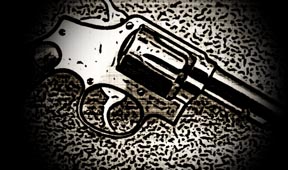 I had revenge on my mind and there wasn’t room for anything else. I reached under the mattress and pulled out a bundled oily rag wrapped around an old .38 Smith & Wesson with the serial numbers filed off. It was something that had come my way a few years earlier and I had stashed it away for just such a time. I dug through a box of papers on the floor of the closet. No bullets there. I went through a couple of coat pockets and found one .38 caliber bullet. Then I remembered I’d been using one to add up expenses and it was still on the table among the bottle caps and paper matches. That made two. I stood on a chair and reached my hand into the dark recesses of the closet shelf. Nothing but an old suitcase I’d all but forgotten. Full of old papers from a novel I was going to write. And yes, one lone bullet rattling around in the bottom. I had no idea how it got there.
 The pulled pork sandwich was as good as it got at the barbeque joint Donovan favored in Old Town. Since the Fed had an expense account, he sprung for lunch. Dabbing a corner of his mouth with a napkin, Donovan continued, “It wasn’t originally my call. This is about two years ago. We had a new guy, Hutter.” Butler nodded like he knew the name. “And Collins, who was undersheriff then, had me go in and back him up. Considering that it was at the Horsemen’s compound, he thought that it might be a little intimidating to the new guy. I’d dealt with Herko before so I wasn’t going to be put off by his bullshit.”
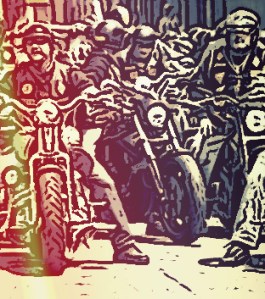 When they wheeled Herko into emergency he was screaming that he was on fire. He struggled against the restraints on the gurney and finally broke free of them. He careened down the hallway in agony, tearing at his clothes, his cut, his shirt, insisting that he was burning up. An EMT tried to tackle him and got a blast in the chops from an elbow that landed him crumpled against a wall. Security and deputies who were attending a stabbing call joined the fray. They tased him but he merely ripped the barbs out of his skin and continued to rage, batting at anyone who came near him. He raised his dusty leonine head and roared at the ceiling, digging his nails into his bare flesh. He fell to his knees and gasped for breath. Then he was silent and dead.
 “It’s all there in the report, Tim. The slug they dug out of Nesso was a .223. Stopped right in the center of the heart. The DEA’s undercover confirmed what I suspected. Herko had a trophy room, strictly off limits to anyone not in the inner circle, on the second floor of the compound with a large window overlooking the undeveloped field that abuts to a number of rural dead ends about a mile away, one of them being Willig near where we found Nesso’s body. Herko had a shooting range set up in the room that allowed him to target practice in the vacant lot behind. He had everything in there, competition rifles worth a couple grand easy, tripods, sandbags, scopes, range finders. Looked like he did his own loads, too. Apparently, according to one of my sources, he did a lot of plinking from his perch.
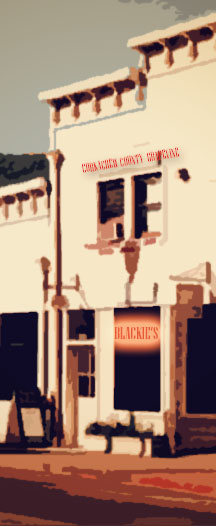 I found myself alone, in the cramped little square that housed the editorial office of Corkscrew County’s weekly newspaper, The Grapevine. Bundled back issues were stacked on the floor and against the walls, and in turn, file folders bulging with clippings and black and white photos were placed precariously on top of the none-too-steady bundles. There were two chairs in the room, one at the desk and one by the door, both of which were piled with more shapeless folders and assorted papers. The one window that looked out onto the street below was being used as a de-facto bulletin board, plastered with sticky note reminders, editorials from other newspapers, announcements, flyers, and various New Yorker style cartoons commenting on the vagaries of fourth estate culture.
 Kelly’s owner was a man by the name of Ralph Fashwalla, or so he introduced himself. Kelly’s hadn’t been owned by anyone named Kelly in quite a while JJ had explained on the way out. In fact, in her opinion, the place was jinxed. The last three owners had gone bankrupt. Business was generally good in the summer and early fall. But revenues from the so-called tourist season were hardly ever enough to sustain the resort during the lean winter months. Part of Kelly’s problem was its rundown appearance. The shredded fishnets, the broken life rings, and rusting nautical knick knacks littering the verandah were just plain tacky. JJ was making vague promises that an ad in her paper would help assuage the coming dearth of business.
 Next to the gas station and heading back into town was Elaine’s Pottery and Knick Knacks with a big hand-lettered Closed Till April sign on the front door. Directly across the street was Henderson’s Realty and next door was Carlyle’s Hardware and Equipment Rental. A weed clogged vacant lot provided the space between the hardware store and The Blue Ox, a garish blue cinderblock bunker adorned with an oversized representation of Bunyan’s pet with particular emphasis on the horned mammal’s gender. The red neon knot in the only window advertised a brand of beer known the world over. Across the street and completing the first block of businesses was a cyclone fence enclosure that contained a Quonset hut surrounded by the rusting hulks of autos. The sign on the double drive gate read Mike The Mechanic and underneath, in smaller print, American Cars Only – Beware of Dogs.
 Every hair on the man’s head was flawlessly in place as if it had been painted on. He wore a navy blazer over a white shirt, and around his neck, a speckled yellow power tie. A pair of Bermuda shorts and sandals completed the outfit. Typical of TV reporters. Since they were only viewed from the midriff up, they went casual below the belly button.
 “Well, this is news! International fashion model discovers gruesome murder while reporting for obscure country journal!” His face lit up like a cheap paper lantern.
 of fantastic storytelling that’s been around since practically the invention of writing (if one is to believe Mikhail Bakhtin). Crime fiction itself has an American origin, in Baltimore, from the pen of Edgar Allen Poe. The superstars of that genre, Hammett, Chandler, and Gardner, were published in the highly respected Black Mask Magazine but also in magazines like Dime Detective, and Spicy Detective. An abundance of irony and a certain cynicism set the requisite tone. There are only bad people and less bad people and they don’t even think of themselves in that way. The modern gaze is blurred in discerning right from wrong because we inhabit the age of relativity. It’s all very dark, particularly after the war, some might even say “noir.” Crime fiction and westerns are where the tough hombres and mujeres live, lines are drawn in the sand or around corpses and someone is always on the wrong side (or so it seems). In the early pulps, those shady characters were roughly drawn, sketchy, succinct, the dialogue terse, wisecracking, the action constant.


 I passed my first mile mark, a rank of sentinel-like poplars turned from green to gold in just the last week. There were a half dozen of them guarding an abandoned property, and tall enough that I had to tilt my head back to see their tips pressed into the swirl of thick morning fog. Their leaves littered the late greening grasses at the shoulder of the road like a scattering of large yellow coins.
 I maintained my pace, determined to remain calm. They weren’t really trying to run me over. It was just their way of getting acquainted. I’d been recognized. Nothing new, I assured myself.
 The road brought me out into an open alluvial plain where the gray low ceiling seemed bright by comparison. Banks of brambles lined both sides of the road, and scattered throughout the thicket, the reds and yellows of poison oak pennants. A row of birches partially divided a weed-choked field alongside a driveway at the head of which stood a tiny cabin, roofed and sided with the same green tar-paper brick. An anemic thread of smoke rose from the rusted stovepipe on the roof. I saw old man Goldstein cutting across the field to the road ahead of me, elbows pumping like a tiny old-fashioned locomotive. He hailed me as I was about to run by. It sounded like Chinese at first.
 In the differing versions of that story I’d heard before Goldstein never admitted that the original dog named Hitler would have died years ago and that the present Hitler was either a grandson or some descendant of the original dog. And he never admitted what I’d come to suspect, that he had named his Airedale Hitler because it was shocking for a Jew to have a dog with that name.

 The dog had almost strangled itself on its tether chain trying to get to him when he approached the gate. He couldn’t be bothered and had gone back to his sedan to call dispatch.
 “That’s all they had left at the souvenir shop.” He wasn’t going to tell them it was a present from Miriam, the emergency room nurse he’d been seeing. She’d gone back to Baltimore to live with “her people” as she’d told him. The coast was just too white. Even the black folk were too white. She’d sent him the bobble-head to say that she still thought of him. Not that he was a baseball fan. Miriam knew he cared only for round ball.
 “Right, that’s the Horseman compound right there and home of Jerzy Herkovanic, the president of Apocalypse Inc. So anybody in that neighborhood knows better than to report gunshots or even a gunshot.
 I was listening to the engine purr as it lapped up the macadam and glanced over to see her clutching the purse nervously to her lap. My hand to the dash radio made her flinch. I tuned in one spark of reception after another but out in the wet green hills, no signal had the strength to be heard, not even the high powered stations from Memphis or West Virginia. Music might have relaxed her, dispelled her fears, soothe the savage breast. She must have had an inkling of who I was, what I was doing, and where I was taking her. It couldn’t have been the first time. I figured I should answer her unasked questions
 I tapped a Lucky on the cigarette case, fit it to my lips and lit it. I said, “Yeah,” let the smoke out, and turning my attention to “Yankee’s” kielbasa. I watched him reach inside his suit coat, a garish mauve with pinstripes, and extract a long black leather wallet. He folded it open and I caught a glimpse of the sheaf of bills. That much money made me nervous. His large fingers flicked through the stack expertly and shoved a crisp specimen in my direction. The sight of Ben’s likeness in the oval hypnotized me. I reached for it and it fluttered, just missing my fingertips, towards the plush red pile of the carpet under my feet. I crouched to catch it before it landed. As I did, I realized my mistake. The red pile exploded into blackness against my cheek.

 Dime Pulp