by Pat Nolan
“Rudolph.”
“Is that who killed them?”
“No, no,” the old man snorted his scorn, “That was the boy’s name, his son.”
He had spoken the name after what had seemed like an interminable time glaring at the tip of his cigar. He returned his attention to the ash encircled end and continued his meditation another moment.
“Though you may be more right than you know. The boy could have been partly responsible for what occurred.”
“How’s that?”
“I mean, that could have been the Colonel’s fatal error, bringing his boy along when he went to file those rustling charges against O’Lee. He might have thought that the boy being with him would deter any attempts on his life, as any decent man, no matter how crooked, wouldn’t harm a child. He hadn’t fully accounted for the ruthlessness of those Texas assassins. Had he been on horseback rather than being slowed down by that buck-board, he could have had an even chance of avoiding an ambush. Jennings was no stranger to gunplay, I can tell you that, and he’d held his own in some mighty close scrapes. As it was, they both perished.”
He had always felt a certain affinity with Jennings.
There was also a slight physical resemblance that Ash had seized on, claiming that they had probably come from the same egg, only that one of them had got more than his fair share of the yolk. At a distance, they could have been mistaken for each other. They both sported the same type of moustache, full, with the ends unwaxed and hanging over the corners of equally grim-set mouths. Jennings, though not quite so tall, bore himself with a similar aloof dignity. He too was the type who would not back down once the ruckus had started.
“Now here’s something I’ll wager you didn’t know about the Lincoln County War, as you call it.” He paused as the young man now faced him, attentive. “Albert Jennings was William Bonney’s lawyer at his murder trial.”
“Billy, the Kid?”
 “The same. In fact, that’s where I first met the Colonel. Even then, he had a reputation that made Bonney look like a pipsqueak by comparison. Al Jennings was a hardheaded, no-holds-barred politician. There’s a story about him that while he as a member of the Texas legislature he fought a pistol duel with a political rival. He got the worst of it and was wounded in the shoulder but he managed to get to his horse and ride off.
“Now here is an example of someone not to be taken lightly. As the story goes, later that night he came back, shot and killed the man. Then he had to make himself scarce so he moved up here to the Rio Grande valley.
“He’s the one who created a law and order militia in Dona Ana County that flushed out the Texas desperados and petty rustlers who were operating out of Mexico. But you see, the way he went about convincing the criminal element to find healthier climates rubbed some people the wrong way. Some of the outlaws he rounded up were on the receiving end of a little sagebrush justice and, well, were shot trying to escape.
“He was a vigilante, then. How’s he any better than the criminals he executed?”
The old man nodded. “I won’t apologize for the Colonel. He knew what he was doing was a shade over the line, but he did what was necessary to make the Rio Grande valley more law abiding. And he was respected by most folks, honest ranchers and farmers, for clearing out the nests of thieves and badmen. My hat’s off to him in that regard.”
He did not bother to mention that, on the other hand, Jennings had been despised as a spic lover. His posses were made up almost entirely of native New Mexicans, mostly small ranchers, homesteaders, and sheepherders. Few Anglos participated, mainly because of Jennings’ conviction that the Texans were a big part of the problem. It was from among these people that he had drawn his power base. Jennings knew better than most that politics made strange bedfellows, having found himself in unconventional accommodations more than once, but he’d remained loyal to his following and pursued their interests whenever he could.
The Colonel and he also shared the fact that they both had married into the native population. His own wife was a Guiterrez whose people had lived and worked the land of the Southwest long before the Anglo arrived with his blond looks and blue-eyed arrogance.
There was a special hatred for Mexicans among Texans, and O’Lee as well as the two other men implicated in Jennings’ murder, Jim Mcann and Gil Leland, were prime examples.
They regarded the men who had gone native with contempt, as nothing more than lowlife half-breeds and squawmen. Ash’s pronouncement of long ago echoed in his ears. “A Texan is someone who’s had half his family killed off by Comanche and the other half in blood feuds; hard as nails and twice as sharp; brought up to hate anyone who’s a shade darker or different than them; an odd lot, weaned on the barrel of a Colt, and loyal to a fault to their own kind, but brutal in their vengeance against those they feel has crossed them.”
 Curly O’Lee was a Texas range rat, a mongrel breed all his own. Cocky, brass, and ruthless, he’d had the ambition to be a cattle baron, and the determination to attempt it. He was built close to the ground and he walked with the unsteady gait of a man used to letting his horse do it for him. Wiry, with long gangling arms stretched, no doubt, from a lifetime of roping cows, he looked like a saddle bum down from the line shack after six months. A pale moon face topped the slightly stooped shoulders. The crooked toothy smile and pale blue eyes masked a sadistic killer. His big sandy moustache seemed to float under a red puff of nose. He had what the natives called a “Yankee face”. Red, white and blue. Whenever without the big white Stetson on his head, he combed the thinning wisps of hair from one temple to the other to cover the obviously barren terrain. This was the picture of O’Lee he remembered.
A few years after crossing over into the Territory from Texas, O’Lee had accumulated quite a sizable herd and had claimed large sections of rangeland at the foot of the Sacramento Mountains. Many of his neighbors suspected O’Lee of stealing their cattle but were afraid to go up against him or his Texas guns. As his empire spread, he began to threaten the bigger ranchers in the Pecos Valley, in particular the Santa Fe syndicate. It was partly at their urging that Jennings had investigated O’Lee’s operation and had begun proceedings against him. O’Lee had outflanked that move by wisely, months earlier, joining ranks with the underdog Democrats chaired by Abe Falk and generously contributing to the party coffers. In Falk, O’Lee had a brilliant lawyer, as ruthless as himself, for an ally. From that point on, politics would determine the extent of justice.
“Now you’d think that a man who was implicated in the disappearance and murder of a prominent citizen and his son would not be your likely candidate for a seat in the Santa Fe Legislature, would you?
Fact of the matter, that is exactly what the Democrats are attempting in Messila. They want to elect a man that most of the population in this part of the Territory believes is guilty of ordering the disappearance of Colonel Jennings if not outright participating in it. The crazy thing about it is that they will most likely do it! And then they ask themselves why it is that New Mexico won’t be admitted into the Union as a State. I can tell you that the people in Washington D.C. think that the Southwest is populated by people right out of the pages of the Police Gazette!”
Ash had originally expressed that opinion. It was one of those topics that was bound to make him apoplectic, the hogwash from the East about the West. He was in favor of New Mexico being admitted to the Union but swore that the Eastern establishment was creating the image of a lawless no-man’s land to forestall the additional votes that would add to an ostensible Western establishment. It was one of the reasons why they had agreed to write the book together.
“The world at large must know our version of the truth,” his old friend had spoken blithely.
There was no need to mention that his own notoriety in a killing, the subject of the book, had led to a sudden rise in his own political viability, and that he too, at one time, had been considered for a seat in the Legislature.
The young man was attentive as the horse easily followed the rutted road between Organ and Las Cruces. Along the side, at regular intervals, the poles that would eventually carry the telephone line to the feed store in Organ were propped against the berms and hillocks of beige dirt.
“Back up here a bit,” he said finally. “What you’re saying is that the O’Lee that’s the Democrat candidate in Messila is the same O’Lee that was accused of murdering Jennings, is that right?”
“One in the same. In this day and age, the reward for murder is prosperity. After he was acquitted up in Hillsboro, he went right back to rustling cattle and scaring the small ranchers off the range. With Jennings gone, there was not one who had the backbone to go after O’Lee. Once the jury handed down the verdict, as the Sheriff, I had to respect the law even though I knew he was guilty.”
“I’ve had the pleasure of making Mr. O’Lee’s acquaintance and found him to be a gentleman. He seemed very congenial and not at all like a murderer.”
The old man had to laugh. “What the hell does a murderer look like, anyway? Anyone, you, me, could be a murderer if the circumstances were right. No one is too good to be a killer. You just have to convince yourself that your survival is more important than that of the person you kill. Most of us can abide folks without the homicidal urge. Often though it’s only the convention of civilized behavior that’s saved the life of some poor fool!
“No, O’Lee doesn’t dress the way you might imagine a killer to dress and he does not talk like a murderer, but I am convinced that O’Lee not only planned the murder but was one of the executioners as well. Jennings had proof that O’Lee was rustling cattle and he was killed for it. And when it came to trying him for the murder, he bought off the witnesses he could and the ones he couldn’t had a sudden hankering to leave for a more congenial climate.”
“Well, if the jury acquitted all three of the murder. That, to me, would settle it.”
 “Obviously you ain’t the only one. He is made out to be a respected businessman now, but he murdered Jennings and his son. That fact will never change for me. True, the jury acquitted him, Leland, and Macann, but the jury was intimidated by the ruffians and Texas cowboys O’Lee imported up to Hillsboro and billeted in the only hotel in town. Hell, the jury had to sleep in the hayloft at the livery! It was a jamboree up there. People came from all over the Southwest, pitched their tents, and lined up every day hoping to get in to see the trial. The jury got wind of what some of the tougher O’Lee guns were planning if they even considered finding their boss guilty. But he didn’t need them. His lawyer, Abe Falk, destroyed the prosecution’s case. The attorney for the Territory was a political hack from Santa Fe who could have cared less who O’Lee had killed. He had been sent to make sure that Falk, the Democrat, did not win. Everyone knew that. What had been a clear-cut case of kidnap, murder, and conspiracy was made hostage to political maneuvering. What I had believed to be right and the law suddenly shifted in the political wind like it was no more than the smoke off this cigar!”
Ash had admonished him against politics more than once. He had had his ambition to sit in Santa Fe, but Ash had told him, “You’re too upright a fellow to be mingling with those old foxes.
All of them with a hand in the chicken coop. Ethics is a word foreign to their standards, and you are too ethical a man. You’d stand out like a trained bear in a flea circus.”
But what would Ash have made of the Governor of the Territory of New Mexico meeting with him in an El Paso hotel room along with some of the more prominent businessmen of the Territory, Abe Falk included, for the purpose of hiring his services in the investigation of the Jennings disappearance?
 Santa Fe was being pressured from both Washing-ton and the local citizenry to resolve the case and bring the criminals to justice. The Sheriff of Dona Ana County at the time was doing nothing because of his fear of O’Lee and the fact that they were both Democrats. Everyone knew or said they knew who the guilty parties were. O’Lee’s confederates tried to blame it on disgruntled Mexicans. That was highly unlikely as Jennings received much of his support from that segment of the population. The most widely accepted version was that O’Lee had done the deed or had hired someone to do it.
He would have loved to have told Ash that he had had old Poker Tom squirming. Ash would have appreciated the wonderful irony of the situation. Poker Tom, the Democrat Governor of the Territory, having to promise the post to a registered Republican like himself.
The terms of their agreement stated that he would return to Las Cruces, set up residence, and act as a private investigator for the Territory of New Mexico until such time as was feasible when he would take over the post of County Sheriff.
The offer had come when he had been casting about for a new way to make a living. With Ash gone and the horse ranch losing money, it seemed at first like a golden opportunity. His wife was tiring of the remoteness of the ranch and longed to be nearer her relatives in New Mexico.
He thought he had left law enforcement behind. Nevertheless, it was something he knew he could do. Looking back, he realized that Ash would have warned him against it. “When you’re dealing with politicians, take inventory to make sure you haven’t been robbed, and check your back for knives.”
He wished now that he had listened to his friend’s advice although it could not have been offered in this particular case. Ash was the old whiskey sage, “the oracle of the long necked bottle” as he liked to call himself. And it was as if, now after all these years, his old friend was talking to him again as he himself took another swig of aguadiente. He would have made quite a windy of the White Sands tale.
Ash had the habit of adding flourishes to the facts. He, on the other hand, felt confident only to tell the facts the way he had experienced them.
He had admired the way Ash could take a simple occurrence and pump it full of portent. But he couldn’t do it, or when he did, it always sounded forced and not a little exaggerated. The art of storytelling, Ash had told him, was exaggeration that appealed to the expectations of the listener. If that meant bending the truth in places, being inaccurate to conform to the lay of the tale, then that is the way it had to be done. The importance of the facts had always tripped him up when it came to spinning a yarn. “Don’t let the facts get in the way of your imagination,” Ash had advised him. Like other advice Ash had offered him at one time or another, he followed it poorly, if at all.
“I made myself available once I got into Las Cruces. It was common knowledge as to why I was there, and I let it be known that I was interested in anything anyone had to say about the disappearance of the Colonel or his son. At first, folks kept their distance, but as time went on and people got used to seeing me and my buggy around, names came my way or someone that knew someone heard that someone else had sighted the Dog Canyon bunch. I was not in a big hurry to go after them just yet. Besides, I did not have the authority to arrest them, and I couldn’t count on help from the Sheriff. I bided my time and collected the facts that would bring the case to trial.
“As it was, much of the evidence had already been collected by the time I took over. What remained was sorting through the reports by witnesses, figuring which ones were reliable, and constructing a train of events.”
 The shadows of men halted in front of the wide display window. One of them put his nose up against the window to peer in. I recognized the nose and the face behind it. The G-man, Nekker.
 “They ain’t gonna think of looking for us in plain sight,” I said when she stared at the wide windows looking out on to the street. There was another couple in the one booth in the back and I would have preferred to be down there, half way out of sight, instead of perched on a stool hunching my shoulders to the street. Still I had a gut feeling that we might have eluded the G-Men and I could catch my breath. From the counter man’s mug he thought we looked a little rough.
 “Crane’s. Yeah, I remember. What a disaster that was. Ted got so drunk. He was celebrating the first one man show of his assemblages. He knew he was dying even then but kept it under his hat. Didn’t want to bother anyone unnecessarily” She turned from the tiny icebox. “Milk’s gone sour, but I’ve got a little honey if you want.” with a self-effacing smile that shouldered all the sorrows of the world. “What about the show?”
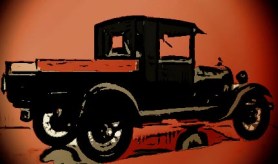 Ted was my brother-in-law for a very short time. When I hooked up with Grace, he was already pretty sick. Alice said it was because of all the chemicals he used in his business that had got to his lungs, his brain. He refinished furniture so he could afford to work on his art. Every once in a while I helped him moving furniture he had refinished and deliver it to the customer in his old ’28 Ford when I wasn’t tracking down runaway daughters or nieces or spying on the wives of poor deluded bastards or retrieving someone’s possessions, like jewelry boxes.
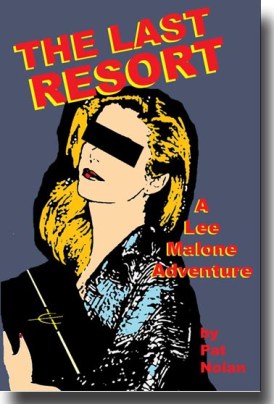
 Deep in the redwood wilds along the Corkscrew River, someone is shooting neighborhood dogs. The year is 1985 and Lee Malone, former fashion model, queen of the runways from Paris to Milan, once dubbed the most beautiful woman in the world, now a part-time reporter for The Corkscrew County Grapevine, is looking for a story to sink her teeth into. When Lee finds the owner of Kelly’s Seaside Resort brutally murdered, it leads her on an adventure that includes a mysterious gray van, another murder, extortion, pornography, sex slavery, and a shadowy organization of militant feminists known as SAPHO. In the process, Lee Malone’s notorious past catches up with her.
 “Lackland Ask is the name. ‘Lack’ to my friends, ‘Don’t’ to those who think they’re funny. You might have seen my portrait on the cover of Black Mask, the crime fiction magazine. This is my story. It starts with a blonde. This kind of story always starts with a blonde.” Thus begins the seemingly non-stop, endless narrative of Better Than Dead in which women are not the only trouble although most of it, told with the wit and street savvy of Runyon and Parker.
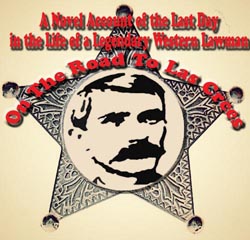
 In late February of 1908, a one-time drover, buffalo hunter, saloon owner, hog farmer, peach grower, horse rancher, US Customs inspector, private investigator, county sheriff, and Deputy US Marshal set out from his adobe home on the mesa above Organ, New Mexico accompanied by a young man in a black buggy on the journey to Las Cruces. He would never arrive. This is the story of that journey, a novel account of the last day in the life of a legendary lawman.
 “I have cut my ties with these bad people, Lack, I cannot go back to them and ask for help. These diamonds will allow me to start a new life here in America.” Her eyes pleaded. “Don’t you trust me? Besides. . . .”
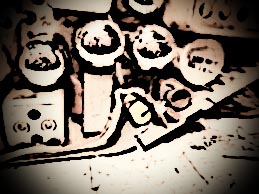 The alcove I was in was some sort of workshop, but it didn’t look like something you would find in a tailor shop. Spools of wire instead of thread, pliers instead of scissors, screws and bolts instead of buttons. There was an odd odor, too, but I couldn’t quite place it. A few sheafs of grimy paper were folded in among what looked like radio parts on the workbench. I spread one open. It was a diagram of some sort, measurements and notations, and in the same weird alphabet as in the address book. I stared at the drawing on the second page, turning it sideways and upside down. It didn’t make sense, cylinders, squares, squiggly lines, kind of a blueprint, but of what exactly?
 “The reason he must flee to America is because of bomb that kill police officials in Salonika. They say his bomb. They say he is Soviet agent because he is graduate of university in Moscow. He was to come here and beginning again, he has told me. Now I see what it means ‘begin again.’”
 My headache had gone away and was replaced by the pounding of my heart with special emphasis on the timpani of my ears. She moaned as my lips touched the inside of her thigh, grabbing my hair in her fists and arching her back. My hand reached under her skirt and found the top of her silkies. I pulled them down from her hips to be met with the moist miasmic vapors of the hairy grail. Now she had me thinking like a poet, but the Billy club in my pants was draining all the blood from my brain. And besides, it was no time to be thinking.
 In the days following my release from the hospital, I was the center of a media storm. I’d been there before. This time was different in that it involved arson, extortion, murder, an international sex trafficking ring, and money laundering, not my usual outrageous prima donna shenanigans. I was camera candy on a daily basis for a couple of weeks. It was like the old days in Milan. I couldn’t go anywhere without being accosted by the strobe of camera flashes. Then someone else’s high jinks, this time in DC, took over the headlines.
 In Alice Franklin’s case, an enraged Rhonda had instructed Timmy to do whatever it took to get Alice out of the picture. Ramparts Corp would then grab up the last resort on the Corkscrew River for next to nothing. It was well known that Alice was in financial trouble exacerbated by a drinking problem. She needed money to keep the Mint open, and having fallen in with dubious company in the persons of Timmy and his partner, Bear, she was persuaded that the money they made from a risqué movie would pay off her mounting debts. Timmy denied any involvement in his partner’s death in spite of the fact that his fingerprints were all over the murder weapon. Even more damning was evidence that it was the same shotgun used to kill Fashwalla. The investigators also found a video tape in a search of Timmy’s apartment at Montague Winery. The tape confirmed that Alice and Bear engaged in perfunctory sex play. The video also showed Alice shrinking back with a mixture of surprise and fear as Bear advanced with shotgun in hand. Bear then stopped as if something had distracted him and, with an angry frown, glared off camera. The video stopped at that point indicating the camera had been turned off. Confronted with the evidence on the tape, Timmy admitted that once Bear had his way with Alice, he meant to kill her. The investigation concluded that Alice Franklin had turned the tables on them and acted in self-defense. What or who had distracted the killers and why the filming had stopped was an unresolved detail that would not hinder the DA from adding conspiracy to murder to Timmy’s growing list of criminal charges.
 I put my right running shoe on the front bumper of my Volvo and tightened the laces and then did the same with my left. I would attend to everything I could all in good time. But first I was itching to run. I inhaled deeply, the cool of early morning autumn air filling my lungs. This was my favorite time of the year, the deciduous trees on the verge of turning to a riot of reds and yellows. With a water bottle strapped to one hip and a tiny cassette player on the other, I ran in place, adjusting the earphones on my head. I pressed play and grinned as Aretha’s voice sang “R-E-S-P-E-C-T, find out what it means to me.” I knew exactly what she was talking about. My feet beat the asphalt as I propelled myself down Primrose Lane. Was there ever any doubt? I rock!
 Apollinara woke Paulita after midnight. When her husband had not returned by nightfall, her full fear had come to the fore. She could not just sit and do nothing. She set about hitching Old Jupiter to the buckboard. Then, leaving the younger children in the care of their Navajo cook, she and Paulita, wrapped in blankets against the blistering cold of the predawn mesa, set off down into the pitch-black canyon.
 It took them hours to finally arrive at Swanson’s in Organ, old Jupe familiarly picking out the trail but slowly against Apollinara’s tight rein. Her eyes had searched the dark for any sign of her husband although she was certain that she would not find him there. She murmured prayers all the while.
 The front door opened and Swanson’s wife, Lou, came out onto the porch. “What is it, Polly? I thought he was off the firewater. Don’t tell me he’s on another one of his jags. I don’t envy you, dear. Come on inside, I’m just about to start breakfast.” She helped Apollinara down from the buckboard. “Don’t worry, one of his chums has probably got him over to the boarding house to let him sleep it off.” She put her arm around Apollinara and led her inside.
 The old man found the matches inside his hatband. His hand had fished out a fresh cigar from the inside pocket of his coat. The match head flared with the flick of his thumbnail and was quickly brought up to the tube of tobacco. Soon puffs of smoke drifted out from under the brim of his dark sombrero.
 The old man reflected in a cloud of smoke. He had watched the whole affair develop in the pages of the El Paso newspaper, too. He had been living in Uvalde then. Apparently Jennings was in possession of evidence that Curly O’Lea, the Sacramento Mountain rancher, and his Dog Canyon bunch were stealing cattle, and had filed charges against him. But it was all politics. O’Lea had aligned himself with a Democrat, Abe Falk, and by going after O’Lea, Jennings was hoping to embarrass Falk and his Messila Democrats. Ash and he had spent many an hour discussing the moves the politicians were making in their bid for power in the Southwest. Ash had foreseen Jennings’ disappearance. “He who lives by the ballot dies by the bullet,” he had cynicized. One way or the other, they had both agreed, Jennings was up against two formidable opponents. Falk was a brilliant lawyer, and O’Lea, a ruthless cattleman.
 He had been an honest man all his life. He had lived by the laws he enforced. That was something he understood and which was understood about him. Given the job, he would execute it with efficiency and integrity.
  “Certainly. I read all about the desperate goings-on that took place there. Cattle rustling, counterfeiting, gunplay, murders, The Lincoln County War, Billy, the Kid.”
 —Perry O’Dickle, chief scribe
  Deep in the redwood wilds along the Corkscrew River, someone is shooting neighborhood dogs. The year is 1985 and Lee Malone, former fashion model, queen of the runways from Paris to Milan, once dubbed the most beautiful woman in the world, now a part-time reporter for The Corkscrew County Grapevine, is looking for a story to sink her teeth into. When Lee finds the owner of Kelly’s Seaside Resort brutally murdered, it leads her on an adventure that includes a mysterious gray van, another murder, extortion, pornography, sex slavery, and a shadowy organization of militant feminists known as SAPHO. In the process, Lee Malone’s notorious past catches up with her.


 “So you never did come up against any Indians?”
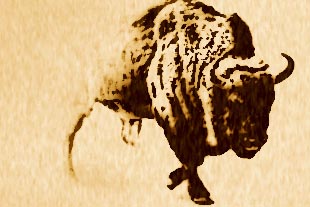 “Well, I hadn’t gone more than a mile when I came up on a clump of buffalo, about twenty in all. My position was on a little rise about a hundred feet from them. I got down in the snow behind a mound and picked a cow that had started to stray.
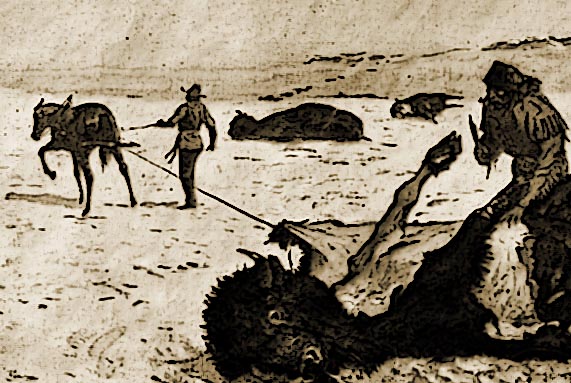 “I had him cut around each animal’s neck, down the belly to the root of the tail, and then down the inside of each leg. I wrapped a rope around the wooly scruff at the neck and tied the other end to the mule while Joe, he staked the animal’s snout to the ground with a wagon rod. Once that was done, I cracked the mule on the rear and he jumped a good six foot and yanked that hide right off.”
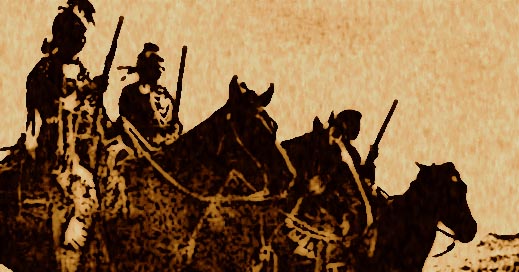 “I had never been face to face with a wild Indian before,” he continued. “There wasn’t a pleasant looking one in the whole dark, greasy lot. They were wrapped in buffalo hides and Army blankets astride their ponies, and there was no telling who if any was fingering a trigger.”
 The buggy crossed the stream at the bottom of the canyon. Adams drew up the horse under the cottonwoods and got down to loosen the harness. The old man stepped down from the bench and stretched to his full six foot four height; in his younger days, the Spanish-speaking natives had given him the name of Juan Largo.
 Back on the Staked Plains, the animals were rutting, and hunters counted on this time of year to double their bloody harvest. The herds were also beginning to move north in anticipation of their spring migration.
 Joe, the tag-along from Fort Worth, did not have the stomach for skinning or slaughter. His ineptness at practically everything was a constant source of amusement for the camp, and an endless irritation to Shelton who counted every blunder, every botched hide as money out of his pocket.
 That agonized expression, it was like Ash’s the morning he’d found him. He had died in his sleep, looking like he’d protested every inch of the way.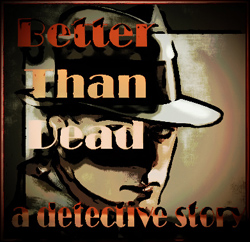
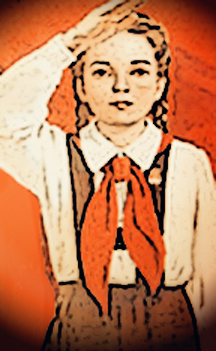 of comrades, we called ourselves the “red kerchief” because that was our uniform, a red kerchief around our necks. When the war came I return to Salonika. My mother was a school teacher and belong to a political party prohibited by the metaxfascist government. The secret police arrest everyone in connection and steal their property. The Black Hand gangsters firebomb our place of worship and kidnap those of our faith for ransom. My mother was torture until death. My father escape to Istanbul on a Black Sea freighter and with help of compatriots come to America. I stay behind to be with my mother and help hide refugees until she is arrested and I hear she is dead. I have to flee because the secret police wishes to arrest me, too. I catch fishing boat across to island of Lesbos, and then to Anatolya where I ride many bus lorry wagon for many days to reach Beirut where after a long wait I am able to catch ship to come to this city and find my father who has joined with Herr Doktor Soloman and his refugee organization and where I can get new papers to say who I am and why we must fight for the revolution and overthrow the oligarchy!”
 I stink, I’ve been told that many times, mainly by dames, and for entirely different reasons. This time I was looking at the evidence that I did and trying not to add to it with something coming up my throat. I set the package on the washbasin and slowly ran water over the sticky stinking muck. They were two well-formed specimens. I began separating them with a pencil tip. Most of it washed away as a disgusting brown slurry and I almost lost it down the drain and had to stop up the hole with my thumb while my other hand carefully separated the tiny chunk of gravel to one side of the basin and onto a dry section of the newspaper. I held the pebble under the faucet and let the slow stream wash the dirt away. It still looked a bit of grit but now that I knew what it was it was more than that. Slipping it into my vest pocket, I ran water over my hands washing off the crap and scrubbing my fingers with the bar of lye soap on the shelf next to the can of Drano. No matter how many times I put my nose to them, the stink lingered around my sparkling cuticles. I dumped the newspaper and the remains into the commode and after slipping into my suspenders, strode out into the hallway and back into the tailor’s shop.
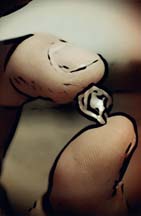 “I plan get as far away as possible from the cops and this little beauty is my ticket out of here. I just got a little bit of unfinished business to take care of and I’m gone.”
 I just wanted to curl up somewhere warm, soft, safe and quiet. Instead I was on the back of a noisy chopper with a gale force wind blowing through my skimpy blouse and up my long skirt. And I was on the down slide, the price I had to pay for my extraordinary power. I’d been there before, guided through my initiation by Trayann, and allowed to right my tumbled world before the blazing hearth of her stone hut with a bowl of herb tea, listening to the murmured litany that would help ease me out of the depths of my autism.
 shotgun. The blast hit Rhonda on the left side just as she got off a round striking Blackie in the back. She was thrown backwards, taking the oil lamp with her. It shattered on the concrete floor sending flaming oil in all directions. Timmy’s legs were pinned under the weight of Blackie’s body.
 Dime Pulp